Collaborations and Inspirations: More Peasant Food

This summer I decided that the next chapter of my “Collaborations” blog series would be focused on Peasant Food.  It didn’t take very long until I realized there were way too many amazing people and delicious recipes for one chapter, so I broke it up.  In August I shared stories and recipes from my sister Karen Butler (Jambalaya), my once sister-in-law Monica Radvany (Feijoada), long-time employee Sarka Kalocajova (Beef Goulash) and friend and colleague Ann Yonkers (Smoky Sausages, Peppers, and Onions).  This chapter continues the theme with four more recipes from four other remarkable women.  Welcome to Part Two of my exploration of Peasant Food.


****************************************************************************


Elizabeth Butler

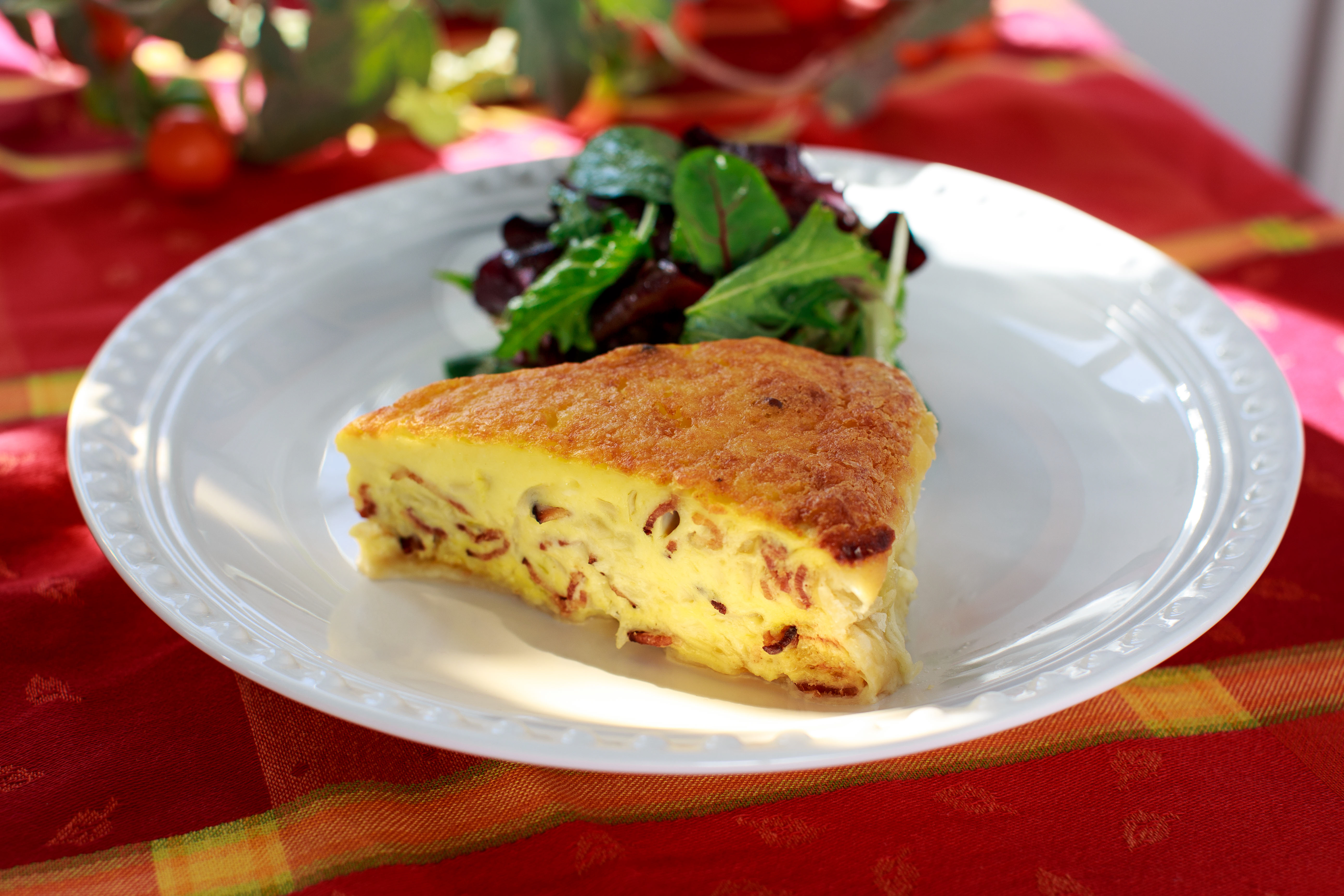
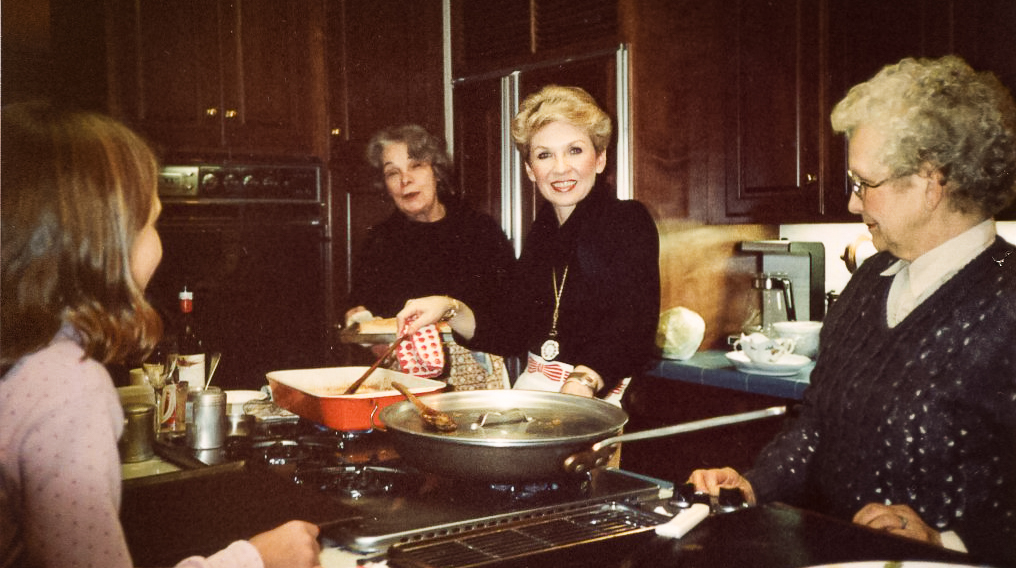
Certain memories of mine are so vivid and clear that they feel like they happened yesterday.  One such memory takes me back to the summer of 1984 when my niece Elizabeth had come to spend the summer with us.  I had just opened the second Convito Italiano in Chicago’s Gold Coast and my business was thriving.  Elizabeth was working at my Wilmette store, but on this day she and I were in my Glencoe kitchen where I was teaching her how to make risotto, one of my favorite recipes, which would turn out to become one of Elizabeth’s favorites too.

Chris Kim, Elizabeth’s wife, is the main cook in their home – and she is an excellent one – but Elizabeth has never fully abandoned the kitchen.  She loves making all kinds of interesting salads and since that summer in Chicago has developed a complete repertoire of seasonal risottos.  And though she may not cook often, Chris makes sure to request Elizabeth’s risottos at least once or twice a season. Using the basic risotto recipe I taught her those many years ago, Elizabeth adds whatever fresh and interesting produce she can find in any of the amazing markets in and around the Seattle area where she and Chris live.


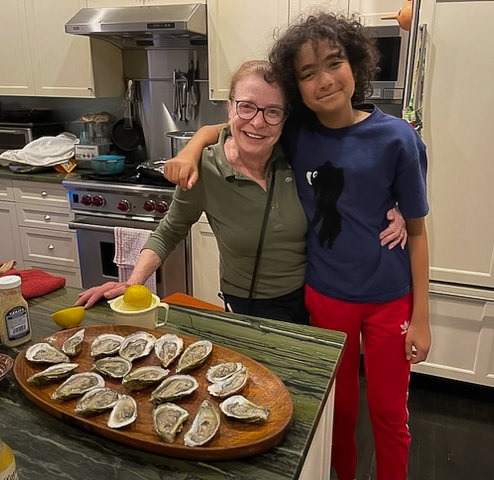
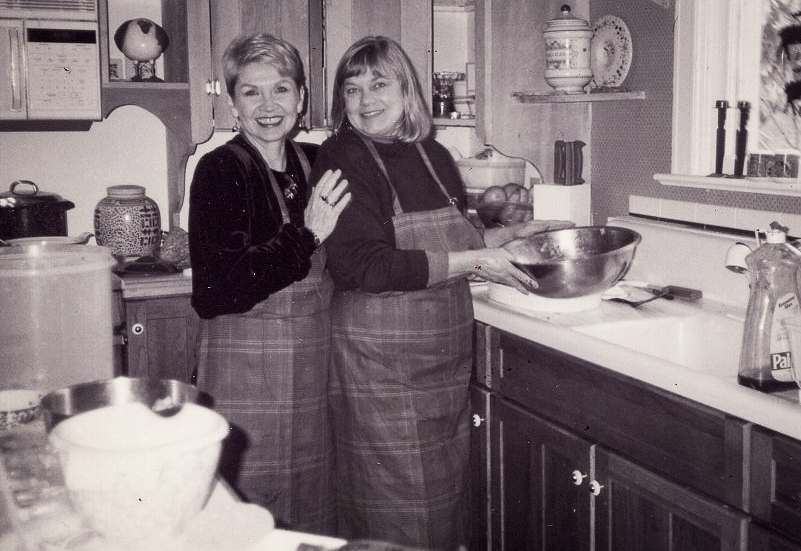
Elizabeth and I in my Evanston kitchen
(celebrating nothing in particular!)


On occasion Elizabeth comes up with a risotto idea while working for the Washington State Recreation and Conservation Office.  She coordinates the state’s salmon recovery grant program which seeks to protect and restore the habitat of the endangered Chinook salmon, Steelhead trout and Southern Resident Killer Whales.  Occasionally she has to make site visits to wilderness locations throughout Washington and a few years ago she and some coworkers stumbled upon a culinary jackpot.  Hiking through a dense forest on their way to inspect a salmon run, they discovered a broad field of Morels which Elizabeth decided – then and there – would be the focus of her “spring risotto”.  So, basket in hand – Elizabeth is always ready for a good forage – she collected her share of the wild fungi, which she would later combine with shallots, baby carrots and fresh mint to make one of her favorite risottos.

Elizabeth serves her risotto as a main course, but these days most good Italian restaurants treat it like a pasta course served; a small portion served between the appetizer and the entree. But risotto’s 14th century roots are actually much more in line with Elizabeth, than with modern Italian restaurants.  At its core Risotto is the quintessential peasant food: hearty, adaptable and reliably delicious.  And though the expensive mushrooms featured in this recipe may at first glance feel a bit too luxurious for a peasant meal, the fact that anyone with even a passing knowledge of mushrooms can forage them at no cost is precisely in the spirit of all the best peasant foods.

Elizabeth confesses that one of the many things she loves about making risotto is that she doesn’t have to follow a recipe anymore.  She just instinctively makes her basic risotto and improvises any additions or substitutions as she goes. She explains that “I find making risotto very calming…just a stir or two to blend the rice, then a sip or two of my cocktail to ‘blend’ me”.
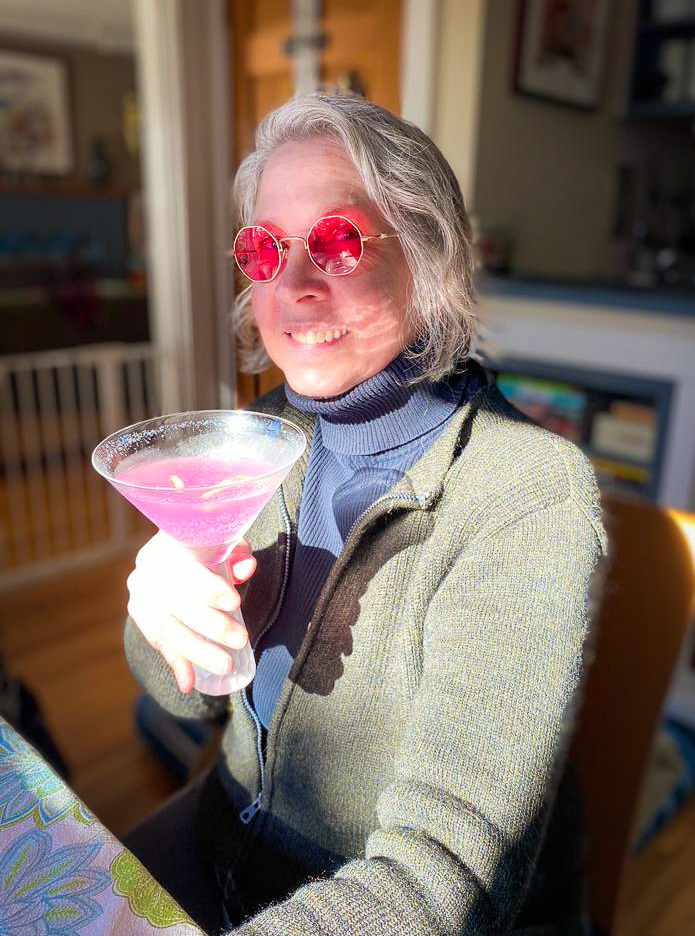


Mushrooms are Elizabeth’s weakness and two of her other seasonal risottos feature them as well. One of her fall risottos contains shredded chanterelles sautéed in butter with sage, thyme, and basil.  Instead or Parmigiano Reggiano she uses Pecorino Romano which is made from sheep’s milk and has a more grassy and earthy flavor that compliments the chanterelles.
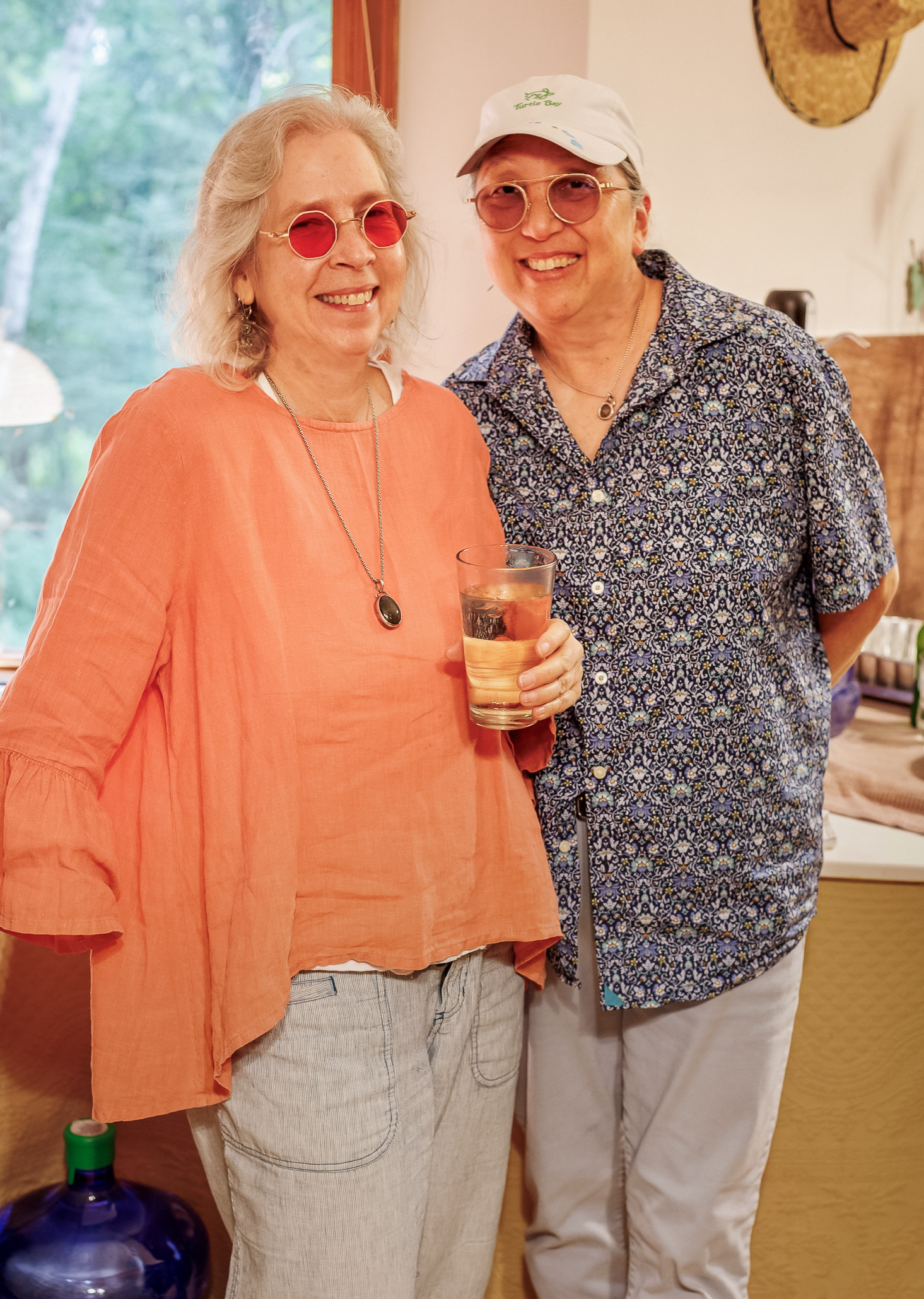
Chris’s favorite is Elizabeth’s Winter Risotto, which I showed her how to cook all those year ago back in my Glencoe kitchen.  This is a heartier risotto and therefore more in keeping with one course Peasant meals.  Elizabeth makes it with whatever mushroom catches her eye at the local market – often Seattle’s Pike Place Market, the original source for local artisan and specialty foods.  She also likes to add sauteed pieces of skinless, boneless chicken breast and bright green petite peas thrown in at the very end.

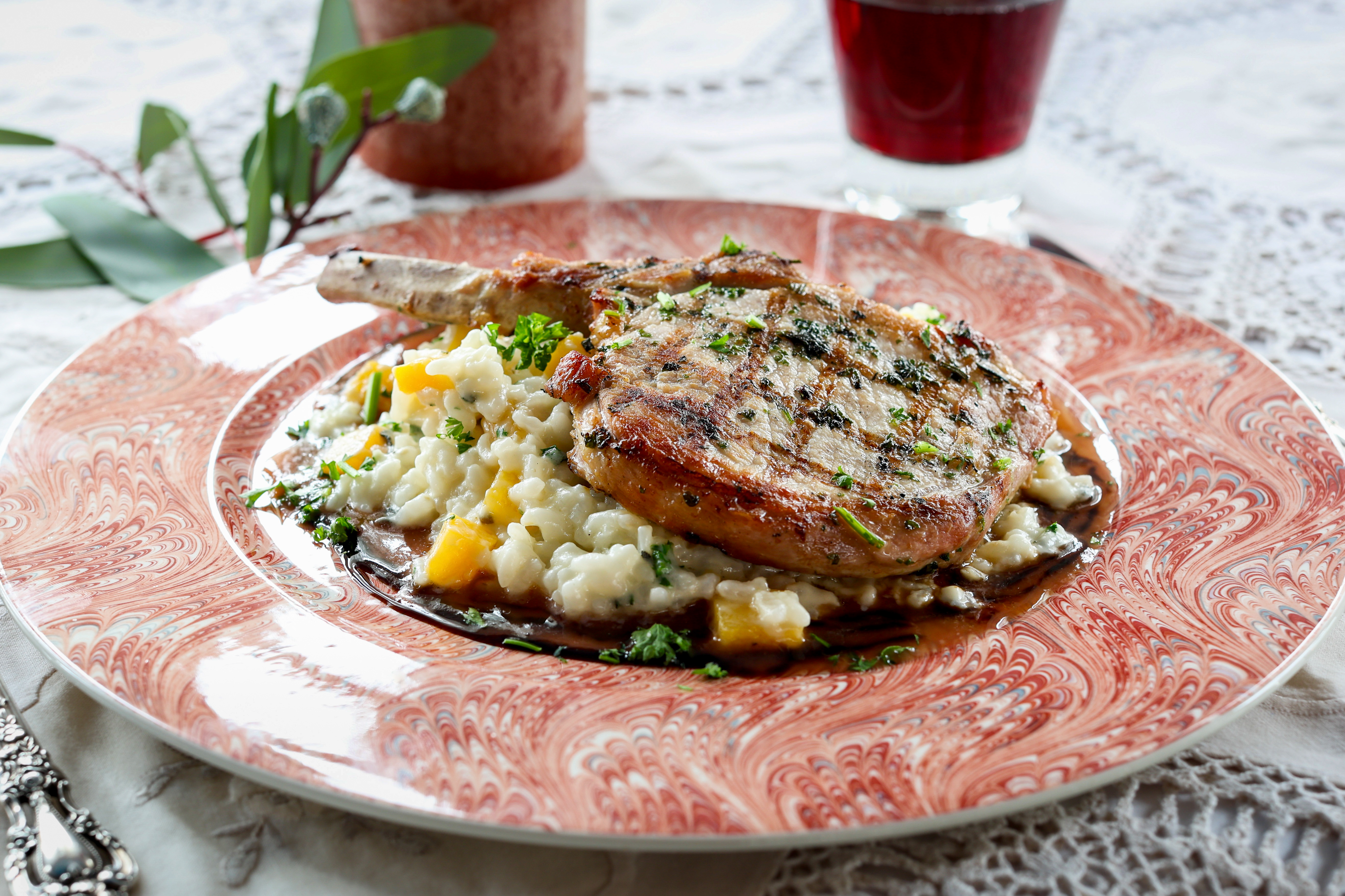
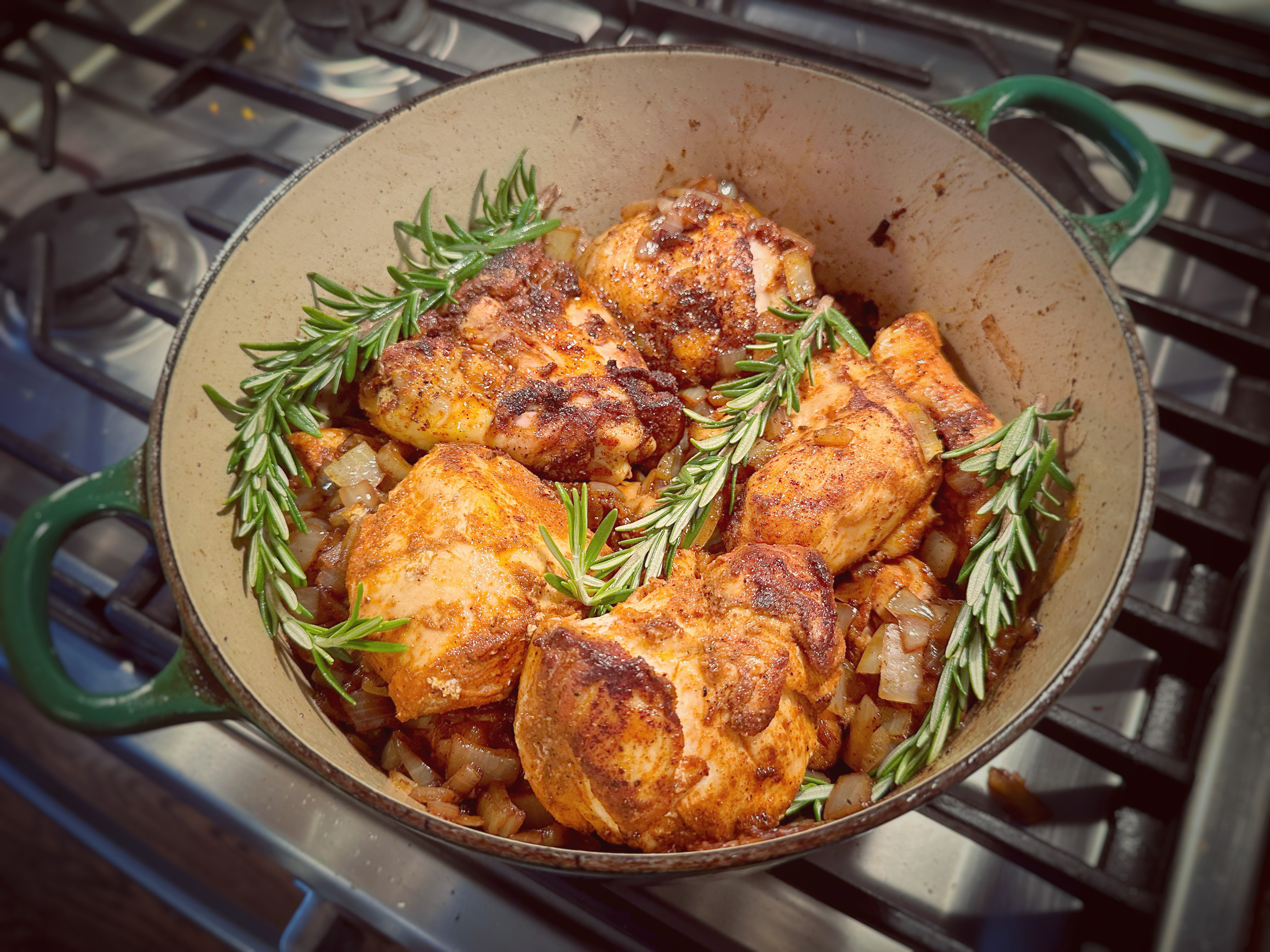
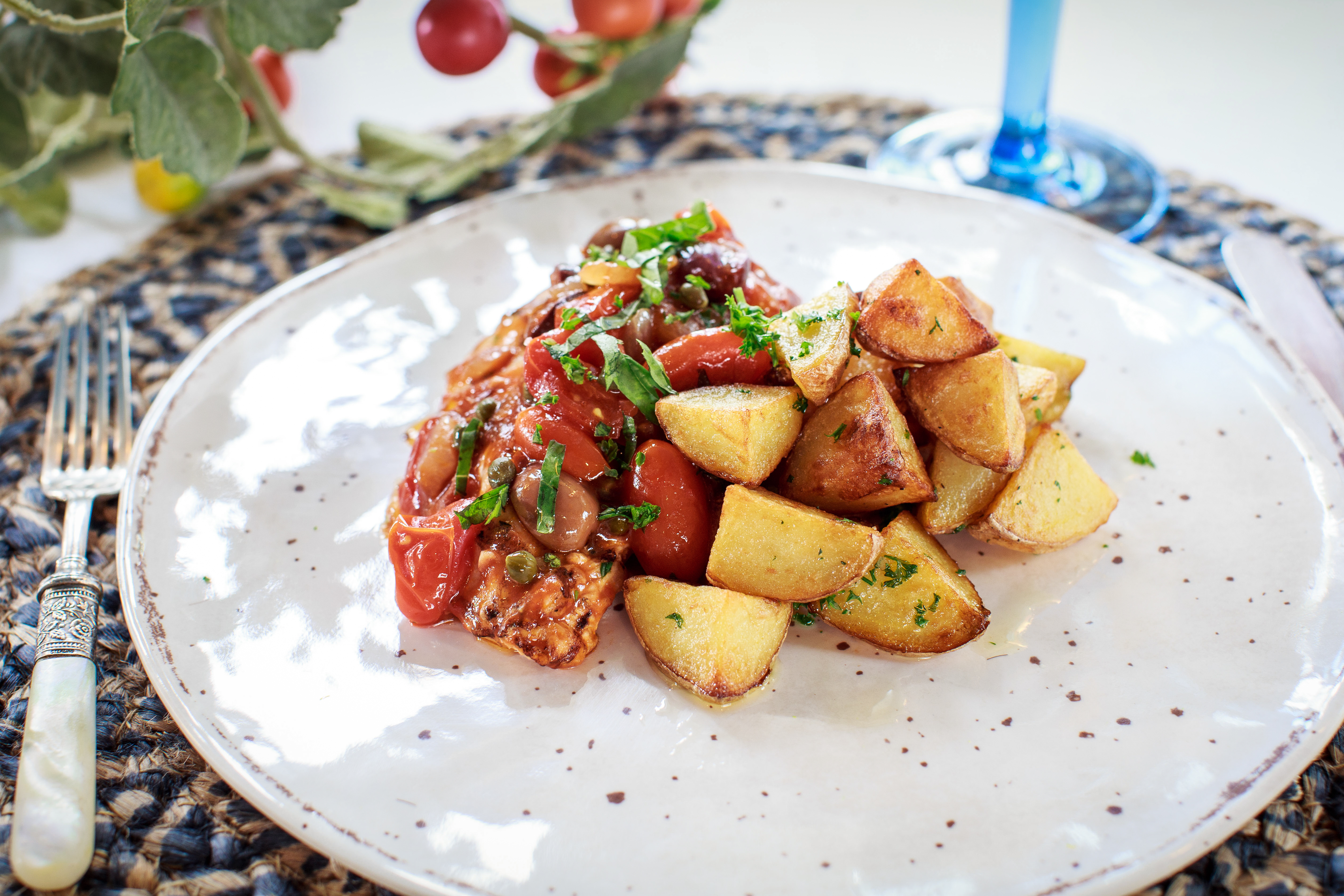
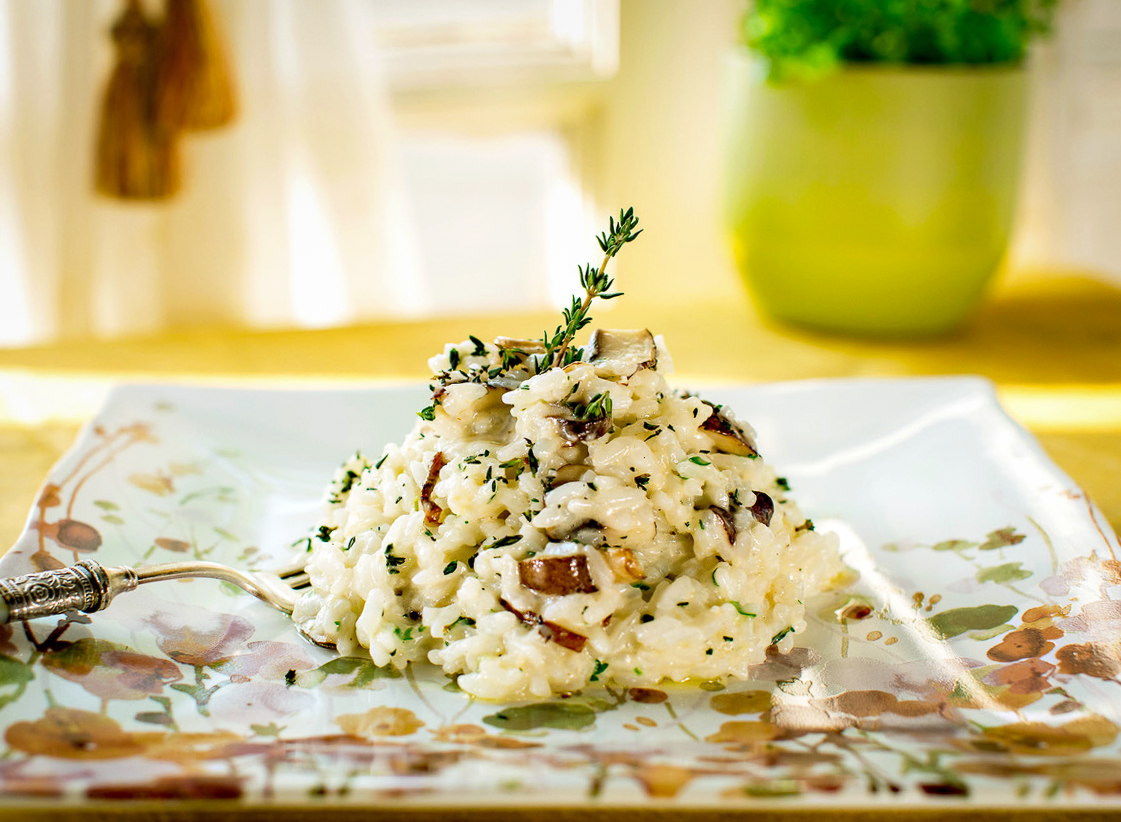
Elizabeth’s Summer Risotto is – in my opinion – the prettiest of her seasonal risottos, which is why I selected to be photographed.  Here she substitute leeks for onions, and when the rice is just a few minutes away from being al dente, she adds a sauté of fava beans, baby peas, thin half-moon slices of zucchini and yellow squash.  Then at right before serving, she adds a squeeze of lemon juice, some more freshly grated Parmigiano Reggiano and finally a generous sprinkle of lemon zest.  Its lovely green and yellow palate set against the cool white Arborio rice paints a picture of sunshine and green earth.


© rob warner photography 2024

Basic Risotto
Serves 6

5 cups chicken stock
2 tablespoons butter
1 tablespoon olive oil
3 tablespoons finely chopped onion
1 ½ cups Arborio or Carnaroli rice
½ cup dry white wine
1/3 cup Parmesan cheese
salt and freshly ground pepper to taste


In a saucepan, bring the chicken broth to a steady simmer.  Melt the butter with the olive oil in a heavy-bottomed skillet over low heat.  Add the onions and sauté over medium heat until soft, approximately 2 minutes.  Add the rice and stir until well coated.  Add the wine and stir until absorbed.

Begin adding the simmering broth ½ cup at a time.  Continue stir cooking always making certain the rice is not sticking to the bottom of the pan and yet not adding too much broth at a time.  This process should be done over medium heat.  (Approximate cooking time is 30 minutes).  The rice is done when it is firm but tender.  You may need more broth if you run out.  Then use hot water.

When you estimate that the dish is a few minutes away from being done and the rice is al dente, turn the heat off.  Add the Parmesan cheese, stirring it into the rice.  Taste for salt and pepper.  Serve in bowls immediately.

Note: you can use other stocks depending on ingredients.  I use a seafood stock with shrimp and Elizabeth likes to use freshly made mushroom broth when she finds great mushrooms.

Because risotto cannot be prepared in advance, it can be a difficult dish to serve to guests.  However, if you have made it many times before, you know that it requires less in the way of concentration and more of a mechanical commitment to the continuous stirring.  So, as long as I have guests who I don’t mind hanging in my kitchen (which is admittedly not a long list) I am happy to prepare it for good friends over a glass of wine and some simple hors d’oeuvres while I coax out the creaminess of the rice and the flavors of the whatever ingredients I decided to add that night. Elizabeth does the same and will even have friends take over the ceremonial stirring while she tends to other things (perhaps a bridge too far for this lady).


****************************************************************************


Barbara Glunz

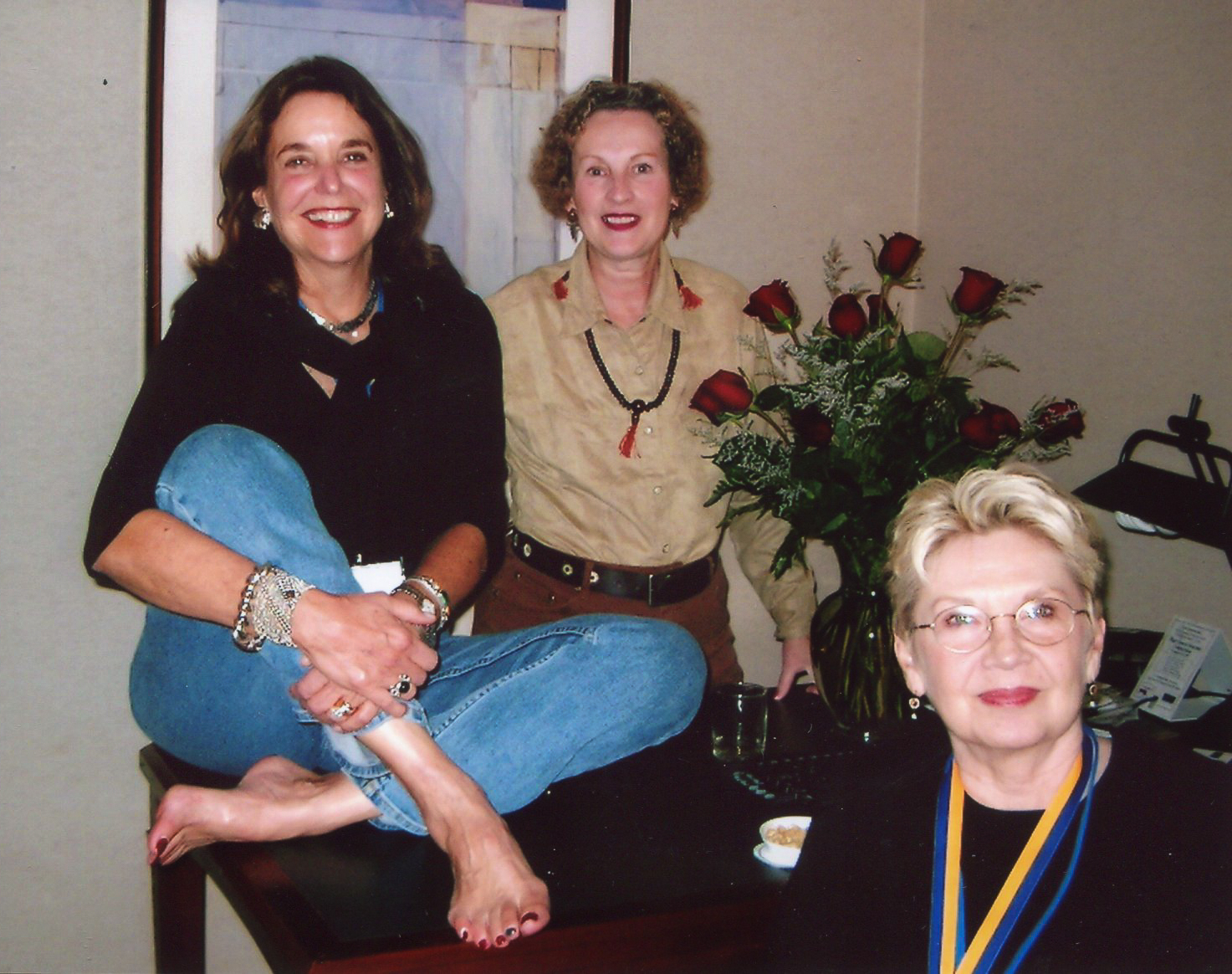
I got to know Barbara Glunz more than twenty-five years ago as a member of Les Dames d’Escoffier, the powerful group of women leaders in the food, beverage, and hospitality industry that I was fortunate to join early in my career. We have both served as President of our Chicago Chapter over the years, which cemented a closeness to what was already a budding friendship.

When we first met, our roles in the home kitchen were very similar.  We were both career women with extensive responsibilities to our businesses that made it a challenge to cook the kind of meals that our families had become used to.
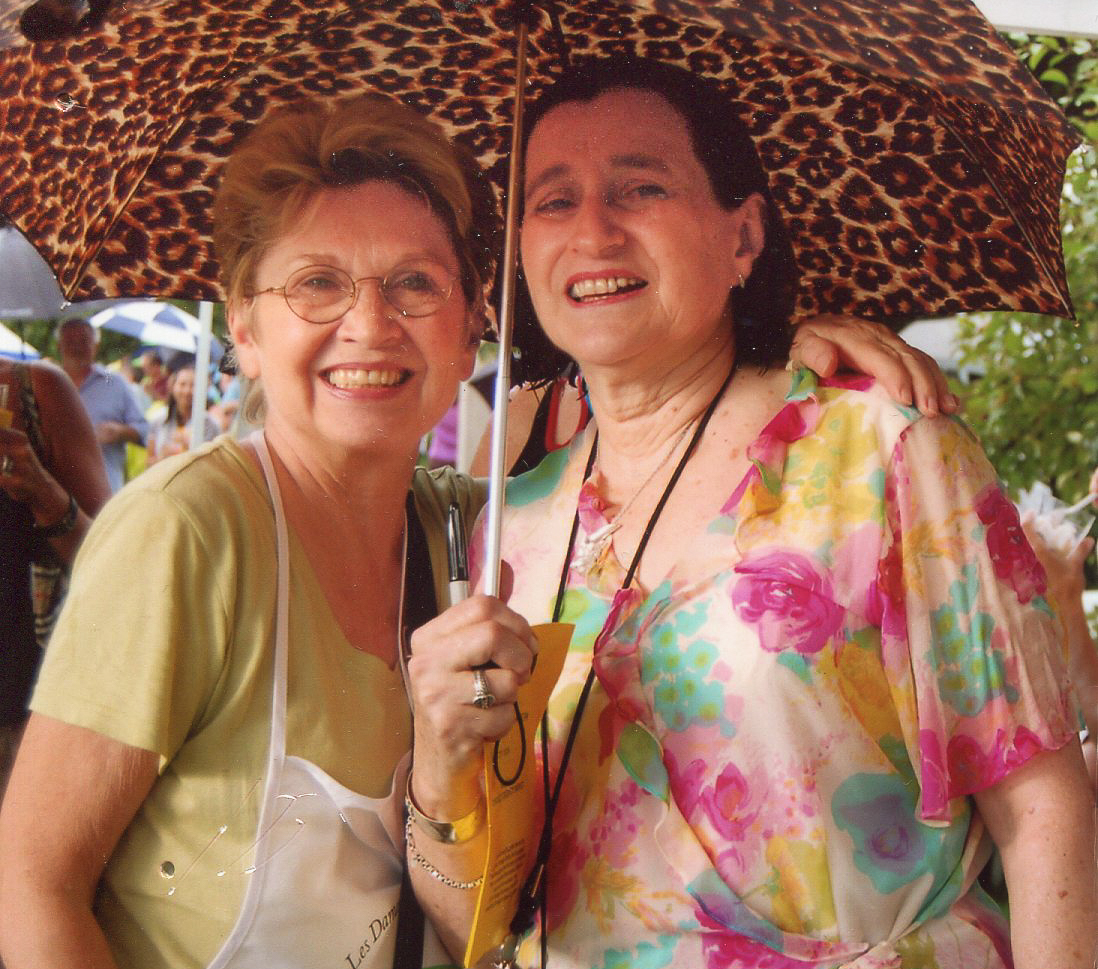
Barbara & I at the Green City Market, Chicago

I recall getting home every night – usually a few minutes later than I hoped – and whipping together a meal in a markedly different way than the leisurely cooking I enjoyed before I opened my stores and restaurants.  Fortunately, Convito was already offering a lot of great take-out options which I often used to give me a head start on making the family dinner. Both Barbara and I missed those days when we had time to add a pretty vase of seasonal flowers to the table or to bake a pie instead of buying something for dessert, but we were both so energized by our careers that the occasional loss of a relaxing cooking experience was a cost we sometimes had to pay.

On the other hand, our relationship to food prior to our careers could not have been more different.  Barbara is the mother to six children and always embraced the same European-style embrace of dining and drinking that she grew up with.  A third-generation member of the world-renowned House of Glunz, Barbara grew up in a small second floor apartment above her family’s business in the historical building at 1206 North Wells.  When she tells stories about the sophistication and volume of food that came out of their four-burner, single-oven, six-by-ten foot kitchen with only enough counter space for a toaster, a Mixmaster and a blender, I am not only impressed, but totally astonished.

I only had two kids and was raised in a home where we ate well, but where the process of cooking was much more utilitarian.  I initially adopted that same perspective on cooking when I started my family, but soon began to want to explore. I think the workaday relationship my parents had with food was very much responsible for creating an escalating fascination with – and envy of –  people who grew up with a more refined understanding of food.  So much so that when I eventually met Paolo Volpara and his mother Wanda Bottino – who as Italians epitomized the idea of culinary sophistication – I liked them so much we all became partners in my first business in the early 80s.

One of my favorite childhood Barbara stories is the one where her Auntie Bee taught a seven-year-old Barbara how to make a braided coffee cake.  It turned out beautifully and since her Auntie Bee could tell how proud Barbara was of her first culinary creation, she let her take it home.  She was so proud that instead of sharing it with the family she hid it in her drawer!  I wonder what it was like going to sleep with that delicious coffee cake right next to her. Did she nibble on it in the middle of the night?  Did she bring pieces to school with her?  Did she leave her glorious creation untouched?  Barbara says she doesn’t remember, but I think she might be keeping it her little secret.

All her aunts were superb cooks and traditional German food was a major part of their lives. Peasant food like Sauerbraten, Hasenpfeffer and Kidney Stew were part of their everyday meals.  Even as a young woman, Barbara could cook all those dishes, but she wanted to expand her repertoire to include other cuisines and more complicated dishes.

Dinner parties became a great excuse for Barbara to experiment and she entertained guests frequently, a tradition well established by her parents and one that continues with her children.  In the 60’s and 70’s, parties for 30 or more were frequent events.  She also loved to explore different pairings of food and wine and was not afraid of serving a dish that she had never cooked before or an untested bottle of wine.  It was fun and it was a challenge.
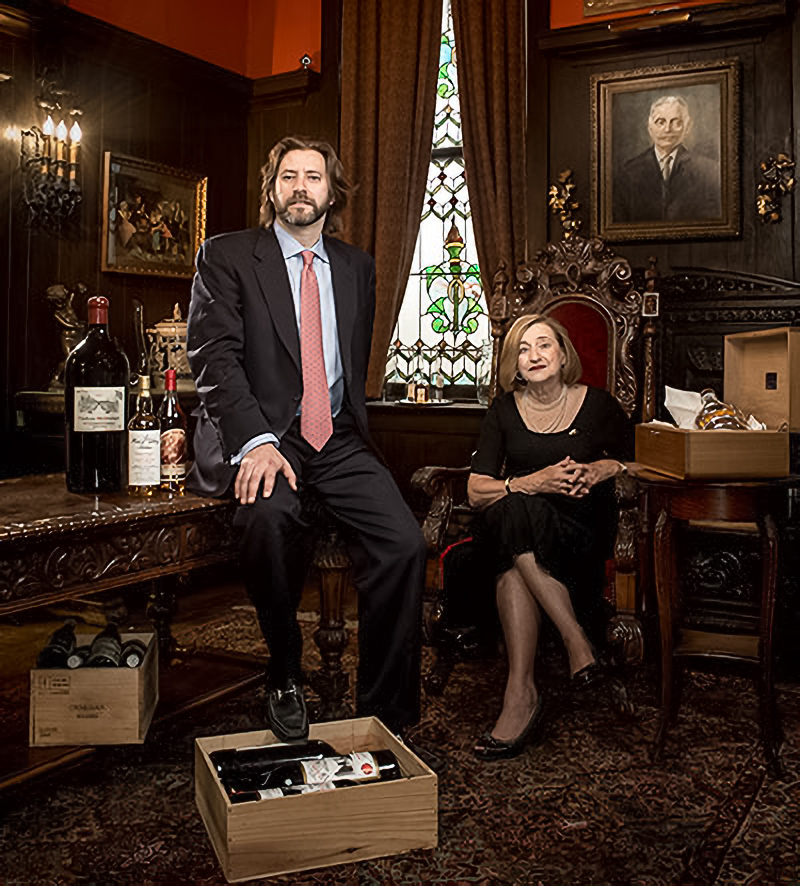
Barbara with partner and son Christopher Donovan

The notable legacy of The House of Glunz began in 1888 when Barbara’s great-grandfather Louis Glunz journeyed from Westphalia, Germany to what is now known as the Old Town neighborhood of Chicago.  The business began with a focus on German imports, but today their highly curated inventory includes wines from across the globe and offers a continually evolving collection that ranges from simple (but delicious) table wines to the rarest of wines and spirits held in their extraordinary private cellar.  Barbara took over the reins of the family business from her mother in 1989.  By that time, she was already a seasoned wine expert given her upbringing as part of Chicago’s oldest and finest wine and spirits shop.

It was shortly after she took over the business that I got to know Barbara.  I was lucky enough to attend some Glunz events and tastings  which were always delightfully informative, respectful of the audience and offered a tantalizing glimpse into the Glunz world of food and wine.  Barbara believed these events should showcase her family’s passion and deep knowledge of food and wine, but also remain intimate and welcoming.  That is certainly how I see Barbara’s outlook on life in general, and is a key reason why I have always loved spending time with her.

When I ask anyone to be a part of this blog, I generally like to interview the person to better understand not only their style of cooking, but also their upbringing and how they got to be where they are today.  When I asked this of Barbara there was a long silence over the phone.  Looking back on that conversation I can only imagine Barbara’s consternation at the thought of summing up three generations of knowledge and experience in one short conversation.  And I can only laugh at the images she had in her head about the recipe she would select after most likely first reviewing the myriad of dishes she had already prepared for her family and friends and then, of course the thought of paging through the many cookbooks of well stained recipes that also she would want to review.  The thought of all this reviewing must have blown her mind.
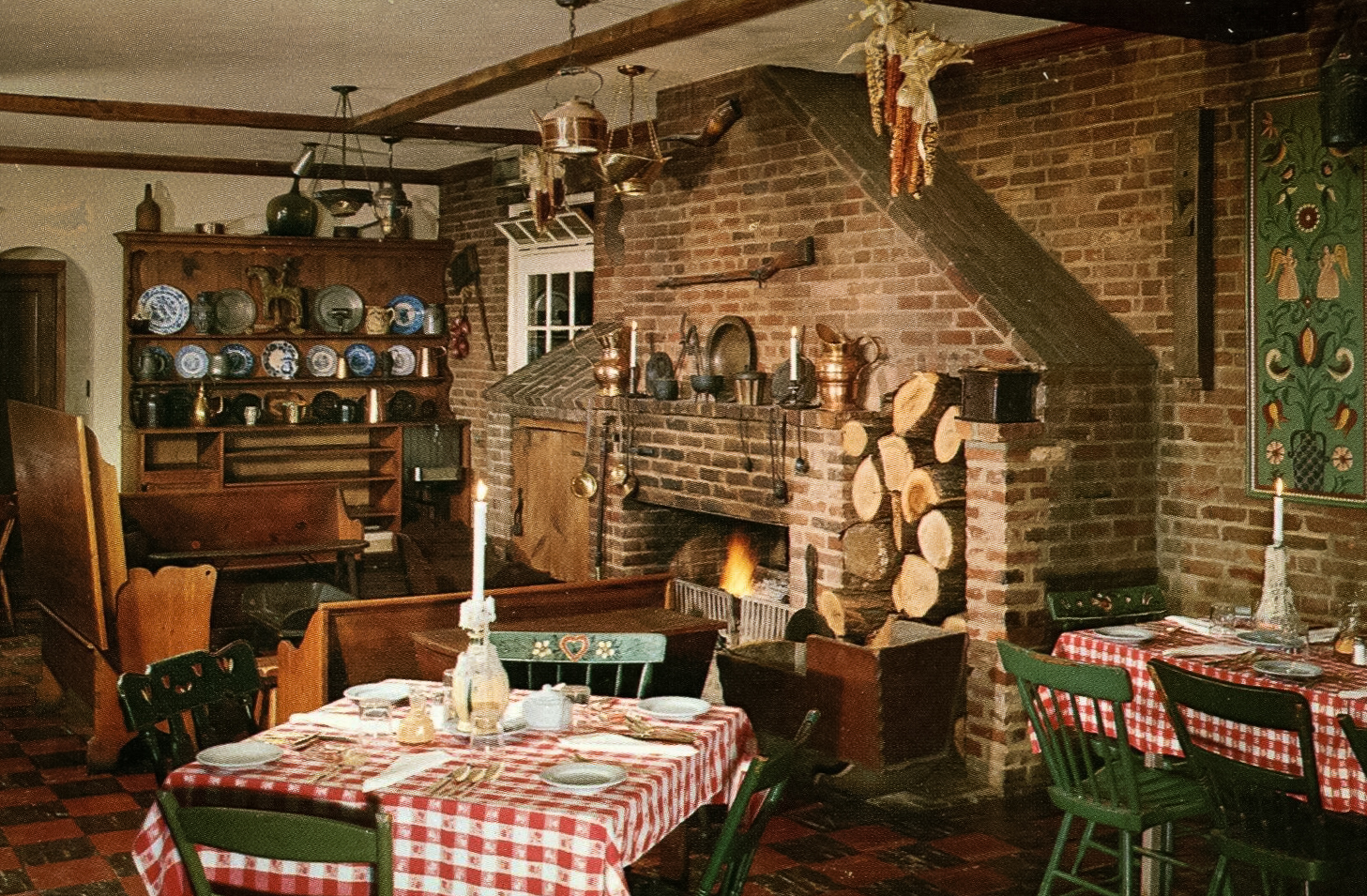
Water Gate Inn, circa 1970

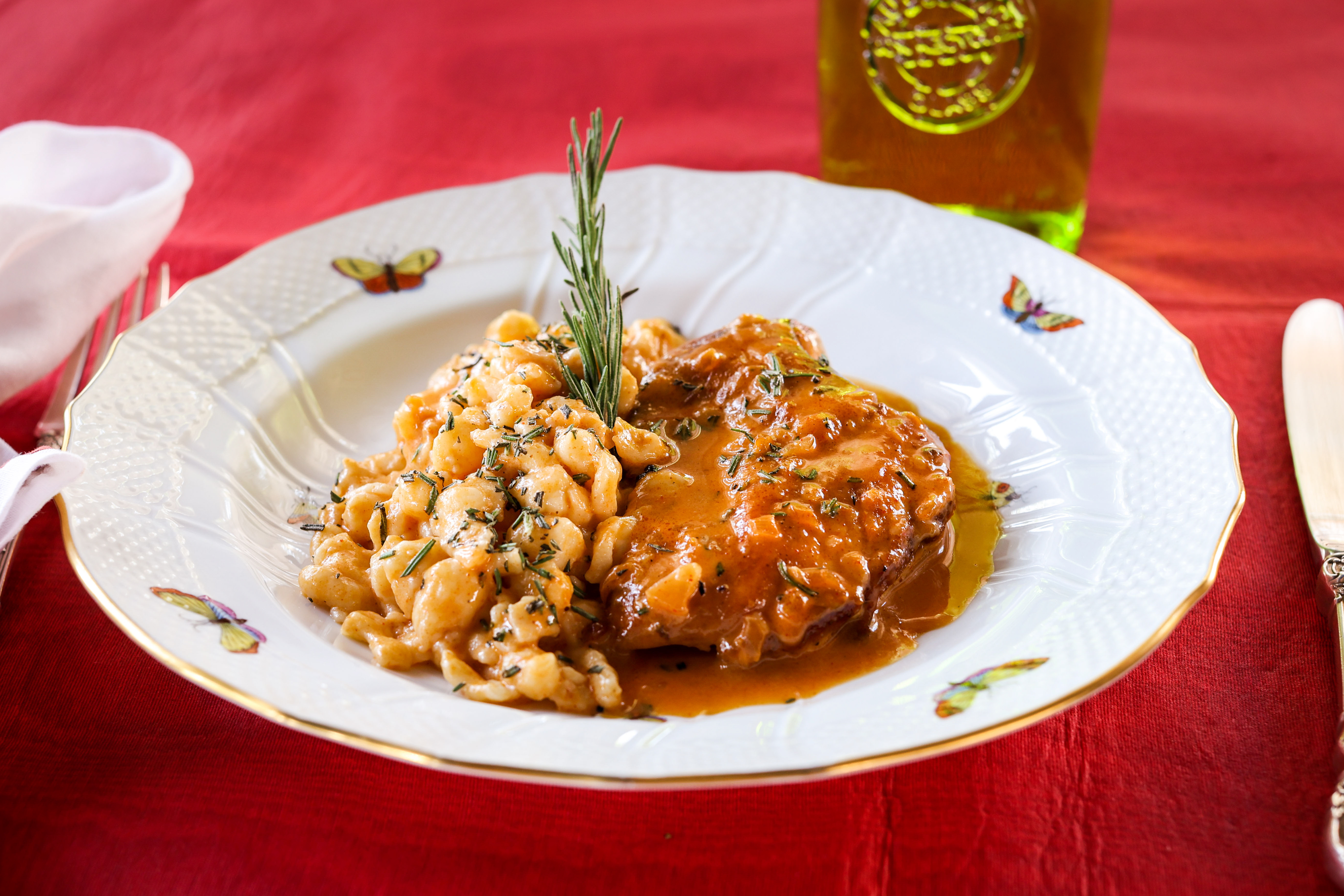
This dish Barbara settled on was one she had enjoyed many times at the famous Water Gate Inn (not to be confused with the infamous Watergate Hotel which was later built next-door) when she was attending college in Washington D.C. Located in a picturesque spot along the Potomac River, the Water Gate Inn was Barbara’s special occasion restaurant.  The Pennsylvania Dutch interior of this fabled restaurant is a masterpiece of Early American decoration and Barbara remembers being mesmerized by it.  Whenever she went there, she ordered the Mennonite Chicken which had becomeher special occasion dish.  The Inn is no longer there (the Kennedy Center was constructed on the site in the late 60s), but Barbara continues to make her version of it as a way to revisit that special place.


© rob warner photography 2024

Mennonite Chicken Baked in Sour Cream
(2 servings)

¼ cup of butter
¼ cup all-purpose flour
1 tsp salt
Dash pepper
2.5 pound ready-to-cook (semi-boneless) broiler-fryer chicken, split in half
Paprika
3 tbsp water
1 tbsp all-purpose flour
¼ tsp salt
Black pepper
Paprika
½ cup sour cream


Preheat oven to 325 degrees.

Melt butter in shallow baking pan or oven-going skillet. Combine ¼ cup flour, salt, and dash pepper and roll chicken in mixture until coated.  Dip coated chicken in melted butter and arrange skin side up in the baking pan.  Sprinkle with paprika.  Bake for 1 ¼ hours or until chicken is tender and nicely browned.  Remove chicken from pan; cover to keep warm.

Add water to pan drippings and mix well. Blend in 1 tablespoon flour, ¼ teaspoon salt, a dash each of pepper and paprika, and ½ cup sour cream.  Bring to a boil, stirring constantly.  Remove from heat, drizzle over chicken and serve.

Barbara: I serve this with Kluski noodles which originating in Poland.  They are a chewy and versatile noodle and a staple of Eastern European cuisine. 


****************************************************************************


In Tuscany with Linda Calafiore (left) and Dorene Centioli-McTigue (right)

Dorene Centioli-McTigue

Dorene Centioli-McTigue is another close friend that I met through Les Dames d’Escoffier.  We are both past Presidents of the international arm of the organization (Les Dames d’Escoffier International or LDEI) and our shared leadership experience is something I believe has bonded us over the years.  In fact, I have featured three other Les Dames leaders in these peasant food chapters: Ann Yonkers, another president of the International Chapter; Barbara Glunz, Chicago Chapter President; and Jen Lamplough, also a Chicago Chapter President. These friendships are a testament to the influence that group has had on my life. Working with these remarkable, interesting and imminently capable women has easily been the most stimulating consequence of starting my own business, and it has granted me the rare opportunity to create adult friendships born of shared interest and achievement with bonds that have proven everlasting.


Ann Yonkers, Linda Calafiore, Nancy and Dorene in Tuscany


As I researched and wrote these Peasant Food chapters, I recognized commonalities and connections amongst all five Les Dames. We all came from families who have a strong connection to food. We all treasure our personal history and steadfastly honor the traditions of our families. And though I don’t quite have the immigrant pedigree or the multi-generational business experience that many of my friends do, I have tried to honor my own unique heritage and have sought to cultivate new traditions that I hope will be carried on when I am no longer here. Christmas is the penultimate example of how I like to mix family tradition and cultural heritage with my own ideas: how I set the table; which ceremonies I repeat year-to-year; how I think about gifting (bigger is better!); how I choose the day to unfold; how we welcome new participants; and…what I will serve for Christmas dinner.  And though some might see this meticulous planning as excessive, I find it absolutely invigorating!  When one of my grandkids comments on how beautiful my Christmas table is or how excited they are to open the presents I have so lovingly wrapped for them, it is a sign that these new traditions of mine might just endure.  And that makes all the difference!
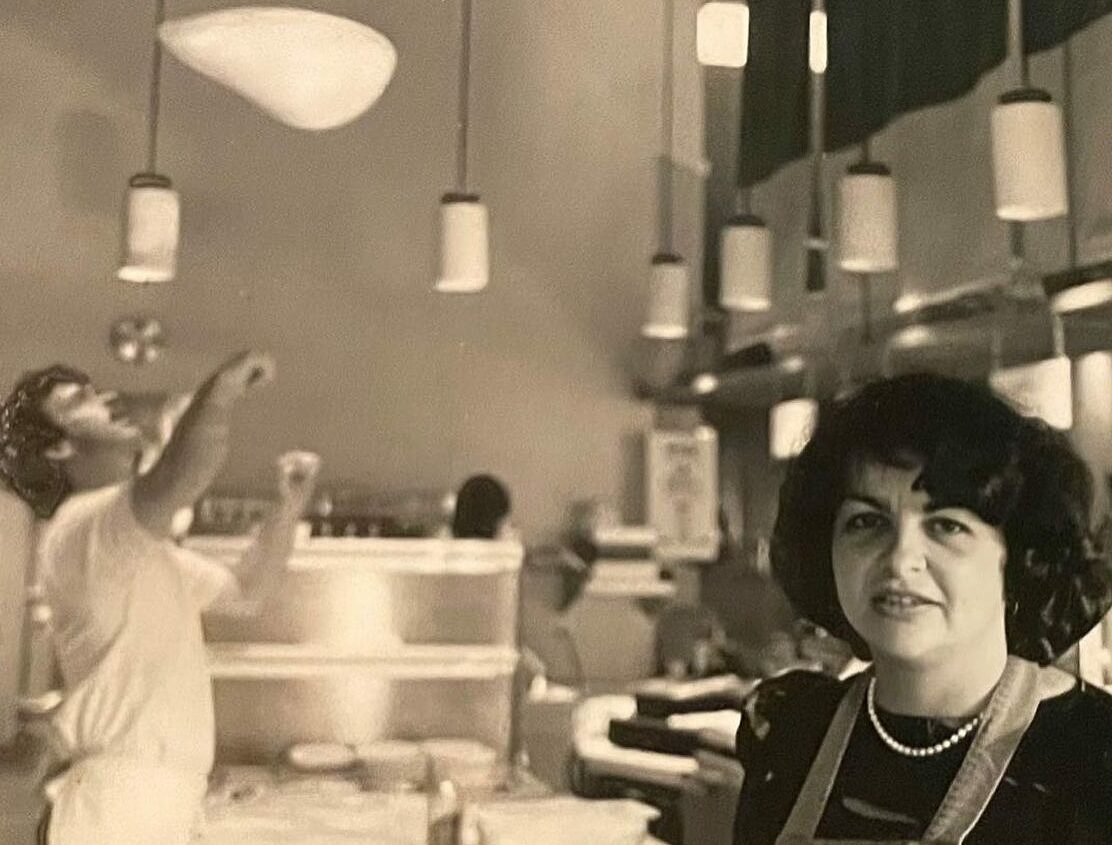


Christmas to Dorene’s family is equally important, where food, family and tradition rule the season.  Dorene grew up in a classic Italian family that embraced a close relationship with food, so it was inevitable that she would learn to cook at a very early age. Her first experiences came at the holidays where the whole family contributed to making Christmas cookies, even the kids.  Anyone knows even a little about Italian cookies will understand this was a very “hands-on” task.  Not only is there a lot of baking and decorating going on, but deep-fryers and pizzelle irons are usually involved. Nothing to take lightly.  These cookies are certainly more complicated than most of the Christmas cooking making I have experienced.
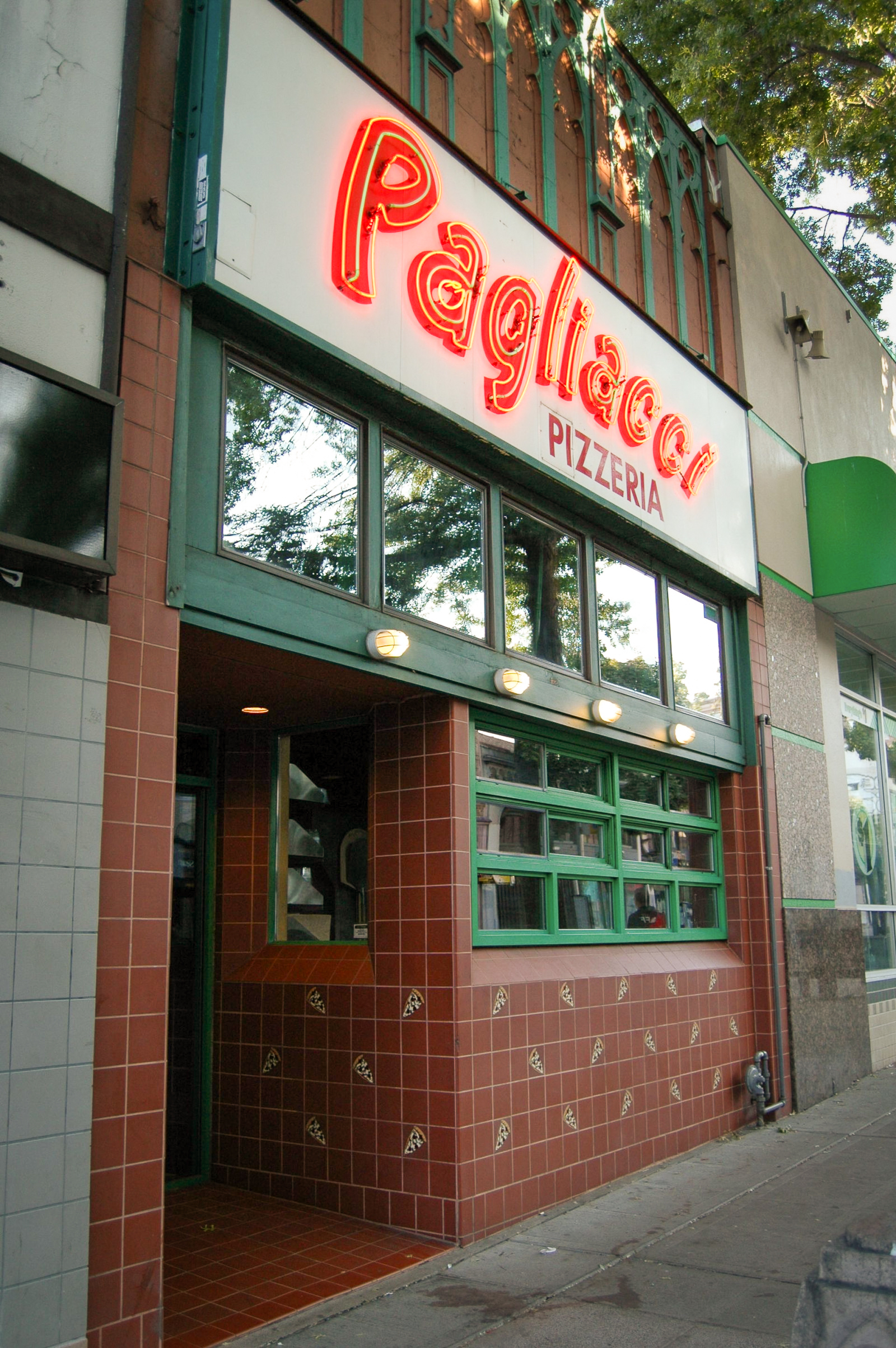
Dorene’s and her siblings – two sisters and one brother – are not only great cooks, but they are all committed to preserving the close family connections that they grew up.  My favorite example of that is the family pizza restaurant opened by her husband Terry, her bother Gerard, and her cousin Mickey in 1979 for the dual purpose of guaranteeing that they would have great pizza-by-the-slice nearby and that they would always have a place to hang out together. Not only did they achieve those goals, but they also grew their “clubhouse” into a very successful chain of restaurants in Seattle.  Dorene became a part of the pizza empire and was there throughout its expansion to 18 locations.  Eventually the business was sold but remains a Seattle institution with 26 locations across the region.

When I asked Dorene for a Peasant food recipe, she wanted to share a dish that her grandmother (on her mom’s side) always made during the holidays – Nonna JoJo’s Antipasto.  Nonna JoJo came to the U.S. from Calabria (the tip of southern Italy’s toe) in 1890 and settled in the Seattle area.  Though she passed on many years ago, Nonna’s spirit – and her antipasto – live on at the family’s ever-growing  Christmas Eve dinner.

Everyone looks forward to the Antipasto, which remains an evolving recipe.  Nonna JoJo built the dish around the vegetables she had grown and preserved over the that past summer, combined with the best of what was available in her local markets. Though Dorene doesn’t preserve her own fruits and vegetables, she is always looking for new ideas and year to year the recipe continues to change.  The antipasto is served on a bed of lettuce mixed with a drained can of tuna and about ¼ pound of shrimp salad.  It is also delicious as a spread on crostini.


© rob warner photography 2024

Nonna JoJo’s Antipasto


¼ cup olive oil
1 cup diced celery
1 ½ cups carrots, peeled and diced
4 cups cauliflower florets, sliced
2 cups sweet onions, diced
2 cups firm zucchini, diced
8 garlic cloves, peeled and diced
2 x 6-ounce cans tomato sauce
¼ cup tomato paste
1/3 cup drained capers
8-ounce jar picked onions, drained and rinsed
½ cup diced sweet pickles
¾ cup quartered kalamata olives
¾ cup pimento-stuffed green olives
4 ounces marinated artichoke hearts, quartered and undrained
½ cup red wine vinegar (more to taste)
¼ cup sugar (to taste)
1 small tin of anchovies, drained and chopped
1 cup chopped basil
½ chopped fresh parsley

Boil water in a Dutch oven or pot large enough to accommodate all the carrots, celery, and cauliflower.  Blanch the vegetables, drain and run under cool water to stop them for further cooking.

Dump water from Dutch oven and warm olive oil Add garlic, onions, and blanched vegetables, and braise for 5 minutes.  Add zucchini, cover, and steam for 3 minutes.  Mix in the tomato sauce, tomato paste, capers, pearl onions, sweet pickles, kalamata and green olives, artichoke hearts, vinegar, sugar, and anchovy fillets.  Cook for 10 minutes and taste.  Add more vinegar if needed.

Refrigerate for several days to allow the flavors to come together.  Stir once or twice during those days.

Note: This recipe makes a lot of antipasti, so the family fills canning jars with the leftovers then ties beautiful bows around the jars and gives them as wonderful holiday gifts for family and friends. 


Dorene’s sense of humor is yet another reason I love being around her.  During our recent interview she shared a story I think is both funny and very telling.

A few years ago when Dorene’s son Gabriele came to visit, the extended family gathered was at their aunt’s home to bid farewell to her niece who was heading off to college.  As they gathered around the car sharing hugs, jokes and some tears, Gabriele suddenly asked his mom “When are we going to eat?”  Dorene reminded him they were all there just to say goodbye to his cousin and with a mix of confusion, disappointment, and incredulity he replied “

But mom, we ALWAYS eat!”

That pretty much says it all about this warm and generous Italian family who brings way more than just food to the table. Their connection to each other, their commitment to sharing their legacy in the form of food and wine, and their unfailing comic timing is something to behold.  If you ever get a chance to sit at their table, you’ll find that the magical relationship with food is extraordinary.


****************************************************************************
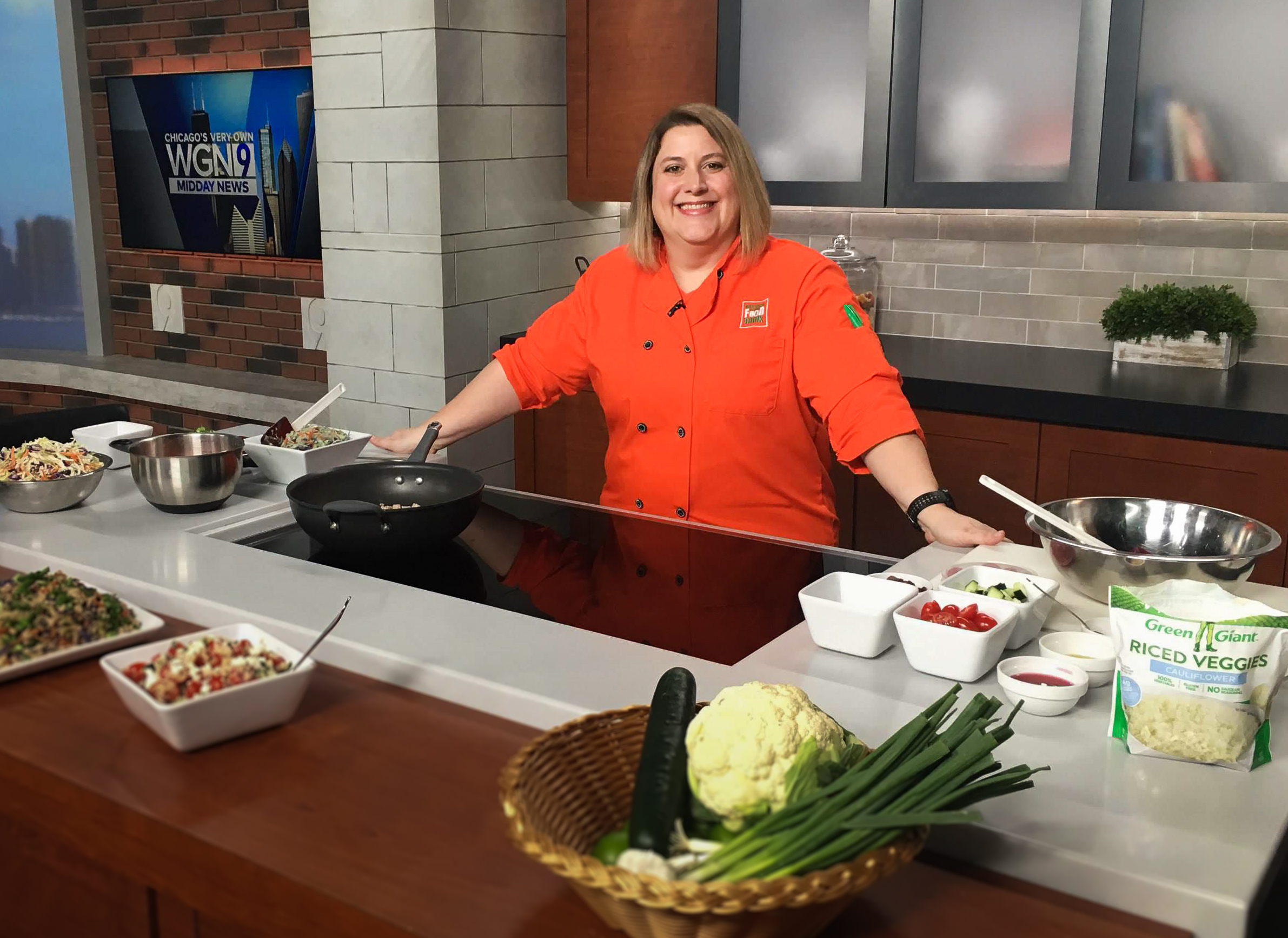
 

Jen Bucko Lamplough

Jen Bucko Lamplough – another veteran of Les Dames d’Escoffier, is not afraid to tell you that she has always had an aptitude for cooking.  She’s not bragging – in fact it’s quite the opposite – she is just disclosing a truth.  Even as a teenager it was instinctual for her to pick up a pan and make an impromptu (and delicious) dish for her family or her college roommates before settling into a night of study.  Perhaps it was as much about procrastinating schoolwork as it was about the joy of preparing a meal, but either way, an affinity for cooking came naturally to Jen.

But she wasn’t alone in this endeavor, everyone in her family is comfortable in the kitchen. Her parents bought a Dairy Queen franchise when Jen was in middle school, which exposed her to the equipment and skills needed to operate a commercial kitchen.  Her first self-assigned job was to learn how to make the perfect cold, creamy, chocolate-dipped DQ cone which – given the resulting reward – came easily.  Here at her family’s Dairy Queen was where she began to quench her lifelong thirst for knowledge, and where she recognized the importance of never waiting for solutions to be offered by others, but to take control of a situation herself.  I am sure this was the moment Jen became the unapologetically self-reliant person I know and love.

But Jen’s path to a life in food wasn’t a direct one.  She also loved writing, which led her to Bloomington, Indiana to pursue a bachelor’s degree in journalism at Indiana University.  After graduation, Jen came back home to Chicago and her path was redirected again. One evening while riding the L train home from work she took note of something she had seen hundreds of times before but never really processed: the entrance to the Cooking and Hospitality Institute of Chicago (CHIC) on Chicago’s near-north side close to where she lived.  But this time something was different, and she found herself getting off the train and heading toward to door.  Inside the school, she immediately felt at home, and in a matter of minutes found herself signing enrollment papers to begin her study at a professional cooking school.  Clearly it was meant to be.  It was here where she was formally taught proper kitchen technique, foundational cooking methods, the importance of excellent service, and the art of fine-dining management.  But Jen’s favorite part of her education here was her introduction to a myriad of international cuisines.

When I first met Jen, she was Chief Instructor of the Master’s program at Robert Morris University Institute of Culinary Arts in Chicago (where she earned her MBA) and was about to become President of the Les Dames Chicago Chapter.  As a former teacher, I was impressed with her academic approach to our industry, and we spent a lot of time getting to know each other and exchanging ideas.  My father was a high school history teacher and later the principal of the Janesville, Wisconsin Junior High, so academia felt comfortable to me.  But just as much, it was our shared sense of humor which drew us together.  Like me, she loves to laugh and we’ve spent many hours cracking each other up exchanging stories of our victories, our losses and our dogged endurance over our many years in the the restaurant business, as well reminiscing about the chronic melodrama we endured in the professional associations we were part of.
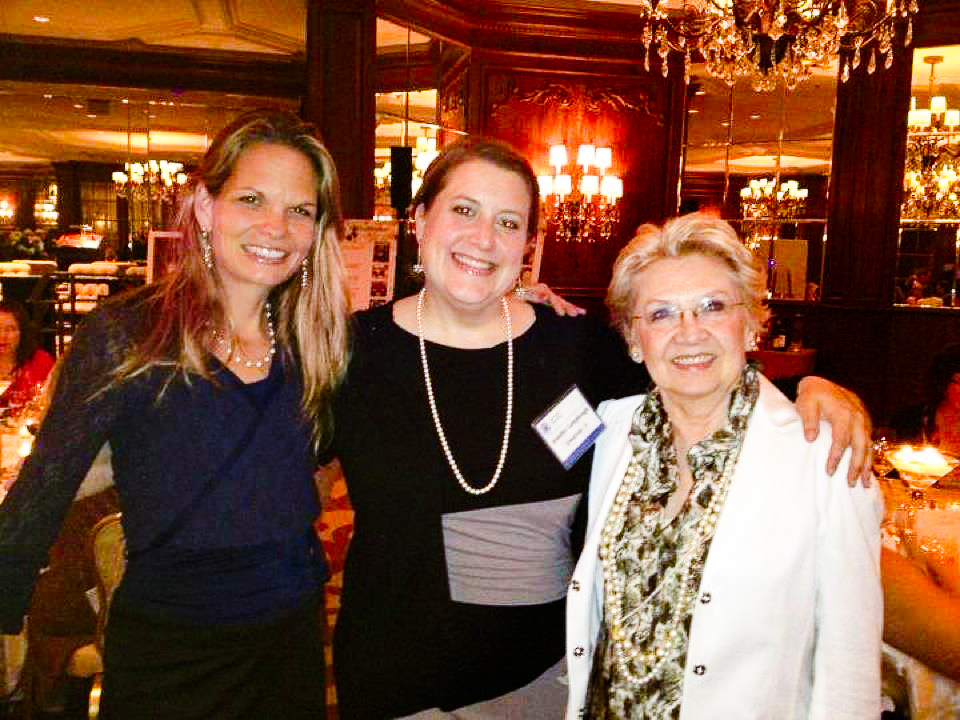
 

Jen and I with my daughter and business partner Candace Barocci Warner


Jen knows that humor can be an effective tool for communication and whether she is in front of a class or sitting across from you at a restaurant, there is always a twinkle in her eye and a deep contagious laugh which never fails to charm anyone who finds themselves in her orbit.

“How about duck & dumplings?!?”

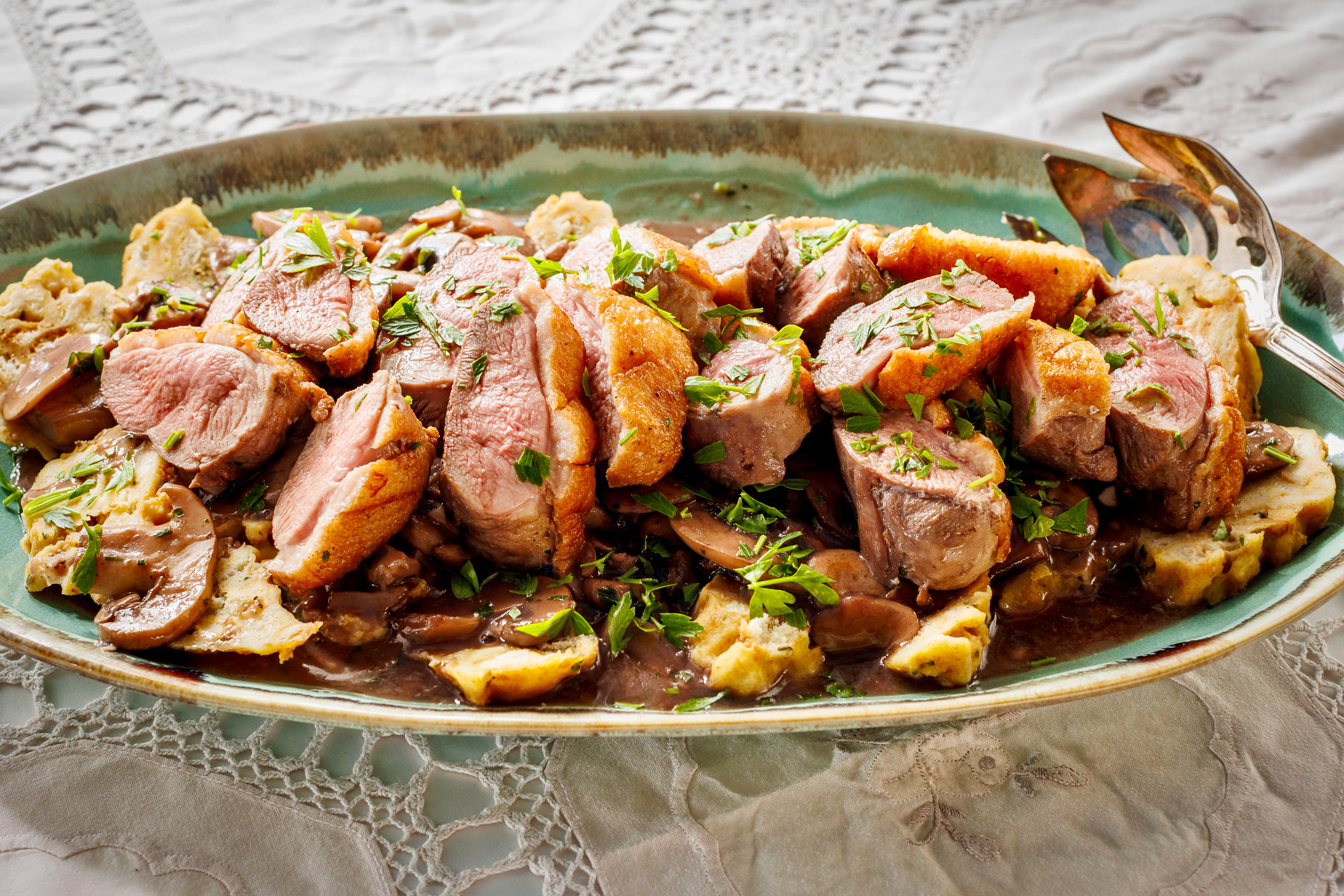
I had barely finished asking Jen if she would contribute something for my Peasant food chapter before she told me exactly what her contribution would be.  She went on to explain that it was one of her family’s favorite recipes ever since her father decided to pair a duck he had shot that morning with bohemian dumplings.  How intriguing, I thought. This was going to be the ultimate peasant dish: fresh game (originally prepared by the hunter himself) accompanied by fresh and local ingredients!

.
© rob warner photography 2024

Duck and Dumplings

Duck
4 skinless duck breasts
4 tablespoons butter
2 cloves garlic, minced
1 tablespoon sage, crushed
1 tablespoon parsley, chopped
Salt and freshly ground pepper to taste
2 cups Burgundy wine
1 can sliced button mushrooms with juice
1 teaspoon corn starch (optional)

Bohemian Dumplings
8 pieces of white toast
3 eggs
1 tablespoon chives
Salt and pepper to taste
All Purpose flour (see directions for amount)


Dumplings:
Toast bread and cut into ½ inch squares.

Beat eggs and mix in chives, salt & pepper.

Mix in a quarter cup of flour at a time until a sticky wallpaper paste consistency is reached.  Add the toast squares and mix well.

Make “hand-sized” dumplings and place in a pot of boiling, salted water for 10 minutes.

Remove from the water and place on a cookie sheet in a low heat oven until the outside of the dumpling is dry.

Slice the dumplings and serve with duck and gravy.


Duck:
Cut the duck breasts into 1-inch-thick-strips.  Add the butter to a large sauté pan over medium-high heat.  Sauté the duck until medium-rare.

Remove duck from pan, then add garlic, sage, parsley, salt & pepper.  Sauté for 1 minute then add the wine and let reduce by half.

Add the duck back in along with mushrooms and their juice.  Simmer for 15 minutes. You can thicken the gravy if needed by adding the corn starch to COLD water and spooning it in and bringing to a boil until desired thickness of the gravy is reached.
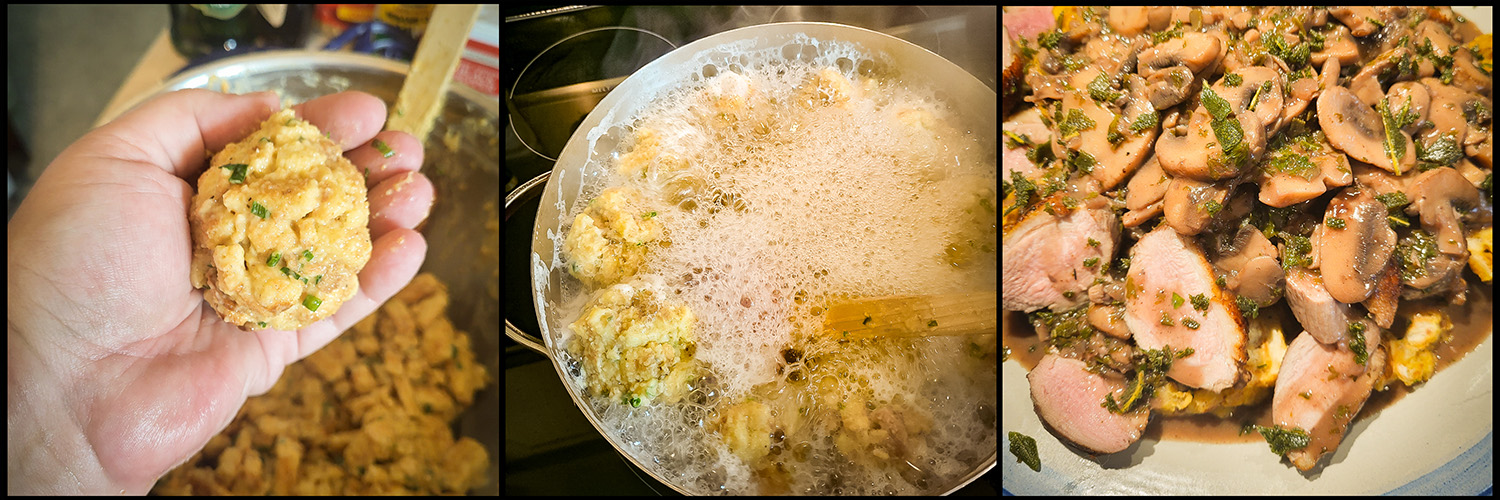
 

Note: Jen explained that cooking this dish has evolved over the years. No longer does the chef need to shoot the duck, which reduces the concern over digging out the buckshot before preparing or eating the duck!


Jen’s perpetual quest for new experiences eventually led her to join the Northern Illinois Food Bank in 2015 where she has been the Director of Nutrition Programs, Executive Chef, Senior Director of Strategy and is today the Chief Impact Officer.  Through a network of agencies and programs coordinated by the NIFB, she and her team are able to ensure that everyone in the community receives the food and support that they need to thrive .

She was beginning to recognize the connection between fresh heathy food and working people who often cannot afford it and have no access to it. There was one moment in particular that really crystalized her understanding of that problem. While teaching at Robert Morris University, she had concerns about a student who seemed disinterested in her lectures and disengaged from class projects.  One day when she brought in some particularly delicious produce to discuss then cook and eat, this student’s indifference finally got to her.  She decided to confront him.  “Why did you enroll in this class” she asked him? “What is it that you think you will get out of a class like this?”  His response was a surprise.

“Um..I joined so I could eat.  This class has given me access to food and taught me how to cook it – so now I can actually eat.”

This was Jen’s eureka moment.  The fact that this student had to enroll in school to get access to real food was distressing and became the catalyst which would change the course of her career.  Almost immediately, she shifted focus from fine dining to helping improve the ways we help provide sustenance to those in need.  She now spends her time running her amazing food pantries, soup kitchens, shelters and work programs so they can serve the community by providing both food and education to people hungry for both.


A young Jen in the family kitchen


****************************************************************************


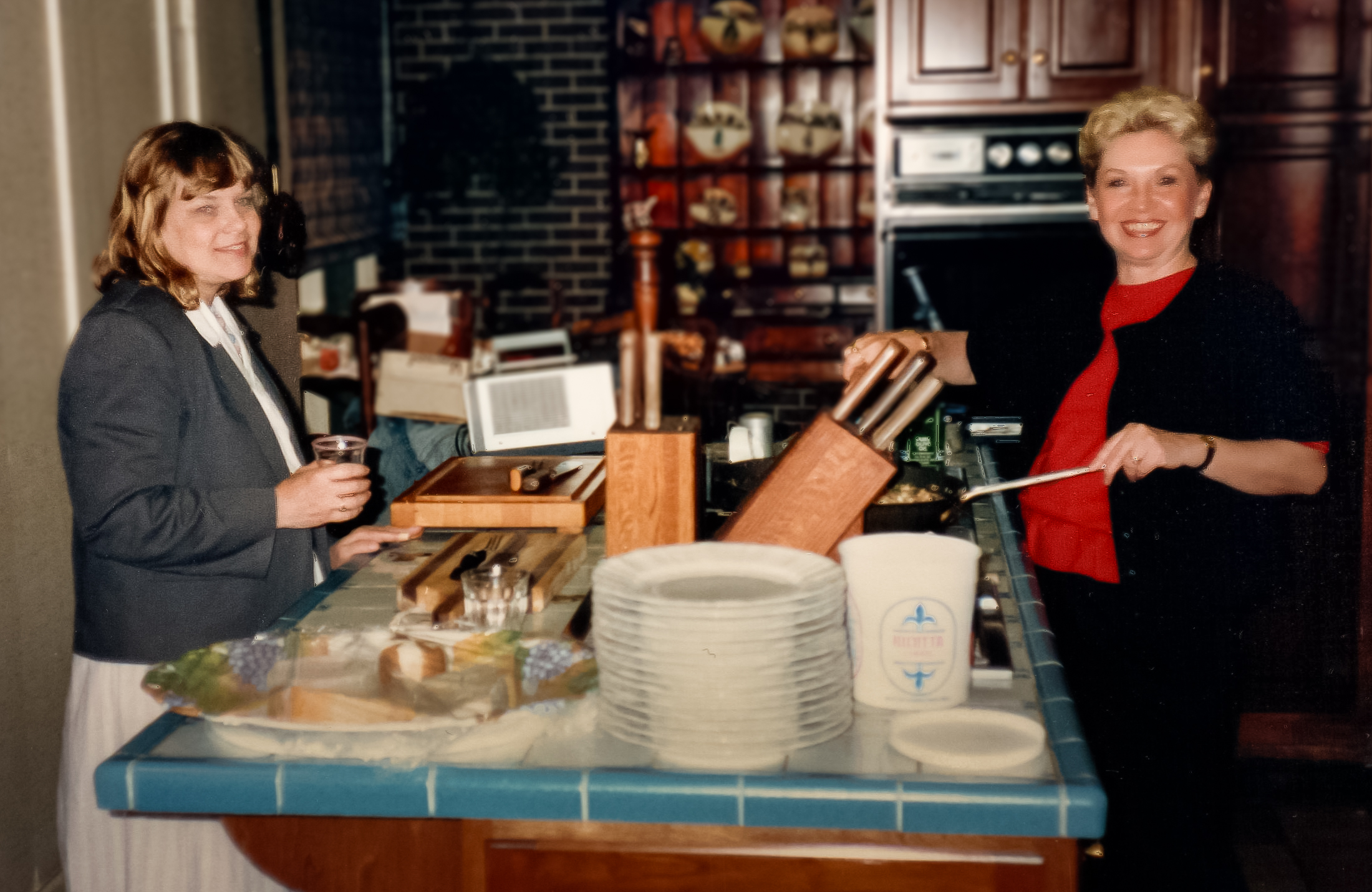
I never quite know where this blog will take me, and these last two chapters have delivered recipes, stories, and ideas than I never expected. It has been a privilege learning more about these amazing ladies (and now ambassadors of Peasant Food) through their wonderful recipes, their intellectual curiosity, their love of family, and their commitment to social change.  Each of them are fascinating and unique people whose culinary sensibilities and perspective on life have been a joy to explore. But most of all it has been such fun to research, cook, and – yes eat – their food.  These are my kinds of women and my kinds of meals!
 

Posted in Uncategorized | Leave a comment

Collaborations and Inspirations: Peasant Food

The decision to embark on the new Collaborations and Inspirations chapters of this blog was driven to a great degree by my desire to spend a little time away from my own journey and instead focus on people who have inspired me. This chapter on peasant food features friends and family who all share a knack for taking the humblest of ingredients and turning them into something utterly delicious. Some of these recipes have been passed down over the years as family favorites, some are signature dishes representative of a particular locale, and others are recent creations. In either case, they have been lovingly cooked by some of my favorite people.

Peasant Food has a rich history of using both scraps from the animals being butchered and other locally available ingredients. Beans are grown all over the world, ands you will find them in several of my recipes since they are an affordable and reliable protein source for peasants globally and a symbol of rustic simplicity.

The difference between the Peasant food dishes in this blog and their originals is that these recipes were not made out of necessity, but instead developed as a nostalgic tribute to kitchens and dining rooms where they were originally served. For instance, the Shepherd’s Pie recipe was originally created by a peasant housewife using every resource she had to feed her family, whereas my version exists to just be delicious!

It has amazed me that by simply combining a number of simple, accessible, inexpensive ingredients, transferring them into a pot and cooking them over slow simmering heat for whatever time is required, that it is possible to produce these one-dish meals that have fondly become known as Peasant Food.


***************************************************************

Monica Radvany Barocci

Monica with grandson Luca

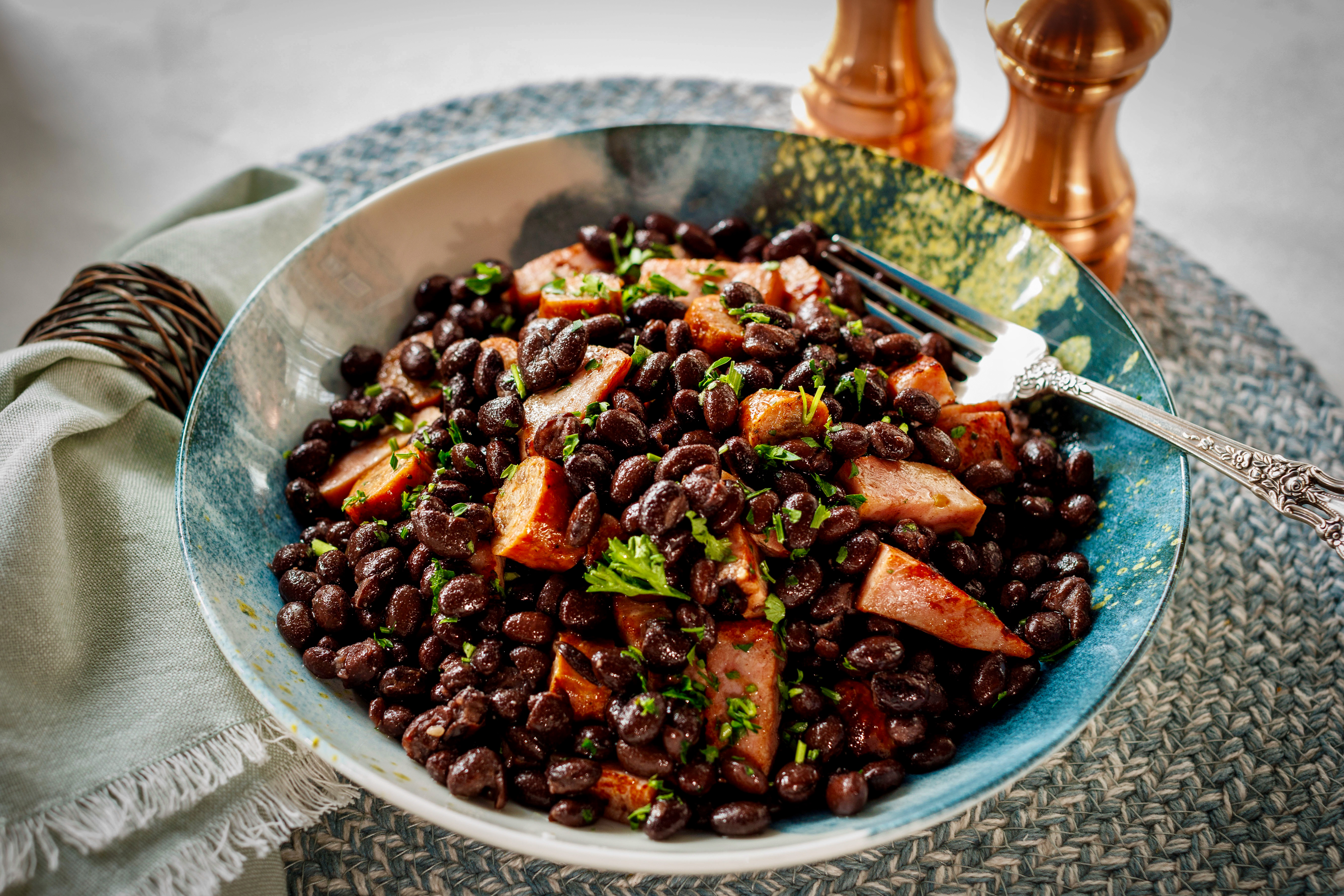
The very first time I tasted my former sister-in-law, now friend, Monica Radvany Barocci’s Feijoada, I had no idea it was her version of Brazil’s national dish. I just knew that it was incredibly delicious. It wasn’t until I decided to write this blog and began researching peasant food dishes, that I realized that wonderful, black bean and pork stew that I had so enjoyed at Monica’s home in Boston so many years ago was one of the world’s iconic dishes. Clearly its roots were in peasant food since it had all the markings – inexpensive ingredients, locally available ingredients, a one dish meal, and most importantly it was incredibly flavorful.

Once I recognized this, I immediately called Monica in hopes that she would share her version of this recipe, and that we could talk about her distinctive cooking style which had impressed me since we first met decades ago. What I was most curious about was how a young woman who had grown up in a household where meals were handled not by her mother, but by cooks employed by the family, would end up being such an instinctively talented cook.

When I asked her about this, Monica laughed and admitted she really didn’t know exactly how she learned to cook. She did know that it was not from reading cookbooks, since to this day she has no interest in making food based on written recipes (which ended up making this blog section slightly more challenging!) She guessed that simply being around a kitchen every day and watching various Brazilian cooks create meal after meal with skill and ease must have been the key factor. Amazing I thought. There was no way I could watch a person cook and then store all those details in my head and recreate that same meal at another place, another time. At the very least, I’d have to record measurements and steps along the way. But I suppose the fact that Monica also speaks five languages fluently suggests she possesses a distinctive intellect which must also allow her an intuitive ability to create amazing food in ways unique to her.

She also claimed to have had a little hands-on experience on her path to becoming a good cook. That began when she moved to the U.S. in 1970 with her first husband who was completing his residency in Boston. Shortly after she arrived, a friend asked her if she would consider replacing the lunch chef at his fraternity who had abruptly abandoned his position with no notice at all. They needed to replace him immediately. “But I don’t cook – I don’t even know how to cook,” Monica answered. “It’s only opening cans of Campbell’s soup and heating them up. There’s nothing to it,” her friend explained. Somehow this argument convinced Monica to at least give it a try. She needed the money and always liked a challenge.

Of course, being a fraternity lunch chef turned out to be way more than just opening cans of soup, but she survived and quickly began to realize how much she actually enjoyed creating food in the kitchen. She stayed in that job until she was accepted into Boston University’s School of Economics, but left with the new-found knowledge that she really could cook and to her surprise, enjoyed the experimentation along the way. Reflecting back on this period of time, she did have to smile when she thought about some of the “exotic” concoctions she had provided those naive fraternity boys in her lunch chef position.


Monica and I in Boston

Feijoada was one of the first things Monica cooked when she began preparing meals for her family and it became a weekly menu item almost immediately. Monica had a fascinating life as a girl and young woman – she was born in Austria and lived there until she was seven, spent a brief time in Casablanca, and then relocated to Brazil where she lived until 1970 – I knew her head had to be filled with a whole myriad of flavors (way more than just Brazilian) that she had tasted through the years. Mix into that combination, her parent’s Hungarian roots with all their marvelous use of spices (paprika being the most notable) it was inevitable that someone with that many influences would produce great and most interesting food.

And Feijoada was certainly one of those interesting dishes. The most frequently told legend about the origins of this dish claims that it was created out of necessity by Brazilian slaves who combined beans with scraps of the pigs that their masters slaughtered for other meals. And though the name Feijoada is derived from feijoa – “bean” in Portuguese – I believe it is the variety of meats that makes this dish special. At one time or another, Monica has used everything from ham hocks to bacon to pork shoulder to chorizo, but no matter how many or what kind of meat is in the spotlight, it is always the beans that remain the main ingredient.

But you can also find recipes using no meat at all. As Monica points out, the way the beans are cooked is really the real key to Feijoada – “Not too soft, not too hard”.

© rob warner photography 2024

Feijoada
Brazilian Black Bean Stew

3 cups dry black beans, soaked overnight
1 ham hock
1 smoked sausage (like linguica or kielbasa), browned then sliced into ¼” coins
2 beef bouillon cubes
3 bay leaves
3 cloves garlic, chopped
Salt & freshly ground pepper to taste
Olive oil

In large pot or Dutch oven, place-soaked beans, and enough water to cover beans by 3 inches. Bring to a boil, then reduce heat to medium-high and simmer uncovered for 30 minutes (if beans seem to be drying out add warm water as needed to keep them under water)

Remove beans from heat. Strain and discard water.

Remove 1 cup of beans and set aside.

Return the rest of the beans to the Dutch Oven. Add the ham hock and other meats. Add the same amount of water as you did the first time along with 3 bay leaves. Cover and cook on medium- high heat for 2 hours until tender. (Beans should maintain a low, steady simmer)

While beans are cooking, sauté garlic in olive oil in a large frying pan. With a ricer or mashing tool make a paste out of the reserved cup of beans and add to sautéed garlic. Mix well then remove from the heat.

When beans cooking with the meat are tender, uncover the pan and continue to cook for another 20 minutes to allow some of the liquid to evaporate.

Add 2 cubes beef bouillon and freshly ground pepper. Combine well.

Combine beans and meat with the bean paste and garlic mixture.

Season for salt & pepper and serve with white rice

Notes:
1 cup dried beans will make about 3 cups cooked.


***************************************************************

Karen Brussat Butler

My sister Karen comes to cooking through a more traditional path than Monica. Like many young girls, she began baking cookies in our mother’s kitchen when she was about ten years old. Cookies quickly gave way to pies about the same time that her prodigious skills as an artist came into view. Karen’s pies always looked as if they were waiting for a Bon Appetit photographer to pop out from around the corner to snap a shot for the magazine’s cover. That artistry continues to be a signature of her cooking.

When Karen was a new mother her experience as a baker in our childhood home allowed her to be comfortable in the kitchen and it was there where she taught herself everything else. She used cookbooks and recipe cards swapped with friends and family as her resources and she was always on the lookout for dishes that would please her kids like mac ‘n cheese, a classic “kid-meal” from the 1940s through today. More exotic fare came as her children grew up and she had time to prepare for more complicated events like cocktail or dinner parties.

When I thought of Karen for this blog, there was no question what dish I wanted her to cook. It is something she still makes and is one of the best-known and most beloved peasant food dishes on everyone’s list.

Jambalaya is a dish that was destined to be a part of Karen’s cooking repertoire from the beginning of her marriage. Her husband’s family had strong connections to New Orleans that began when her father-in-law, Graham would travel there on business as a part of his Parker Pen sales territory. Graham immediately fell in love with the city – especially the food and the music – and he quickly passed that love onto his son Jeff. Jeff remembers one particular incident when he was still in his pre-teens that influenced him greatly. One night when his dad was away on a work trip the phone rang in the Butler home around the time they would often hear from their father. But this night when his mom picked up the phone a cacophony of music came blaring through the phone. Graham was in the French Quarter listening to Dixieland Jazz and became so enthralled by the moment that he called home from the pay phone at the back of the club and held the handset in the air so his family back in Janesville could share his joy. Now how could a son not be impressed and profoundly influenced by that kind of fatherly enthusiasm?!

Karen and Jeff in NOLA

Jeff began traveling to New Orleans early in their marriage as a part of his own business obligations, but he and my sister quickly made it their city of choice for weekend get-aways. In the eighties Karen’s watercolor artwork found its way into two of the city’s vibrant art galleries, so visiting the city to “check up on everything” became a frequent excuse for them to go for a brief visit.

They quickly became as enamored as Graham – if not more so – with the food and the music of this unique city, and they ventured deeper and deeper into the music scene of the city where Cajun, Zydeco and R&B was everywhere. They also embraced the city’s wide variety of famous food like gumbo, po’boys and a delicious oyster dish called Oysters Bienville which is a traditional dish of baked oysters in a shrimp sauce. This mix of Cajun and Creole cultures has produced many of the city’s distinct and delicious dishes – more than any other American City I can think of.

Karen was also profoundly inspired by the blend of people they found in NOLA. The diversity of the city was – and is – astonishing, and it seemed to her like everyone looked and sounded totally unique. The energy of all these people set New Orleans apart for her and being there reminded Karen of many Europe cities where you could share your enthusiasm about the food you had just eaten with a stranger sitting at the table next to you, or discuss the fabulous museum you had just toured with your cab driver who was already recommending the next restaurant you should try (or talking about his grandmother’s great Sunday Supper recipe). New Orleans remains a distinctively intimate city where people wear their passions on their sleeve so much so that you can almost feel the spiciness in the air.

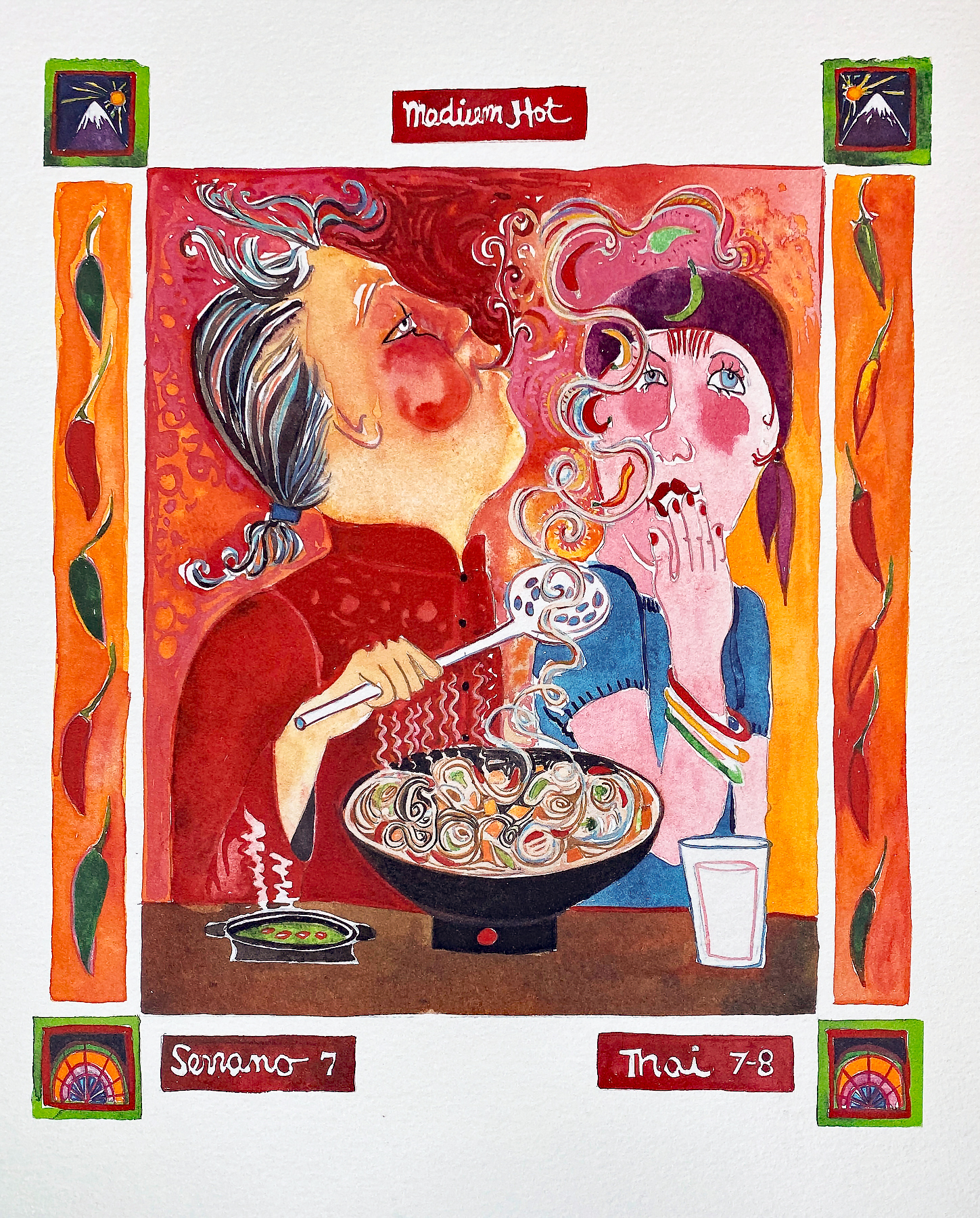
“Spice of the Party” by Karen Brussat Butler

That inspiration led Karen to create a series of Giclée Prints (a fine art print created by using a specialized high resolution inkjet printer) for the “Hot and Spicy” food show in New Orleans in the nineties. There were 6 prints of 6 different peppers from mild to extra hot with a story about the pepper and where it was grown. Of course, peppers are a ubiquitous ingredient in New Orlean’s cuisine and Jambalaya is just one of the many dishes that contains them. Jambalaya has remained Karen’s favorite New Orlean’s dish.

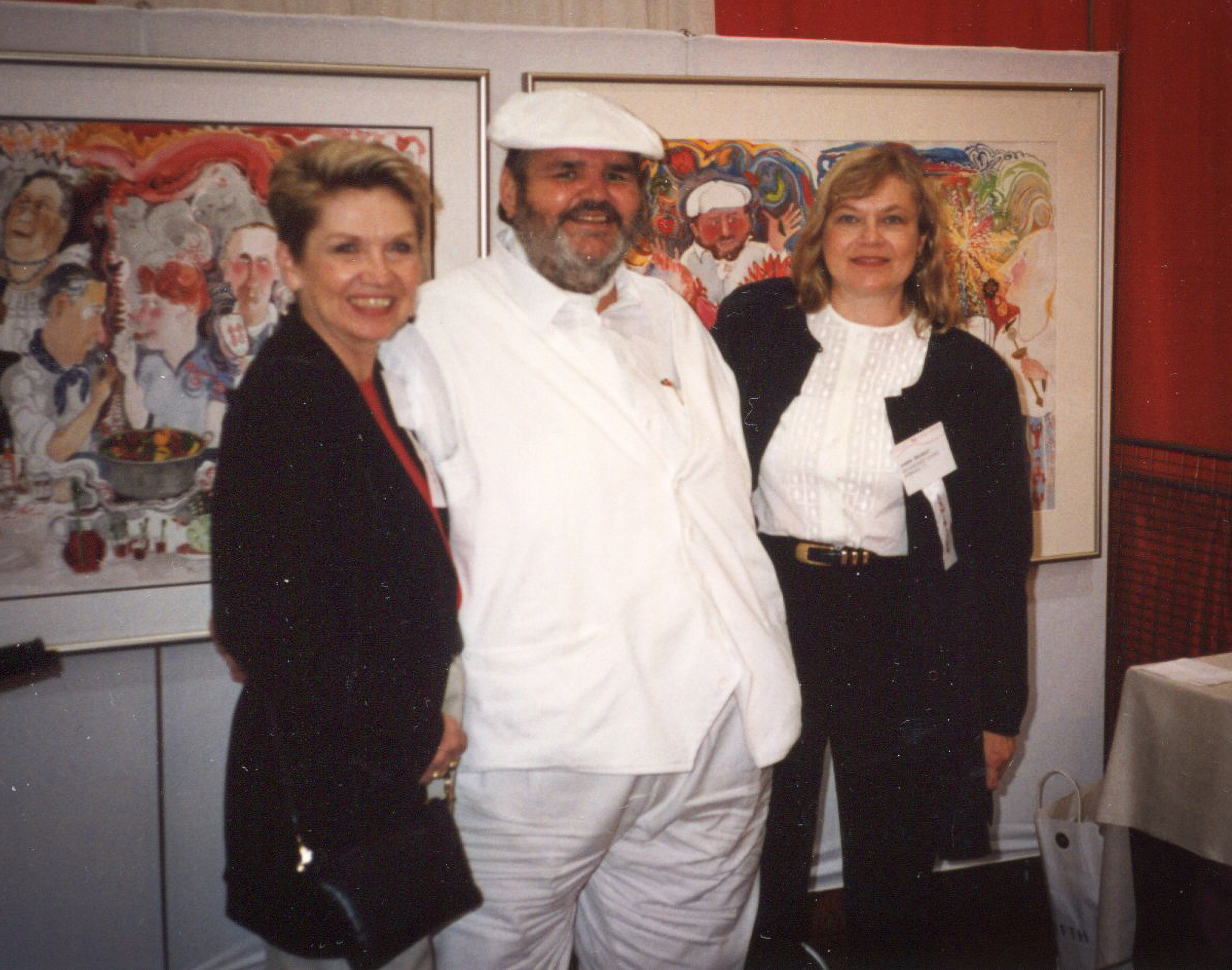
Karen and I with Paul Prudhomme

Paul Prudhomme, one of the city’s most famous citizens, was in the center of one of her paintings entitled “Spice of the Party”. Karen had used his Magic Blend Seasonings before meeting him in New Orleans, but they just became tastier and much more meaningful after meeting him. He was a magic kind of guy. I had been lucky enough to work with him as a part of the American Airlines Chefs Conclave (a group of 15 chefs from across America who were food consultants for the airline) and I always looked forward to spending time with a man so passionately committed to creating extraordinary food.

“Medium to Hot” by Karen Brussat Butler

Legend has it that Jambalaya originated in the French Quarter and was probably a local variation of Paella, the famous Spanish rice dish. Though its true identity is unknown, Jambalaya has been a part of New Orleans cuisine for hundreds of years and combines influences from the many cultures that settled there including African, Spanish, French, Native American and Caribbean. Whatever its origins, there is no disputing that it is one of the most interesting and flavorful of all peasant dishes.

© rob warner photography 2024

Jambalaya

4 x large chicken breasts
2 x 28 oz cans whole tomatoes in water
1 x 16 oz can of tomato sauce
2 cups chicken stock
1 pound sweet Italian sausages (browned then cut into ¼” coins)
Low salt ham steak (browned in hot pan, then cut into 1” pieces)
3 ½ cups chopped onions
1 teaspoon garlic, minced
1 ½ cup green pepper, chopped
Paul Prudhomme’s Poultry (or Seafood) Magic seasoning
2 x bay leaves
4 tbsp chopped parsley
6-12 cooked shrimp, (optional)
Olive oil
Salt & pepper to taste
2 cups cooked rice

Season chicken breasts liberally with Paul Prudhomme’s Poultry seasoning (and ideally let the chicken sit refrigerated for a few hours)

Preheat oven to 350 degrees. Place chicken in baking dish with space between breast and bake uncovered until cooked through, approx. 30 mins (chicken is done when an instant thermometer reads 165 degrees). Let cool chicken cool, then cut into ½” cubes and set aside.

In a Dutch oven combine 2 cans whole tomatoes, tomato sauce, chicken broth, Paul Prudhomme Seasoning (start with 4 – 6 T- add more if need – I use a lot), bay leaves and parsley. Warm over medium heat.

In a large sauté pan or skillet, heat the olive oil over medium high heat. Add the onion and cook for 4 minutes, stirring occasionally. Add some salt and fresh ground black pepper and cook another 4 to 5 minutes, stirring occasionally. Add to Dutch oven.

In the same skillet you sued for the onions, sauté green peppers the same way until a little brown. Add to pot.

Sauté whole sausages until browned, then cut into ¼” coins. Put sausage back into the pan with ham cubes and brown Add to pot.

Keep sauté pan on medium hight heat, add a few tablespoons of water and deglaze. Add to pot.  The sauce should not be too watery but not too thick.

Add cooked chicken cubes, cover and cook slowly over low heat for 2 hours.

When the Jambalaya is done, add the cooked shrimp (or portion pieces out to each bowl wen serving.

At this point there are many options for serving. For larger groups combine the rice and shrimp to the pot and serve. Alternatively, you can fill each bowl with rice, add a shrimp or two and cover with Jambalaya. Either way, sprinkle each bowl with parsley and serve.

Karen’s Note:
Jambalaya is a Creole rice dish that reminds me of our favorite city, New Orleans. I make Jambalaya when large groups (more than 4) are coming for dinner. It’s good because it can be made ahead so that you can spend time with your guests. I like to serve it with crusty bread and a green salad.

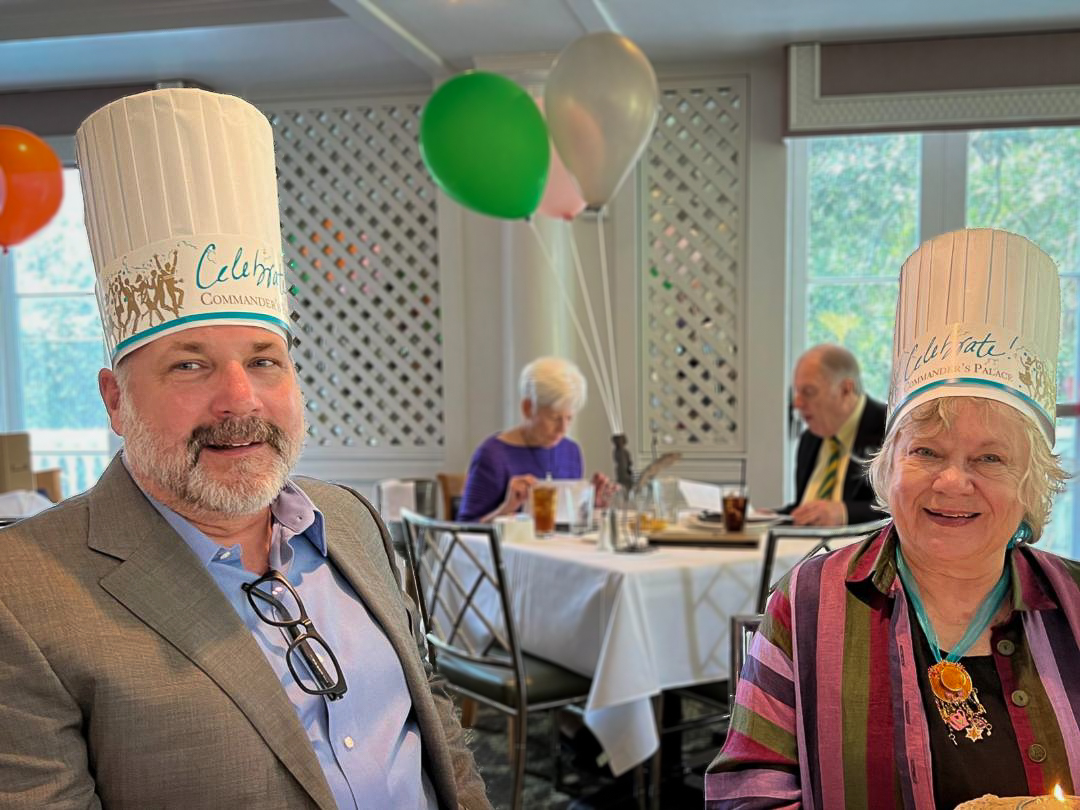
Karen with son Travis at Commanders Palace

Jambalaya is still on the Butler family menu as are visits to this most intriguing city. They still manage to find an excuse to visit New Orleans as often as they can. Just last year the extended family gathered in NOLA to celebrate Karen’s and her son Travis’s birthdays which culminated at a fabulous jazz brunch at the famous Creole restaurant Commander’s Palace. The city’s great music and great food combines in an alchemy to create a flavor that fill the city’s every pour and draws the Butler clan from near and far. That magic will not relinquish its grip anytime soon!


***************************************************************

Sarka Kalocajova


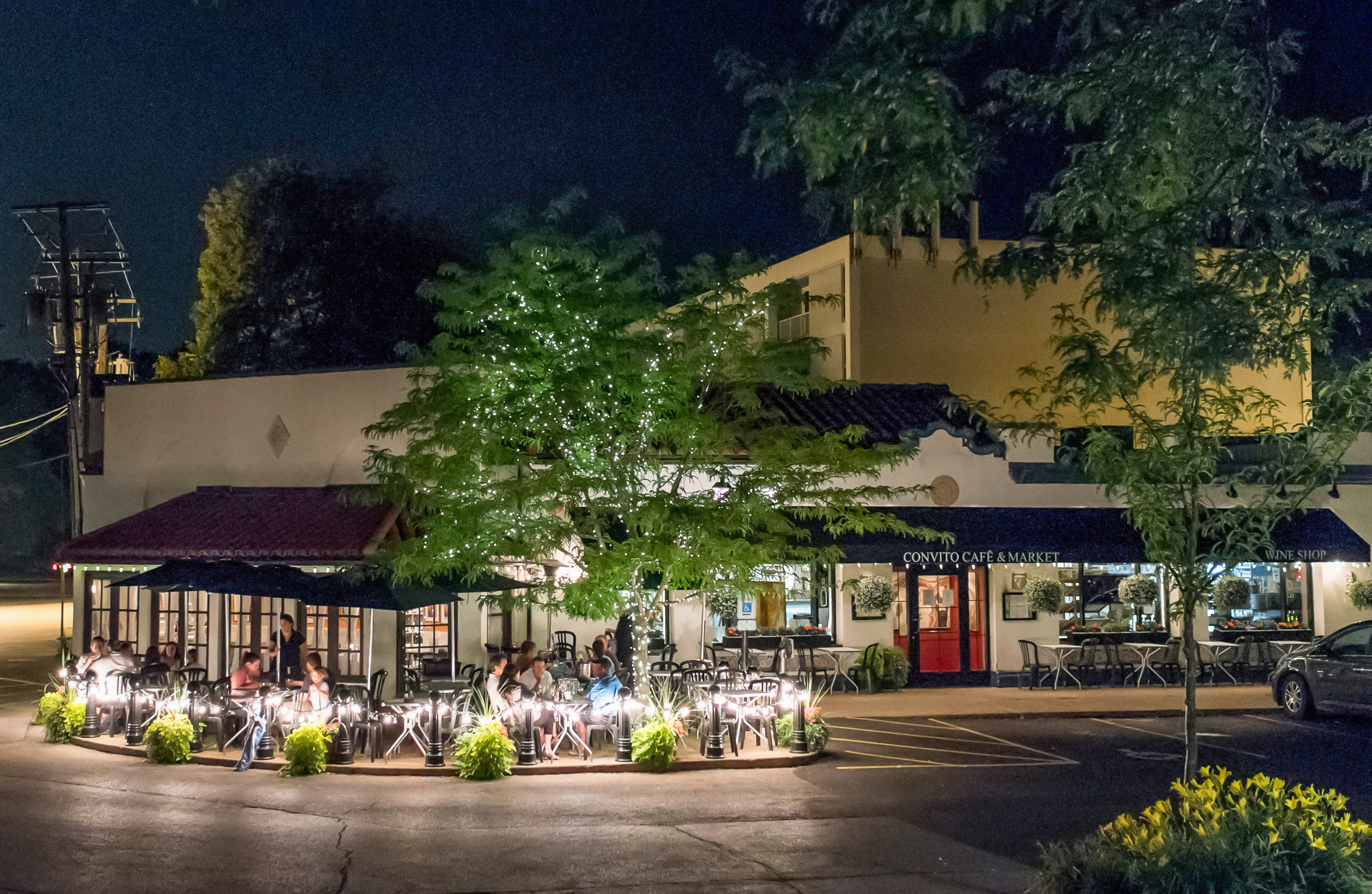
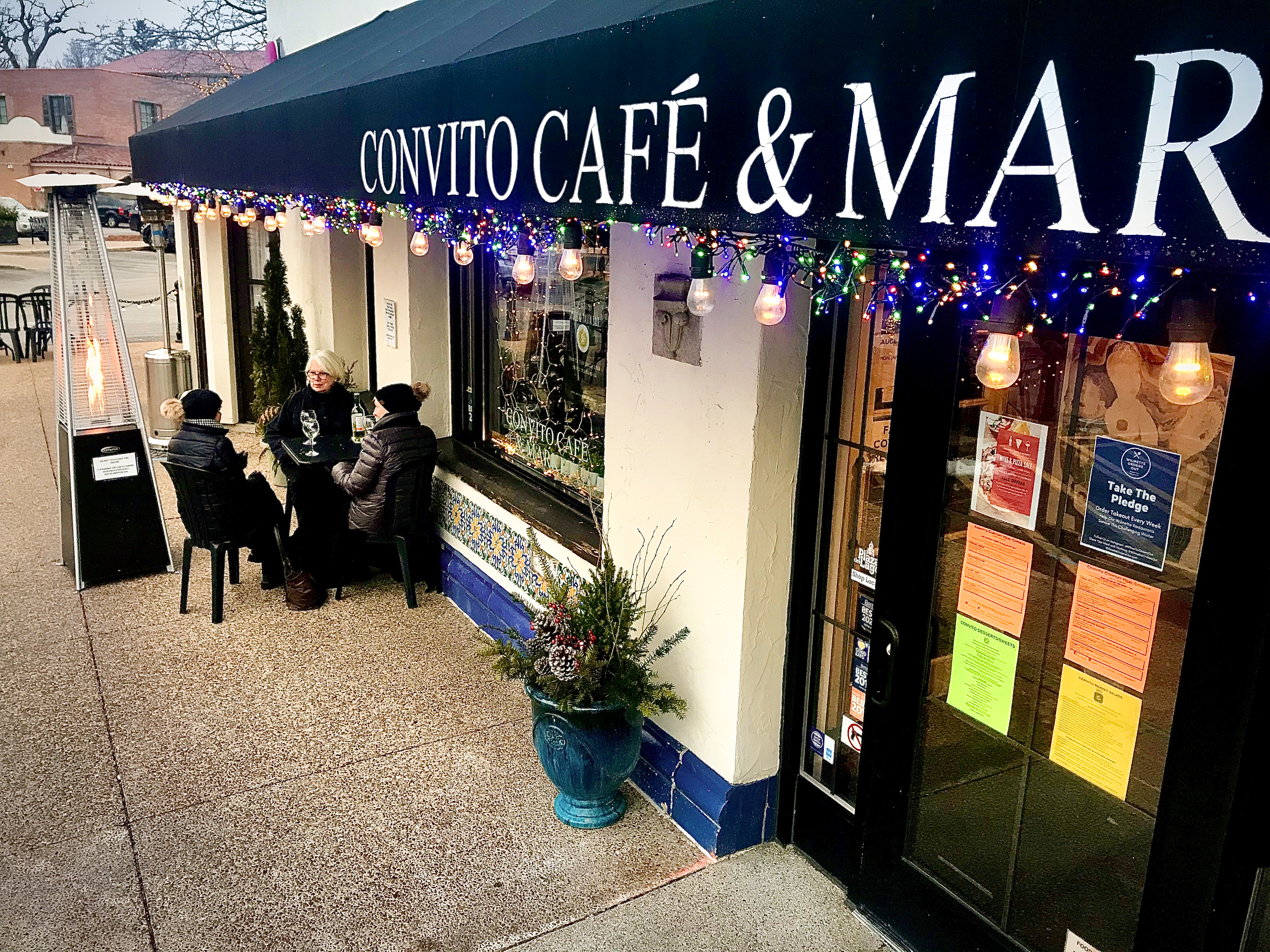
It is amazing how culinary influences work their way into people’s lives at so many different times and in so many ways. In Sarka Kalocajova’s case they arrived long before she joined the staff at Convito Café & Market where she would eventually become our longtime Restaurant Manager. Born in the Czech Republic in the region of South Moravia, Sarka loves to boast about the bounty of gastronomic delights that surrounded her growing up in this delightful section of the world known for both its great food and wine.

South Moravia has a rich wine-making tradition and houses some of Europe’s finest restaurants. It is where her fellow citizens all go for the finest food and drink in Czechia, as well to drive through the vineyards and rolling hills that remind one of a Tuscan landscape.

Though Sarka is primarily self-taught, she comes from a family of excellent cooks including a father who is a professional baker. Because both her mother and father had full-time jobs, the whole family shared in the cooking, which she has been doing since she was a little girl of twelve just like her older brother and sister, Roman and Ester.

Many of Sarka’s most vivid memories of childhood focused on food. One of her favorites is how much she loved accompanying her father to work. He was considered the best baker in the very famous baking town of Petrov and was especially sought after for his delicious wedding cakes, pastries and kolackys. Every time she visited his bakery, Sarka requested (as only a little girl could), a sample of each of the doughs her father was preparing that day. Her favorites were the sugar doughs, the puff pastries, and the sweet-yeast dough, but she insisted on tasting everything, even the more sophisticated and bitter doughs. She eventually got a reputation amongst her father’s baking colleagues – as well as family and friends – as a discerning taster and so they started calling her the “little dough girl” and teased that she must be made of dough herself.

Good food is good food the world over, but how people choose to enjoy it varies from country to country. In Czech Republic, many families like Sarka’s make Sunday a “baking day” where the women of the household bake both sweet and savory goodies that – along with a cup of hot coffee, of course – bring together the whole family to review the week’s happenings, debate politics and sports and maybe even gossip a little. Today Sarka is most comfortable with the bustling, sometimes frenetic pace of America, (she is now a U.S. citizen), but she admits to occasionally longing for the slower pace and camaraderie that the Czech people bring to their enjoyment of food and life in general.

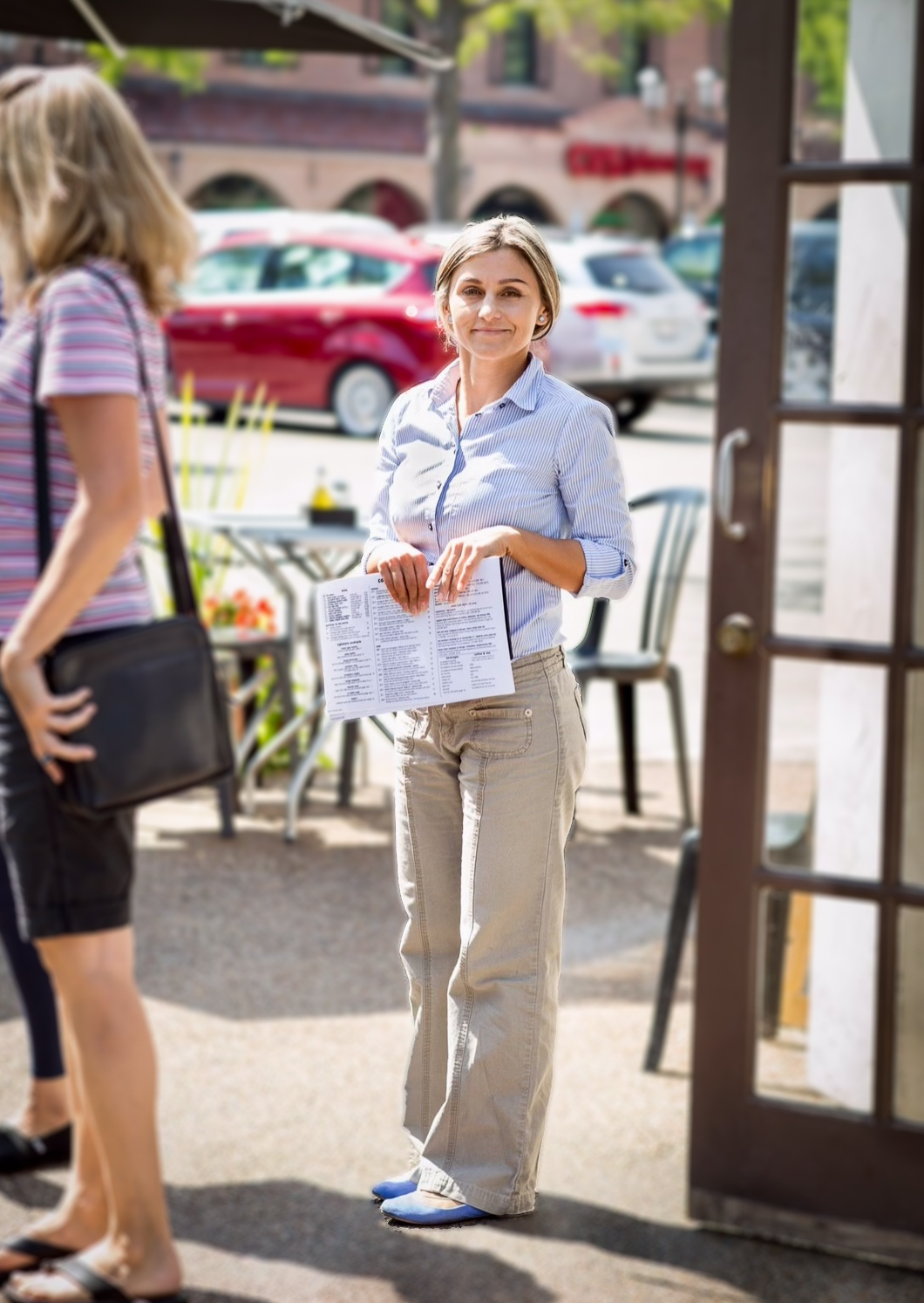
Sarka at Convito

With the kind of rich culinary history that Sarka carries with her, Convito was lucky that she joined our staff. Food and wine knowledge is a treasured commodity and Sarka’s path to Convito is an interesting one – a story that paints a picture of a young woman from a small European town who early on wanted to expand her horizons and become more acquainted with the world and what it had to offer.

When she left the Czech Republic at age 19 to move to London, it was her intention to improve her English. She supported herself for a year and a half as an au pair then moved back home for six months, only to pack up again and move to the U.S. where her sister lived. Again, she found work as an au pair in a suburb of Chicago (Northbrook) and stayed for 4 to 5 years until the children no longer needed her.

As the time approached for her to leave this family, not only was her English much improved, but she had developed other skills too. She had begun to take extra jobs at nearby restaurants as a server and bartender where she could explore the restaurant business as a possible future career choice as well as to earn a little extra money.

Sarka with Kianna and Kingston

As fate would have it, one afternoon she ended up at my daughter’s house who was both a mother in need of a babysitter (she has two young kids at the time – Kingston (4) and Kianna (1) and a restaurant owner who was in need of additional help at our café. The next week she was already helping with Candace’s kids and not long after that she became a host then server at Convito. Soon she was the store’s Assistant Manager and then Restaurant Manager, but between the responsibility of multiple jobs and the fun of living in the U.S. in her twenties, she was too busy to do much cooking for herself, which is why it took me many more years to learn about her skills in the kitchen.

From time to time Sarka would make some of the traditional Czech recipes she brought with her. Czech cuisine is distinguished by heavier and more filling meals shaped by its long, cold winters and influenced by its neighbors – Austria, Germany, Hungary, Poland, and Slovakia. Like many northern European cultures, the Czech people have a love of hearty meals like roasts, stews, sausages, and dumplings. I already liked Sarka, but once I learned how much her country’s cuisine reminded me of the Midwestern dishes I grew up with, she became family to me.

Sarka and Candace

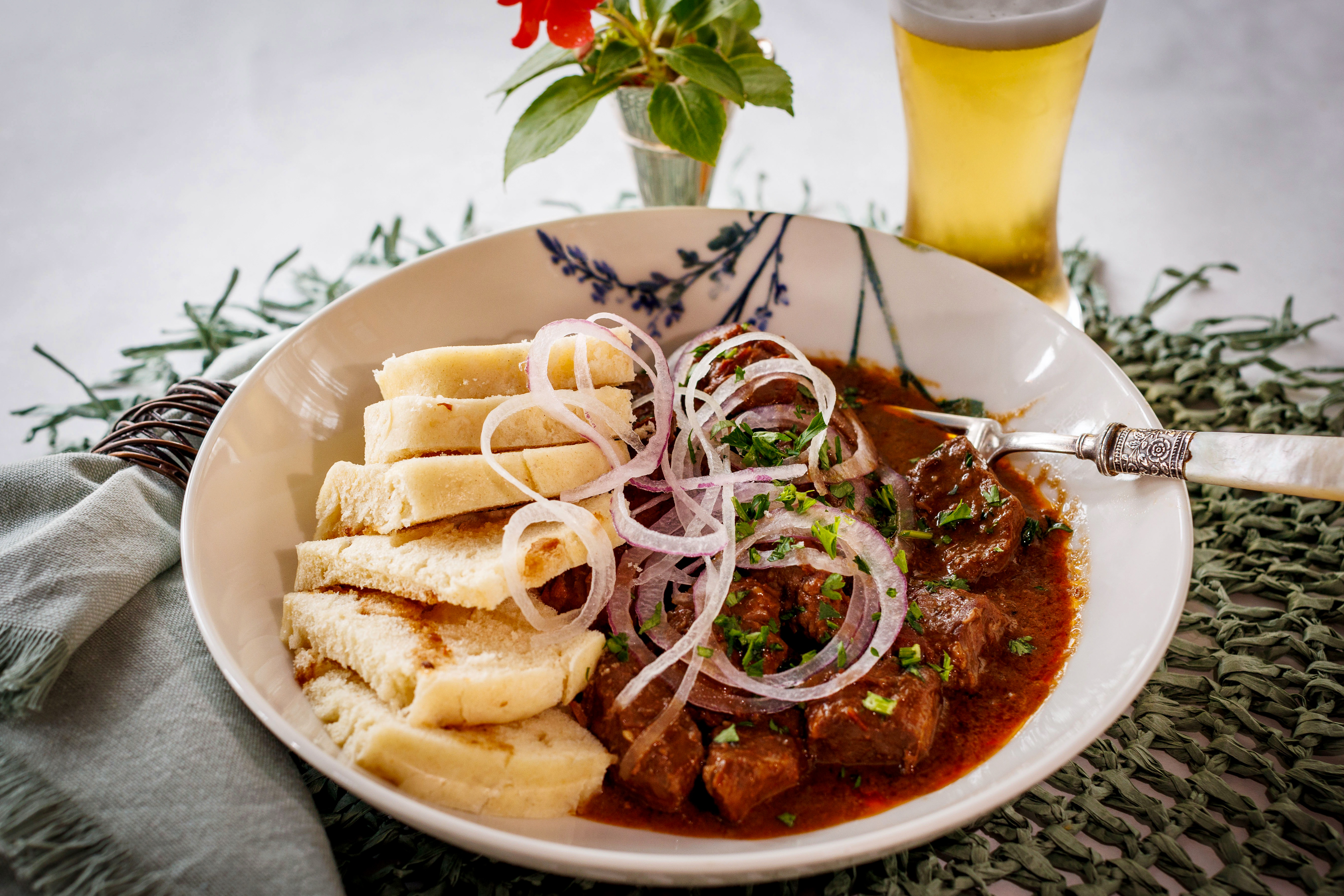
When I thought about who to include in this blog, I was fairly certain Sarka was a perfect match and when she didn’t hesitate when I asked her for a “Peasant Food” recipe, I knew I had the right girl! Hovezi Gulas (Beef Goulash) was her choice. Czech Goulash tends to be milder and beefier than its Hungarian counterpart (and with fewer vegetables), but what I especially like about it is its liberal use of beer (specifically, Pilsner), which imparts the goulash with a very aromatic scent and a rich taste.

© rob warner photography 2024

Hovezi Gulas
Beef Goulash

2 tbsp olive oil
2 large yellow onions, chopped
3 lbs stewed beef, cut into in ½ inch cubes
4 to 6 tablespoons Hungarian paprika (fresh is best)
1 tbsp tomato paste
2 cloves of garlic, minced
3 tbsp all-purpose flour (or cornstarch for a gluten free version)
1 tbsp marjoram
Salt and pepper to taste
2 oz of Czech Pilsner style

Warm olive oil in a large Dutch oven or pot on medium heat. Add the onion and garlic and sauté until soft. Add the beef and allow it to brown on the outside.

Add paprika and combine with beef.

Whisk the Wondra flour with 3 tbsp of water, taking care to remove any lumps. Add to beef.

Add tomato paste and enough water to fully cover meat (with a little extra).

Add salt and pepper.

Bring mixture to a boil, cover, and simmer on low for about two hours until the sauce thickens and the meat becomes tender and falls apart. Once the sauce is thick and meat is tender it is ready to serve.

Note:
The beer that we know today as pilsner has its origins in Bohemia known in the present day as the Czech Republic, where it was originally brewed in 1842 in the town of Plzen (known in English as Pilsen)

Sarka always serves her goulash with dumplings made from scratch or purchased from her local Czech market, but it can also be served with noodles (German), Spätzle (Hungarian) or even rice.

Sarka’s roles over the years as Restaurant Manager and Assistant General Manager at Convito and all-star babysitter to Candace’s children have made us all very close. But it is her love of food, her dedication to Convito and how much fun she is to be around which makes her more than that to us. She is both a good friend and member of the family. And now that my grandchildren Kianna (18) and Kingston (22) are hosts at Convito when they are home from college she has assumed yet another role – boss!


***************************************************************

Ann Yonkers

Attending my first Les Dames d’Escoffier International conference in San Francisco as a member of the Chicago Chapter delegation, I found myself sitting across from Mother Earth – or at least a person who fit my idea of what Mother Earth should look like. She was nurturing, naturally beautiful, statuesque; a woman full of emotional and spiritual intelligence and someone I decided immediately that I would get to know well. Often our wishes don’t materialize the way we hope, but in this instance – lucky for me – they did, and Ann and I have been dear friends to this very day.

I was also right about my Mother Earth observation. As I grew to know her better I saw how she cultivated an exceptional power and a disarming wisdom that a woman in an industry dominated by men needed in order to be a leader. Then I marveled at how she viewed food as something that needed protection and nurturing in order to develop into the healthiest and tastiest meal it could be. She is a one-of-a-kind force of nature!

When we first met however most of us “food people” were still in the throws of French cuisine worship, its rich flavors and meticulous presentation holding it in a revered place in our hearts. Those very sophisticated and respected techniques would never be left behind, but I could tell Ann was on to something very different, but I wasn’t able to see it right away.

Candace, Ann & Charlie Yonkers I

In 1991 Ann and her husband Charlie bought Pot Pie Farm on the Chesapeake Bay. Located in Talbot County, Maryland and set on a peninsula surrounded by water on three sides, Pot Pie is a gorgeous piece of land with magnificent views and and awe-inspiring sunsets, and it became an incubator for Ann to ponder the best way to get fresh food from the local farms that had a surplus to the people in the surrounding area who couldn’t find anything fresh or local on their grocery shelves.

During their first spring at Pot Pie, Ann’s father visited and reminded her of a family tradition he learned as a boy growing up on a ranch in Montana. Something perennial would be planted each time they purchased new land so that when it appeared healthy and sturdy during the next harvest, it would be a positive sign. When you taste something right after it pops it new little head from the very ground in front of you, it is a very different experience. It indicates the future of this newly purchased piece of land. Her dad chose to plant asparagus, and when it finally appeared the next season – with the silent unfolding of its fonds and leaves – it seemed to both Ann and her father to prophesize the future success of Pot Pie.

Breaking off one of those tender asparagus spears and biting into it, Ann had a eureka moment. The taste was clearly the exciting marker that Ann remembers most! Almost buttery, the green grassy fresh flavor astounded her. It was nothing like the asparagus she had tasted before. To share that experience with people in the D.C. area became her new mission.

Ann was prepared for this new venture – to create a program that connects farmers in the Chesapeake Bay area with a local communities in need of healthy (and local) nourishment. Encouragement and help from people like renowned chef Nora Pouillion (owner of the first certified organic restaurant in the U.S.) and members of American Farmland Trust (AFT), whose mission is to protect American farmland and encourage sustainability within the industry, were essential influences along the way.

Ann and Bernadine Prince at the 1997 debut of FRESHFARM’s first market in Dupont Circle

It was not long before everything was organized enough for Ann and her cofounder to start the Dupont Circle Farmers Market which became the showcase market of FRESHFARM the nonprofit she co-founded that seeks to build a more equitable and sustainable food system in the Mid-Atlantic through the use of education, farmers markets, and food distribution programs. The organization eventually expanded to a network of over 18 markets all over D.C, Maryland, and Virginia with Ann as its passionate organizer and leader.

“I had really big policy goals. I wanted to change the way Washingtonians experienced food. I wanted to disrupt the current food system by bringing fresh local food into a city where policy is made but instead of talking about it, actually doing something. I believed in the power of food to inspire and alter habits and hearts because you could actually see it, taste it, and feel it,” Ann declared.

Ann was also determined to bring the local and fresh food back to the chefs in D.C. Its easy to forget that neither fresh nor local were the culinary buzzwords they are today, but Ann knew this had to change. Her culinary degree and experience as a professional cooking teacher allowed her the clout to walk into the best kitchens in the region and discuss all these opportunities with the restaurant chefs whose support she needed for this to become a successful project. She wanted people to remember that a cucumber didn’t need to be waxy, bland and watery and that a fresh eggplant has a savory, slightly sweet taste, as opposed to the bitter, thick-skinned ones we find in our grocery stores.

It was an exciting time for Ann. This whole movement – to raise, produce and distribute better quality, local foods – naturally changed the way she cooked at home as well. Seasonality was always top of mind. She didn’t plan what she would cook that night until she could see it – always selecting what looked succulent and at its optimum “freshness.” This was to be her criteria for what would be on her menu that night.

Ann, Toria Emas and I at a Les Dames conference

When I asked Ann for a Peasant Food dish recipe, I wasn’t surprised when she gave me a colorful, but simple Smoky Sausages, Peppers, and Onions recipe. The combination of simple, accessible, and inexpensive ingredients is not an unusual mixture for a peasant dish, but Ann’s introduction of the smoked paprika gives the dish a lovely spicy flavor with hints of sweetness and a warmth of flavor that Ann describes as adding “happiness to this already happy mixture”. To Ann, “Happy Food” happens when all the ingredients of a dish blend together so harmoniously that everyone at the table is smiling, which is exactly how this Earth Mother wants us all to feel.


© rob warner photography 2024

Smoky Sausages, Peppers, and Onions

2 pounds heritage pork sausages (sweet, hot or mixed)
2 x medium onions
Extra virgin olive oil
5 red and yellow Italian frying peppers, rinsed, stems and seeds removed and
1 tbsp smoked paprika
Salt and pepper

Line a cast iron skillet with all the sausages and add enough water to cover. Over medium heat, simmer about 6 minutes. Turn off the burner, cover, and soak for 6 more minutes. Pour off the water, dry the sausages and set aside.

Place the large cast iron skillet over medium heat, add 2 tablespoons of olive oil and put the sausages back in. Sauté them until they are thoroughly browned, turning with tongs throughout. Remove the sausages and set aside.

Cut onions in half, then slice vertically into half circles. Slice peppers vertically into long thin strips.

Add onions to the skillet with sausages and sauté over medium heat until golden. Stir in the smoked paprika and the sliced peppers, stirring briefly to combine, then sauté until the mixture is lightly browned.

Cover the skillet and simmer over low heat for about 2-3 minutes or until the peppers and onions are softened. Uncover the skillet and raise the heat to medium-high. Add the whole or cut up sausages and sauté briefly to combine all the flavors.

Add salt and pepper to taste.

Serve as an entrée over brown rice or as a filling for tacos. Yum!

Ann Harvey Yonkers Note:
The combination of pork sausages, onions and peppers is classic and delicious. What distinguishes this recipe is the intentional sourcing of the highest quality free-range, heritage-breed pork and the specific choice of pepper; the Cubanelle, a late summer/fall long, sweet, flavorful pepper whose popular name is Italian frying pepper. These carefully sourced ingredients raise the deliciousness quotient to new heights.


Writing about my friend Ann reminds me of the Belgian-French novelist Marguerite Yourcenar. She once wrote that “to stay in one place and watch the seasons come and go is tantamount to constant travel: One is traveling with the earth.” Ann’s willingness to let the nature guide her as a cook and a human being is truly inspirational and reinforces my conviction that she is a true Earth Mother. What a lovely thought for us all!


***************************************************************


Peasant food combines the things I love most about cooking: bold flavors, simplicity, the embrace of regional character and the celebration of cultural diversity. But I also appreciate that these dishes endure first-and-foremost to provide sustenance for families by using inexpensive and accessible ingredients. I certainly have a place in my heart for haute cuisine, but I’ll take a one-pot meal on a chilly night any day of the week!

I chose these particular recipes because I love both the food and the people who cook them, but I also admire how representative of their origins they are.

This chapter of my blog series represents just half of my reflections on peasant food. Next month I will highlight another four of my favorite cooks and share their take on the simple pleasures of peasant food. Stay tuned for more Collaborations and Inspirations and thanks so much for reading.


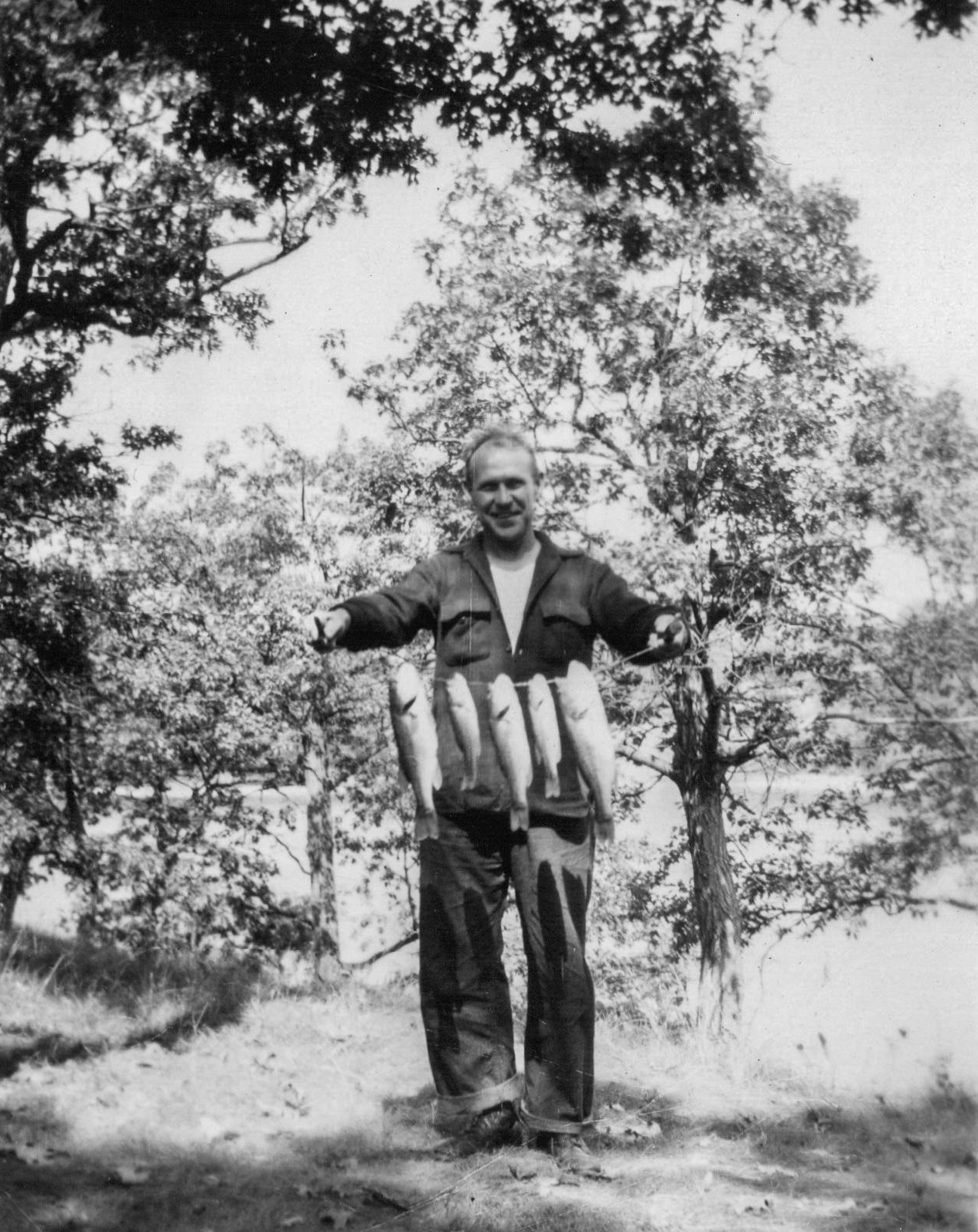
Karen wrestling a mid-size Connecticut Peasant Fish

Posted in Uncategorized | Leave a comment

Collaborations and Inspirations: Comfort Food

It was on a chilly night last February when I decided to write about something very dear to my heart…Comfort Food. Snuggled under a pile of blankets as a wet, slushy snow fell outside my windows, I found myself craving something warm and soothing in my belly. Unfortunately, I didn’t have the right leftovers in my fridge, but I did have a topic for this chapter of my blog.

As I began to steep on this idea, I found myself weary of having to write about myself again. I have cherished the opportunity to chronicle my life in in this blog and am grateful for the audience, but after twelve years of posting quarterly chapters (and sometimes more), I decided I wanted focus on the people I have cooked with and been inspired by. After all, preparing food is best when it is a collaborative experience, so for now I will concentrate on sharing the recipes and stories of family, friends, and professional peers that I have met along this amazing journey of mine.

Comfort food is a little slippery as a culinary category because it tends to be different for everyone. One’s birthplace plays a big factor in determining which foods fall into this classification. A hearty platter of Boeuf Bourguignon might be the dish a French person desires for comfort, whereas a spicy corn-husk-wrapped tamale is probably the food of choice for someone raised in Oaxaca. In either case these simple dishes are bonded to their nation’s character and will often trigger a sense of nostalgia that is a fundamental marker of comfort food.

Comfort food is most often associated with one’s childhood and offers a feeling of consolation when we return to it. It is the chicken noodle soup your mom brought you when you were sick in bed, or the chocolate cake she baked for you on your birthday every year. These familiar flavors somehow make us feel safe. We cherish them when experiencing stress and anxiety, we crave them when we are holed up against the elements on a cold winter’s night, and we hunger for them when we are sad or need a pick-me-up.

For me, comfort food is at its most powerful when prepared exactly the same way I remember it. Whether I am the cook or the eater, I tend to scoff at changes to the original recipe and any indulgent creative tweaking! OK…that’s not totally true. I can absolutely enjoy a dish which has the strength of character to tolerate deviations from the original, but only if done with respect! I concede that sometimes a novel ingredient or unexpected presentation can give a dish just a little more pizazz, while still not distracting from its original purpose…Comfort!

In making a list of my favorite comfort foods, I discovered that many of the best ones had potatoes as their star ingredient. Whenever I enjoy a plate of particularly good French fries – hands-down my favorite potato dish – I am taken back to my teenage years when one of my after-school rituals was savoring crispy golden French fries with lots of ketchup at Milt’s Dairy Bar, a diner close to my High School in Janesville WI. Besides their wonderful taste and the nostalgia for my high school days, they were also the impetus for my first cooking experience which doubles their nostalgic value. I can still vividly remember slipping down into our basement where we stored our French fryer and through trial and error eventually discovering the secret to making perfect French fries (for more about the secret check out my first chapter about my My Journey into the Kitchen titled “Beginnings”).


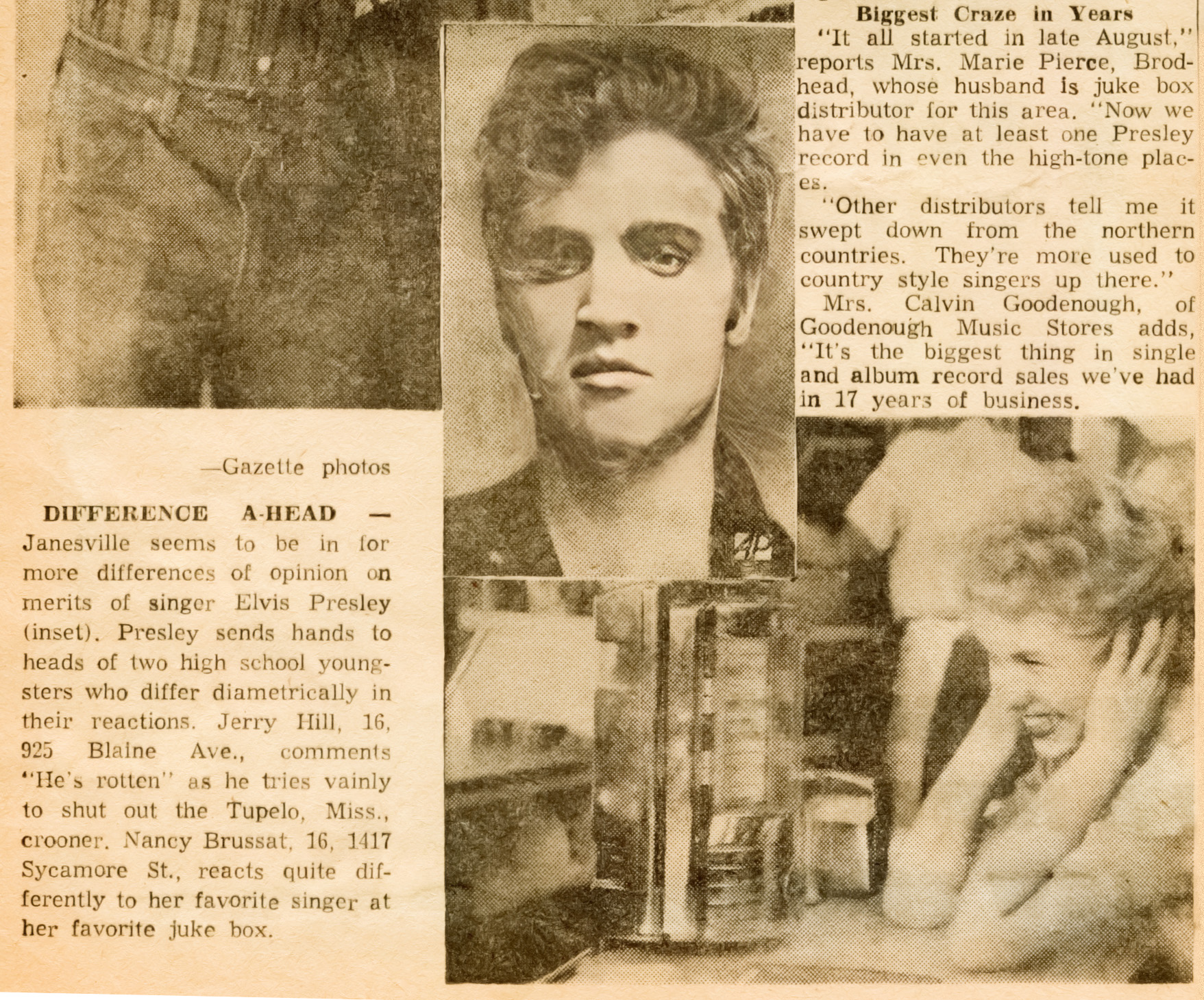
Me at Milt’s in an article about the Elvis’ “Pelvis Controversy”

Baked or fried, mashed or roasted, the flavor and texture of potatoes brings back happy memories in many people’s lives. Almost everyone has been served some version of the iconic baked potato, which is perhaps the ultimate comfort food. It is the perfect base the simplest of ingredients – slathered in butter and sour cream, dashed with salt and pepper, or can become a comfort meal in itself when ingredients like broccoli, onions, cheddar cheese and bacon are added.

And it’s not just my sentimentality that makes this root vegetable so important to so many of us. It’s believed that the high carbohydrate content of potatoes increases serotonin levels in our brains which is directly connected to an elevated feeling of well-being. Supposedly one feels calmer and more content after indulging in a plate of French fries or a big baked potato (I know I do!).

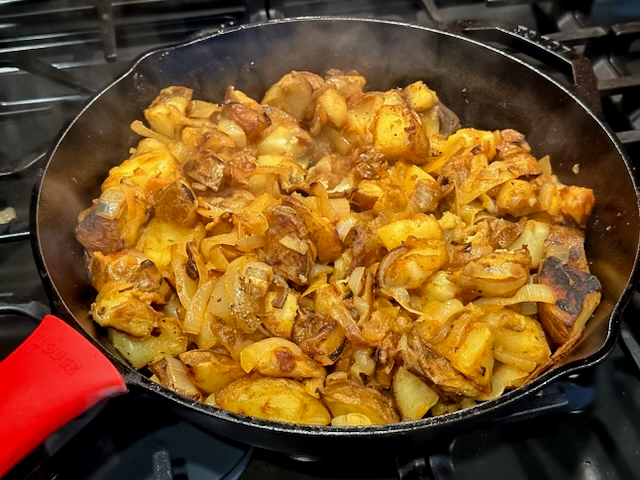
The best potato recipes are also very simple and easy to make. One I especially love is my dear friend (and former brother-in-law) Tom Barocci’s recipe that my son calls “Uncle Tom’s Breakfast Potatoes” though Tom refers to them as his “Sunday Potatoes”. Tom has been making this potato dish since his years at the University of Wisconsin when he was working towards getting his PHD. He and his three roommates, like most graduate students, were on a strict budget and needed a cheap any easy way to fuel themselves. Potatoes and onions were two inexpensive ingredients they always seemed to have around the kitchen of their rented farmhouse, so they became the foundation of this dish.

Tom came up with this recipe – which has evolved over the years – one foggy morning after a late night in Madison. Tom has always loved food and grew up with his mother’s excellent cooking (link to Journey into the Kitchen “My Three Mentors), so it was in his DNA to invent something that was as delicious as it was nourishing. It began as a side dish prepared for weekend breakfasts, but sometimes it often ended up as a main course. In those cases, the basic recipe was often modified by adding other ingredients like bacon or whatever vegetables he happened to have around, and it might be served any time of day (or night!).

Once Tom moved out of the farmhouse, got married and found steady employment as a Professor at MIT, he continued to make his potato dish (despite no longer being on a budget that required it) because everyone loved it. By then the recipe was exclusively prepared for breakfast or brunch, and usually on Sundays; hence the name, Sunday Potatoes. His grad school version contained hot sauce but once he met and married Monica Radvany (also an exceptional cook) whose family had Hungarian roots, paprika found its way into the ingredient list. It added a sweet and peppery flavor to the dish and now is an essential part of the recipe.

My son, Rob, still distinctly remembers climbing down from the attic loft of Tom and Monica’s New Hampshire farmhouse to the heavenly savory-sweet smell of onions – masses of them – being sautéed for Tom’s potato dish. How could he stay in bed?! I think Tom knew from experience that the best way to rouse an exhausted college kid out from under the warm covers of his cozy loft, would be to overwhelm him with the smell of good food (and the promise of more drink). Rob would join Tom, Monica and the kids in their rustic kitchen for a robust Bloody Mary, some bleary conversation and a delicious breakfast of scrambled eggs, bacon and sausage, toasted “good bread”, fruit and – most importantly – Sunday Potatoes.

Whether Tom was making his potatoes or grilling something from his vast repertoire (roasts, turkey, sausages, burgers, or steaks), or Monica was preparing a Brazilian feast or an everyday family meal, food was something that bound their family together. And if you were lucky enough to get invited over for dinner or brunch, you were guaranteed to have a splendid meal.

© rob barocci photography 2024

Tom Barocci’s Breakfast Potatoes
(serves 4-6)

3 large potatoes (Russet or Idaho)
3 large, sweet onions (Walla Walla or Vidalia are best)
3 tablespoons of olive oil
8 ounces butter (half stick)
1 tablespoon sweet paprika
1 teaspoon hot sauce (Frank’s Red Hot or Cholula)
1 small bunch chives, chopped (optional)
salt & ground pepper

It is best to bake the potatoes the night before so they are cool when they are fried. If you can’t cook them before, then bake them per the below recipe and cool them in the fridge before frying.

Preheat oven to 425 degrees and line a baking sheet with tin foil. Wash the potatoes and use a fork to poke holes in the skin (maybe 10 stabs per potato). Coat with olive oil, sprinkle with salt, and place on the baking sheet. Bake for 50-60 minutes or until a knife or toothpick can be easily inserted into the center of the potato. Cool potatoes.

Quarter onions and slice into ¼ inch slices. In a large skillet (cast iron is ideal, but anything will work), fry onions in olive oil slowly over medium-low heat until transparent, but not brown. Don’t crowd the pan. While onions are cooking slice potatoes into ¼ inch pieces.

Remove onions from the pan, add a little more olive oil and fry potatoes over medium-high heat until they begin to brown. Re-add onions and combine with potatoes.

Reduce heat to medium. Add butter, sweet paprika and as much hot sauce as you like (Tom’s preference is a hefty dose of Frank’s Red Hot). Add salt, freshly cracked pepper, and chives, then sauté for another few minutes until well mixed and warm. Serve with eggs, bacon, toast coffee and Bloodies.

***************************************************************

Though appetizers are not necessarily excluded from the category of comfort food, there were rarely on mine. But this wonderful appetizer, originating from France, is an exception for me.  This little savory choux pastry is called a Gougere and is made of choux dough mixed with cheese and delicately baked.  They look like mini cheese puffs – crusty on the outside, soft and hollow on the inside.  I had not had them for years until I encountered them again at a dinner party given by my good friend Kathy Clement.

My very first encounter with Gougere was back in the seventies at one of the late Leslee Reis’ French cooking classes. My dear friend Leslee was not only a great teacher (on the level of a Julia Child) but also a very successful restauranteur and personal mentor.  She too was a big fan of these little “dream” puffs and claimed they were first on her list of appetizers to make for cocktail hour because they not only look great and taste special but most importantly, they require minimum effort and time.  Kathy agrees.  Gougere is very much a part of her appetizer selection whether as a pre-dinner app or just to savor with a glass of wine.

It is no surprise that Kathy truly enjoys cooking.  Graduating from the University of Illinois as a Home Economics major, she took a job as a Home Economist consultant in the creative department at the renowned Chicago ad agency Leo Burnett.  For the six years she was there she worked on a whole variety of food accounts including Pillsbury, Campbells Soup and Starkist.  Her vast experience with all aspects of food is clear when you attend one of her delicious dinner parties.

Kathy (second from the right) with Julia Child and classmate

Though I have known Kathy for years it has just been in the last seven or eight years after I moved into her neighborhood, that we have become close friends.  During the pandemic we spent many hours outside at a local park relaxing in our hand-carried lawn chairs – social distancing of course – and discussing this new bizarre world we were living in, as well as of course, food and all of our latest recipe discoveries.

Kathy, like me, loves to experiment with food.  The classic version (below) is made with the usual Gruyere, but as Kathy discovered in her experimentation, there are other combinations that work equally well and give these mini puffs a totally different personality. One such deviation is replacing the Gruyere (which has a nutty flavor) with Parmesan to give them a tangier, saltier character.  She also added fresh, aromatic  basil, which mixes so well with all the other flavors. This particular Gougere version would be especially delicious alongside Italian antipasti like a lovely platter of prosciutto and other Italian cold cuts such as salami and capicola.

Be it Gruyere, Parmesan or some other cheese, these little French puffs have always reminded me of savory profiteroles and satisfy many of the requirements for being considered comfort food – especially their high proportion of butter and cheese which makes them extra rich in flavor.

© rob warner photography 2024

Gougeres
(French Cheese Puffs)

1 cup water
6 tablespoons butter, cut in pieces
½ teaspoon salt
Pinch of nutmeg
Pinch of pepper
1 cup all-purpose flour
4 large eggs
1 cup gruyere cheese, freshly grated

Line 2 baking sheets with parchment paper and preheat oven to 425.

In a heavy saucepan bring water, butter, salt, nutmeg and pepper to a boil.  When butter has melted, remove from the heat. Stir in the flour and beat vigorously over medium heat for 1 – 2 minutes.  Dough will leave sides of the pan and film the bottom of the pan.  Remove from heat and let sit for 1 minute.

Make a well in center of the dough.  Beat in the eggs one at a time until well blended and smooth.  Add cheese to dough and mix well.  Using two teaspoons or a small ice cream scoop make 1 inch diameter – 1 inch high – mounds.  Place on parchment paper 2 inches apart.

Bake 20 minutes until golden brown.

Variations:

  • Replace 1/2 of the Gruyere with grated ½ cup Parmesan
  • Replace 1/2 of the Gruyere with grated ½ cup Parmesan and add 2 tablespoons chopped fresh basil or fresh rosemary
  • Replace the cup of Gruyere with ½ cup grated Cheddar
  • Add 2 tablespoons of your favorite herbs

***************************************************************

There are certain ingredients that really lend themselves to comfort food, and when you can put them all together you are bound to find something universally loved.  One such dish is the grilled cheese sandwich.  It always warms the heart and nourishes the soul (especially when accompanied by a bowl of tomato soup)!

Legend tells us that a grilled cheese sandwich became a symbol of comfort during World War II when English soldiers craved the flavors of home.  What better tastes than melted cheese, butter, and white bread to reminder these men of the simpler times of their childhoods.  When my children were small, I kept the preparation as simple as possible (Velveeta, Land ‘o Lakes butter and Wonder Bread).  Later when I tried to evolve the grilled cheese sandwich to a gourmet level I was almost always disappointed.  My chefs and I made some wonderful sandwiches along the way, but fancy cheese on bespoke crusty bread didn’t add up to a proper grilled cheese sandwich for me.  They were delicious in a different way but were missing the “comfort” that I was looking for.

My brother-in-law, Jeff Butler, reminded me of what a real nostalgic grilled cheese sandwich should be during one of my visits to Connecticut to visit him and my sister Karen.  He decided we would have grilled cheese sandwiches for lunch and he would make them.  All cozied up in the TV room in comfy chairs wrapped in warm blankets (it was winter), Karen and I happily anticipated a lovely comforting lunch.

To my surprise, Jeff violated the first rule of comfort food by adorning his grilled cheese with sliced green olives.  But since it was family, I accepted that dish graciously.  To my surprise, I absolutely loved the combination!  I assumed it was a new twist, but I learned that this was his connected to his own nostalgic trip back to Janesville, Wisconsin where he also grew up.  This was the version his mother made for him as a little boy and to this day it still embodies home and comfort to him.  The green olives gave the sandwich a tangier flavor, but the foundation of the sandwich still said “comfort”. It is now my favorite grilled cheese sandwich.

© rob warner photography 2024

Jeff’s Grilled Cheese Sandwich with Green Olives
(1 serving)

2 slices white bread (Arnold’s Country Style White bread or something similar)
2 slices American Cheese (yellow)
1 ¾ tablespoons butter – room temperature
8 green olives with pimentos, cut in half lengthwise

Heat up iron skillet medium high until it smokes a bit, then turn down to medium low.

On each slice of bread place 5 thinly sliced squares of butter (one in each corner and one in the middle). Place bread buttered side down in the hot skillet and rotate to make sure all surface is covered in melted buttered.

Place a layer of cheese on top of bread in the skillet (cover bread to the edges with cheese) and add 8 halves olives on top of the cheese. Make sure that the bread doesn’t burn. Cover the pan to let cheese melt for a minute or two.

Remove cover and place 2nd slice on top with butter side up. Turn heat up to medium, press bread down gently into the olives and cheese.  When the two slices of bread are stuck together with the cheese flip the sandwich and rotate it again to make sure butter is evenly distributed. Cook until sandwich is golden brown.

Serve with potato chips.

On my many trips to visit my sister Karen and her husband Jeff, it is usually my sister and I doing the cooking.  But that dynamic had seemed to change of late. I asked Jeff when he began cooking more and  he answered, “Not until recently”.  Over the years I had frequently seen him in the kitchen, but it was usually on the way to or from the grill.  He did tell me, however, how he had always loved to make breakfast, even from the beginning of their marriage, but he considered it “processing then assembling” a meal, not cooking.  He would fry bacon, scramble eggs and make “sweet pancakes” (really crepes) then “assemble” it all on a plate. That to him was not cooking. I told him that I disagreed. For me, making crepes is tricky because they are so thin they are very hard to flip.  I could never master it the way he can and that alone makes him a chef in my book!

And while he admitted to being the “grill man” he never considered that “cooking.  Hmm?  Like so many men in our generation, grilling was often a male responsibility but usually the repertoire was limited to hamburgers, brats and maybe chicken.  Not so with Jeff who undertook more difficult grilling like roasts, pork loin and all kinds of fish and shellfish.  To me, anything beyond burgers and hot dogs takes serious cooking skills.  When to marinate? When is it done (not too rare or too dry)?  Is the outside the way it should be – crisp?  Lightly browned? You simply have to know what you’re doing when you grill.  Because my ex-husband was also the grill man in our cooking dynamic, it wasn’t until after we divorced that I picked up that mantle and discovered that grilling was NOT easy.  Even grilling a chicken breast to the desired doneness is tricky.

Upon further conversation, I learned exactly what Jeff thought of as “cooking”.  Even though he floured and breaded (with cornflakes) Walleye then pan fried it, he says that when he began making dishes like chili that required gathering a list of ingredients – chopping, sautéeing other and combining them all to produce a delicious dish, that to him was cooking.

His wife, my sister Karen, is still the main chef in the kitchen at their Connecticut home but Jeff is now experimenting with dishes like Chili Verde and Chicken Minestrone – dishes he will now “cook” for Karen.  So, while Jeff and I may disagree on the definition of cooking, I have spent many hours with him in the kitchen and there is no doubt he is an excellent griller, prep cook, and – whether he likes it or not  – an accomplished chef in his own right.

Also…he makes a mean grilled cheese sandwich!

***************************************************************

Among comfort foods that both give pleasure and make us feel better, I am not sure there is there anything more delicious, more popular, and more sought-after than chocolate cake?  Chocolate is often described as the “big hug” of comfort food and always takes a top spot among ingredients and flavors that people love – comfort or not.  But in our health-conscious culture, sometimes we feel guilty about indulging in it.  But the great news is that chocolate, like potatoes, can actually be quite good for you!  Dark chocolate especially has many health benefits including lowering blood pressure, reducing diabetes risks, and boosting mental sharpness.  It can also be good for your heart as cocoa contains flavonols which activate enzymes that can lead to a better blood flow in your vessels.  So, dig in readers (with moderation, of course)!

Chocolate cake was never on my own list of comfort foods – at least not until I had a slice of Colleen Remsberg’s Chocolate Cake which among friends and family is known as THE Chocolate Cake. It’s not that I don’t like chocolate cake but it is often too sweet for me. I have always preferred less sweet desserts like fruit pies or the German Cheesecake my mother baked for me on my birthday.  But Colleen’s cake is in a different category.

Colleen and I

Colleen has always loved to bake.  I knew this about her almost from the beginning of our friendship all those many years ago when we met (along with her sister, the late Sheila Bradley) at the Evanston Women’s Club.  Our friendship blossomed through the Women’s Club Show (a musical revue) which we were all a part of as well as the many weekend parties we gave for the purpose of socializing, conversation and recreation and to just simply get a break from the demands of little children.  Instead of the typical cocktail party with savory hors d’ouevres that most of us hosted – especially during the holidays, Colleen gave a wine and dessert party.  I still remember her beautifully decorated table covered in a whole array of the desserts she had baked.  A perfect and most festive holiday party.  She was also known for the candies that she and her sister Sheila made for holiday gifts.  I was the lucky recipient for many years.  So, her sweets bonafides were well established.

Colleen has been baking this particular chocolate cake for decades.  She was introduced to the recipe more than 50 years ago when chatting with a member of the Evanston Women’s Club.  Colleen happened to mention how much she loved to bake and in response, the woman gave her a recipe for what she described as a unique eggless chocolate cake.  With minor tweaks, Colleen started baking it and the reception was uniformly enthusiastic.  Once she refined the recipe and made it her own, it became her signature gem and has forever been known as Colleen’s Chocolate Cake (aka THE Chocolate Cake).

It is moist, dense and savory – the very reasons I like it so much-  and even travels well.  She has sent it by mail to friends, relatives, and college kids in multiple states and foreign countries including Singapore where her daughter was working for a short period of time.  She even hand-carried one when she came to visit me while I was living in England in the 1970s.  My then husband, Bob, who had requested it, was in heaven as were my kids!  We love it “as is” or with a dollop or two of whipped cream.

© rob warner photography 2024

THE Chocolate Cake

3 cups flour
6 tablespoons Dutch cocoa powder*
2 teaspoons baking soda
1 teaspoon salt
2 cups sugar
2 cups cold water
2/3 cup canola oil
3 tablespoons white vinegar
2 teaspoons vanilla

Preheat oven to 350 degrees.  Spray 10 “ Bundt pan with baking spray.

Sift dry ingredients together 3 times and put in mixing bowl.  Add remaining ingredients, mixing until well-blended.  Pour into prepared Bundt pan.  Bake for about 43-45 minutes.

Insert a toothpick or paring knife into the cake and if it comes out clean, that means the cake is done. Cool for about 30 minutes before removing from the pan.

Notes:

Dutch Cocoa: Dutch-process cocoa powder is made with cocoa beans that have been washed in a solution of potassium carbonate which neutralizes their acidity and makes it darker in color and mellow in flavor.

Cost: Cocoa powder‘s price usually reflects the quality of the beans used.  Higher quality beans contain a higher percentage of fat, which makes for a richer flavor overall.  Colleen buys hers at the Spice House in Evanston, Illinois.

Shipping: To ship a cake Colleen recommends removing the cake from the Bundt pan after it has cooled, wrapping it in cling wrap and freezing it.  When you are ready to ship, wrap it in more cling wrap and surround the cake in the shipping box with packing peanuts and real popped popcorn, which protects it from damage and keep it moist in transit.

Parting thoughts: Colleen says to be ready to repeat all this because the lucky recipient is sure to ask for more!

While writing this blog I began to notice that some of my favorite comfort food dishes also fell into the category of peasant food.  These working class meals are always made from accessible, inexpensive seasonal ingredients.  They are usually one-dish meals that can be easily served or packed up for a long day away from home.  Shepherd’s Pie is the epitome of both comfort and peasant food and no other dish feels more home-y when serves on a cold winter’s night.

Until I moved to England, I mistakenly thought that the meat in this dish was beef.  However, I learned that a real Shepherd’s Pie is made with lamb.  Its origins are credited – depending on who and where you’re asking – to the English, the Irish and the Scots and references to date back to the late 18th century.  Like most peasant food, it was a way for frugal peasant housewives to use their leftover food, as well as the bits of an animal that were less desirable on their own.  I have always used beef in my version which makes it technically a Cottage Pie, but I prefer to call it a Shepherd’s Pie anyway since very few Americans know the difference.

Mary Lu and I

My first encounter with this dish was during the 1970s when my friends and I were busily swapping recipe cards with one another.  It was a time we all had little children and little money, so the recipes were most often easy ones that could be made on the cheap in lickety-split time.  My good friend, Mary Lu O’Malley gave me a recipe entitled “Hamburger Pie” which was essentially an Americanized version of Cottage Pie. This one, of course, included ground beef and mashed potatoes, but also a can of Campbell’s Tomato soup.  Many recipes from this era included cans of various soups which were meant to add a saucy-like flavor without going through the more time-consuming process of making something from scratch.  Regardless of the shortcut, my kids loved it!  How can a dish consisting of creamy mashed potatoes on top of a rich bubbly hamburger stew not be on the top of any kid’s comfort food list?

Mary Lu is another good friend who I first met at the Evanston Women’s Club which is the origin of many of my lasting friendships.  Fortunately, we have stayed close through the years as we watched our children grow up, go to college, get married and then give us grandchildren.  She is one of many people I know who claims that she gets intimidated when she cooks for me.  That’s probably because I am in the food business.  The truth is that she is terrific and I have never had anything less than delicious at the O’Malley’s home.  And she has a great palate!  Knowing good food when you see it is half the battle and she is a pro in that regard.

With this recipe I eventually decided to drop the Campbells soup and make my own simple sauce.  I also added some crispy onions to top the potatoes.  It is delicious but really ……was it any better or any more comforting than Mary Lu’s “Hamburger Pie”? If you asked my kids, I think they would say no (and so would I).

© rob warner photography 2024

Shepherd’s/Cottage Pie
Serves 6

2 tablespoons kosher salt
3-4 large russet potatoes, peeled & quartered
8 tablespoons unsalted butter
½ cup milk
1 cup grated Parmesan cheese
Freshly ground black pepper
1 1/3 cups onion, finely diced
1 ½ cups carrots, peeled and diced small
1 clove garlic, minced
4 sprigs fresh thyme
1 ¾  pounds ground beef
1/3 cup tomato paste
1 tablespoon all-purpose flour
¾ cup beef stock
¼ cup chopped fresh parsley
1 ½ cups frozen peas, thawed
¾ cup crispy onions*

In a large pot of boiling water add salt and potatoes and boil for about 20 minutes until potatoes are soft.  In a small saucepan, heat 6 tablespoons butter and milk together until butter melts.  Drain potatoes and return to pot.  Using a masher, mash hot potatoes until smooth.  Mix in the hot butter mixture a little at a time and mash until well blended.  Stir in the Parmesan.  Blend.  Season with salt and pepper.  Cover and set aside.

Heat the oven to 375 degrees.  Melt the remaining 2 tablespoons of butter in a large skillet over medium heat.  Add the onions, carrots, garlic and thyme and cook stirring often with a wooden spoon until the onions are translucent and the carrots are tender approximately 10 minutes.  Add the beef, breaking the meat up with the spoon and cook until no longer pink. (Drain off excess fat)  Season with salt and pepper to taste.  Add the tomato paste and stir until well blended. Another 2 to 3 minutes.  Sprinkle the flour over the mixture and cook 1 minutes.  Add the beef stock , stirring until liquid has thickened lightly.  Stir in the parsley and remove thyme stem.  Stir in thawed peas. Taste and add more salt and pepper if needed.

Place the meat mixture in a baking casserole (3-quart capacity) and spread into an even layer.  Top with dollops of mashed potatoes.  Transfer to the oven and if mixture is at the top edges of your baking dish, set a foil-lined baking sheet underneath the casserole dish to catch any drips.  Bake until the the potatoes have begun to brown and the edges are bubbling, approximately 30 minutes.  Let stand at room temperature for 10-15 minutes.

Recently Peasant Food has gained a newfound popularity and is no longer just simple blue-collar fare but something you find in the best restaurants all over the the world.  It is now possible to order dishes from the humblest of origins at the fanciest of restaurants.  Who would have ever guessed that something as simple as Italian polenta (nothing more than cornmeal porridge) would become a status symbol on any self-respecting Italian menu? Or Bouillabaisse (fish stews originally made from leftovers) would command top dollar at gourmet restaurants in New York, London and Shanghai?!

I am looking forward to showcasing several Peasant Food recipes in my next blog posting – recipes from friends, collogues and family.  Some might be from their grandma’s recipe box and some might be their own creative take on a dish that has been a part of their history for years.  Whatever their origins may be, all of them I can assure you, will be delicious.

Posted in Uncategorized | 1 Comment

The Seasons: Spring is in the Air

Spring is in the air

The feeling of renewal and growth so dominate my images of spring that when the chirping of birds, balmy breezes and fresh scents of rain are interrupted by the frigid reality of a winter that refuses to expire, I can’t help but be disappointed.  We in the Midwest should be used to the fickleness of the seasons, but somehow slipping back to frigid weather in spring throws me every time.

However, there are only so many times winter can interrupt the arrival of spring before the bluebells poke their perky heads through the melting snow and inaugurate a stunning show of seasonal contrast. Golden daffodils and a myriad of multi-colored tulips will be close behind and mix themselves into the landscape no matter what the weather might be. Spring’s march forward never fails to vanquish winter, ensuring its own time to shine.

There was only one time in my life when I recall experiencing a full three-month season of spring.  During my freshman year at Stephens College in Columbia, Missouri I was amazed to wake up every morning to temperatures that hovered pleasantly around 60 to 70 degrees with bright, sunny skies that would occasionally allow a light spring rain to serenade me with the soothing pitter-patter of rain drops falling on a vibrant green landscape.

But nothing comes for free and Missouri would inevitably punish us with the tremendous heat of its humid subtropical summer.  Here in Chicago it is the very long, freezing cold winter season where we pay our dues. I guess there really is no place in the world that offers four perfect seasons.  At least not one that I’m aware of.

As a child, the longer and lighter spring days meant we spent more time outside playing kick the can, tag and hide and seek just to name a few.  It also meant that summer break was fast approaching and swimsuits and bare feet would soon replace our winter coats, jackets and wool hats.  Sandwiched in between the holiday festivities of winter and the parties of summer, it was hard for spring to compete.  But as I have written here before, I am one who always loves that change of seasons so was excited for all the things that come with spring; a new wardrobe, the family-centric holidays of Easter and Mothers’ Day, and the promise of the freedom and independence that summer brought to a young girl in the 1950s.

One of the first days that really felt like spring to me was Easter and I always looked forward to the baked ham supper my mother served on Easter Sunday.  Sometime in the mid-afternoon she would gather us around our kitchen table for this much anticipated meal. Our family eschewed fancy restaurants which were too crowded and too expensive.  Instead we preferred a good home cooked meal with traditional fare accompanied by the occasional “new” dish. The classic Brussat Easter meal always featured a baked ham.   In fact, it is no coincidence that the special meal we serve every year on Easter at Convito looks very similar to what I grew up eating in my mom’s kitchen.  Her ham was accompanied by scalloped potatoes (our cafe serves a potato gratin, very similar) with baked asparagus. The big difference is the sauce on the ham as well as the side dishes. My mother brushed her ham with a sweet brown sugar and pineapple glaze that was popular in the 50s, whereas today Convito features a delicious honey-lavender sauce which we think is a little more unusual and exotic.

© rob warner photography 2024

Easter Ham with Honey Lavender Sauce
(8-10 people)

3-5 lb pre-cooked, boneless, sliced ham
½ cup grain mustard
½ cup honey
¼ cup Extra Virgin Olive Oil
1 tablespoon lavender

Combine mustard, honey, olive oil and lavender in a small mixing bowl.  Spread liberally over ham.

Bake in a 325° oven for 15-20 minutes per pound. Raise temperature to 350° for final 20 minutes. The ham is done when the a meat thermometer inserted in the thickest part of the meat reads 140°

My sister Karen, my mother Thelma, and I in our Easter finest

Besides being a good cook and providing us with a heartwarming Easter meal, my mom was also a brilliant seamstress, so each Easter she would hand make her three girls’ Easter outfits.  We all got to participate by helping her pick out the dress patterns and the fabric. Somehow each year she managed to whip up incredibly lovely pastel-colored dresses, usually delivered to us with a complimentary coat.  We had to be prepared for all types of weather (I remembr many a cold Easter) and the idea of wearing our everyday winter coats to cover these beautiful new outfits was not an option for any of the Brussat girls!

In later years my mother became somewhat of a designer and seamstress in her own right.  My sisters and I would encourage that talent by requesting outfits we had seen in magazines and (especially for me) the movies.  She would take us to Bostwick’s department store in downtown Janesville, WI where we would each search for patterns and fabrics that were as close as we could get to the dress or suit we had in mind.  Once home, my Mom would disappear into the sewing room at the back the house where she would make adjustments to the store patterns to better emulate our“inspirations” and deliver us items that – especially in retrospect – were truly lovely.  I especially remember the outfits that she made for me that were inspired by the clothes worn in movies by Doris Day, Grace Kelly, Audrey Hepburn and even Marilyn Monroe – beautiful dresses and formals that became a part of my wardrobe.  One of her best creations was a version of Givenchy’s black and white gown specifically designed for Audrey Hepburn in the movie Sabrina.  I loved it so much it became my very own stylish – and talked about –  prom dress.  I wish I still had it (and – more than anything – could still fit into it!)

Prom in Janesville, WI (Nancy second form right)

Prom is one of America’s most iconic rites of passage.  Even though it is not officially a holiday, it is as important a night as any in the lives of American teenagers and is woven into the fabric of the spring season.  No matter whether you’re attending or just watching a younger generation dress up for their big night out, it’s hard to miss this remarkable event.  One night each spring a gaggle of teenage couples in tuxedos and gowns blankets the suburbs and I am immediately transported back to the nervous anticipation I felt when I was young.  It was a magical night.

Granddaughter Kianna heading to Prom

Compared to the fashion and social elements of Prom food was an afterthought, but it was always a part of the conversation. Long debates about where to dine before the dance took place at least a month before.  Would it be fried chicken at the local supper club or Chinese food at our one and only Chinese restaurant?  Though our Prom meals were usually unremarkable, one year my “gang” was treated to a formal dinner party at my boyfriend’s home where we nervously sat through a three-course meal served by his very gracious and kind mother.  She was always a perfect hostess and did her best to make her nervous young guests as relaxed as possible. Memorable as it was (this was my very first “formal” dinner party), I don’t think we did much eating.  Our focus was on how we looked and whether or not our dates really liked us which were much more serious topics to us than food.

Granddaughter Neko (on right) and friends taking the subway to their NYC Prom

The word prom is an abbreviation of “promenade” which means to walk around in a formal and showy way. Its origins date back to the 1800’s when debutante balls provided the opportunity for couples to dance and display their good manners and fine fashions.  Though making a show of good manners might seem silly to kids today, fashion remains a major part of the event.  I look forward to seeing what my granddaughters choose to wear, just as I did with my daughter.  There were definite rules back in my day – formal gowns, gloves, high heels – which my daughter still followed at her Prom in the 80s.  I still remember fondly all the dresses I wore, but there are a much wider variety of looks found on dance floors today.

As a parent I saw Prom from a totally different perspective.  Photos we took every year next to a young magnolia tree just outside our kitchen door became a barometer.  Each spring another glamorous shot of my daughter Candace would not only chronical her evolution from a young girl into a beautiful young lady, but also reliably predict whether or not the Chicago spring was on schedule.  If the magnolia was in bloom, spring was coming or had arrived.  If not, we got ready for a late (and short) spring followed by a quick jump into the hot summer.

Candace ready for Prom

Before I was old enough to go to Prom and obsess over boys and fashion (not necessarily in that order), Easter is what I looked forward to most in spring.  It was not ham I thought of when I was a child, but candy. The Easter Bunny always fascinated me and my sisters, even after we became suspicious about the ability of a cute little animal to deliver all those treats each Easter morning.  As long as no one asked our parents any questions, the candy filled baskets would continue to arrive. My sister Karen even went so far as to act as the Easter Bunny in a Janesville mall during her high school years.  She would – just like Santa – hold children on her lap and give them each some Easter candy.  Needless to say, she was a very popular bunny.

***************************************************************

Though Convito always welcomes kids on Prom night, our restaurant never gets too crazy that night.  Rather it is Easter and Mother’s Day that require immense preparation for all of us in the restaurant business.  Both are family-centric events celebrated in big groups over festive brunches and traditional dinners.  I always make sure my restaurants do something special for customers who choose to celebrate with us, which is why we generally find ourselves packed from brunch through dinner.  Mother’s Day is particularly crazy for us.  Moms and Grandmothers are brought to Convito by fathers and children to thank them for all that they do and to celebrate another year together.  And by joining us at Convito everyone is relieved of the extensive cooking and cleaning that comes with celebratory meals.  Perhaps since I didn’t grow up dining out for these holidays, I try especially hard to create a warm and friendly experience for these special ladies, complete with a single rose handed to each Mom on their way out.

Our market also provides dishes for more adventure dads who want to prepare their own meal for mom but get a little bit of help from our kitchen.  Our side dishes are particularly popular as a supplement to whatever main course is on the grill or in the oven. One favorite salad is our Celebrating Mom Salad which features baby spinach combined with strawberries, toasted almonds and marinated red onions, and is then dressed with a peach-champagne vinaigrette we call our Bellini Dressing.  It’s great anytime, but perfect for a festive Mother’s Day.

© rob warner photography 2024

Celebrating Mom Salad with Bellini Dressing
(serves 4)

12 oz baby spinach, washed and dried
10-12 fresh strawberries, sliced
¼ cup sliced almonds, toasted
1 red onion, thinly sliced
¼ cup blue cheese, crumbled
½ cup Champagne vinegar
1 cup olive oil
¼ cup honey
¼ cup mango chutney
½ cup peach puree
2 teaspoon salt
¼ teaspoon black pepper

Thinly slice the red onion, put in a small bowl or mason jar and cover in olive oil.  Let onions marinate at least 30 minutes (but they are even better if you make them the night before).

In a small bowl, combine vinegar, olive oil, honey, chutney, peach puree, salt & pepper and whisk well.

Combine baby spinach, strawberries, toasted almonds and marinated red onions in a large bowl.  When well mixed, add the dressing and toss until the greens are well coated.

Plate individual salads and sprinkle with your desired amount of blue cheese.

*Depending on how many salads you are making, any leftover Bellini Vinaigrette may be kept in the fridge for two weeks.

Lamb is another spring food we love to feature.  Though today it is available year-round, it used to be strictly a springtime meal that coincided with the life cycle of sheep. At Convito we frequently offer a rack of lamb as a special throughout the spring as well as on other special days throughout the year.  We offer many different side dishes that are great accompaniments, but one of my favorites is couscous with mint and peas (two more items associated with spring) and it is one of the most popular of the season both in our restaurant and in the market


© rob warner photography 2024

Couscous Me Peas
(8 – 10 servings)

Salad ingredients
3 cups Israeli couscous, cooked al dente
2 cups frozen peas, thawed
1 cups pistachios, chopped
1 ½ tablespoons fresh mint, chopped
2 tablespoons shallots, finely chopped
2 cups arugula, roughly chopped
1 ½ cups feta, crumbled or chopped

Dressing ingredients
½ cup olive oil
⅓ cup red vinegar
1 tablespoon lemon
2 teaspoons sugar
⅛ teaspoon chili pepper flakes (or to taste)
Salt & freshly ground pepper to taste

Whisk together ingredients for dressing and set aside.

Combine couscous with peas, pistachios, mint, shallots, arugula, and feta in a large mixing bowl.

Fold dressing into the salad and taste for salt, pepper and chilis.

Serve as a side with rack of lamb or your favorite spring entrée.


Besides familial celebrations, springtime is widely considered to be the ideal fundraising season.  People have spent winter cooped up at home, so any excuse to get out is appealing.  The professional women’s organization that I belong to has traditionally held their fundraisers in the spring for that very reason.  Les Dames d’Escoffier is an international association of women in leadership in the food, beverage and hospitality industries whose goal is to nurture a community that celebrates excellence and to support the next generation of female pioneers in our field.  We currently are composed of 44 chapters in the United States, Canada, Mexico, the United Kingdom, France and Italy totaling over 2,500 women.

Given the nature of our organization, food and wine are always at the heart of our events, which have ranged from casual garage sales to formal dinner dances. The money we raise goes primarily to culinary scholarships and food related charities like the Greater Chicago Food Depository whose organization provides food for the hungry.

Meme Hopmayer co-chair; Linda Avery, coordinator; Jen Lamplough, president; me co-chair (L to R)

I have been co-chairman of many of our more formal grazing-dinner auctions, most of which were held at the Ritz Carlton.  The most fun I had, however, was co-chairing with Meme Hopmayer an event we dubbed Swank-A-Licious, a supper club themed dinner and auction.

Being a Wisconsin girl myself, I have eaten at many a supper club over the years.  An idea born in Wisconsin – and still thriving there – these cozy, dimly lit restaurants offer an intimate dining experience without pretension.  Their relaxed environment is complemented by an understanding that though food and drink are critical to a dining experience, they don’t always have to be the star of the show.  These local places emphasize warm hospitality, a welcoming atmosphere and familiar comfort food like beer-battered fish and a baskets of crispy fried chicken with French fries and coleslaw.  If you are ever lucky enough to wander into one of these special places it won’t take you long to realize what you are getting is not just a meal, but a tradition.

Our Les Dames evening found inspiration via two supper club books “Wisconsin Supper Club – an Old-Fashioned Experience” and “The Supper Club Book a celebration of a Midwest Tradition.”  Upon arrival our guests were greeted with the choice of a Waukesha Sour or an Appleton-tini, accompanied by Pigs in a Blanket and Rumaki. A family style dinner of Wisconsin Supper Club favorites followed once everyone was seated.  Our tables quite proudly announced their Supper Club theme with jars of Wisconsin Crock Cheese and a fabulous retro relish tray complete with the usual raw vegetables, olives, pickles, crackers and iconic red-spiced apples.  The mood was set!

Since various Dames’ restaurants did the cooking, the dishes that came next were the very best versions of classic Supper Club food I could have imagined.  Fried chicken, fried catfish and French Dip sandwiches were the entrees and were accompanied by a bounty of sides including Jell-O molds (of course) and heaps of coleslaw.  They were as delicious as they were appropriate!

Once we settled on this theme, I made sure that my restaurant would make the coleslaw.  I am very particular about the dish – as is my brother-in-law Jeff Butler – and we frequently rate and report to each other the various slaws we consume.  Whether we make it ourselves or eat it out, every slaw gets assessed.  We both like a very tangy coleslaw, so my recipe includes all the ingredients that contribute to that style: mustard, vinegar and horseradish.   I am biased, but there’s no doubt in my mind that our slaw deserved a 10 out of 10.

© rob warner photography 2024

Nancy’s 10-out-of-10 Coleslaw

5 cups green cabbage, shredded
5 cups red cabbage, shredded
2 cups carrots, shredded
1 cup scallions (green part only), finely julienned
2 teaspoons lemon juice
1 tablespoons sugar
¼ cup cider vinegar
1 ½ teaspoons salt
1 teaspoon freshly ground pepper
1 cup mayonnaise
¼ cup sour cream
4 tablespoons horseradish (less if your preference is less tangy)
1 tablespoon grain mustard

Combine the red and green cabbage, carrots and scallions in a large mixing bowl.

Whisk together the rest of the ingredients in a small mixing bowl to make the dressing.

Toss dressing with the cabbage mixture.  I like to let it sit for at least 30 minutes or more so the dressing can infuse the vegetables, but it’s also great to serve right away.


To add even more fun to our fun fundraiser we hired a band.  David Huizenga is a terrific keyboardist and rock vocalist who amplified the frivolity of the evening.  Singing with him was former Les Dames president, Julie Chernoff.  Their combined talent and energy got all the Dames in attendance out onto the dance floor where we spent an hour or two dancing our little hearts out – a first, I think!  It didn’t matter if you had a partner or not, this group was feeling it that night.  My son even flew in for the event which was both a surprise and a treat for me, and since my daughter is also a Les Dames member, it turned into a family affair which was right in line with the true spirit of a supper club.

Candace, Nancy & Rob @ Swank-a-Licious, May 2014

The whole wonderful event was tied up in a handsome bow with the fantastic program that our very talented member Flora Caputo designed.  Needless to say, the event was very successful – everyone had a great time and we raised a lot of money.

***************************************************************

More often than not, I find inspiration for food ideas when gearing up for holidays or special events.  It is those times when I am consciously seeking to discover something original.  But occasionally they come when they are not expected, which is my favorite way to get inspired.  That happened this past June when I attended a casual luncheon given by a Dames friend of mine.  She invited me and some other friends we had in common to “catch up”, but the afternoon turned into more than that for me.

Even though this wasn’t a “special” event, I knew the food would be spectacular.  Portia Belloc Lowndes is a caterer, private chef, and luxury property manager who can always be depended upon for delicious and innovative food, and this luncheon was the very essence of the spring season featuring beautiful food that emulated blossoming flowers and the lush and lively newness that spring represents. 

She served a Danish dish that I love called smørre­brød.  These open faced sandwiches use traditional Danish breads as their base then are artistically topped with various ingredients.  Portia chose light rye, pumpernickel and sunflower breads and built six different smørre­brød, each featuring a different principal ingredient: egg salad, asparagus, shrimp, chicken curry salad, smoked salmon, and beets.   These were then enhanced by complementary ingredients including wedges of hard-boiled egg, grapes, sliced cucumbers, grape tomatoes, fresh dill, scallions, watercress, micro grains and even caviar.  Each smørre­brød also featured a different spread – butter, honey goat cheese, cream cheese – that not only connected all the flavors, but also acted as the glue that held all the ingredients to the bread foundations.

Each of the six different sandwiches were lined up on rectangular plates running down the center of the table and each was a work of art. As New York Times writer R.W. Apple wrote about smørre­brød: “Leave it to the Danes, those past masters of form and color, to turn a sandwich into a still life”.   Among my favorites were one featuring smoked salmon (the Danes “gift from the sea” as they say) and another showcasing marinated beets whose blood-red color dramatically contrasted with the with goat cheese with which they were paired. 

Smørre­brød ingredients

Though there is considerable work and effort required to make these sandwiches, much of that chopping, mixing, and assembling can be done ahead of time. Right before the guests arrive the sandwiches can be assembled and stand ready to put on the table.  Another plus of serving smørre­brød is the fact that nothing else needs to accompany them. No baskets of bread, no chips, nothing.  They are the whole deal – nothing else needed.  I see them as a glorious combination of a sandwich and a salad.


Smørre­brød

You can most use your imagination and combine all sorts of different ingredients from the simple to the complex.  Below are some of Portia’s favorites to get you inspired.  (I added of few of my own)

Breads
light rye
dark rye
pumpernickel
baguette
whole grain

Spreads
cream cheese (plain or with combined ingredients)
butter
honey
hummus
mustard & mayo

Toppings
cucumber, thinly sliced
smoked salmon
canned fish (anchovies, mackerel, octopus)
cooked shrimp
hard-boiled eggs, sliced
marinated red onions, thinly sliced
fresh spices (dill, basil, mint)
hard (cheddar, Manchego, Havarti) and soft cheeses (feta, goat, Brie)
sliced pickled vegetables
salumis & hams

Arrange ingredients in any artistic and delicious manner that you can imagine!

Beet Salad Smørre­brød

Sunflower seed bread
8 oz. goat cheese, softened
4 oz. cream cheese, softened
2 tablespoons honey
3-4 large beets
small bunch of microgreens
1 red onion, sliced thinly
½ cucumber, peeled and sliced
bunch of watercress

Trim beets, lightly coat in oil and wrap individually in tin foil. Roast the beets in a 400° oven for 45-60 minutes, or until you can pierce them easily with a fork. Remove beets from the oven and let them sit for 15-20 minutes until they’re cool enough to handle. Under cold water, slip the skins off using a small paring knife.  Quarter beets, slice into ¼ to ½ inch slices and marinate in olive oil or your choice of dressing.

Combine goat cheese, cream cheese, and honey in a medium mixing bowl and using a hand mixer or sturdy whisk, blend until light and smooth.

Spread the honey goat cheese mixture on a slice of sunflower seed bread.  Place marinated beets on goat cheese spread, then sprinkle micro greens on top.

Arrange red onions, cucumber, watercress (or anything you like!) in whatever artistic manner suits you.

For me, that event embodied the essence of spring.  Upon entering Portia’s beautiful garden patio on a lovely, warm day we were welcomed with a cold glass of seasonal Rosé and given ample time to catch up with old friends. Eventually we sat down to a long communal table covered in a stunning flowered tablecloth where the Smørre­brød served as a brilliant centerpiece.  The whole thing – the location, the food, the people, the weather – were magical.

It was delightful to share fantastic food, to see old friends and to reminisce about good times, but what lingers for me was an image of spring that was captured that day.  I remember the afternoon as a still life of the spring season, a moment that encompassed hope and potential.  I believe great art can do that to us, whether it comes from seeing a painting or tasting a sandwich. I left with a smile on my face and a determination to replicate this lovely event by creating my own Smørre­brød (though Portia’s garden and the lovely, warm day may be beyond my control).  I count myself very lucky to have friends willing to share a little of the beauty in their own lives and inspire me to continue to explore and create in mine.

Posted in Uncategorized | 4 Comments

The Seasons: My Winter Wonderlands

Snow dominates the winter memories of my Midwestern youth.  I especially remember those days when big fluffy snowflakes fluttered gracefully from overcast skies covering the ground in a blanket of white, readying itself for the myriad of children that would joyfully use it as their playground to stage snowball fights, to build whimsical carrot-nosed snowmen and to gather like-minded friends to carry their sleds to the highest hill for an afternoon of sheer gleeful terror. Even walking to school sloshing through piles of snow was an adventure.

Of all those winter activities, ice skating was my favorite.  I so looked forward to meeting “the gang” at Goose Island, the local outdoor skating rink in my hometown of Janesville, Wisconsin.  All of us were budding Sonja Henies (the figure skating ice princess of the fifties for any reader under the age of 65), trying diligently – and mostly unsuccessfully – to master our figure eights.  Despite our failures, the fun was in the trying and it always resulted in peals of laughter as we watched each other twist, turn and fall all over the ice.  If there is an equivalent feeling to the invigorating outdoor activities of winter in any other season, I can’t think of it. However, there comes a time when I had enough of the cold air and ice.  When our noses and cheeks were chapped and bright red, we happily retired to the rustic warming house to take off our skates and then headed to the warmth of our local diner for a Coke, french fries and endless teenage gossip.

Today the Midwest is warmer than it used to be and the exceptionally snowy days of yore – that once required feet to be encased in big furry boots, necks to be wrapped in scratchy wool scarves, and hands to be protected by oversized mittens – are far less frequent.  But I still hang on to all those warm garments of my childhood as I do the memories of those chilly day in Wisconsin (though I take them out of my coat closet much less than I wish I could!).

Coziness is really at the core of what I love about winter, yet its short days bring with it a mood of somber reflection.  But my love of the seasonal comfort food of winter will always triumph over that melancholy. Stews, chilis and pot pies sink deep into your bones and transfer a physical and emotional solace the same way a wood burning fire, a steaming cup of cocoa and a cozy blanket do.  Those things offer more than just physical warmth, but a soulful contentment.  John Steinbeck put it best in his book Travels with Charley:

“What good is the warmth of summer
without the cold of winter to give it sweetness?”

***************************************************************

The month of December is when the calendar tells us that winter begins and in that month come countless festivities: brunches, dinners, cocktail parties, caroling, and (hopefully) a few Santa sightings for the kids. As a child I only knew of the Christmas tradition, but over the years friends of mine have introduced me to Hanukkah, Kwanza, Solstice and others.  No matter our traditions, the one thing we seem to have in common is that we decorate our homes in celebration of these holidays, in my case by putting up garlands, twinkling lights, ornaments, candles, tinsel-clad trees, poinsettias and every kind of greenery imaginable.  December provides us all the opportunity to celebrate the past year and our shared embrace of hope never fails to fill me with joy.

Back in the days when I was newly married with young children, it seemed that everyone I knew hosted some kind of holiday party and there were many weekends when we would go to three or more of these events.  I often found myself struggling for new things to talk about as I stood next to the same people I had seen just last night.  But escaping from the stress of work – and the relentless needs of small children – made this world of adult holiday cheer a wonderful escape.

The best events were the early-evening cocktail parties which invariably featured creative drinks and passed hors d’oeurves.  Cocktails back then were serious business, invariably consisting of generous pours of hard liquor and something to mask the booze– scotch and water, gin and tonic, Jack and Coke. Wine was years away from being something anyone really thought of to serve socially. Occasionally someone might make a show out of some overly tannic, straw-basket-covered Chianti or a faux-ceramic bottle of Lancer’s (a painfully sweet Portuguese rosé), but the more sophisticated Sauvignon Blancs, Barbarescos and Merlots would not arrive for at least another decade or more.

My cocktail parties were a combination of passed appetizers and a buffet featuring crudité platters, chafing dishes filled with sauced meatballs, bowls of shrimp with cocktail sauce and a variety of wraps, bruschetta, dips and chips.  At later cocktail parties (after I had been on my Italian journeys), I loved making one of my cheese tortas inspired by my favorite Milanese Salumeria – Peck’s.   I featured these tortas at my downtown Chicago location in the late 1980s, but they were a short-lived experiment once I realized that the labor and ingredient cost made them a dramatic profit-loser no matter how popular they became.  Regardless, I still had the kitchen make them from time to time because I loved them so much.  Consisting of layered cheeses, nuts, dried fruits, vegetables and herbs they were stunningly beautiful, so much so that they once caught the eye of a famous Chicago merchant about to open the Armani store on fashionable Oak Street near my restaurant and market. She asked me to create a layered “designer cheese torta” for her opening party and I was naturally thrilled to do it.  I named each layer after a famous Italian fashion designer.  Both my staff and I put many hours into its creation.  The below photo is of my one and only designer-inspired layered-cheese torta never to be made again. I didn’t charge her what it cost – it was obscene – but I have never for a moment regretted creating this indulgent, gorgeous and delicious dish.

I named the layers (from bottom): Torta Missoni with dried cherries, blueberries & walnuts; Torta Krizia with sun-dried tomatoes and basil; Torta Armani with basil and pine nuts; Torta Valentino with dried apricots and walnuts; and Torta Gucci with a Gucci-colored green and red of green olives and roasted red peppers.  Each torta also contained many different cheeses like mascarpone with dried blueberries and the rich Annabella cheese with chopped walnuts.

The most festive looking one is the Torta Missoni which I still occasionally make during the holidays.

Torta Missoni

36 slices of domestic mozzarella (approximately 3-inch squares)
18 ounces cream cheese
10 ounces mascarpone
5 ounces gorgonzola
½ cup dried blueberries, chopped
½ cup dried cranberries, chopped
1 pound cream cheese
½ cup milk
1 pound cream cheese
½ cup milk
1 ½ cup whole dried cranberries
1 ½ cups whole dried blueberries
1 ½ cup walnuts, chopped into similar size pieces to dried fruit

Day One

Let the cheeses come to room temperature.

With a mixer blend 12 ounces of the cream cheese with the mascarpone.  Divide this mixture in half into two smaller bowls.  In one bowl with mixer, blend with chopped blueberries.  In other bowl blend with chopped cranberries.

In another small bowl, with a mixer blend the remaining 6 ounces of cream cheese with the gorgonzola.

Oil a 9 inch round cake pan and line with saran wrap leaving 6 inches on either side to help with removal in the future.

On approximately a 10-inch square of parchment paper, lay out 3 rows of 3 squares of the mozzarella so that the edges meet or overlap slightly. Place the bottom of the cake on top of the mozzarella, with a knife running along the base of the cake pan, trim the mozzarella so that you have a circle that will fit into the inside of the pan.  Pull the scraps aside.  Remove the pan from on top of the mozzarella and place the circle of mozzarella pieces inside the pan.  Spread the blueberry-cheese mixture evenly on top of the mozzarella.

Add a second layer of mozzarella using the same technique as above. Spread the gorgonzola mixture evenly on top of the mozzarella.

Add a third layer of mozzarella.  Spread the cranberry cheese mixture evenly on top of the mozzarella.

Add a fourth layer of mozzarella, cover with tin foil and place in refrigerator to solidify overnight.

Day Two

Remove the torta from refrigerator, un-mold by lifting the saran wrap edges and place on the serving platter. Pull the saran wrap from under the torta and throw away.

With a mixer combine the cream cheese and milk until silky smooth to make the icing. Ice sides and top of torta reserving some icing for piping at the end.

Create a template for the decoration: From the center, use a toothpick to outline the missoni design by dividing the top of the into six triangular sections with a slight curve at the outside edge, Leaving about ¼ inch between each triangle for piped icing.

Decorate each triangle with alternating rows of dried cranberries, walnuts, dried blueberries, walnuts. Repeat. Make rows of berries and nuts shorter as they progress to the corner of the triangle.  Repeat until all 6 triangles are complete.  Finish by piping the remaining icing between each triangle and around the outer circle of the torta.

Colette and Sergio with antipasti tray.

Another dish I love to include on my buffet is an antipasti tray. Convito carries many – Formaggi & Salumi (cheese and salamis), Charcuterie (salamis, mortadella, olives, roasted peppers and artichokes), Artisanal Cheese Platter (an eclectic selection of unique cheeses with walnuts, apricots and a delicious fig-almond cake), our popular Vegetable Crudité Platter (raw vegetables and dips) and a simple Cheese and Fruit Tray.

***************************************************************

December ends with a bang, literally.  Horns, noisemakers and fireworks conclude many New Year’s Eve parties, though I prefer a quieter evening.  Apparently the origin of all this noisy hubbub is an ancient tradition meant to scare off evil, but to me it is just needless chaos!  All that noise combined with confetti in my hair, over-served strangers bumping into me, and the compulsory public kissing adds up to one party I am happy to miss these days.  When my kids were little, I was willing to join the fun, but these days I much prefer to watch the freezing-celebrants navigate their drunken bedlam via television and get a call or text from my kids.  Come 12:01am I’m thrilled to be either going to sleep or watching an old movie to ring in the new year.

Back when I was still a reluctant celebrant there came a moment when my close friends Janet and Paul Alms suggested maybe we transition away from the big parties to a more intimate, formal New Year’s Eve dinner evening that we would limit to just four couples.  At that point I began to look forward to celebrating New Year’s Eve. We eventually expanded the group to six couples over the years, but it remained a comparatively intimate evening.  Our first one was at the Janet and Paul’s home and featured French cuisine with Coq au Vin as the main course.  We all took turns hosting these formal dinners and over the years many different cuisines were featured – Greek, Mediterranean, American regional, etc.  To no one’s surprise (or complaint!), I cooked Italian food several times.  Probably my favorite was the year I prepared a multi-coursed Carnevale-themed Venetian meal.  Our whole group consisted of excellent cooks and wine lovers (wine was in vogue by now!) so every dinner was superb and featured many (almost always too many) amazing wines from all over the world.

New Year’s Eve group

Eventually as our kids grew up the group disbanded and most of us began to celebrate with our now grown families.  My daughter Candace lives nearby and my son and family usually come in from New York so we are able to spend a whole week together celebrating both Christmas (blogs “Christmas Traditions/Christmas Changes) and New Year’s Eve.  Initially when the grandchildren were quite young the adults had their meal after the children were in bed.   For years our dinner was divided into two parts: a fish course and a cheese course. Our seafood dishes included crab legs in butter, smoked trout with apple slices and creamy horseradish spread, or sautéed shrimp.  After another glass of wine, we would move on to an amazing, exotic selection of cheeses given to us by close friend and longtime Convito cheese supplier Sofia Solomon through her amazing company Tekla.  We always delighted in the many fantastic and unusual cheeses Sofia gave us: like Saint-Marcellin, a soft French cheese; Humboldt Fog Goat cheese; and Sottocenere al Tartufo made with truffles and wrapped in an ash rind.  It was always a generous treasure trove of delicious and delightful surprises.

Candace making chili

As the children grew older and could stay up a little later, Candace would organize themed dinners more appropriate for the whole family.  Our last two years featured a make-your-own-baked-potato buffet complete with a huge selection of veggies and condiments, and a Chili Dinner featuring my son Rob’s (very) spicy and delicious ground beef and sausage chili and Candace’s yummy vegetarian chili.


© rob warner photography 2023

Candace’s Vegetarian Chili
(Serves 6-8)

½ large white onion chopped coarsely
2 large carrots sliced in thin rounds
2 cups frozen corn
1 ½ cups frozen peas
12 oz can (or box) kidney beans
12 oz can (or box) cannellini beans
12 oz can (or box) black beans
12 oz can (or box) pinto beans
26 oz box or jar of passata tomato purée (Pomi or Mutti good brands)
26 oz box of strained tomatoes (Pomi is good brand)
26 oz can of crushed or diced tomatoes
4 tbsp tomato paste
32 ounces of vegetable broth
extra virgin olive oil
2 tsp cumin
1 tsp lemon pepper
1 tsp paprika
½ tbsp tbsp chili powder
¼ tsp dried mustard
¼ tsp garlic powder
salt and pepper to taste
shredded cheddar cheese
sour cream

Coat bottom of large stock pot with extra virgin olive oil, heat on medium for 3 minutes. Toss in onions, cumin, lemon pepper, paprika, salt and pepper and sauté on low medium heat until soft about 10 minutes.  Add carrots and more olive oil and sauté for 5 minutes. Add ½ cup water continue to sauté until carrots are softened about 5 minutes.  After water has absorbed to carrot, onion and spice mix, add dried mustard, chili powder, and garlic powder. Stir.  Add strained tomatoes, passata and diced/crushed tomatoes to pot and simmer on medium for 10 minutes. Add all beans, stir and continue to simmer for 5 minutes. Add vegetable broth, stir and turn up heat slightly and simmer for 10 minutes. Taste, and add more chili powder, paprika if you want more spice. Add more salt and pepper to taste if needed.  Can leave on stove on low to simmer until ready to eat.

Sprinkle with shredded cheddar and sour cream to taste.

*Add other vegetables if you desire, like steamed broccoli or roasted peppers.

*Use different beans (like butter beans) to stretch the recipe.

After such a festive month filled with so many events and parties, January always comes as a respite month for me – my “steeping time” where goals can be reviewed and plans for the coming year finalized.  I revel in this quiet time, but in my family I am pretty much the only one who feels that way.

Candace, Rob and their Dad in Colorado

Both Candace and Rob grew up going to Colorado with their father and friends to spend a week enjoying the fresh mountain air and the challenges of skiing. Most resorts offer great snow conditions from late December to early March and my family usually went in January or February.  I never caught the ski bug (ski lifts are totally incompatible with my fear of heights) so I stayed home and took advantage of the time to think about last year and make plans for the next one.

Over time my son committed himself to always spending some time in the mountains and decided to spend his first year after college living as a ski bum in Steamboat Spring, CO.  He eventually returned to the East Coast where he went to college and soon started dating his now-wife Angie. They would rented a modest little ski house in southern Vermont every year so they had a base for skiing. After they were married and had kids, they bought a home in the Hudson Valley area where he now spends many a winter weekend skiing in the Catskills with his two daughters who have also caught the ski bug.

Neko, Rob & Isis in the Catskills

*************************************************************** 

By the time New Year’s wraps up, the unrelenting parade of parties has  exhausted most people, so social events go on hiatus for the remainder of winter.  If I feel like entertaining, I usually do it on a small scale by hosting intimate dinner parties with good friends.  However, one year I decided to throw a big party for my Convito staff as a way to say thanks for all their hard work over the holidays and to fight off everyone’s winter doldrums.

Bob deals Blackjack

Wanting something memorable and fun, I decided to stage a gambling party and turned my house into a casino complete with roulette, blackjack, and poker tables! My then-husband, Bob and my brother-in-law Jeff acted as croupiers distributing gambling chips and working the tables with help from other gambling-savvy staff members.

It was a perfect winter party – lively and fun. We served cocktails and beer throughout the night and took an intermission from gambling for a classic British pub buffet serving everything from Shepherd’s Pie to Bangers and Mash (pork sausages and mashed potatoes) to my favorite – the Ploughman’s.  This traditional lunch of British laborers can be as simple as a plate with a few hunks of aged cheddar cheese, some

Jeff showing that the house always wins

fresh bread and some sort of chutney or pickled onions (my favorite is called Branston Pickle).

I even made Scotch Eggs that night!  These boiled eggs wrapped in sausage and coated with breadcrumbs then baked in the oven were something most of my guests have never even heard of, but there were none left at the end of the evening.


But probably the most unlikely hit of the night was a simple bowl of nuts I placed at every table in an effort keep all the gamblers sated (and at least a little sober)!

© rob warner photography 2023

Sweet, Spicy, Smoky Nuts

1 cup pecans
1 cup cashews
1 cup almonds
1 cup walnuts
1/3 cup dark rum
2 tablespoons brown sugar
1 tablespoon butter
1 tablespoon fresh rosemary, minced
1 teaspoon sea salt
¼ teaspoon chili pepper fakes

Preheat oven to 300 degrees.  Line a baking sheet with parchment.

In a small fry pan over medium-high heat, add rum, bring to a boil, then reduce to about 2 tablespoons.  Remove from the heat.  Add brown sugar, butter, rosemary, salt and chili pepper flakes and combine.  Return to heat, bring to a boil and cook for one minute more.

Combine nuts in a bowl.  Add the warm rum combination and toss until well coated.  Spread nuts in a single layer on a parchment-lined baking sheet and bake for 25-30 minutes or until golden brown.

Allow nuts a few minutes to cool then serve warm or later at room temperature.

***************************************************************

The official end of Winter comes with the vernal equinox on March 20th, but I like to think of the seasons in neater three-month sections that correspond to calendar months.  So for me – and this blog – winter begins December 1st and ends on the last day of February.  But before I start putting away my sweaters and getting ready for spring, February offers two more days for me to celebrate: Valentine’s Day (probably my favorite non-Christmas holiday) and my birthday!  In fact since my mother’s original due date for me was February 14th, I have occasionally celebrated those two events together, despite actually arriving three days late.

As a girl I celebrated my birthday with my family, and would always get to choose the menu for my birthday dinner.  Invariably I chose steak, french fries and my mom’s German cheesecake.  Most kids, like my sister Karen, preferred sweeter cakes like chocolate, angel-food or a white cake with chocolate frosting, but I loved this rustic cheesecake with a graham cracker crust that was creamy and never overly sweet.  It was my father’s mother’s recipe and though she passed away before I was born, I heard many wonderful stories about her, especially about her legendary baking skills.

© rob warner photography 2023

Maud Brussat’s German Cheesecake

Crust
3/4 cup butter, softened
9 ounces (1/2 package) of graham crackers, crushed *
3/4 cup powered sugar
1/2 cup graham cracker crumbs

Filling
6 eggs
1 1/2 cups sugar
1/2 teaspoon salt
juice of 1 lemon
1 tablespoon lemon zest
3/4 teaspoon vanilla
1 1/2 pound cottage cheese
3/8 cup flour
1 1/4 cup heavy cream

Preheat oven to 325 degrees.

Mix butter, graham crackers (original recipe used Zwieback), powdered sugar and graham cracker crumb in a mixing bowl and combine.  In a spring form pan with a center hole, press the crust mixture into the bottom and about 1 inch up the sides to about 1/4 – 1/3 thickness. Place in refrigerator to cool while making the filling.

In a large bowl, beat eggs, sugar, salt, lemon juice and rind, vanilla, cottage cheese and flour together.  In a medium bowl, whip cream then fold into the filling mixture.

Carefully pour or spoon filling onto cooled crust within 3/4 inch of top of the pan (depending on pan size there maybe extra filling). Sprinkle (almost cover) the top with graham cracker crumbs.  Bake for 1 hour. Turn oven off and leave cheesecake in oven to cool for 1 hour.

Remove from oven and release the spring from sides of the pan.  Carefully remove sides of pan

Serve cheesecake on the base, warm from the oven or chilled.

Adult birthday celebrations were often fancy dinners or the occasional party with close friends.  They were all nice events, but it was after my kids left home and began their own relationships and families that I began to look forward to the types of celebrations that I genuinely enjoyed – small gatherings with good food, time spent with loved ones and perhaps a bottle or two of great wine.  I usually went to one of their homes to celebrate my birthday, but every so often I left town to celebrate.  When I look back at those trips it’s notable that even when I did actually leave wintry-Chicago, I never once ended up at a beach or other warm destination, but instead traveled to another chilly locale.  I guess my love of coziness and the comfort of winter indulgences overruled any need to warm up!

For my 40th, my partners, Paolo Volpara and Wanda Bottino treated me to a Medieval birthday weekend in a handsome – but very cold – castle. Castello Pomerio is of ancient origins and is located in the countryside and the quiet hills of Branza, not far from Milan.  Upon arriving we spent the afternoon roaming the freezing castle grounds, but eventually retired to our private quarters where we were welcomed with a roaring fire and a plethora of flickering candles that brought warmth to the imposing stone and brick castle walls

It is amazing how candles can light up and give warmth to even the gloomiest of rooms.  I use them in every season, but especially in winter.  In doldrums of February the gentle flicker of a candle flame somehow produces a feeling of well-being and transforms a certain seasonal desolation into an atmosphere of cheerful optimism.  Plus, soft candlelight is flattering for both the old and the young, so what is not to like?!

My castle birthday with Paolo (to my left) and Wanda (across from me)

Another wintery out-of-town birthday location I remember fondly was planned by my daughter Candace.  My kids and their spouses took me and my close friend Nancy Harris (another February baby) to New Buffalo, Michigan, a quiet beach town just 70 miles from downtown Chicago that Candace and her husband Rob knew quite well from Warner Family vacations nearby.  After settling in to our charming cottage, we bundled up and spent the afternoon strolling the icy shores of Lake Michigan.  To commemorate our snowy outing the Robs (my son and Candace’s husband) created a funny, soused snowman who very casually slumped on a bench outside our cabin with an empty Jack Daniels bottle in hand.  I wasn’t sure if he was there to protect us or vice-versa, but he gave us a laugh every time we passed by him.

Nancy Harris, me, Angie, Rob and Candace on the Lake Michigan shoreline

That night we had a lovely dinner, but my favorite part of that birthday evening was spent hanging out next to a roaring fire, playing games and enjoying a birthday cake topped with what both Nancy and I determined was way too many candles.  Someone must have made a mistake with their math!

Cold weather and candles remained a through-line of my birthday when one year I decided to celebrate it in Manhattan during the artist Christo’s “Gates” installation – a massive installation made up of twenty-three miles of saffron-flagged pathways winding throughout Central Park.  The installation was only up for two weeks and my birthday fell right in the middle of it.  I invited family and a few close friends to join me for yet another cold February stroll through the “Gates” and then rewarded them all with dinner at one of my favorite Manhattan restaurants – Felidia.  We all sat in the front of the restaurant basking in the warmth of chef Lidia Bastianich’s candle-filled room and savoring steaming bowls of her perfectly sauced pasta. We toasted that magical day (and yet another of my birthdays) with tall glasses of fine Italian Prosecco.  It was a magical weekend.

with my sisters Karen and Joan at The Gates in Manhattan

New York is one of my favorite places in the world and I have spent two other out-of-town birthdays here.  The first one was in East Hampton at a lovely house rented for the occasion with my kids and their families as well as sister Karen and my brother-in-law Jeff.  My birthday was spent walking snow-covered paths near the beaches of Montauk, followed by a glorious dinner culminating with a beautiful cake baked by my talented grand-daughter Neko and some very original games invented by my clever sister Karen.

with family in Amagansett, NY

My last New York birthday was in the Hudson Valley at my son’s home in Tivoli, NY. Most memorable about this birthday was the meal – a return to my roots – where we dined on steak and French fries, something I had not had outside of my restaurant in many years.  Another highlight was a cocktail introduced to me by my daughter-in-law Angie.


She created her own version of a Paloma, this one made with Mezcal mixed with a sparkling pink grapefruit drink.  I liked it so much I added it to our Convito cocktail list and named it, of course, “Paloma Angelina”.


Paloma Angelina

1 ½ ounces Mezcal
4-6 ounces sparkling pink grapefruit (we use the 6.8oz bottles of Fever Tree)
rosemary sprig
ice

Over ice combine mezcal and sparkling grapefruit in a highball or rocks glass.

Garnish with a sprig of rosemary.


As winter wanes, Valentine’s Day sneaks up on us to close out the season.  Originally a pagan holiday dating back to Roman times with a dark history of beheadings and other morbid crimes, it has slowly but surely shed its dark history and become a day celebrating love and romance. Roses are sold by the millions, chocolates are given to lovers, and dear friends and family express all kinds of positive emotions.  To me it is the perfect winter holiday for an intimate dinner party and just two years ago I held one where I think I outdid myself thematically.  I lavished an opulent centerpiece with what must have been 20 different shades of pink and made sure that each and every dish I served had a deep red or a soft rose patina to it.

We began with a cup of roasted tomato-basil soup piped with a crème fraîche heart floating in the center of each cup.

© rob warner photography 2023

Roasted Tomato Basil Soup

6# ripe plum tomatoes cut in half lengthwise
1 cup olive oil
2 tablespoons kosher salt
3 teaspoons pepper
4 cups chopped onions
4 cloves garlic
½ teaspoon chili pepper flakes
6 cups canned diced tomatoes
3 cups chopped basil leaves
2 teaspoons thyme
2 quarts vegetable stock
salt and pepper to taste
crème fraîche (if desired)

Combine plum tomatoes, ½ cup olive oil, 2 tablespoons kosher salt and 3 teaspoons pepper. Spread in one layer on a baking sheet.  Roast in 400-degree oven for 45 minutes.

When roasted tomatoes are out of the oven, heat the butter with the other ½  cup olive oil in a large stockpot.  Sauté onions, garlic and chili pepper flakes for 5-10 minutes.  Add canned tomatoes, basil, thyme and chicken stock.  Add the roasted tomatoes and their juice.  Simmer for 30 to 40 minutes.  Using in inversion blender or cuisinart, coarsely blend the soup, but leave some chunks for a mixed consistency.  Add salt and pepper to taste.

Serve in bowls with fresh basil and crème fraîche piping.

The next course was a pasta dish invented by my son-in-law Rob for his wife Candace’s birthday.  She loves to find an excuse to celebrate and so Champagne naturally comes to mind.  And since lobster is one of her favorite foods (she has good taste like her Mom), the combination of these two indulgences makes for an extravagantly delicious Valentines meal.

© rob warner photography 2023

Fettuccine with Lobster Sauce
Serves 4

2 fresh whole lobsters, about 1 ½ pounds each
¾ cup (1 ½ sticks) unsalted butter, divided
1 tablespoon olive oil
1/3 cup rum
1 pound dried fettuccine
1 cup onions, chopped
2 gloves garlic, minced
5 ripe Roma tomatoes, peeled, seeded and roughly chopped
¼ to ½ cup heavy whipping cream
salt to taste

Bring water to a boil in an extra-large pot (or in two separate pots if you don’t have one large enough for two lobsters).  Add live lobsters to the boiling water and cook for 9-12 minutes (shells will be bright red and the meat will be white, not clear).  Remove the lobsters with tongs and submerge them in cold water. Save 2 cups of the cooking water for the next step.

When the lobsters are cool, place them on a baking sheet.  Cut the claws and tail open, and extract the meat.  Cut the lobster meat into bite size pieces, place them in a bowl, cover and set side (reserve the little claws and vacated shells for stock later).  Strain and reserve the remaining lobster pieces on the baking sheet.

Melt ½ cup of the butter and olive oil in a large saucepan over medium-low heat.  Add the rum.  Add 2 cups of the reserved lobster cooking water, the reserved little claws, the shells and the strained juices.  Cover and cook over medium-high heat for 10 minutes.  Uncover and boil gently until the liquid has reduced to ¾  cup, about 20 minutes.  Allow the reduction to cool and then remove the claws and shells with a slotted spoon.  Strain the reduced stock over the reserved lobster meat.  Refrigerate for several hours or overnight.

Heat a stockpot of salted water to a boil.  Add pasta and cook according to package directions.  Meanwhile melt the remaining ¼ cup butter in a large skillet over low heat.  Add the onions and cook until lightly browned about 10 minutes.  Stir in the garlic and cook for 30 seconds.  Add the chopped tomatoes and cook 5 more minutes.  And the stock, lobster meat and cream.  Cook for another 2 to 3 minutes.  Drain pasta, toss with the lobster in a large bowl.  Serve immediately.


Winter never fails to top the list of complained-about seasons. “Why is it so gloomy, my feet are frozen, when will the snow melt, for god sakes…when will spring arrive?!” Sure, our winter admittedly overstays its welcome even for me, often reaching its cold icy fingers into late-Match and once in a while bringing us a surprise April snowstorm.  But those late-season snowstorm are all the sweeter for the knowledge that soon the Blue Bells will be poking their heads through the frosty ground.  I try to enjoy those final flurries and recognize that these last vestiges of winter make the inevitable warmth and renewal of spring all the more lovely

So when dark, gloomy days settle over the skies for what seems like weeks on end, take a little time to remember all the good things that winter brings us: momentous holidays that encourage celebration and family reconnection, incredible sporting activities that require snow and ice, and a season devoted to love and romance!  Whenever I tire of the season I’m in, I always remind myself how lucky I am to live in the Midwest where the dramatic change of seasons always keeps me on my toes.

Posted in Uncategorized | 1 Comment

The Seasons: Oh My Gourd…I Love Autumn

Driving up Sheridan Road on Chicago’s North Shore is a picturesque journey in any season, but it is particularly majestic in the fall.  The thick canopy of trees lining the road occasionally reveals a peek of Lake Michigan and envelopes one in the warm, earthy richness of autumn.  So many different trees, so many different leaves, all diverse in shape, size, and depth of color, yet in perfect complimentary harmony.   I often find myself absent-mindedly searching my subconscious for the perfect name for each leaf color.  Over the years it has become a game that I look forward to playing anew each fall season.  Yellow is never just yellow, it is lemon meringue, banana split, saffron, or simply lemonade.  I am always amazed at the variety of shades within each major color category – burnt orange, brown sugar, caffe latte, pale persimmon, sumptuous sienna.  Not so surprisingly, food words tend to dominate my list, though I will occasionally get stuck on a leaf that I can’t quite classify within my existing vocabulary of autumnal colors.  It is then that I wish I had my artist sister Karen with her color-palate-brain sitting beside me.

This expansive glossary of color applies not just to leaves, but also to the lifeblood of my world, food.  Squash is a perfect example of an autumn veggie that has a variety of color variations that continues to grow exponentially each year. They range in color from shades of green and yellow to orange and amber to even gradations of white.  Speckled or striped versions also exist.  They can be round, oval or shaped like a shell or even a trumpet.  Their warm and comforting flavor speaks to me of the quintessential taste of autumn.  Even with all these new versions available, I tend to come home to my favorites – the ubiquitous acorn and butternut – and have made many dishes using both for my market as well as my own personal dinners.  Is there anything better or more delicious than the sweet, nutty flavor of a baked acorn squash half with just a dot of butter and maybe a sprinkle of brown sugar?

In Rome with giant squash

The most versatile squash in my opinion is butternut squash.  It is delicious cooked, steamed, baked, roasted, sauteed or pureed.  Relying on its sweet, moist and nutty taste and its dense texture, I have created many recipes with it, though Butternut Squash Gratin (My Journey into the Kitchen – Christmas Changes) is probably my favorite.  Another is a Savory Butternut Squash Soup which I make with a little ginger and nutmeg that adds a sweet and spicy flavor to the soup. I usually serve it in soup cups as a first course sitting around my dining room table, but one Thanksgiving I had it at a friend’s house served in her living room in little demitasse cups.  Guests found it easy to sip from their little cups while relaxing and enjoying a glass of Champagne.  Brilliant I thought. So clever.

© rob warner photography 2023

Snappy Butternut Squash Soup
Serves 6

1 (2 ½ pound) butternut squash, peeled, seeded & cut into 1-inch pieces
2 tablespoons olive oil
2 tablespoons butter
1 large carrot, chopped (about ¾ cup)
1 medium onion, chopped (about 1 cup)
Pinch ginger
Pinch cayenne
Pinch nutmeg
4 cups homemade or store-bought chicken stock
Salt & pepper to taste

Preheat oven to 400 degrees. Toss the squash in olive oil and spread out on a large sheet pan. Roast for 30 to 35 minutes.

In a large pot, melt the butter over medium-high heat and sauté the carrots and onions until lightly browned (about 5 to 10 minutes). Add the ginger, cayenne and nutmeg and stir into vegetables.  Add the squash and chicken stock and simmer for 10 minutes.

Using the blender of your choice (an inversion blender is ideal), blend until smooth. If too thick, add a little more chicken stock.

Garnish with créme fraiche.

Another popular dish that we serve at Convito is this versatile butternut squash, kale and almond combination which works equally well as a side dish or a vegetarian main course.  It can be made ahead of time and heated up in a microwave just before serving.  Many of our customers buy it for their lunch.

© rob warner photography 2023

Kale & Butternut Squash Sauté
6-8 servings (as a side)

3 small butternut squashes
4 cups baby kale
1 clove of garlic, minced
salt and pepper
3/4 cup almonds, slivered

Preheat oven to 400 degrees.

Peeled squash, remove seeds and cut into 3/4 inch cubes.  Toss the squash in olive oil, spread out on a large sheet pan and roast for 30 to 35 minutes.

In a large pan sauté kale with garlic, salt and pepper over medium high heat for about 1 to 2 minutes until it wilts.

In a large bowl combine squash with kale mixture, toss with almonds and serve.

My new favorite however, is our Butternut Squash & Sage Risotto. Risotto’s versatility extends through all seasons depending on its preparation, and this version is what I like to think of as elegant comfort food, perfect for cooler seasons.  But when I replace the squash and kale with asparagus & lemon zest, risotto becomes a harbinger of Spring.  Or fresh tomatoes and basil will transforms it into a celebration of Summer.  Risotto is both simple or complex, the star of the meal or a complimentary side dish.  What I love about this particular recipe is that it can be either.  Recently Convito’s chef, Jorge Plata, has been serving it as a side dish next to a grilled pork chop with Chianti jus – a wonderful combination.

© rob warner photography 2023

Butternut Squash and Sage Risotto
Serves 6

1 medium butternut squash (about 1 pound)
10 sage leaves, diced
5 cups chicken stock
2 tablespoons butter
1 tablespoon olive oil
3 tablespoons finely chopped onion
1 ½ cups Arborio or Carnaroli rice
½ cup dry white wine
1/3 cup Parmesan cheese
salt and freshly ground pepper to taste

Preheat oven to 350 degrees.

Peel, clean & dice the squash into bite-size pieces.  Place squash on an oiled bake sheet and roast in the oven until slightly browned and tender (about 5 to 8 minutes), then set aside.

In a saucepan, bring the chicken broth to a light simmer.

Melt the butter with the olive oil in a heavy-bottomed skillet over low heat.  Add the onions and sauté over medium heat until soft, approximately 2 minutes.  Add the rice and stir until well coated.  Add the wine and stir until absorbed.

Slowly add the simmering broth ½ cup at a time.  Continually stir the rice, always making certain the rice is not sticking to the bottom of the pan.  Add just enough broth to keep the rice moist  This process should be done over medium heat.  (Approximate cooking time is 30 minutes).

About 20 minutes into the process, add the squash and the sage to the rice and continue to stir constantly (if you run out of broth you can use hot water).

When the rice is a few minutes away from being al dente, turn the heat off, add the Parmesan and combine with the rice.  Taste for salt and pepper and serve in bowls immediately.

Harvest Dinner with friends

I have made my squash risotto many times for dinner parties hosted in September or October when fall ingredients are still plentiful at my local farmer’s market. If I serve more than one course, I begin with a mushroom farro soup (Tuscany III – A Region for All Seasons), another one of autumn’s signature tastes. I’ll then pair the risotto with pork chops, followed by a cheese course as dessert.  In honor of the season I arrange the cheese (my favorites are aged cheddar, a soft cheese like brie, a gorgonzola and a goat cheese) with baby pumpkins or gourds as an autumnal accent.  I will then add slices of green & red apples and pears, a scattering of figs, some dried berries, apricots and grapes, as well as a variety of crackers.   I have also served crème brulee made with puréed pumpkin, cinnamon and nutmeg, another superb way to end a fall meal for guests with more of a sweet tooth.

© rob warner photography 2023

***************************************************************

Fall is my very favorite time to travel, especially to Europe. The weather, for the most part, is more predictable  – not too hot, not too cold and the tourists have begun to abate.  My fall travels have mostly been to England, France and Italy but one year I was lucky enough to go to Zurich, Switzerland with my son, Rob and his wife Angie during Octoberfest.  We spent a few glorious fall days wandering the city’s streets, checking out museums and of course, eating well.

Cheeses, wurst and rösti were our staples.  I couldn’t get enough of rösti, essentially a potato pancake with a French-German name made from pre-cooked potatoes, held together with melted butter.  It is the national dish of Switzerland and is served with almost every meal.  We always checked because if it didn’t come with the course, we ordered it as a side.  Anyone that knows me well, knows that I have never met a potato dish I didn’t love, and rösti is right up there with my French Fry obsession.  Even though I really like almost any kind of potato pancake or hash browns, rösti is my favorite.  Its almost ethereal in its simplicity, made with only ingredients: potatoes and butter!  How could that be anything but divine?!

The best version of rösti we had during our trip was at the restaurant we dined in on our very last night – Haus zum Ruden, housed in a beautiful guild house on the Münsterbrücke bridge, close to the town hall.  The building dates back to 1348, as does the unique 11m-wide wooden barrel-vaulted ceiling in the Gothic Room. Dishes are usually classics like the dish I ordered – Zurich-style veal and mushroom ragout in a cream sauce.  The rösti served was so tender and oh so flavorful.  A great way to end our visit.

© rob warner photography 2023

Rösti
Serves 2 – 4

1 pound Yukon Gold Potatoes (approximately 2 medium potatoes)
Kosher salt
6 tablespoons unsalted butter

In a small saucepan, cover the potatoes with cold, salted water.  Bring to a simmer and cook at a simmer for approximately 25 minutes or until you can just pierce the potatoes with a sharp knife.

Drain the potatoes and allow them to cool at room temperature.  Then cover and refrigerate until fully chilled (recommended 8 hours to 3 days).  *I was told by the friend who gave me this recipe that using cooked potatoes in making rösti makes all the difference – you don’t have to worry about oxidation, the pancake cooks up quickly and the internal texture and flavor are different – much better than when using grated raw potato.  Chilling retrogrades the starch firming up the potatoes just enough to make grating them into nice strands – not a pile of mush)

When ready to cook, peel the cold potatoes.  Grate them using the large holes of a box grater, into a bowl.  Season with salt and pepper to taste.  Stir to mix.

In a 10-inch cast iron skillet, melt 3 tablespoons of the butter over medium-high heat until the butter foams.  Add the potatoes and form them into a disc about 1 inch thick using a spatula.  Cook until golden brown and crisp on the bottom (approximately 10 minutes).  Lower the heat, if necessary, to prevent scorching.

Slide Rösti out of skillet onto a large plate (not always that easy the first time you try it, but have a spatula ready and make peace with imperfection!).  Plate the remain 3 tablespoons into the skillet, bring to a foam.  Plating a second plate on top, flip to invert rösti and slide back into skillet and cook until golden brown and crisp on the second side – approximately 10 minutes longer.  Fold any bits that have come loose back into the disc helping the rösti maintain its circular shape.

Slide onto a serving plate and serve in whatever portions you see fit.

Even though I am not a fan of beer (too many of my University of Wisconsin memories are of the stale beer smell in all the fraternities – especially after the weekend parties) Rob and Angie insisted that we stop at a massive Oktoberfest tent (the ultimate beer garden) just outside of the main train station to enjoy a beer and some typical Bavarian food specialties.

Festivities were in full swing during our stay and I learned that Octoberfest originated in Munich, Germany to celebrate the marriage of the crown prince of Bavaria.  Today it is celebrated all over the world especially in German speaking countries, but also in German communities like the one in Chicago’s Lakeview neighborhood where for many years once I had grandchildren, our family would gather during my son’s Christmas visit to eat brats & sauerkraut, have a beer in a one liter steins and dance to Der Ententanz (aka The Chicken Dance) with the little ones.

Over sixty percent of the Swiss population speak German as their main language and these two countries also share borders, so it is no wonder that their cuisine has so much in common.  I truly enjoyed the food I had during my Zurich visit as I did during my travels to Munich, Frankfurt, many villages and towns along the Rhine and Alsace-Lorraine (a historical region located in modern-day France but created in 1871 by the German Empire).  There is something fundamentally autumnal and cozy about German food – especially their many sausage and potato dishes – which reminds me of the comfort food I ate growing up in Wisconsin.

When it comes to that style of food, sausages are at the top of my list. Switzerland and Germany boast hundreds of different types – over 1,500 different ones – from the commonly known bratwurst to the lesser known knochwurst to the smoked Bierwurst to many I had never heard of (like the Regensburger Wurst, a boiled sausage with fine pork fillings).  The history of sausage originates from a desire to preserve as much meat from the hunt as possible and may have its roots in ancient Greece. But it is the Germans who have clearly mastered the art of sausage-making.  Not only does each region have their own special sausages, but many families have their own special sausage recipes.

Schnitzel is another popular German dish that I love. Similar to the Italian Vitello Milanese, both are flattened pork which has been floured then breaded and deep fried.  Most of these meat dishes are served with some kind of potato dish, but also frequently some sort of cabbage, another typical German ingredient.  One of Germany’s most popular and famous cabbage dishes is sauerkraut (A Seasonal Journey: Summer (and the livin’ is easy), but a lesser known and equally delicious one is Rotkohl, a sweet and sour braised red cabbage with apple, cloves, juniper berries, vinegar and sugar. It is the perfect accompaniment to a Sunday roast beef and almost any kind of sausage.

***************************************************************

Though I love all the above dishes, there has always been something extra special about Spätzle.  More associated with Hungary than Germany, it is perfect for fall.  Perhaps the ultimate comfort food, spätzle falls somewhere between a noodle and a dumpling and is found in the cuisines of Germany, Austria, Hungary and Alsace to name just a few. The spätzle dish I am most familiar with is the one my former mother-in-law made to accompany her Chicken Paprikash. It is a Barocci family recipe which I made frequently (the recipe was even printed in Abby Mandel’s Chicago Tribune column after she had it at my house) and has been handed down to my son who prepares it at least three times a year – for his wife’s birthday as well both his daughter’s fall birthdays: Isis in October and Neko in November.  They request it each year!


My mother-in-law, Mary Barocci’s parents were both from Croatia which was a part of the Austro-Hungarian Empire for centuries, so many dishes like Chicken Paprikash were passed on to the other nearby countries.  She always served her Chicken Paprikash with spätzle swimming in an absolutely delicious creamy gravy.  My son makes a dairy-free version (below) that is just as delicious as Mary’s original.

© rob warner photography 2023

Chicken Paprikash
Serves 6

2 tablespoons sweet Hungarian paprika
2 teaspoons salt
½ teaspoon freshly ground pepper
1 large frying chicken, cut into 8 pieces (or whatever pieces you like best)
2 tbsp unsalted butter (or non-dairy substitute)
2 tbsp olive oil
2 medium onions, chopped
2 sprigs fresh rosemary
¼ cup flour
¼ cupwater
1 ½ cups milk (or non-dairy substitute)

Mix paprika, salt & pepper in large plastic bag; add chicken.  Shake until well coated.

Melt butter with the olive oil in a large Dutch oven over medium-high heat.  Cook chicken, turning once, until browned, about 2 minutes per side.  Transfer chicken to plate.

Add onions to pan, stirring often until brown, about 5 minutes.  Add rosemary and chicken to pan.  Cook, covered, over medium-low heat until chicken is cooked through, turning the pieces once midway, about 30 minutes.  Transfer chicken to a platter and set aside.

Combine flour and water in small dish until smooth.  Stir into pan juices.  Cook over medium heat until thickened, about 1 minute.  Gradually add 1 cup of milk, stirring constantly until thickened, about 2 minutes.  Add remaining milk as needed for a thick, rich gravy.  Remove rosemary sprigs.  Return chicken pieces to gravy.  Serve with spätzle mixed with the gravy.

Spätzle
Serves 6

2 ½ cups flour
½ teaspoon salt
½ teaspoon baking powder
2 eggs, lightly beaten
½ cup milk (or oat milk)
½ cup water

Combine flour, salt & baking powder in a bowl.  Mix together with the eggs, milk & water.  Gradually add to the flour mixture and mix well.  Dough must be firm enough to maintain its shape.

Bring a large pot (3 to 4 quarts) of salted water to a boil.  Place pieces of the dough in the a spätzle maker* and slide back and forth into the boiling water.  Cook in boiling water for 1 to 2 minutes or until spätzle floats to the top.  Drain in a colander and toss with a little olive oil or butter to keep from sticking together.

Plate the chicken and spätzle, cover both with the gravy and serve.

*Alternatively, you can place dough in a colander and force it through the holes or place dough on a wooden board and cut or break off small pieces with a spoon into the boiling water, but I strongly suggest getting an inexpensive spätzle maker since you will make this dish many times over

Food often is how we express ourselves and sharing recipes – especially family favorites – is not just about the exchange of a list of ingredients and instructions.  The backstory of a recipe transcends the simple act of cooking and becomes an act of sharing an intimate memory.  My relationship with Mary Barocci’s Chicken Paprikash recipe is as much about the process by which I originally obtained it as it is the delicious dish itself.  Mary was an instinctual cook whose idea of exchanging a recipe was just to tell me what the ingredients were without amounts or any explanation of the process of combining and cooking them.  Is “a little” a teaspoon, half a teaspoon, a pinch? Much of her cooking was the “taste-as-you-go” kind, so getting one of her recipes with precise measurements and instructions was almost impossible.  If I really wanted to capture the taste of a dish she was preparing, I would have to follow her around the kitchen religiously recording every move she made, ingredient amounts and cooking times.  I was finally satisfied with this particular recipe after several afternoons spent closely shadowing her, incessantly asking questions and craning over her shoulder trying to understand the secrets of what would become one of our family’s favorite dishes. 

Those afternoons spent with Mary in her kitchen were probably the closest I ever felt to her and was when I began to understand how cooking together builds a certain intimacy in a relationship.  Working together in a small space toward a shared goal requires a language of collaboration, both overt and instinctual. There are not that many people I like to cook with, but when I do it invariably nourishes the relationship I already have with that person.

***************************************************************

Aann Yonkers, Dorene Centioli-McTigue, Linda Calafiore and Nancy

Just recently in Seattle I cooked with three Les Dames friends who get together every few years not only cook together, but also to enjoy one another’s company. Each one of us usually makes a suggestion as to how to improve upon the dishes we are each individually making.  After I asked Ann Yonkers, my friend from D.C. to taste the mushroom-farro dish I was preparing, she suggested it needed “something” – maybe an herb.  She then stepped out into our host, Dorene Centioli-McTigues’s herb garden, brought in a sprig of rosemary and added it to the dish.  Voila!  It brought out all the flavors and added a depth that the dish didn’t have before.

We all took turns tasting the delicious tomato-pancetta pasta sauce Linda Calafiore (who I originally met in the Chicago Chapter of Les Dames, but now resides in Carmel, California) was making, suggesting a little addition of chili pepper flakes or more salt or a little tweak here and there. Nothing drastic – it was already on its way to fabulous.  But there is something so intimate about the process of tasting and sharing opinions with friends and family during the cooking process.

***************************************************************

All the kitchen partners I have had over the years have one thing in common – a passion for both food and cooking.  Nancy Harris is another Les Dames friend who used to live in the same Chicago building as me.  We frequently consulted one another when trying to create recipes for our dinner parties or Les Dames events, and we always shared them once we were finished.   She’s a very creative cook and someone who always helped me improve upon on my ideas.

My sister Karen and brother-in-law Jeff are also terrific cooking partners.  It’s an understatement that the three of us love to eat – and eat well – so naturally food is always a part of our time together. When I’m in Connecticut cooking in their kitchen – usually creating one of my new recipes for them to taste and to give me their opinion – I often begin preparing it in the kitchen alone.  I have by now become familiar with the location of the cooking utensils and pots and pans.  However, their ingredients cupboard is a real challenge.  It is gigantic, tall and impossibly deep and is filled to the brim with just about every product category imaginable, but I have yet to understand the logic of its organization!  After a few minutes of trying to locate Dijon mustard (or whatever I might be needing that day), I give up and call Karen.  In she comes, opens the cupboard, shuffles things around usually comes up with multiple options of anything I have asked her to find.  The last time I was there Jeff arrived during this process ready to perform his sous chef duties and spotted the mustard assortment on the counter.  “Kar”, he said accusingly, “I’ve been looking for that horseradish mustard for months!”

We all had a good laugh because we each know – especially Jeff – that he is generally the one responsible for their chock-a-block cupboard.  He has always found it difficult to buy just one item in a category and loves nothing more than to experiment with new tastes. So, their cupboard is a veritable treasure trove of tastes!

Karen and I in her kitchen

Another person I love cooking with is my son.  He genuinely enjoys the whole process of preparing, cooking, and – of course – eating the food and he has a real talent for putting flavors together. We have cooked together many times and though we no longer reside in the same cites (he lives in Brooklyn with his family), we often discuss food over the phone.  Sometimes he requests a recipe for an old family favorite or one of the dishes I created at Convito that he had while he was still living at home or that he ate while visiting. He is the editor and formatter of these blogs (in addition to his full-time job as a cinematographer), so he often comments on rough drafts and always gives great suggestions on the recipes I submit for each of my blog posts.

Rob & I cooking together in Umbria

In our family, his multi-tasking abilities in the kitchen are legendary – speedy and extremely organized.  For the most part I am usually an incredibly organized person, but when I’m cooking I tend to leave that part of me behind.  I have no idea why, but when I finish a task, rather than clean up the items I just used – knives, measuring cups, etc. I simply move on to the next task leaving behind a total mess.  My kitchen always ends up a disaster, the complete opposite of Rob’s.  Recently when we cooked together, he was surprised – maybe astounded is a better word – at the whirling dervish I become in the kitchen and trailed behind me putting pots and spatulas in the sink to soak, wiping down counters and putting ingredients back where they belong.  He told me later how funny he found it that me of all people (a devoted maker-of-lists, keeper-of-tidy-houses and all-around organized lady) would leave her kitchen a total mess after making a meal.  His strategy is to clean as he goes so that he doesn’t have a massive clean-up to face after the meal is eaten.  I now try to be a little better and clean up before I begin another recipe – but if I don’t, I can count on Rob to finish the task.  My kitchen is never cleaner or more organized at the end of a cooking session with him – a bonus to our having such a good time.

***************************************************************

Thanksgiving marks the end of the fall season for me, and the meal is one of my favorites.  Classic dishes like roast turkey, gravy, stuffing, mashed potatoes, veggies, cranberry sauce and pumpkin pie are served all across the U.S. on that special day of celebration, however, according to culinary historians, those dishes were not among the ones served at the historic meal that brought the pilgrims and the Native Americans together – our very first Thanksgiving.  Though turkey may have been on the menu, venison roasted over an open fire was a more likely choice.  Turkey – if it was served at all – was wild turkey, probably roasted or boiled along with other game like duck and goose.

Culinary historians also believe that seafood was a big part of that first harvest feast.  Because easily harvested mussels clung to the rocks up and down the New England coast and lobster and clams could be found in abundance, it was thought that all three were most likely served as a part of the meal.  Corn – a native variety harvested by Native Americans and likely prepared in the form of cornbread – also seems a likely addition.  Unfortunately, there was no original “Thanksgiving Menu” left behind so we can only surmise the contents of what we now like to romantically imagine as the first grand harvest banquet, but we can be sure that much of what we so fondly associate as standard Thanksgiving fare today did not appear until much later.

Sadly seafood did not continue as a part of our modern-day menu, but instead new and delicious dishes arrived over the years to the Thanksgiving table.  Stuffing is perhaps the most famous of the non-originals, but now with-obligatory additions.  Although it can be traced back to Roman times, the iconic Thanksgiving-stuffing (which at its most basic is made with dried bread, celery, onion, and sage) was not mentioned in American cookbooks until well into the 18thCentury and it was shortly after that when the real debate begins. Is the proper name “stuffing” or “dressing”?  And is it cooked inside the turkey or baked separately?   The answer to these questions are probably determined by which side of the Mason-Dixon line you grew up in, but however you define it, it is my favorite Thanksgiving side-dish, especially when smothered in turkey gravy.

In 1863 during the Civil war, President Abraham Lincoln made Thanksgiving a national holiday.  But no matter what part of America you’re from or what’s on the menu (or whether you serve stuffing or dressing!), Thanksgiving has become a food-focused holiday where we all toast the blessings of the past year. The spirit is the same whether we celebrate a successful harvest with mussels and venison as our ancestors did, or a modern family reunion with roast turkey and mashed potatoes.  We’re lucky to be here, and what better way to do that than over a table laid out with a huge spread of comfort food.

My Thanksgiving table

The family in Tivoli

Though I used to host this familial gathering, over the past decade or so I have relinquished those duties to the next generation.  For many years I would join my son-in-law’s family – the Warners – at either his house or one of his brother’s homes in the Chicago area. But my past two Thanksgivings were spent at my son and daughter-in-law’s home in the Hudson Valley.  Like me, my children cook a very traditional Thanksgiving meal but allow for creativity with unusual side dishes and desserts.

Before I arrived in Tivoli, NY for Thanksgiving Day, I spent a few days with my sister Karen and her husband Jeff at their home in Connecticut where we prepared a few things to bring with us.  Always creating, Karen invented a deliciously spicy cranberry sauce made with jalapeño peppers and ginger, as well as her reliably amazing pumpkin pies.  My contribution to the meal was my crowd-pleasing sausage and leek stuffing and a fantastic Brussels Sprouts slaw.

For years I used to make a Waldorf Salad to accompany our meal.  This fresh, crunchy and sweet salad made with apples, grapes, celery, walnuts in a creamy lemon mayo was a staple for me growing up.  It originated in the 19th century at the Waldorf Hotel and was ubiquitous for many years, but tastes have evolved away from this type of dish, so I had been on the lookout for something different for many years.

Then on one visit to Brooklyn to see Rob, his wife Angie and my granddaughters Neko & Isis, we ended up at the legendary Cobble Hill restaurant Frankie’s 457.  Rob suggested we share a Brussels sprouts salad which he promised was more amazing that it sounded.  After my first bite I f***ing loved it!  At the time, I had never thought of serving raw, shaved Brussels sprouts, but I immediately adapted their concept and refined it to my taste.  Frankie’s version includes a bit of shaved cheddar cheese and what I think was pancetta.  I make mine with shaved Parmesan and crispy prosciutto.  Because the idea of a salad made from Brussels sprouts sounded a little crazy, I really didn’t know how it would be received at Convito.  It took a few months to catch on, but it eventually became wildly popular – so much so that customers even demand it in months where Brussels sprouts are far from their peak.  Clearly Frankie’s was ahead of its time and – thanks to their inspiration – we were too!

© rob warner photography 2023

Bella Brussels

1 ½ # Brussels sprouts
2 cups julienned prosciutto sautéed
6 oz. shaved Parmesan
1 cup olive oil
½ cup white balsamic vinegar
2 tsp. sugar
¼ tsp. nutmeg
1 tsp. salt

Mix olive oil, vinegar, sugar, nutmeg and salt in a small bowl.

Thinly slice the Brussels sprouts using a mandoline.

Combine Brussels sprouts, prosciutto, and Parmesan, add vinaigrette and toss.

Another tradition that many assume was a part of that first Thanksgiving meal is serving pie for dessert.  But the truth is that the pilgrims lacked both the butter and wheat flour necessary for making any pie crust.  The creamy, custardy pumpkin pie we know so well today – spiked with cinnamon and nutmeg and topped with a dollop of whipped cream – did not appear in a cookbook until the late 18th Century and was inspired by the open-faced fruit pies popular in France and England.

Our Hudson Valley Thanksgiving meal ended with the two of the most popular and iconic Thanksgiving pies – pumpkin and apple – baked by two great family bakers of different generations.

Sister Karen’s pumpkin pie

My sister Karen brought her legendary pumpkin pie which is not only delicious, but also features her artistically pinched crust with the embellishment of two pie-crust leaves.  All of her pies look like they should appear on the cover of Bon Appetit magazine. The first Thanksgiving we spent at Tivoli she also baked a mincemeat pie, but her husband Jeff is really the only one to embrace this enthusiastically (though I do always like a sliver).  Its sweet, spicy and savory taste is a nice balance to the pumpkin pie, but it suffers from a reputation as the fruitcake of pies.  What I love the most about it though, is that it is such a loving gesture Karen makes for her husband of 58 years.

The other pie at out meal was a lovely and delicious apple pie my granddaughter Neko made.  She loves baking – pies, cakes, cookies, scones, whatever – and has become very proficient at it.  It is always a challenge eating dessert after such a huge meal, but unforgivable to miss such delicious pies, so our solution is to clean up the kitchen, relax (or nap in a chair) and return to the table an hour or so later for these finishing touches of our Thanksgiving.

I am always sad when autumn comes to an end.  I will miss the colors, the food and the cooler – but not yet cold – temperatures (my kind of weather!).  And though I lament saying goodbye to what it is probably my favorite season, the promise of Christmas always lessens my sadness.  That’s what so great about seasonal change…there is always something new and exciting around the corner.

Neko with her Hudson Valley Apple Pie

Posted in Uncategorized | 3 Comments

The Seasons: Summertime (and the livin’ is easy)

Seasonal change has always had a powerful effect on me.  It influences my mood, my wardrobe, my activities and especially what I choose to eat. On the one hand a bowl of hearty beef stew satisfies my winter palate, whereas the earthy, grassy flavor of asparagus perfectly matches the taste of spring.  And though summer offers a myriad of choices, nothing defines it better than sinking my teeth into the sweet and fleshy tomatoes of early August when they reach their peak ripeness.  But when autumn arrives, my taste buds crave the sweet, nutty flavors of squash – butternut or acorn.  Their warm color and smooth texture suits this transitional season that prepares us for the long, cold months ahead.

I feel lucky to live in a part of the world that allows me to experience seasonal change.  Despite a winter that overstays its welcome and a spring that comes and goes in the blink of an eye, the Chicago area allows all the seasons to have their “day in the sun” (pun intended).

In my next series of posts, I turn to these ever-changing seasons and focus on what they mean to me: the recipes that leap from my files, the holidays and events that never fail to inspire me to host friends and family, and the climate quirks particular to the seasonal character of life in the Midwest United States.

As I embarked on this assignment, I came across a poem I wrote about the seasons many years ago.  I am usually alerted to the change of season by the how daylight subtly metamorphoses and was inspired by that observation when I wrote this.

Seasons of Light

The light catches you first
Signaling in the nuances of a season about to change

Spring’s light teases
Kaleidoscoping from shadowy grays to soft pastels
Flirting with the clear blues of summer

Summer’s happy hues glisten
Bringing bold, bright even brilliant radiance
To a season of magic and sparkle

But oh, the light of autumn
Constantly adjusting and refining its focus
Revealing the warm and quieter tones of maturity

Winter’s light fools
Juxtaposing crystal clear with dim and somber
Turning us inward to a more personal world

(Nancy Brussat, 1993)

***************************************************************

In this first chapter I begin with summer.  It’s warm temperatures and long, sun-drenched days bring with it magic and brilliance.  Technically, Summer begins at the solstice on June 21st and ends at the equinox on September 22nd, but for the purposes of this blog I used a less formal definition.   My summer season begins on Memorial Day and ends on Labor Day, covers the months of June, July and August (and a few days of May and September).

Until I lived in England, the summer activities I usually participated in were mostly casual – picnics, grilling, hanging at the beach, camping, hiking and the like. But living just outside of London for four years gave me a new perspective on summer – especially the month of June.   June in England – or THE SEASON as it is known there – is anything but casual.  The calendar is packed with sporting spectacles, music festivals, outdoor entertainment and more. And unlike the summers I spent in the Midwest, most of British events of June are formal, like the Glynbourne Opera Festival held in a lovely country house in East Sussex where the official dress code is black tie (and exceptions are not tolerated).

But England’s most famous June events are the Henley Royal Regatta (a famous rowing event held on the River Thames), Wimbledon (the oldest and most prestigious tennis tournament in the world) and Royal Ascot (a week of elite horse-racing always attended by royal family), all of which I was lucky enough to attend when we lived there.  Although the Regatta and Wimbledon no longer have the strict dress code that they did years ago, there remains a certain English expectation of “appropriate” dress that most attendees follow. Clothes like ripped jeans and too-brief tank tops are universally frowned upon.

Royal Ascot on the other hand, still has a strict dress code, particularly for those invited to the Royal Enclosure where the royals sit: Queen Elizabeth II when I was there, and now King Charles III.  Here gentlemen must dress as they did at the turn of the century following a code established by Beau Brummel, a close friend to the Prince of Wales and infamous dandy of the early 19th century.  Morning Dress – a short jacket with tails, a waistcoat and formal trousers – is still required in the Royal enclosure and must also include a top hat, a tie (playful is ok, cravats are not!) and black shoes with socks.  I love it!  Who would wear a waistcoat and top hat with shoes and no socks?

my sister Joan and her former husband Phil, Bob and I dressed up for Ascot

Women’s fashion for the Royal Enclosure also has rules: dresses must be of modest length and women’s heads must be covered by a hat or a headpiece which has a base of 4 inches or greater in diameter. Such detail!  Do they actually measure?

I loved the whole “pomp” of it all and though I was never invited inside the Royal Enclosure, I played dress-up with the best of them.  Actually, many people did, no matter what enclosure they had access to.  I remember very little about the races themselves.  For me the horses were nothing but a distraction from the fashion show and the anticipation of catching a glimpse of the Queen.  Oh, the fashion!  Ascot is THE event of the season and one that remains synonymous with elegance and class.  For me, just viewing the spectacular sea of women’s hats – from gorgeous to totally outrageous – was an event in itself.

***************************************************************

One of the first parties I had after I moved back to the U.S. was an Ascot party. Even though there would be no horse racing or Royal Enclosure, everyone I invited came prepared to have a “grand old English time”.  A few had actually attended Ascot with me during their visits to England, so I knew at least those guests would get into the fun and pomp of it all.   And they did – especially my close friend the late Janet Alms who absolutely adored England.  She came to the party decked out in a lovely pink flowing dress and matching hat and rarely faltered from speaking with an affected “upper crust” English accent which always sent me into fits of laughter.  Like most divas, she could really lay it on!

Janet Alms and I at my Glencoe Ascot party

We began our Ascot party outside our Glencoe home with passed appetizers served with a choice of either a glass of Champagne or a Pimm’s Cup, a refreshing English gin-based cocktail that has been around since the mid-1800s.  It consists of Pimm’s No 1 gin, lemonade, cucumber peel, fresh mint sprig and orange slices.

Later we adjourned to the dining room for dinner which began with Vichyssoise, a chilled potato and leek soup which has French origins but is very popular in England.  This was followed by Grilled Salmon with Cucumber Dill Salad (blog “My Journey into the Kitchen “Teatime, Top Hats and Tradition”), a typical English summer dish.   Dessert, of course, was the only fruit that matters during the Season, strawberries. Heart-shaped, plump and bright red, they are the prime ingredient in many different desserts, but most popular at these events is the very simple dish of strawberries and cream.  I decided, however, to give my version an Italian slant.  I tossed the strawberries with balsamic vinegar and a little black pepper, and instead of whipping cream I used whipped mascarpone, a soft Italian cream cheese.  This recipe was based on a similar dish I had in Milan during one of Italian journeys.

© rob warner photography 2023

Balsamic & Black Pepper Strawberries with Mascarpone Cream
(Serves 8)

2-quarts strawberries, rinsed, hulled & sliced thick
4 tablespoons sugar
3 tablespoons balsamic vinegar
2 teaspoons freshly ground pepper

½  cup mascarpone
¼  cup powdered sugar
1 cup heavy whipping cream

Macerate Strawberries
Toss the strawberries with sugar & balsamic and toss gently
Allow the berries to macerate for about 15 minutes

Make the Mascarpone Whipped Cream
Place mascarpone in a bowl and use an electric mixer to soften it.
Add powdered sugar and continue to mix
Pour in heavy cream and continue to mix with an electric beater until mixture forms stiff peaks

Finish
Add the black pepper and toss to coat
Put into 8 individual bowls and add a large dollop of Mascarpone Whipped cream on each

***************************************************************

The highlight of the summer season in the U.S. is of course Independence Day or as it is known colloquially, the Fourth of July. These celebrations, as we all know, are almost defined by being casual.  Parades and fireworks displays can be found in every town and village across America. I had never been a fan of parades – too crowded, too noisy – until I had children. Seeing a parade through the eyes of a child is a totally different experience. The bright mosaic of anticipation and excitement spread across their beaming faces makes every loud noise and elbow jab worth it.

Robby on his dad’s shoulders with my Dad July 4th 1969

Large crowds and traffic jams are also a part of the Fourth of July’s legendary fireworks displays. As spectacular as they can be, it is often difficult just making your way into a park to find a small piece of unoccupied grass where you can spread your blanket and watch the colorful explosions that both light up the sky but would often cause me to cover my ears to block out the noise.  I was happy to be a part of this noisy festivity back in my high school days, but as I got older, I began to prefer a more controlled environment.

My son Rob with his daughter Neko (now 17!) on their lower-Manhattan rooftop

Probably the most memorable Fourth of July I had as an adult was one spent on the rooftop of my son’s lower Manhattan loft where he, his wife Angie and a few friends watched the city’s incredible pyrotechnics show launched from 5 barges on the East River.  It is the largest Independence Day celebration in the country and one of the greatest events of the year in New York.  It was truly spectacular, especially because we were elevated above the chaos below.  Ours was a very exclusive, private viewing.

Candace, Bill and Claire Stickney and I in our Independence Day regalia

I have also enjoyed the fireworks festivities in my own backyard during the years I lived in north of Chicago.  Our house was very close to Lake Michigan – just feet away from the beach where the fireworks were launched – so whenever I had a Fourth of July Party, guests could view this dazzling display while comfortably sitting in one of my lawn chairs sipping a glass of chilled white wine.  So much more civilized!

4th of July Pool Party

Because I had this evening of built-in entertainment, I hostessed many  Fourth parties those years I lived in Glencoe, whether it was just family, friends or the Convito staff…or often some combination of all three.  Most often I served grilled hamburgers and hot dogs (the American classic) along with a wide variety of salads – most of which I had created for Convito (more Italian).  One that was always on my menu was a salad I named Red, White & Gorgonzola.  This recipe came about as a result of a call I received in the summer of 1983 from the Chicago Sun Times newspaper asking if Convito featured anything special for Independence Day. They wanted to print a Convito recipe in their food section.

At the time I had nothing in particular that screamed Fourth of July, but I had learned from my friend and fellow restaurateur, Leslee Reis, that whenever the press called for anything – say yes – even if you don’t have what they’re asking for.  Just tell them that you’re busy at the moment but that you’ll call them back shortly.  “Then get your ass in gear and go make something up”.  Press, I had learned early on, is incredibly important for the success of the restaurant business!  Getting your name in the newspaper reminds people that you are still around.

Dianne King, Leslee Reis and Sheila Bradley celebrating the 4th

And so, I quickly came up with what I called “Red, White & Gorgonzola (gorgonzola being the blue).  It is a salad we make to this day.  Simple, but delicious…and appropriately named.  I have recently revised the recipe because back in 1983 good tomatoes were difficult to find except during the summer months.  But now with delicious grape tomatoes available all year long, I replaced the beefsteak tomatoes in my original recipe with these firmer, less delicate tomatoes allowing Convito to make this salad at other times of the year.  Recently I have also added farfalle pasta to make it a little more substantial.

© rob warner photography 2023

Red, White & Gorgonzola
(Serves 8 – 10)

Salad
4 cups farfalle pasta cooked al dente
3 pints grape tomatoes, cup in half lengthwise
4 cups mozzarella balls cut in half lengthwise
1 cup red onion, thinly sliced into half rounds marinated for at least an hour in olive oil
½ cup fresh parsley, chopped

Mix all the above together.

Dressing
½ cup olive oil
½ cup red wine vinegar
salt & pepper to taste
¾ cup gorgonzola

Mix the olive oil, vinegar and salt & pepper together with a wire whisk.  Add the gorgonzola and continue mixing with the whisk.  Do not completely emulsify the gorgonzola – small pieces should remain.

Fold the dressing into the salad

***************************************************************

The true meaning of Independence Day is often forgotten in all the hoopla and noise of this holiday.  But not so with my sister Joan.  She made a point of reading the Declaration of Independence each Fourth of July.  I was lucky enough to be witness to her recitation during the two summers we both visited our other sister Karen and her husband Jeff in Connecticut.  Right before we sat down to a delicious dinner of grilled bratwurst, potato salad, baked beans and cole slaw, Joan read aloud this document upon which our country was founded (and the very reason we celebrate the Independence Day).  I must say it was quite moving and extremely thought provoking.  A discussion followed about the meaning of “We hold these Truths to be self-evident, that “All Men are created equal,” about what those words meant then and what they mean today.

Joan, Karen & I in Norwalk, CT

A summertime staple for this Wisconsin girl were bratwursts.  Southern Wisconsin where I grew up has a heavy German heritage, so this dish was a mainstay for my family. I always like them accompanied by a sauerkraut garnish.  Jeff and I are huge sauerkraut fans (we could both eat it straight of a the jar) but my sisters find it “too sour” and are not fans.  One year I decided I would make a version that even they would like. I sauteed a LOT of onions until they were caramelized then mixed them with the fermented cabbage.  I was right, they both liked this kinder, gentler version.  The caramelized onions add a certain sweetness cutting down on the very sour and what they described as “funky” taste of plain sauerkraut, while enough of the REAL sauerkraut taste remains for those of us who like that sour taste.  Actually, a lot of people I know have become sauerkraut converts once I share with them this recipe.

© rob warner photography 2023

Nancy’s Sauerkraut

1 large onion cut in half then sliced into thin half rounds (approximately 2 ½ cups)
2 tablespoons olive oil
1 x 24 ounce jar of sauerkraut, drained
Salt & freshly ground pepper to taste

Heat the olive oil over medium heat.  Add onions and sauté for 15 to 20 minutes stirring frequently until golden brown.  Add drained sauerkraut and mix with the onions.  Sauté 2 or 3 minutes until heated through.  Add salt and pepper to taste.

Note:  If mixture seems too dry, you can add a little broth or just plain water.

***************************************************************

The abondanza of summer produce is a critical element of Summer cooking.  No matter where you live these days, there is usually a marvelous selection of fruits and vegetables at local farmer’s markets.  My two seasonal favorites are tomatoes and corn, and though today they are available year-round, they are never as good as they are during this peak season.  In Chicago, fresh-picked corn from local growers can be found starting sometime in July.  Tomatoes start to appear around the same time, but the really wonderful ones don’t arrive until late Summer.

at farmer’s market

Tomatoes are actually a part of my diet every season of the year and I probably eat some form of them every day.  Whether it’s in their plebian form of ketchup (which I love); in the canned variety (for tomato sauce) or tomato paste (which I use as an enrichment in dishes like beef stew); or in their natural glory in salads, they are ever-present.  But never have I found a fresh tomato in the grocery store in any season of the year that comes close to the taste of a fully-ripened, locally-grown market tomato. All that these “peak” tomatoes require is a drizzle of extra virgin olive oil and a tiny bit of salt.

Another dish I make only during the summer season is a multicolored tomato caprese salad using heirloom tomatoes – all in different colors, different flavors and textures.  Given their more delicate nature, heirloom tomatoes have a much shorter shelf life than hybrids, so I am very careful in my selection and use them immediately.  I layer each slice with fresh mozzarella, a drizzle of extra virgin olive oil and balsamic vinegar (a high quality one) and a basil leaf or two and then sprinkle a few different colored grape or cherry tomatoes around the periphery. It makes for a gorgeous first course – a kind of simple, but “show-off” dish.   (Italian Journey blog – Campania II “Rugged, Rock, Robust”)

Even though Convito makes three different “basic” tomato sauces – hearty tomato, tomato with wine and tomato basil – I still like to make my own using red, ripe summer tomatoes. Sometime in August, I buy a large basket of Beefsteak tomatoes (or sometimes Roma – whichever looks best and ripest), blanche them in boiling water, peel and seed them, then put them through a food mill to separate the seeds and skin from the flesh.  Next, I pour this tomato puree into a large saucepan along with a little chopped onion, olive oil, fresh basil and salt and pepper.  I cook the sauce until thickened and then pour it into individual containers, many of which I freeze to use in the coming months.  When I eventually defrost and reheat the sauce, I always add a little more extra virgin olive oil.  Many people want to cut down on the olive oil, but to me (and most REAL Italians), a good olive oil can make all the difference in a good sauce.  It acts as an emulsifier and will help the sauce cling to the pasta.  And most importantly, it lends a lot of flavor to the sauce! I usually serve my sauce very simply atop fresh pasta and finished with some julienned fresh basil and – of course – freshly grated Parmigiana Reggiano. Voila.  Totally simple, totally delicious, and hands-down one of my favorite meals!  With bread and a glass of wine, what’s not to like?
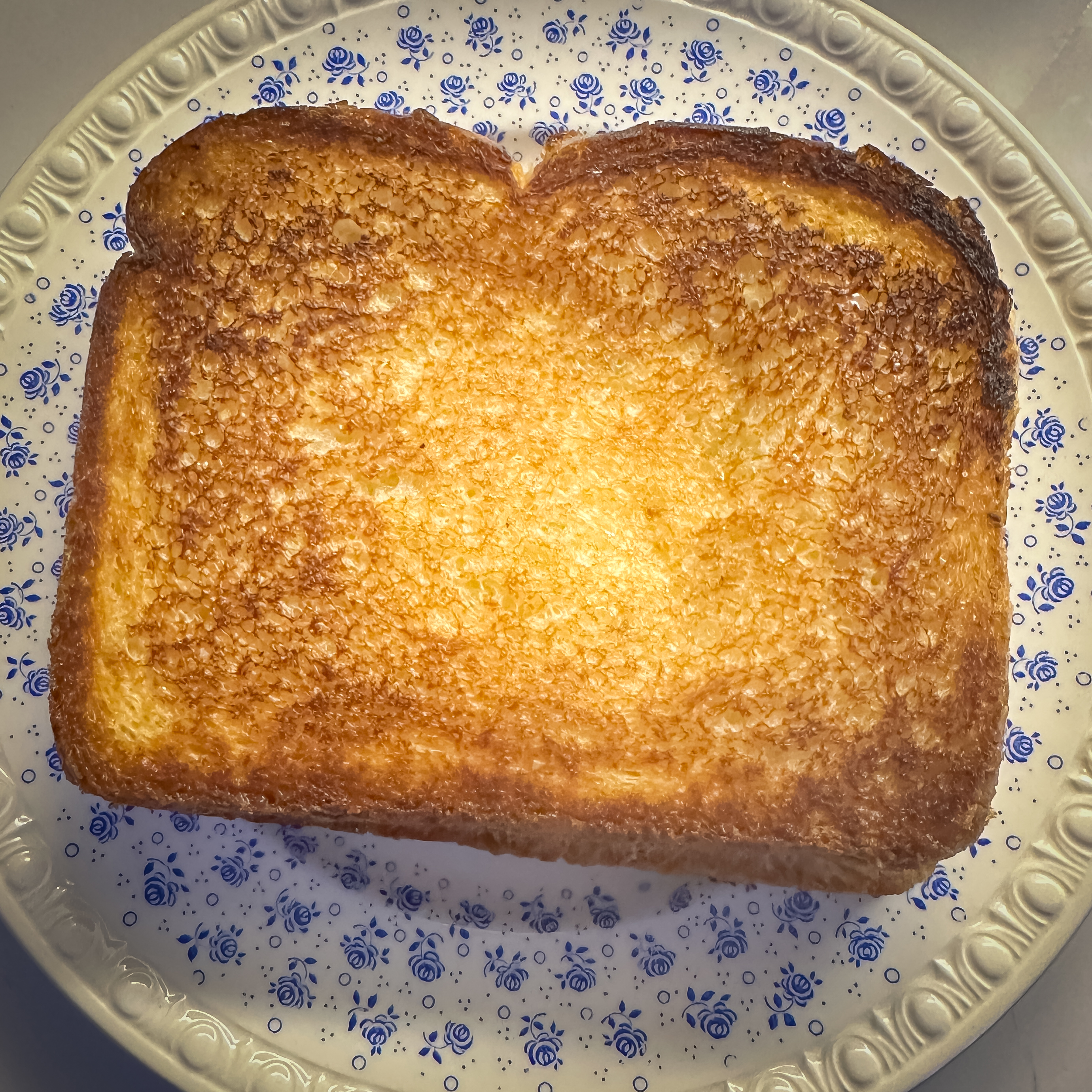
***************************************************************

Corn is another of my favorite summer foods.  A fresh ear bought at a farmer’s market in peak season is sweet and buttery soft.  As a teenager I clearly remember looking forward to my father bringing home a sack full of corn purchased from a farm stand just outside of the town I grew up in – Janesville, Wisconsin.  So, for the months of July and August my mom would prepare beautiful, yellow corn to go with whatever meat she was cooking for dinner that night.  To me it was always the star of the meal.  Ears of corn can be steamed, boiled, grilled or roasted but my mom usually boiled hers – a method I prefer to this day.   However, I have had some delicious grilled corn at my son-in-law’s house.

Kingston eating his dad’s delicious summer grilled corn

My recipe is simple: bring a large pot of water to a boil, husk the corn & remove the silk, put them in the boiling water, cover, wait until water starts to boil again, turn off the heat and cook for about 7 minutes.

On many of those same days I was enjoying the corn my father brought home, I was also working in the fields detasseling what was called “field corn” – corn grown primarily for livestock feed and other uses.  Piling into the back of a truck with a bunch of other sleepy teenagers at five in the morning was not exactly my dream, but it was the best paying summer job that most of us could find.  So, while I shuffled through endless rows of wet, damp stalks removing the pollen-producing tassels from each earn, I didn’t really think about the fact that I was performing a critical form of pollination control (I learned later that this task was crucial in preventing unwanted pollination so that the plants could produce pure hybrid seeds).  Instead I just concentrated on the money I was making and daydreamed about the sky-blue angora sweater I would buy as soon as I got my first paycheck.

***************************************************************

Summer is also about cooking outdoors, no matter what the weather.  Whether it’s a beautiful summer evening or a sweltering afternoon, there is something glorious about cooking outside.  Somehow whatever food is being cooked always tastes better.

Today grilling outdoors is second nature to most Americans, but in reality it only became popular in the 1950’s.  Who knows why exactly, but it must have had something to do with our collective exhaustion at being cooped up indoors for the winter.  After cooking over a hot stove for months on end, everyone is excited to get outside, and enjoy the distinct taste of a grilled steak, bratwurst or even the lowly hot dog.  Magically, the grill with its smoke and char breathes new life into everything that is placed on it.

Though grilling looks easy, I have come to realize that it isn’t.  Knowing when a chicken breast or piece of fish has reached perfect “doneness” is an art that I never acquired given my limited experience at the grill.  When I was younger, grilling was the exclusive domain of men.  It always seemed a little odd to me, but as I became responsible for putting a meal on the table every night of the week, I realized I loved the help!  I had millions of other responsibilities, so assistance with any part of the meal was most welcome (though at the same time, I did miss out on learning the important points of becoming a true grilling guru).

Rob at grill

All that said…in our family I must admit that it is indeed a male who I consider our expert griller and whom I would always turn to for advice should I ever attempt grilling in the future.  My son-in-law Rob Warner (also the professional photographer responsible for all the food photos in my blog) always begins with the basics: he starts with a very clean grill, makes sure it is hot, and never neglects to oil and care for the grates.  But what still seems like alchemy to me is how he always knows when a chicken breast or piece of fish is perfectly done, wonderfully tender and totally delicious.  Rob has generously shared with me his recipe and though he makes many different versions, this one is his “go-to”.

© rob warner photography 2023

Rob Warner’s Marinated Grilled Chicken Breasts
(Serves 4)

4 boneless, skinless chicken breasts
½ tsp kosher salt (or pink Himalayan salt)
1 tablespoon extra virgin olive oil
1 tablespoon Worcestershire sauce
1 tablespoon premium soy sauce
½ tsp lemon pepper seasoning
½ tsp smoked sweet Spanish Paprika
1 tablespoon Grey Poupon Dijon mustard
½- ¾ tsp chopped garlic

Wash chicken breasts under water and pat dry with paper towels, then place in a gallon plastic zip lock bag.

Mix the rest of the ingredients together in a bowl, then add to the plastic bag making sure each breast is thoroughly coated and place bag in refrigerator for 4 to 6 hours.

Turn grill on to 375 to 400 degrees.

When warm, spray grill with olive oil and place breasts directly over hot part of grill.

Cook one side for 6 minutes. Turn over and cook for another 4-5 minutes.  Use an instant-read thermometer to check if the breast is done (it should read 165 degrees) or make a little cut into the middle to check that it’s just about opaque in the center.  Every grill is a little different, so these times may vary (the thermometer is your best friend here!)

Remove from the grill and let chicken rest for for 2 to 3 minutes before serving (this keeps the juices from running out when sliced open).

***************************************************************

Inevitably we always reach Labor Day, which marks the end of this glorious season.  It is time to pack up the swimsuits and beach towels  and bring out the lunch boxes and light cardigans.  Even if you no longer go to school or have kids that go to school, the end of summer always reminds me of the excitement I felt of getting ready for a the school year – new clothes, new teachers, new books. I so looked forward to going to the local school store to pick out all the supplies I would need: pencils, paper and books that would lead me down all kinds of new paths.

Both the beginning and the ending holidays of the summer season – Memorial Day and Labor Day – are usually celebrated outdoors with grilling or picnicking.  But in late May and early September the weather can be iffy in the Chicago area and I have planned many a party that either had to be moved indoors or where I had to share my own sweaters and jackets to keep the guests warm.

However regardless of the weather, we usually went ahead with grilling outside even if we did the eating indoors.  Whether it was a simple meal of hamburgers and hot dogs, or something more discerning like bacon wrapped pork tenderloin or Asian kebobs, my meals always included some sort of potato salad.  I have created so many different ones for Convito’s market selection that I could always vary the type and select a recipe that complimented the main course. One of my favorites and most adaptable recipes follows.


Mama’s Potato Salad
(serves a crowd – cut in half to serve 8-10)

5 pounds yukon gold potatoes – skin on cut into ¾ to -1-inch pieces
2 tablespoons olive oil
2 tablespoons dried marjoram
1 tablespoon salt
2 teaspoons pepper
2 cups diced pancetta
1 ½ cups red onion, chopped
2 cups sun-dried tomatoes chopped julienned
4 cups arugula, loosely chopped

Potatoes
Preheat oven to 350 degrees

In a large mixing bowl, combine the potatoes with the olive oil, marjoram, salt and pepper, making sure the potatoes are mixed well.

Spread potato mixture evenly on a large baking sheet. Roast in oven for approximately 25 minutes or until golden brown.  Remove from oven and let cool.

While potatoes cook, warm a tablespoon of olive oil in a small fry pan over medium high.  Add pancetta and onions, and cook for about 20 minutes until crispy.  Let cool. Cool then mix with the potatoes.

Dressing
¾ cup olive oil
1/3 cup red wine vinegar
1 teaspoon dijon mustard

Mix all together and add salt & pepper to taste.

Assemble
Mix potatoes with sun-dried tomatoes and arugula.  Add dressing and serve.

***************************************************************

It has been said that the one constant in life is change.  I don’t always welcome all of life’s changes, but when it comes to the seasons, I do.  Saying goodbye to the lazy days of summer – walks along the beach, basking in the sun, eating heavenly juicy ripe tomatoes and sweet, tender corn-on-the-cob – was never as difficult if I thought about what lay ahead in Fall.  It became an opportunity for a fresh start where I felt energized noticing the leaves change and the sky becoming a different color.  It was a perfect time to plan something new and something where I could incorporate the upcoming seasonal elements – the food, the weather, the holidays – into whatever might inspire me – a dinner, travel plans, a walk by the lake, my writing.

And so here I toast the end of summer with a very delicious, very summery cocktail, one my grill-master son-in law likes to make, his Mango Margherita.  Mangos are best in the summer and are known as the “King of Fruits”.  Rich in vitamins, minerals and antioxidants, they taste fresh and sweet – just like the season they most happily represent!


My daughter Candace enjoying her husband’s summer Mango Margherita


Mango Margherita
(Serves 4)

¼ cup coarse salt spread out on a plate
8 limes (7 juiced, one cut into 4-5 wedges for garnish)
1 -16 oz bottle of mango juice Rob likes (Mango 100% Juice smoothie from Trader Joes)
1 Tbsp organic light or blue agave
½ Tsp kosher salt
Grand Marnier liqueur
Reposado or Blanco Tequila (brand of choice)
Ice
Large cocktail large shaker with a strainer

Rub lime generously around the rims of four 6 oz. chilled margarita glasses to moisten and dip into the Margherita salt.   Place several ice cubes in each glass to keep cold.

In the cocktail shaker place the salt, agave, lime juice (7 limes) & 10 oz. of the Mango juice.

Stir ingredients together then add a 10 oz. cup of partially crushed ice into the shaker.

Pour in 3 oz of Grand Marnier and 7 oz of Tequila, put the top on the shaker and vigorously shake ingredients together for 15-20 seconds.

Drain any melted ice from the glasses and strain the cocktails into each glass.  Garnish with a lime wedge.  Enjoy !!

We toast to you summer.  It was a good run!  So…thanks and goodbye!  See you again next time around!

Welcome Autumn!

Leslee and Andy Reis celebrate summer at our party in Glencoe

Posted in Uncategorized | 2 Comments

My Journey into the Kitchen: “The Cousins”

Loaded up on pizza and Coca-Cola, the six grandchildren of Ray and Thelma Brussat laughed and squirmed in the back of my brother-in-law Jeff’s gold 1972 Ford Grand Torino station wagon during the thirty-minute drive back to our rented house on Pawleys Island, South Carolina. Ranging in age from four to ten, they all hoped their parents would allow them a quick swim before bedtime, but as we pulled into the driveway, Gardner – the oldest – let out a long, painful moan that turned our heads. He had left his prized army-surplus hat back at the pizzeria and was inconsolable. That very tattered hat – which he wore constantly – was basically his big-kid security blanket. Alarm spread immediately throughout the car with each cousin most likely relating to his or her own anxiety thinking about the horror of losing the very blanket or stuffed animal that helped them feel safe and secure. A distraught Gardner was assured by his mother Joan that she would go back to the restaurant immediately and would return with his hat. However, none of us was really confident she could deliver on that promise.

To everyone’s relief she did. After digging through the restaurant’s garbage cans, she finally found it – covered in tomato sauce and smelling like pizza. It didn’t matter – Gardner would have his beloved hat back and calm would be restored to the tense situation back at the house. Gardner’s hat story is one of those stories that has all the right elements – dismay, tension, anxiety and best of all, a happy ending – and because of that, it is often repeated at family gatherings.

Mom & Dad

Our story as a family begins of course with my parents, Ray and Thelma in Janesville, Wisconsin. I am the middle daughter of three; Joan the oldest and Karen the youngest. Like most kids in the Midwest at that time, our days were filled with everything from school activities to playing afternoon hopscotch to simply running around the neighborhood with the other kids on our block. Like everyone, we experienced the ubiquitous ups and downs inherent in all families.

Eventually the three of us left home for college, married and each had two children, thereby beginning the Brussat’s extended family. Joan was first when Gardner, was born. Karen followed soon-thereafter with Elizabeth, and I was next with Robby. Travis (Karen’s), Doug (Joan’s) and Candace (mine) followed and adhered to a rhythm of one new cousin each year until about six years after we started. At that point we each had a family of four and were ready to call it a day!

Nancy, Thelma, Ray, Joan and Karen

During those early years, my two sisters and I always made it a priority to get our families together whenever possible despite the challenges of raising them in different cities. It was our hope that our children – “the cousins” – become not just relatives, but friends.

However, getting together became increasingly difficult. Distance was a major factor since I lived in Chicago, my older sister Joan in Wichita, Kansas and my younger sister Karen in Connecticut, but we overcame that at least once a year when we all vacationed together at some agreed upon location; various lakes in Wisconsin and a few different beaches in South Carolina. Eventually the kids became too big to be thrown in the back of the station wagon at 4 am for the long drive to our selected vacation spot and as time went on, school, sports, camps and summer vacations began to make it impossible to find a date when everyone could get together, so these full-family reunions eluded us for a period of time.

Whitewater, WI – 1976

Then one afternoon in 1989 my daughter Candace approached me and my sister Karen and lamented not having seen her cousins together at the same time in many years, all of whom were now in college or had just graduated. She suggested that we try to organize a Brussat family reunion that would include everyone. At first Karen and I were dubious that we could make that happen since at that time, the cousins ranged in age from 18 to 24 and were spread out across the country. However, we decided to give it a try. Because Karen and Jeff were living nearby me in Chicago, we thought Chicago – right in the middle of the country – would be the ideal location to lure everyone for our first complete family gathering in years – that is, if they were at all interested.

We were delighted when everyone accepted our invitation, so 1989 marks the official beginning of what came to be known as “The Cousin’s Reunion.” Though my father had passed away two years prior, my mother was still alive and joined us enthusiastically that year.

Cousins in Port Townsend, WA – 1999

We began with a casual catch-up cocktail party on the porch at Karen and Jeff’s charming, cottage home in the Old Town neighborhood of Chicago. Dinner was delicious Jambalaya that concluded with two homemade cakes iced with a message that read “Welcome Cousins”.

Cousins at first reunion in Chicago – 1989

“Welcome Cousins”

Over the next few days, we did a lot of hanging out, took a fascinating architectural boat tour up the Chicago River and had a memorable dinner at the downtown location of my restaurant just off Chicago’s Magnificent Mile.

Architecture tour in Chicago River – 1999

The weekend concluded with a day at my home in suburban Glencoe. I served an al fresco lunch next to our swimming pool that was inspired by my many visits to the South of France. The highlight of the meal was an idea I brought back from one of my favorite restaurants near Cannes, Le Columbe D’Or. I filled a hand-woven basket with crudités: raw carrots, tomatoes, cucumbers, celery, radishes, small zucchini, scallions, endive, mushrooms and hard-cooked eggs. We each selected what we wanted and drizzled one of two vinaigrettes – sometimes both – over the ingredients. The crudités were accompanied with a selection of cheeses and cold meats along with grilled coarse country bread slathered with Boursin cheese. Totally simple. Totally delicious.

Crudité (with Jeff and I in background)

Anchovy Vinaigrette

½ cup extra virgin olive oil
1.4 cup red wine vinegar
1 teaspoon Dijon mustard
Salt & freshly ground pepper to taste*
4 anchovy fillets
1 garlic clove
1 large shallots, peeled and cut into chucks

Combine oil, vinegar, mustard and anchovy fillets in a blender

Blend until mixture is creamy.

Add garlic and shallot and pulsate until minced

*be careful not to over-salt since the anchovies will bring that as well

Fresh Tomato Vinaigrette

2 medium, ripe red tomatoes quartered and seeded
1 shallot – peeled & finely minced
¼ cups minced fresh basil
2 tablespoons white balsamic vinegar
3 tablespoons extra virgin olive oil
Freshly ground pepper and salt to taste

Using a grater, grate the tomato slices with cut side down all the way to the skin and discard skin

Mix all the ingredients together

Taste for seasonings

Add more vinegar to taste

***************************************************************

Dinner that night was a grand seafood buffet featuring many of the regional Italian dishes I had discovered in my Italian travels. It was clear by the end of the weekend that this was a group that truly enjoyed eating – as well as simply being together – so it was everyone’s desire to make sure that we would all gather again, sooner rather than later. We all agreed on a timeline for future reunions to take place at intervals of no more than five years.

We also made other “official” decisions – most important was that the oldest cousin (Gardner) would be the organizer of the next reunion. It was time for the next generation to take the organizational reins! The cousin-in-charge would choose the location for the reunion, as well as arrange all other pertinent details. After Gardner, that responsibility would pass to the next oldest cousin (Elizabeth) and so on, until we ended with “baby cousin” Candace. We figured if we continued to pull off these get-togethers, we could start all over again. But that was a problem for another day!
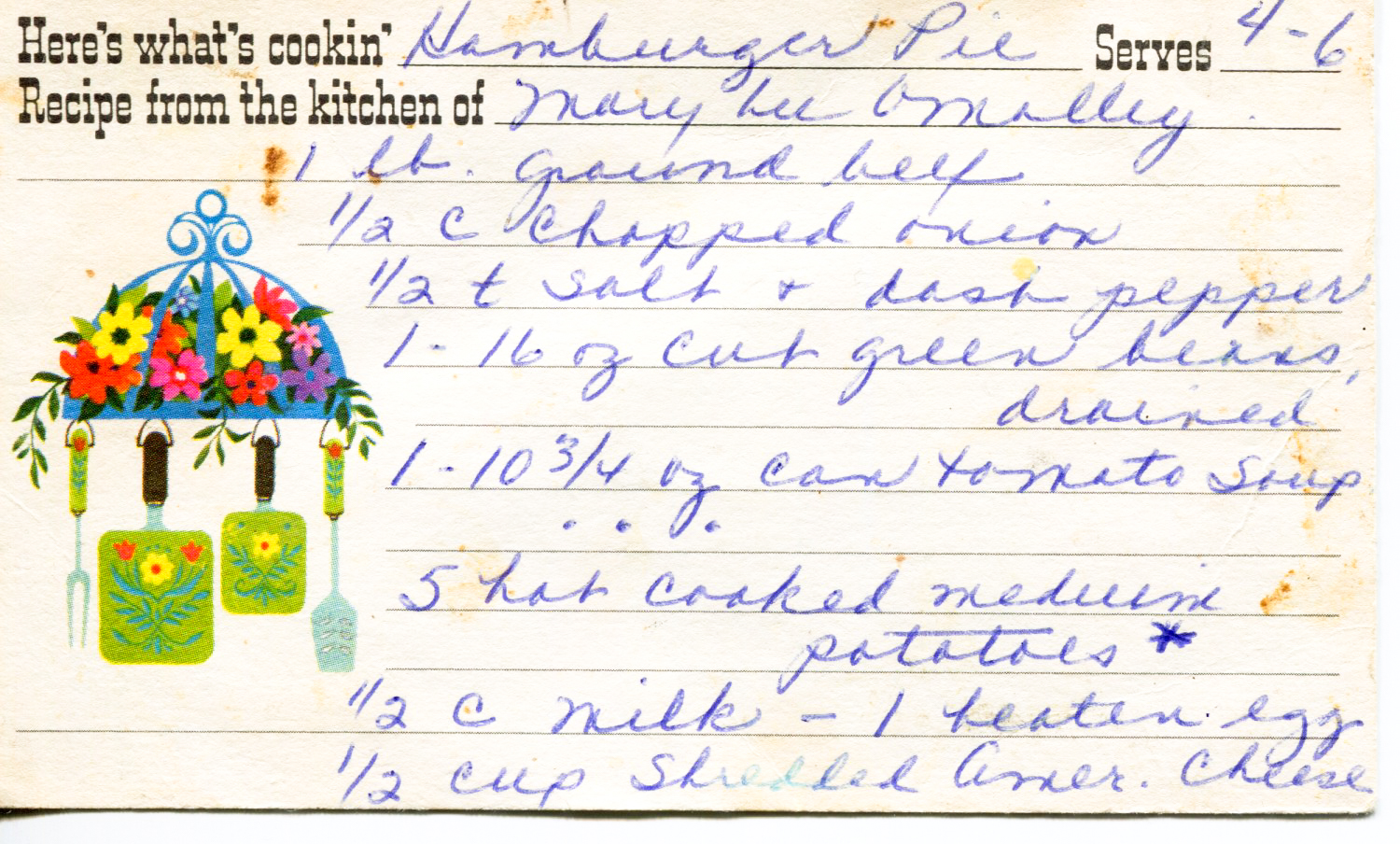
To establish some formality to these hand-offs, my brother-in-law Jeff purchased a candlestick which all the cousins signed. It was to become a sort-of baton to pass to the next in line at the conclusion of each reunion.

Gardner lighting the candle – 1989

Another collective decision made by the cousins (late one night after a few drinks) was that each group of reunion participants were defined based on their relationship to the family. The original six cousins were Blood Cousins, while the significant others to those six were labeled Honorary Cousins. Any offspring of the original six were Second Generation Blood Cousins (SGBCs). After our mother’s passing, the three sisters became the official Matriarchs and Jeff the sole Patriarch of the family.

Amazingly, we did manage to stick to getting together every five-years, but just barely. In the beginning there were just too many major events that disrupted official reunion gatherings – graduations, new jobs, weddings and births. But since those actually brought us all together anyway, we credited them for keeping us connected even if we didn’t call them “official” reunions.

At the end of the first five years, oldest cousin Gardner had yet to plan a reunion, so Karen and Jeff helped him out by holding the 2nd “official” reunion at their home in Connecticut during the Christmas holiday. All cousins attended – and with many of their soon-to-become Honorary Cousins. Tessa, our first and only SGBC at the time, was also in attendance and was easily the most popular person in Connecticut that weekend with everyone demanding lap time from this adorable new addition to the family.

Storytelling began at our very first reunion and reminiscing about our past and all the colorful people in it, increased as time went on. Some of the earliest memories my sisters and I have of our parents are food memories that we enjoyed sharing with the rest of the family. Our father’s love of food was legendary. It was not just eating food that he loved, but everything about it: growing it, cooking it, canning it, and especially sharing it with his family and friends.

Many of those memories centered around our father’s garden. It was overflowing with all kinds of vegetables and fruits and provided our family with a myriad of produce from early spring all the way through late fall of every year I can remember. Each vegetable and fruit took their turn in the spotlight – lettuce peaking first in May followed by asparagus and strawberries and rhubarb. Then in the summer months a bonanza of produce would ripen – each item immediately making its way to our kitchen table: plump juicy tomatoes; cool, fresh cucumbers; crunchy green beans; giant zucchini; and sweet, delicate raspberries to name just a few. Some were sauteed, some canned and some we plucked right out of the garden and eaten raw.

Dad

Many decades later, Brussat family recipes continue to be a hit at our reunion gatherings and usually stimulate a discussion about the history of whatever dish was being served. My Dad’s tangy zucchini pickles are a perfect example. Before our 4th official reunion in Green Lake, Wisconsin, I canned a dozen jars of them in my Wilmette restaurant – of course using his recipe – then adhered a label of Grandpa’s Ray’s face (designed by sister Karen) to each jar and passed them out to all the adults at the reunion. Enjoying those pickles as we have over the years, always triggers stories about our parent’s marathon end-of-the-season canning sessions. Surrounded by mason jars, lids, rims and other canning equipment, they preserved an amazing selection of canned products – everything from raspberry preserves, grape jelly, stewed tomatoes, green beans to exotic gooseberry jam all eventually finding their way to the shelves of our bountiful basement fruit cellar.
Photo of zucchini pickle label designed by artist sister Karen

Ray Brussat’s Zucchini Pickles

2 pounds small, firm zucchini
2 medium onions
¼ cup sea salt
1-pint white vinegar
1 cup sugar
1 teaspoon each celery seed, mustard seed, turmeric
½ teaspoon dry mustard

Wash unpeeled zucchini

Slice onion into very thin slices

Place both in bowl and cover with water. Add salt. Let stand for 1 hour. Drain.

Place vinegar, sugar, celery seed, mustard seed, turmeric and dry mustard in a saucepan. Bring to a boil over medium heat. Pour over zucchini and onions. Let stand for 1 hour. Put all back into saucepan and bring to a boil. Simmer for 3 minutes. Pack in 3 hot sterilized pint jars and seal. Process in hot water bath.

Note: Can be stored in refrigerator without processing for 2 to 3 weeks.

***************************************************************

Over the years, that fruit cellar in the basement of our Janesville home had become a place of wonder to all the grandkids. Of course they recalled the cellar itself – the creaky stairs they had to descend to get there – setting a somewhat foreboding mood. Then at the bottom of those stairs they usually headed into Grandpa’s workshop, snapped on the hanging light bulb and observed the wall of never-before-seen tools. Around the corner they found Grandma’s black upright piano which invited them to “ping” any key they wanted without being shushed by their parents. There were also boxes piled high, shelves containing wooden trays hand painted (rosemaling) by Grandma, a slide projector and screen and a bunch of empty lawn chairs where each cousin would sit for one of Grandpa’s favorite activities – his slide show presentation of the latest family travels and sometimes even old images of their moms – Joan, Nancy and Karen – at various stages of growing up. Fascinating!

***************************************************************

Reunions are always a great time to share common memories and the six cousins had many. With the addition of spouses and new little babies over the years, our “extended family” (now consisting of 23 people at our last reunion) – makes for a very reliable story-generation-machine.
At our second reunion in Green Lake, Wisconsin hosted by my son Rob, we continued to honor our original matriarch and patriarch. The three sisters and Jeff cooked “A Wisconsin Memories Dinner” based on meals originally prepared by Ray and Thelma as well as some favorite Supper Club dishes that were very much a part of the three sisters’ and Jeff’s childhood growing up in Janesville. Our Memory Lane began auspiciously with our parent’s favorite cocktail – Manhattans – mixed to perfection by Jeff (as always).

One culinary constant has been Thelma’s deviled eggs. They make their appearance at almost every reunion as an appetizer or as a part of the meal and are always gobbled up as soon as they are placed on the table. We seem to never make enough. The Barocci/Brussat/Warner family also featured them as a part of our dinner theme “Thelma’s Classic American Picnic” at our last reunion in Colorado in 2022 when Doug was in charge.


In the beginning these reunions took place at various times of the year, but once the cousins became parents it became necessary to schedule the events in the summer months during school vacations. Most gatherings are five nights. The first night we always seem to order pizza from a local pizzeria allowing everyone a night to get organized and catch-up and gives the cousin-organizer time to stock up on kitchen supplies, beer and wine. Three nights are reserved for family cooking, and one is usually a restaurant night selected by the cousin-in-charge.
We have assembled 11 times officially over the past 33 years and have held gatherings in 10 different states – Illinois, Connecticut, Washington, Utah, Nevada, Michigan, California, Oregon, twice in Wisconsin and twice in Colorado. Eventually, it was decided that each sister and their family would be in charge of dinner for one night – selecting the menu, grocery shopping and cooking for the whole group. Family themes began to emerge for each sister’s assigned dinners reflecting each family’s interests, their own tastes and how ambitious they were willing to get.

Mays Grilling in Breckenridge, CO – 2022

Joan’s family – aka the Brussat-May-Cole contingent – does a lot of good old American grilling with meat as the centerpiece. Steak is frequently the choice, though chicken, sausage and sometimes salmon have made an appearance from time to time. Sometimes they also mix it up with a Mexican theme. At Travis’s Bend, Oregon reunion the Mays delicious Mexican Fiesta meal included a whole array of grilled meats and veggies to fill tacos, as well as beans and of course, a selection of spicy salsas. I loved the fact that one of the most popular dishes of the whole reunion was a Velveeta Cheese Queso Dip, (Velveeta often described as “not real cheese”). Sometimes sophisticated gourmet is not where it’s at!

Karen’s family – the Brussat-Butlers – likes to match their dinner theme to the location where the reunion was held. At Rob B’s Sheboygan, Wisconsin reunion their meal brought back the Supper Club theme, while at Doug’s Colorado reunion in Estes Park they made a Chuckwagon Dinner featuring all manner of cowboy fare with far-out names like Hop Along Hotdogs, He-Man Hamburgers and Boot Kicking Chili. And at Travis’s Oregon reunion their menu featured Northwest cuisine – Pacific Northwest Salmon being the star.

Most recently in Breckenridge, Colorado the Butler dinner was inspired by the First Nations in recognition of the original inhabitants of the area. The meal which they called “Spirit of the Mountains” began with Mountain High Manhattan’s and Freedom Old Fashioned mix by Travis, a cocktail expert and chip of the ole’ block (his Dad Jeff has always been my favorite mixologist!) The meal was anchored by pulled buffalo meat sliders and accompanied by a selection of wonderful salads Elizabeth discovered in a cookbook she found at The National Museum of the American Indian. We not only enjoyed a delicious meal but got an important history lesson as well.
One of the salads in that meal came from that cookbook and is called “The Three Sisters Salad”. The cookbook claims it to be named after three nearby volcanic peaks in the Cascade mountains called the Three Sisters, but Karen and I like to imagine the dish was actually a tribute to the three Brussat sisters who originally brought this whole amazing group together.


Three Sisters Salad
(Serves 4 – 6)

This recipe has been excerpted from the National Museum of the American Indian’s Mitsitam Cafe Cookbook
Think of the three sisters as the holy trinity of some indigenous cultures, a trifecta of agriculture sustainability. They are represented by corn, beans and squash and they’re an important facet of indigenous culture and foodways. A symbolic triad where beans are planted at the base of the corn stalks, the stalks offering the climbing bean vines support as they reach for the sunlight. The Beans in turn pump beneficial nitrogen back into the soil, fertilizing the corn and squash while the squash’s broad spiney leaves protect the bean plants from predatory animals

Apple Cider Vinaigrette
6 table apple cider vinegar
¼ cup honey
¾ cup canola oil (or we used olive oil)
salt & pepper to taste
For Salad
2 zucchinis, halved lengthwise and seeded
2 yellow summer squash, same as above
2 ears corn, husked
¼ cup oil
Salt and pepper to taste
2 cups cooked cranberry beans, drained
1 medium yellow tomato or ¾ cups yellow cherry tomatoes, diced
2 plum tomatoes (Roma) or ¾ red cherry tomatoes, diced

Prepare a hot fire in a charcoal grill or preheat a gas grill. Brush the zucchini squash and corn with oil.

Season vegetables with salt and pepper

Grill the zucchini and squash until crisp-tender and grill-marked on all sides, approximately 10 minutes

At the same time, grill the corn until lightly browned, turning to cook on all sides, approximately 5 minutes

Transfer zucchini and squash to a cutting board and finely dice, then empty into a large bowl

Cut the kernels from the corn and add to the bowl along with the beans and tomatoes

Add ¼ of vinaigrette and toss

Season with salt and pepper

Serve at room temperature

***************************************************************

My family’s dinners tend to feature Italian cuisine. We have adapted many recipes originally developed in my restaurant, including classic sauces like Bolognese (Emilia Romagna blog)and Amatriciana (Lazio I -Begin at the Beginning blog) and a hearty Tuscan White Bean Salad (Tuscany I – My Country Experience blog) that was a big hit. We also did our share of grilling, including a memorable dinner of Italian sausage and spicy broccolini inspired by the American-Italian food common in my son’s Brooklyn neighborhood. Usually our meals begin with an array of antipasti from salamis and cheese and marinated vegetables to crostini and breadsticks.

And then there were the dishes that defied any actual theme. Besides deviled eggs someone always cooks the ultimate comfort food, Mac and cheese. The recipe originated with Karen though at our last reunion Doug’s wife Tina took over the cooking duties (and wisely took Karen’s advice to “make a ton because everyone gobbles it up!”)

Old Fashioned Baked Macaroni and Cheese

8 oz (1/2 pkg.) elbow macaroni noodles
¼ cup butter
3 tablespoons all-purpose flour
1/8 teaspoon dry mustard
2 cups milk
2 – 3 cups (8-12 ounces) American cheese shredded from a block or cubed (like Land of Lakes)
1 cup breadcrumbs browned in butter in a fry pan

Preheat oven to 350 F

Cook noodles in boiling water for 3 minutes then drain

In a frying pan, melt the butter and slowly blend in the flour and mustard so its not lumpy

Cook until mixture is smooth and bubbly; gradually adding the milk

Cook & stir over medium heat until mixture begins to boil.  Reduce heat and simmer one minute, stirring constantly

Remove from the heat and gradually mix in the cheese

Return to heat and cook until cheese is melted (See how 3 cups of cheese looks and then add more if not cheesy enough. The trick is to have a lot of sauce, so the noodles end up nice and cheesy…if not the dish is too dry)

Add pasta gradually to the cheese mixture and stir. Be careful not to add too many noodles.

Pour into a casserole dish

Top with browned breadcrumbs (optional – lots of kids don’t like them)

Bake for 25 minutes or until cheese is bubbly and breadcrumbs are golden brown.

***************************************************************

The spouses of the cousins have become an essential part of the Brussat family’s culinary landscape. Not only do they enthusiastically participate in the preparation of their own family meal, but they have also introduced us to many of their own family traditions and recipes. Mandy could be counted on for a delicious vegetable or fruit salad or two, Angie enjoys baking and creative table setting, while Rob Warner loves to create dishes for breakfast or lunch using leftovers from each family’s theme meal (we always made too much) which he invariably dresses up with whatever spices or herbs he can get his hands on.  At an early reunion, Elizabeth’s wife Chris made a rice and egg dish with bacon, scallions and soy sauce that reflected the flavors of her Korean-Japanese heritage. It became so popular that it is requested for breakfast by everyone – especially the young cousins – at every reunion thereafter.

Chris’s Rice
(serves – hard to say when you have hungry little cousins)

2 cups cooked long grain white rice cooked al dente (day old is ideal, but if made day of let cool first, then use in this dish)
6-8 strips bacon fried in a fry an until crisp (Set aside and when cooled, crumble)
2 tablespoons soy sauce
½ cup scallions – green part sliced into thin rings.
Freshly ground pepper

In the skillet that you have cooked the bacon, drain most of the grease

Over medium heat, add the cooked rice and stir

Add the bacon and mix well

Add the soy and the green scallions

Stir fry until hot

Add freshly grated black pepper and serve.

***************************************************************

As a woman who grew up in the 40s and 50s, it has been fascinating to observe the changing roles of women and men in the kitchen. Though my mom did most of the everyday cooking and baking when we were growing up, my father was not averse to putting on an apron and helping which was uncommon back then. When grilling became fashionable in the 1950’s, my dad, of course, became the family “grill man”, but he had already established his culinary bona fides with his prodigious gardening skills and his canning ability even producing his own special pickle recipe. He was a man ahead of his times.

Angie baking @ 9000′

Each of the cousins and honorary cousins have carved out their own particular role in the kitchen. As the executive chef of Convito Cafe & Market and author or this decade-long food blog, I was perhaps the most accredited chef in a bunch of great cooks, but the reality is that we all learned from one another. I am always thrilled to share any of my own recipes or cooking knowledge with anyone who is interested, but I am even more excited to learn from the rest of the group. At this last get-together Doug shared some pithy and practical meat-seasoning advice (even gifting us all with a can of his favorite seasoning – Southern Flavor) as he grilled up a bevy of steaks. Angie imparted her hard-won lessons on high-altitude baking when she made cupcakes at 10,000 feet. And my son Rob reminded us that oysters shucking not only required skill but also some muscle!

Rob shucking oysters

***************************************************************

Besides our great diners, other traditions have been introduced through the years. Costume night is honored at every reunion and began auspiciously in 1999 at our third reunion hosted by Elizabeth in Port Townsend, Washington with her “Come as Your Mother” party. It was hilarious seeing what our kids thought of us when they showed up decked out in everything from hippie attire to fashions of the 70’s and 80’s. Karen’s and I wore fur stoles, small vintage hats with veils, and dress gloves in homage to our mothers “glamorous” era of the 30s ad early 40s. There were many laughs especially when Gardner and Doug brought down the house with their interpretation of their mother, Joan. She had served on the Wichita City Council for eight years and had successfully delivered many high-profile projects but also taken occasionally unpopular positions. As a public figure she would often find herself either celebrated or reviled in the local papers, but either way she was often caricatured. The trait most artists chose to inflate was her “big hair.” This inspired her sons to appear in huge blond wigs and fancy red clothing – her favorite color.

Gardner and Doug as their Mom Joan

Our costume nights have also included “Come as your 16-Year-Old-Self,” “Come as Your Favorite Artist,” and “Come as Your Favorite Movie Character.” Occasionally the dinners match the costume party like the May’s Cowboy Steak and Sausage meal in Breckenridge with their “Come as Your Favorite Western Character (dead or alive)” as well as the brat-and-sausage-heavy Brussat-Barocci-Warner dinner in Sheboygan, Wisconsin where we asked everyone to “Come as your Favorite German”. We served everything German from Schnitzel to Knack Wurst to Sauerkraut ending with my father’s favorite German Cheesecake.

Come As Your Favorite German night, Sheboygan, WI – 2016

Other fun activities were planned for each reunion. Mandy’s face painting was wildly popular with the little ones, as was Joan’s “Who’s That Baby?” photo contest where we tried to guess which baby photo matched which grown-up family member. The baby photo of now beautiful Tina got the most laughs and was named “Alien Baby.” At Trav’s Bend Oregon reunion he brought along a giant inflatable Unicorn that carried the clan up and down the Deschutes River.

Bend, OR – 2018

But the most popular activity is always Aunt Karen’s Art Project which began at our 4th Official Reunion when there were five very young second-generation cousins in attendance who needed to be entertained! In deference to the artistic skills of this group (some were still essentially babies) and inspired by our Green Lake, Wisconsin location, Karen brought poster-board cutouts of different shaped fish for the kids to color with crayons and watercolors. As they got older the projects became more sophisticated, though the jumping-off point of cut-outs thematically tied to the reunion location always remained. Karen immediately noticed that this project was beloved not just by the youngsters, but also the adults, because almost everyone participates.

My favorite was the Kingfisher project. For Candace’s reunion, we rented a house in Michigan. From Karen’s research (all the sister’s do extensive research in almost everything they do – our mother was a librarian) she discovered that Lake Michigan was the official home of the belted Kingfisher, so of course, our project was to make Kingfisher hats! They were so spectacular it inspired us to parade them on the road in front of our house the final night of our reunion – making quite a sight …and quite a ruckus.
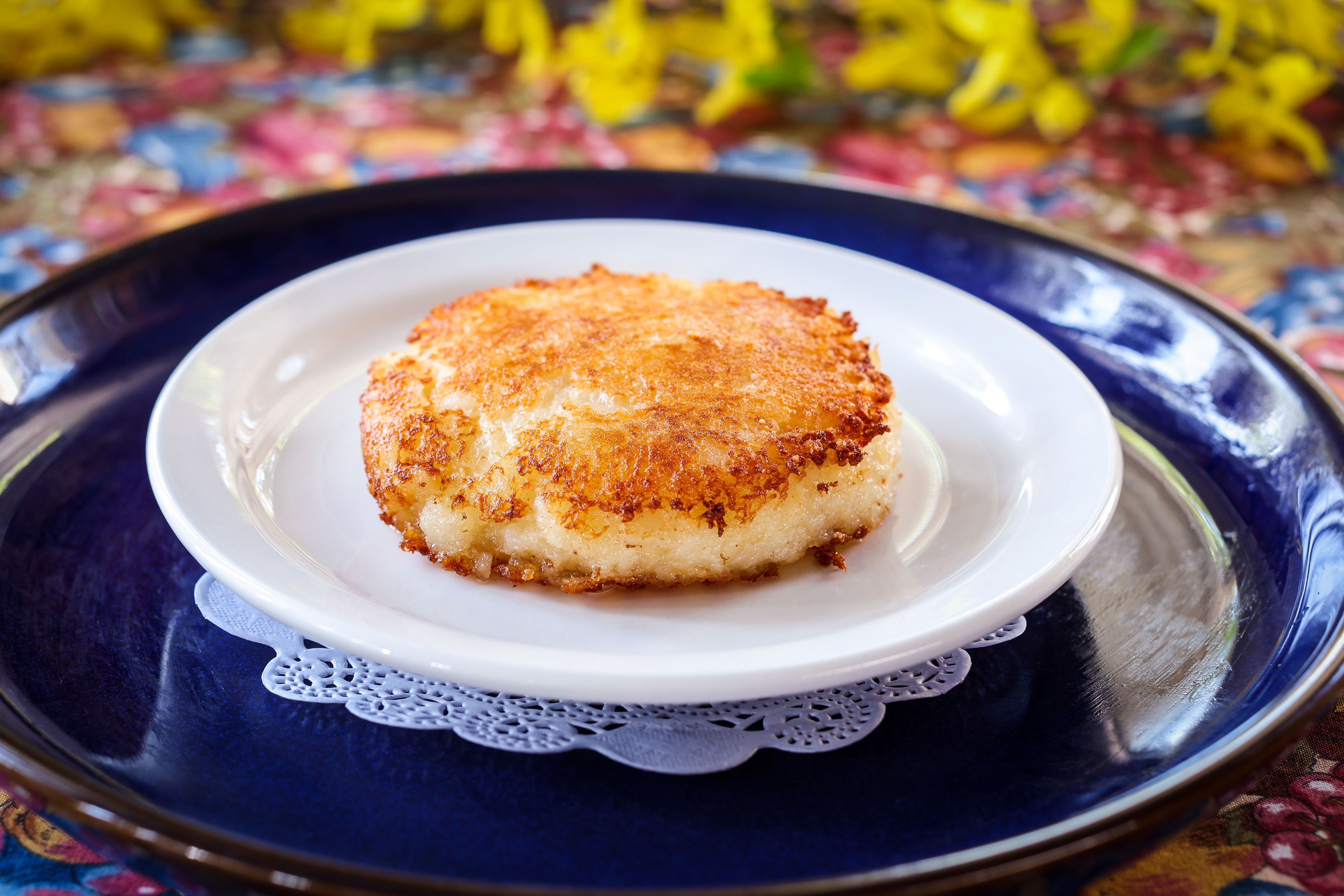
South Haven, MI – 2012

Some activities were dictated by the location of our reunion. Fishing on Lake Michigan arranged by Jeff was a natural fit. Swimming was also a constant given the countless hours of entertainment for the kids it provided. During this past reunion in the mountains of Colorado, there were any number of mountain pursuits including mountain biking, gondola rides and just good old mountain hiking.

Jeff Fishing, South Haven, MI – 2012

Amazingly, our clan even has our own Coat of Arms thanks to Doug who created a family logo and has it stitched into baseball hats each year. The logo is in the form of a tree. The roots and the trunk represent Grandma and Grandpa Brussat, the three main branches represent each of the sisters each of which have two branches representing their kids. At our most recent reunion Doug tied these hats all the way back to the 70s when he quipped that they were as close as he could find to the worn in, faded, olive green army hat Gardner wore (and lost) at one of our first family vacations. He joked that he, however, refrained from replicating the pizza smell that was permanently embedded in the hat after retrieving it from the restaurant’s trash can.

Jeff & Tessa with original hats

Outside of our “official” gatherings, we have all made a point to keep in touch -whether in small or large groups. At the beginning of the pandemic, we even created a ‘cousin’s thread” where we communicated daily by text, posting all manner of photos hoping to infuse a little humor into our isolation; silly pet photos, dishes we were cooking for dinner that night and (our favorite) the evening’s cocktail! A. friendly competition was launched to see who could produce either the funniest or most artistic daily cocktail photo. At the conclusion of this isolation period, my sister Karen and I put together a book of all of our postings entitled The Cousin’s Covid Journal.

Like all families, ours is not exempt from tragedy like the sudden, accidental death of our first SGBC, adorable Tessa. At every reunion we light a candle in her memory and tell Tessa stories. Storytelling is a powerful way to heal and though tears are always shed during Tessa stories, we have eventually found a way to remember her with joy and optimism. The fact that she touched each and every one of us is evidence that her short time with us was not in vain.

This past reunion we honored the passing of my sister Joan with a Lazy Daisy cake, baked using the very same recipe that she used when she made this cake for her boy’s birthdays every year. Her sons Gardner and Doug baked it for honorary cousin Chris’ birthday which was the very last day of our reunion. It was accompanied by warm and happy memories of Joan and a request by many to add this delicious cake to our “must have” dishes at following reunions.

In this day and age of complicated, contentious family divisions, I feel very lucky to be a member of a family that truly enjoys one another’s company and is pretty much on the same page in most of life’s larger issues. With each passing reunion, our cousin’s canvas has become filled with a collection of old and new memories and because the whole group seems to love all those unforgettable meals, costume nights, art projects and crazy cousin activities – I think our official reunions will continue for some time to come. In 1989 no one was sure how long these get-togethers would last and if we would continue to enjoy one another, but this next reunion that baby Candace will organize will complete our second cycle and be our 12th Reunion. Ray and Thelma would be so pleased!

The Next Generation: Napa, CA – 2014

Posted in Uncategorized | 2 Comments

My Journey into the Kitchen: “The Great Outdoors”


Loosely translated Al Fresco dining simply means “dining outside” in Italian.  In most places it is especially popular in summer months when skies are milky blue, days are long and lazy and majestic reddish sunsets cast their romantic glow far into the evening.  Dining outside can take place anywhere from parks to cafes to gardens or even in your own backyard.  It can be a totally casual experience like rustic picnics on a blanket or a formal affair atop a fancy city rooftop or poolside under striped patio umbrellas.

When I was growing up in southern Wisconsin, dining outside simply meant picnics: casual, relaxed, unpretentious meals at a neighborhood park or a nearby lake.   I clearly remember my excitement when my mom and dad announced that we would be going to Palmer Park in my hometown of Janesville, WI for a picnic.  The anticipation grew as we piled into the family car already laden with blankets, jugs of lemonade and my mother’s green metal picnic basket packed with carrot sticks, deviled eggs, fried chicken, potato salad, rolls, potato chips, coleslaw and always…chocolate cupcakes.


Karen & I ready for a picnic

If we were lucky, we would sit at one of the park’s rustic picnic tables, but since those were always in demand especially on beautiful sunny days, we came prepared to sit on the grass. While my parents unpacked all the goodies and spread one of the blankets over a patch of lush green grass, my sisters and I would run off to play on the swings or my favorite playground apparatus, the merry-go-round.


Our picnic menu remained fairly consistent over the years.  The icing on the chocolate cupcakes might switch from vanilla to chocolate, but the rest of the items changed very little, which for kids – who value the familiar over the exotic – is usually a plus.  I was reminded of this “childhood doctrine” several years ago when I brought a new recipe for deviled eggs to my daughter’s Easter dinner.  The recipe was from a fellow Dames d’Escoffier member (women’s professional food and wine organization), Carol Smoler, who had brought them to a Dames’ potluck.

The eggs were a gorgeous magenta color from being soaked in beet water.  They still tasted pretty much the same, but the spectacular presentation was what had caught my eye, so I decided to deviate from my usual recipe and surprise everyone with colorful deviled eggs that I thought captured the pastel Easter palate. Deviled eggs usually disappear pretty quicky at these family gatherings, but not so with these.  No child came near them!  Even the adults looked at them rather suspiciously.  Needless to say, I decided that there are some recipes that are classics, and the versions that stray from the “usual”, need to be reserved for groups with more exotic appetites.


***************************************************************

In the summer my Brooklyn grandchildren, Neko and Isis, often come to visit me and their cousins Kingston and Kianna for a long weekend leaving their parents back in Brooklyn.  During these visits I always conduct some sort of a cooking class hoping to teach them some cooking skills as well as to just have some fun in the kitchen.   I first select a theme: one year Italian, one year Asian, and the last time was my mother’s picnic spread that I had grown up with.  I divide up the tasks, which when we did the picnic, was having two kids make deviled eggs (the REAL recipe) and two make fried chicken.  However, instead of frying the chicken – which can be messy and dangerous – I used a recipe from Abby Mandel’s Celebrating the Midwestern Table cookbook – a low-fat, oven-baked, crispy-crust, skinless breast.  I had made this recipe once before and remembered how delicious it was.  Baking also avoids the usual oil splatter which occurs when frying chicken – not to mention the oily mess that pretty much surrounds the whole cooking area.

Kianna and Isis making deviled eggs

We concluded our cooking session making chocolate cupcakes with Neko (my baker grandchild) in charge. Frosting cupcakes is a perfect family activity. It’s fun and often fosters a friendly competition of who can frost and decorate the most gorgeous cupcake. Finishing a cupcake with icing and sprinkles can change a simple cupcake into a showstopper – and this they all did.  The amount of icing and sprinkles was usually greater than the actual cake part of the cupcake.  But they were all beautiful!

Neko in charge of cupcake making

A big part of the pleasure – and sometimes the disappointment – of “al fresco” dining is the weather.  For this particular picnic, an evening rainstorm was predicted so we kept our fingers crossed as we packed everything up and walked to a park on the Lake Michigan lakefront, just three blocks from my condo.  Thankfully, it didn’t rain until much later that evening, but the winds were so fierce as to make it almost impossible to keep the paper tablecloth, napkins, and plates from flying off into the stratosphere.  Ultimately, we found enough rocks near the lake to weigh down all the paper goods so when our guests arrived – my daughter Candace and son-in-law Rob – we were ready to enjoy our picnic despite the wind.  Outside eating, no matter where, requires all good picnickers to come prepared for just about anything.

Kianna, Kingston, Isis and Neko fighting the Lake Michigan wind

Thelma’s Classic picnic menu also lives on at Convito.  We call it the Americano.  Each summer Convito offers Picnic Meals to Go with various menu selections all packaged complete with paper napkins & plastic utensils.  Customers order them for a wide variety of outside dining experiences from boat trips, business meetings, family gatherings and especially concerts at Ravinia, an enchanting 36-acre park music venue located in a suburb north of Wilmette in Highland Park, Illinois.  The primary venue is a seated open-air Pavilion, but most popular is the lovely sprawling lawn where picnicking has become an art.  Some of the picnickers go crazy and bring candelabras, crystal goblets, and a myriad of china plates to hold elegant picnic fare from pate and caviar to smoked salmon and lobster.  The “candelabra crew” might be sitting next to a more casual group of picknickers eating good old reliable hot dogs and potato salad.  Everything goes at Ravinia.  And for me and my daughter-partner, Candace, it is always exciting to see Convito’s rust colored shopping bags dotted over the entire lawn filled with one of our meals-to-go.  Such great advertising!

Ravinia picnic

 Side dishes for Convito’s “Americano” have changed over the years.  One of the items we have sometimes offered is a sophisticated reinterpretation of my mom’s classic cole slaw – a slaw we call City Slaw.


© rob warner photography 2022

City Slaw

1 ½ # julienned (thin) cabbage
12 oz. baked ham thinly julienned into 1 inch length
12 oz. Gruyere thinly julienned into 1-inch lengths
2 cups (packed) julienned spinach
1 cup julienned scallions (cut on diagonal)
2 tablespoons salt & pepper mix
1 ½ cups red wine vinaigrette
½ cup Gorgonzola

Mix cabbage, ham, Gruyere, spinach, scallions, salt & pepper

Mix vinaigrette (red wine vinegar and olive oil to taste) with Gorgonzola and fold into salad


***************************************************************

As important as the choice and preparation of all the food and accoutrements are when planning a picnic, the art of packing and transporting it to a distant location is one of the most critical and undervalued challenges in guaranteeing a successful meal.  It demands forethought, organization, the acquisition of a few critical pieces of picnic gear and a consistently underappreciated amount of effort.  One picnic that I was lucky enough to attend many times was my sister, Karen, and brother-in-law Jeff’s lobster picnic in coastal Connecticut.  Their forethought and effort were amazing and always resulted in what I consider to be the ultimate picnic experience!  The destination was Roton Point, located on Long Island Sound in Rowayton, Connecticut, a casually elegant swimming, sailing, and tennis association known for its views and its friendly informality.  It was the furthest thing you can think of from a stuffy East Coast country club scene, and that atmosphere alone made it worth the trip.  But it was really the food – oh the food – that made it so memorable.  Before we could feast though, they first had to create the perfect picnic environment.

Jeff would usually drive over early in the morning and claim a prime picnic table (or two, depending on the size of the group) close to the water by clipping down a tablecloth, then head back home to prepare the meal with Karen and gather supplies.  Later in the day after all the food, drink and picnicking supplies were prepped, we would drive back over to Roton Point and park their packed-to-the-gills minivan up the hill in front of a beautiful turn-of-the-century restored hotel where we would unpack a crazy amount of “stuff”.  Karen would immediately go to work setting the table, first laying out her red bandana patterned tablecloth with a vase or two of fresh flowers from her garden.  At the same time, Jeff went to their storage locker to bring out folding chairs for all the guests.  Arranging the pots and pans, the plates and bowls, the silverware, glasses, the food and of course, the bar came next.  Jeff’s beverage selections depended on the food being served and the guest’s drink preferences, and he always made a point of knowing those preferences – always the perfect host. A Butler trait!  Standard fare for lobster night was usually white wine, beer and Margheritas.

Karen, Rob Barocci and Rob Warner sharing a pre-dinner drink at Roton Point

After the guests arrived and were settled with drinks in hand, appetizers were served.  My favorite was what we eventually called “Tessa’s Bruschetta”.  Tessa was Karen and Jeff’s granddaughter.  Their daughter, Elizabeth would bring Tessa every summer from her home in Seattle to stay with her grandparents for six weeks.

Tessa with her Bruschetta

The time frame usually corresponded with a Food show I attended each summer in New York, so I was lucky enough to come to Connecticut and spend time with all three of them.  Tessa was the Brussat sister’s very first grandchild, so we all vied for her attention. That fact alone made her special, but other things did as well. Tessa was wise beyond her years and had the most sophisticated palate I have ever encountered in a child.  The summer we “conferred” on making her bruschetta, she was probably 8 or 9 years old.  Not only was her recipe delicious but as was always the case with Tessa, it was such fun acting as her assistant.  So many laughs.  Her sense of humor was also way beyond her age. *


© rob warner photography 2022


The next course was “steamers”, clams that were steamed over 2 inches of water in a pot that Jeff placed on the burner of his old camp stove, another item he always transported to the site. Once the clams were open (usually after 5 minutes), we all moved to the picnic table where we were each served a plate of clams, along with small bowls of water to rinse off the sand from the clams and of course, individual bowls of melted butter for dipping.

Enjoying steamers

While we were enjoying appetizers, drinks and our first course, the water to cook the lobster was slowly coming to a boil on a grill next to our picnic spot.  Jeff would carefully lower the fresh lobsters into the pot and keep an eye on them while he made the rounds and topped off everyone’s drink.  In the meantime, Karen was busy putting out the side dishes and refreshing the table after our first course.  Eventually Jeff would then pull the bright red lobsters from the pot and distribute one to all the guests along with shell-crackers and tiny forks for pulling the rich meat from the shells.  Karen would hand around more bowls of melted butter and pass out dinner rolls, corn on the cob and usually a salad like coleslaw, potato salad or often both!

Rob Barocci with lobsters

It was always such a luxurious experience sitting at a picnic table on Long Island Sound savoring rich, sweet lobster and all the other trimmings. It felt very elegant to me but as my sister has reminded me, it was an extremely messy meal.  She and Jeff were up to their elbows in dripping water as they cracked the lobsters onto each individual plate.  They made sure to bring along lots of paper napkins and several rolls of paper toweling. Amazingly, they always appeared calm and relaxed giving their guests the impression that this wonderful picnic was all quite effortless. And despite all the labor and mess, it was clear that they enjoyed themselves as much as their guests.  Dessert concluded our evening – usually cupcakes or angel food cake piled high with strawberries and whipped cream.


The bad news with this picnic business is the clean-up.  Packing up the car in the dark, followed by unpacking, cleaning, and storing all the gear and leftovers back at their home was exhausting.  Sometimes we did all that right when we returned, but often – especially if the night went long – they just brought everything into the house, put the boxes of equipment and pots and pans on the kitchen floor and left the final washing up for the next morning after they had recharged.  Honestly, I don’t know how they did it. But the work never seemed to deter them.  From April to October, they made their way to Roton Point sometimes just by themselves, sometimes with family and sometimes meeting fellow member friends.  Although this “ultimate picnic” of steamers, lobster, and everything else was reserved for special occasions, they made an event out of every meal they served there whether it was simple sandwiches or their multi-course lobster feast.  Whatever they brought– Karen and Jeff certainly had picnicking down to a science.

Karen holding fish for another Roton Point picnic

***************************************************************

Picnics are not the only form of “al fresco” dining.  One doesn’t always have to pack up and go somewhere carrying food and beverage with them to enjoy an outdoor dining experience.  Eating in close proximity to where the food is being prepared like in a backyard or by a pool or even a tent is much easier and just as fun.  My very first experience of this kind of “al fresco dining” (though this was certainly not the name we gave to it at the time) took place in northern Wisconsin during our annual summer camping trips.

Ray

As a boy, my father spent lots of happy days on the many lakes around his hometown of Milwaukee, Wisconsin.  It was his desire that his family should have that same kind of lake experience, so every summer we packed up the car and headed north for a two-week encounter with the outdoors.  In the beginning we rented a small cottage on one of the lakes, but it wasn’t long before my father wanted a more rustic, more immersive experience with nature and something just a little more in keeping with his modest teacher’s salary. Thus entered the family tent!  Even though we had traded a structure for a flimsy piece of canvas as our shelter, comfort was still a priority, so he ended up purchasing lots of equipment from the local Army Navy store to make our temporary home-away-from-home in the Wisconsin wilderness as “homey” as possible.

My mom & sisters at Franklin Lake

 The Franklin- Butternut campground in the Nicolet National Forest was the area we most often pitched our tent.  Franklin Lake was a relatively shallow, very clear lake with a sandy bottom great for both swimming and fishing. My father loved to fish, which he did alone or with our mother, but occasionally he would take one of his “girls” along to teach us how to bait a line and how to patiently wait for the fish to bite.  Truth be told, my memory of fishing was that it required a tremendous amount of patience, but I so loved being with my dad hoping to make him proud with whatever kind of fish I might catch (or not), that the sometimes-boring time spent just sitting in the boat staring at the gentle ripples in the water, was in the end, totally worth it.

Ray with catch of the day

Each campsite had a picnic table and a designated fire circle.  Our father also brought along a portable gas-fired grill with two burners.  No matter the weather, this little area right next to our olive-green army tent served as our kitchen, dining room and family gathering room for the whole time we spent in the north woods.  Often, we had pan-fried fish (always my dad’s catch) for dinner.  He would bring back various type of fish including lake trout and bass, but I most vividly remember the perch.  My dad would season and flour each fish and then fry them in butter on his gas grill.  Perfectly browned, they had a sweet, delicate taste, but unfortunately, what I remember most about eating perch was the tremendous number of bones I encountered in every bite!  But following our mother’s warnings to chew very carefully, we got through the meal.  Though tasty, it was not a very relaxing dinner for us girls. I usually filled up on the rolls and my mother’s creamy coleslaw.

One of my favorite Northwood’s memories was going into Eagle River – a little town about a half hour from our campsite – to buy souvenirs at the local gift shop. After we selected something that we absolutely did not need (to this day I still embrace silly mementos as a critical component of any vacation experience), we would stop at the local Dairy Queen for a creamy ice cream cone.  Then on the way home, my father made it a tradition to go check out the black bears…at the local dump.  Even though they looked so cuddly – like my teddy bears –even at a young age, I knew that “cuddly” was not what I would encounter should I come face to face with one of them.  We remained extremely quiet during our daily viewing.

I have almost exclusively fond memories of many of our trips to the north woods – the smell of bacon cooking in the morning; the peppery, minty scent of pine trees; the magic light of fireflies at night; berry picking in the woods; and long walks in the forest with the whole family.  However, one of those long walks in the woods resulted in a rather terrifying experience.  I was only 11 or 12 at the time when my father, our hike leader, accidentally stepped on a wasp’s nest built under a fallen log in the middle of our path.  Even though he stirred up the nest, it was me right behind my dad, who received the “stings” from the wasp’s anger.  They pretty much found every part of my body not covered by clothing.  All I remember is the loud frightful buzzing sound and swats from both my mother and father frantically trying to get them off me.  I think they ended up receiving just as many wasp stings as I did.

It wasn’t just that wasp experience that soured me on “roughing it”, there were plenty of other issues that prevented that transformation.  I didn’t like waking up in a damp tent on a cold or rainy day, fighting off swarms of mosquitoes or black flies at dusk, or having to walk down a long path to the “comfort station”.  Those things just made me long for the comfort of a “real” bed, not a cot; an indoor bathroom, not a “comfort station”; and the ability to turn up the heat or turn on the air conditioner when the temperature got in the way of a good night of sleep.   Does that make me a spoiled brat?  I never thought so, but I suspect some true campers might say otherwise!

However, I am happy to say that even though I did not get the camping gene, it did, in fact, pass to my son who every year looks forward to meeting a friend in Colorado where they backpack into the mountains, fly fish, ascend mountain peaks, and have a true outdoor adventure, setting up camp wherever they might find themselves at the end of the day. A true backcountry experience.  His Grandpa Brussat would be proud!

Rob and friend Dean in Zirkel Wilderness, Colorado

***************************************************************

My distaste for roughing it aside, I do love many outdoor experiences, particularly those close to home like grilling in my backyard.  Until well into the 1940’s outdoor grilling happened mostly at campsites and public parks where you would find firepits and iron grill stations.  But shortly after World War II in the 1950’s the middle class began moving to the suburbs where backyard grilling became the rage.  And it was in the late fifties that I clearly remember my family’s first grilled dinner sitting at a picnic table in the screened in porch extension that my father added to our garage.  It was exciting!  My dad did all the barbequing, specializing primarily in grilled chicken.  His secret was marinating the chicken in bottled Italian dressing for several hours before he placed it on the charcoal grill. That marinade infused the chicken with flavor and made sure that it stayed extra juicy and tender.  My mom made the accompanying dishes, usually some kind of potato casserole and a salad or two.


I continued that summer tradition of grilling in all my adult homes which had their own backyard.   When the suburban Chicago town of Glencoe became my home during the eighties, I was lucky enough to have a beautiful yard with a pool and loved to have dinner parties as soon as the long Chicago winters thawed out enough to make it possible to enjoy the outside without wearing  a down jacket.  Whether they were big or small; with family or guests; casual (brats on the grill), elaborate (a multi-course regional Italian dinner – grilled steak and Tuscan beans – Tuscany “A Region for all Seasons”) or so large we actually had press coverage of it (the Riviera Party my good friend Leslee Reis and I had –  “My Culinary Village”), I used those same picnic lessons learned early in life: plan ahead, be ruthlessly organized and always assume the meal will take more time and effort that you expect.  When I did those three things, I almost always was able to enjoy the food and at least part of the time spent with my family or guests.

Bob at the grill

Though brats and steak are gilling staples for me, chicken continues to be one of my favorite things to barbecue.  Almost everybody loves it (when done well) and there are countless recipes to choose from.  One I especially love is the below recipe which combines the hot just-off-the-grill chicken with a cold relish placed on top just before serving.  It is delicious and so summery!  I usually make simple herb and olive oil roasted potatoes to accompany it.


© rob warner photography 2022

Chicken Provencal
(Serves 12)

12 grilled chicken breasts
1 cup red onion, chopped
2 cups pitted kalamata olives
3 cups grape tomatoes, halved
1 cup capers, drained
1 tablespoon minced garlic
½ cup balsamic vinegar
½ cup olive oil
Salt & pepper to taste

Mix red onion, olives, tomatoes, capers, and garlic together

Mix vinegar and olive oil and fold into the relish and add salt & pepper to taste.

Spoon relish on top of warm chicken breast

Garnish with chopped parsley and fresh basil

***************************************************************

Another summery dish that goes well with chicken or beef is a peach and tomato salad.  I believe I first had it at one of the picnics I enjoyed at Roton Point.  It is best when peaches are in season.  My sister Karen and I discussed the ingredients.  We liked it with arugula or fresh basil.  Both are delicious and make a very refreshing summer salad.


© rob warner photography 2022

Summer Tomato Peach Salad

½ pound ripe beefsteak tomatoes, cut into wedges
½ pound ripe peaches, pitted and cut into wedges the same size as the tomatoes
¼ cup thinly sliced red onion
1 tablespoon champagne vinegar
1 tablespoon extra virgin olive oil
1 teaspoons honey
Salt & pepper to taste
Small fresh basil leaves torn or julienned

Combine tomatoes, peaches, red onions in a bowl

Whisk together vinegar, olive oil and honey and drizzle over salad

Add salt and pepper to taste

Sprinkle with fresh basil

***************************************************************

The very easiest way to enjoy outside dining is to go to an outside cafe and let the restaurant chef do the cooking and the waiter serve you the food.  Order a glass of Rosé (the most popular summer wine), sit back, relax, and just breathe in the summer air.  Although outdoor dining has existed for a long time in many parts of the world, especially in areas that enjoy longer periods of warm weather, the kind of outside cafe we are now used to is a more recent phenomenon.

First Outside Cafe at Convito

When I opened my first Convito in 1980, there was almost no outdoor dining in the Chicago area.  Their popularity slowly grew as restaurant after restaurant saw this as a way to please their customers as well as a way to increase their revenue during the warm weather months.  With this new phenomenon, a whole industry evolved specializing in outfitting these ever-expanding outside cafes: suitable tables and chairs, heat lamps and every kind of planter known to mankind, many of which served as “walls” to encase the cafes and make them seem more like private dining areas.

Once I decided I wanted to join this movement, I knew that the next step was to get an outside dining permit from the Village of Wilmette.  When I went to my local City Council meeting where I had to state my reasons for opening an outside cafe, I was stunned at the opposition I faced from many of Convito’s neighbors. “It will draw a rowdy crowd”, “Motorcycles will be roaring up and down our beautiful lakefront Sheridan Road”, “Loud music will keep us up all night” were just some of the comments.  In other words, in their minds, the sweet, romantic outside cafe I envisioned would only create total chaos.  We did, however, despite the objections, get our outside cafe permit.  And today outside cafes exist all over the area.

Convito Outside Cafe in 2021

Although many of the items on our menu – iconic dishes like Pappardelle Bolognese and Steak Frittes – remain there throughout the year, lighter more summery dishes are the most popular during the al fresco months.  Chicken Paillard (a crispy, boneless chicken on topped with an arugula salad – blog Lombardia IV “A Tourist of a Different Sort) returns every summer as does Insalata Caprese (tomatoes and fresh Mozzarella – blog Campania II “Rugged, Rocky, Robust”).  Our summery version of grilled salmon is also incredibly popular.  It is cooked with lemon and dill, two very light and summery ingredients. We serve it with a summer rice pilaf.


© rob warner photography 2022

Lemon-Dill Grilled Salmon

4 (6 ounce) salmon fillets
1 lemon sliced into thin rings
4 tablespoons olive oil
2 tablespoons chopped fresh dill
1 tablespoon kosher salt
1 tablespoon black pepper
1 teaspoon minced garlic
1tablespoon lemon zest

Pre-heat coals for an outdoor charcoal grill, gas grill or indoor grill pan to medium heat.  (about 350 to 400 degrees)

Mix the lemon, olive oil, dill, salt, pepper, garlic and lemon zest and spread onto the salmon.

Oil the grill and place the salmon on the grill.  Cook for 4-5 minutes per side

Remove salmon and allow to rest for 4 to 5 minutes.

Garnish each piece with lemon rings and serve

***************************************************************

Whether you call it outdoor dining, picnicking, or dining al fresco, simply enjoying a meal outside is now very much a part of our everyday life.  And with the pandemic of the past few years, it is even more prevalent.

Before COVID descended upon us, the American dining experience had been a study in comfort.  Customers wanted to be snug in the winter and cool in the summer.  They wanted perfect ambient lighting and soft music filling the air.  Even eating outside had certain comfort requirements and they all but expected us to provide ideal weather conditions: not too hot and not too cold, not too much wind and they even expect us to keep the regional insect population in check.  We are often blamed for any bees, flies or mosquitos that might interrupt a customer’s dining experience, as if we had personally invited them to dine with them.

However, that has all changed. Eating outside was for a time during the pandemic, the only choice.  Restaurants were closed inside and had to think of creative ways to reopen while adhering to all the new rules of social distancing.  All kinds of new structures began to appear – mini greenhouses, igloo domes, wooden sheds, and tents of every shape and size. Most customers adapted to less than perfect outdoor conditions – sometimes even eating all bundled up in their puffer jackets and down coats.  They simply wanted to continue dining out and the confinement of the pandemic made everyone pine for human contact.


To this day the pandemic has altered many things about restaurants and diners forever.  Even in our still-uncertain future this bizarre period has proven that at least one thing has not changed: people want to connect with one another over a good meal.  They want to gather with family and friends.  And restaurants have always been one of the main facilitators of those kinds of connections.  As a result, diners are becoming more flexible, more willing to accept less than perfect dining conditions (up to a point!).

Al Fresco dining is here to stay.  Be it casual picnicking, firing up the backyard grill, or visiting an outside café; eating outdoors is energizing and good for the soul.  And I’m not alone in this belief!  After many years trying to keep up with our customers’ desire to dine outside in all but the chilliest winter months, Convito has expanded and revamped our outside café.  And on most nights – from early Spring through late Fall – it is one of the most popular places to eat outside on the North Shore.  Even rain doesn’t keep some customers away!  As long as they can tuck themselves under an umbrella or our awning, they often delight in being outside with a glass of wine, good friends and a delicious meal.  And on many nights, you will find me right next to them.


Tessa

*Tessa tragically passed away when she was eleven years old.  Her perceptive, inquisitive personally and loving nature will always have a profound impact on our family dynamic and I miss her every day.


.


Posted in Uncategorized | 2 Comments

My Journey into the Kitchen: “Collaboration”

Jorge and I

The collaborative exchange of ideas I have shared with the many chefs who have worked for me over the years has had an incredibly significant influence on my culinary journey.  While I enjoy the serendipitous ways in which I search for and find recipes on my own (the focus of my previous post “Mixing it Up”), I also love discovering and creating new dishes alongside the professional chefs who work in my kitchens.

Since I opened my first Convito 41 years ago, I have worked with over 25 different chefs.  They each had their own style, their own depth of talent and their own background.  Some were with the company for longer periods of time, making more lasting contributions than others.  But for the most part, they have been happy, productive, and collaborative relationships.

When I collaborate with trained chefs my process generally follows an established pattern.   The collaboration starts when I bring a recipe or idea to them: something I found in a cookbook, saw in a food shop, or often from my own imagination.  Then we either make the dish together in the restaurant kitchen or the chef works independently with his team to develop it and then presents me with their first draft.  We then discuss the merits of their version, give it a thumbs up or thumbs down, and decide whether it needs small alterations or a wholesale rethink.  If we’re pleased, we almost always find a place for it on our menu either as an everyday item on the menu or a special.

Changes to our menu occur twice a year, both in the cafe and the market.  It is rarely a wholesale change, but I always seek to offer new dishes in all categories of our menus, from appetizers to desserts.  Innovative dishes allow the kitchen to evolve with current tastes and to take advantage of changing local ingredients.  It also reminds our customers that we are constantly thinking about ways to improve their dining experience.

Collaboration with my chefs is at its height during this period.  The first step in this process is an extensive testing period where we try new dishes – ones we believe will both fit the season and compliment the other dishes on the menu.  Since the chef still has a daily schedule to follow – cooking both lunch and dinner and attending to the operations of his kitchen – our testing is sporadic since it has to fit into his or her hectic day.

Rob Warner at work

Once we are finished with that part of the process, we schedule a final testing day where the chef presents each of the dishes. We critique each for taste, presentation, and balance relative to the overall menu.  Recently, our panel of critics consists of the chef, me, and my daughter and partner, Candace Barocci Warner.  Always hovering nearby is food photographer Rob Warner who also happens to be Candace’s husband.  He shoots each dish as it is delivered to the table as we wait impatiently for him to give us the thumbs up that he got the shot, which Candace will eventually use on our website or social media.

Candace and I

I have always left the creation of nightly specials up to the chef’s discretion.  This is pretty standard operating procedure within the industry, but I also do it because I believe that after our extensive vetting process, the chefs we hire must understand the language of our restaurants and I trust that that their specials will fit into our theme and focus.  Occasionally some have strayed from our principals, which is always a red flag for me.  The most memorable “deviation” was the infamous Banana Soup special at Convito Italiano’s Gold Coast location downtown Chicago.  I wasn’t in the restaurant the night it appeared, but I heard about it the next morning from my restaurant manager.  “Um, Nancy…is banana soup with cilantro and queso-fresco…um…Italian?” he asked.  Yikes!  I immediately found the chef and asked the same question.  “No”, he replied “but it’s so good.”  “Pad Thai, Jambalaya and bottomless margaritas are also good”, I pointed out “but this is an Italian restaurant and the specials need be at their core Italian.”

Fortunately, I didn’t have many chefs that were so clueless and that particular one didn’t last very long.  I don’t remember if he left on his own or had to be “escorted out” but after our Banana Soup discussion, I kept close tabs on his specials and eventually showed him the door.

Violet Calderelli

Violet Caldarelli

My very first chef, Violet Caldarelli was the chef who had the biggest impact on Convito food.  She not only contributed many of her own recipes (Violet’s Tuna, Pollo Impressivo “My Three Mentors”) but later as Convito’s catering director, she had an impact on every chef that followed in her footsteps.  She was invaluable to the development of Convito’s reputation for high quality food.  Her irascible but humorous personality never failed to (eventually) win over every chef that came through the Convito kitchen.  They all loved her spirit and more importantly, respected her experience and instincts. To this day, whenever I run into anyone who worked with Violet, they always speak highly of her mentorship and love to reminisce about their own “Violet stories”.  She had absolutely no compunction about speaking the unvarnished truth and her comments were often not just funny, but outrageous and imminently colorful.  “I said gently fold the dressing into the salad”, she reprimanded one sous-chef.  “You’re not folding, you’re in a battle with the ingredients and you’re bruising them. Stop!”

Edmund & Violet

Convito was lucky to have Violet for almost 30 years.  She was with us until she turned 94 – still slicing prosciutto, still bossing me around and still the best salesperson to ever grace Convito’s market.  She could sell you anything.  Customers who came in just for a pint of her tuna salad, left with a bottle of wine, a loaf of bread, dessert, and often much more. “We just got in a new blackberry jam”, she would point out. “You must try it!”  And they always did.

Violet passed away a few years ago at age 103, but she will always be a part of the Convito spirit.  Even though the chefs Violet worked with knew she always had their back and that she would pitch in to help them whenever she was needed in the kitchen, they also knew that – God forbid – if they sent a dish out to the market that did not meet her high standards, back it went to the kitchen accompanied by a tongue lashing from Violet herself.

One classic Convito recipe that Violet was indirectly responsible for is Vegetale Fresca, among the first salads Convito sold out of our deli case. I hastily invented it one morning a few months after Convito opened.  I had arrived early to find Violet already in our tiny kitchen and immediately berating me about some expiring produce in our refrigerator.  Violet was brought up in an era where waste was considered unacceptable – even evil.  She had owned a school supply store that also sold lunches to the high school kids, so she was intimately familiar with what waste could do to the bottom line.  I could hardly get my coat off before she led me to her shameful discovery in the refrigerator.  “If this produce is not used today, you’re going to have to throw it all away!” she barked at me.   Rattled, I took it all out, placed it on the counter behind our deli, (In our first store, we had no kitchen), momentarily took stock of what was in front of me and quickly started chopping and julienning these “on edge” cucumbers, peapods, tomatoes and red onions, and came up with a salad that we still sell every day at Convito.   When I stepped back to appreciate what Violet had driven me to invent, I realized how beautiful it turned out!  I decided to dress it with a simple vinaigrette, adding dried oregano to make it more Italian. Vegetale Fresca was complete!

This dish falls into the “accidental” or “by chance” category like my partner Paolo’s Pollo Paesana sauce recipe which I wrote about in my previous blog.    And like Pollo Paesana, it is a real winner, especially because it can be made a day before we sell it and still maintain its delicious, crunchy quality.  It is always sold out by the end of every day.

© rob warner photography 2022

Vegetale Fresca

Ingredients
2 cups julienned carrots (2 inches long)
2 cups julienned zucchini
1 cup peapods, trimmed
1 cup peeled, seeded, julienned cucumber
1 cup grape or cherry tomatoes, halved
1 small red onion, thinly sliced
2 tablespoons chopped fresh parsley

Vinaigrette
½ cup olive oil
¼ cup red wine vinegar
1 teaspoon salt
½ teaspoon dried basil
1/8 teaspoon dried oregano
Freshly ground black pepper

Combine the vegetables and parsley in a large bowl.
Combine the vinaigrette ingredients and whisk well.
Pour over the vegetables and mix well.

***************************************************************

Edmund Beberdick

Naturally, other Convito and Betisé chefs would add to our ever-growing list of recipes. Though some brought their own ideas, more often than not new dishes came out of a need I saw in our menu and that I would challenge the chefs to address.  Edmund Beberdick worked as a chef at Trattoria Convito (downtown Chicago), Convito Italiano (Wilmette) and Bêtise (Wilmette) and this was primarily the way he and I worked together.  One afternoon I asked him to make a potato pizza.  I had just returned from Milan where I had a delicious one and though I didn’t have a recipe (pizza making occupies and entire sub-genre of Italian cooking and was one of my blind spots at the time) I thought it would be a natural fit for out menu.  I described to him the toppings which consisted of paper-thin slices of potatoes, mozzarella, parmesan, and rosemary and asked him to give it a shot.  That very day, he produced a divine potato pizza with a thin, crunchy crust, which we happily added to our list of specials and even sold it in the market from time to time.  Potato pizza remains one of my favorite pizzas and I credit Edmund for really nailing our version.

Our collaboration for the potato pizza recipe was featured in Restaurants & Institutions magazine, a trade publication in the foodservice industry.

Edmund and I in Restaurants & Institutions

During Edmund’s time in the Chestnut Convito location, he met a very pretty waitress – Elizabeth McShane -who later became a Convito restaurant manager and then catering director.  Their meeting resulted in the very first Convito marriage.  The second was my daughter, Candace and her husband, Rob Warner who met as co-workers while serving tables at Convito Cafe in 1990.  Rob is a self-employed photographer (www.warnerfoto.com) who today is no longer a server, but is in charge of all food photography for Convito.  Amore was in the air!

Violet, Elizabeth & Edmund

Another one of Edmund’s contributions to Convito is something we eventually named Beberdick’s Breadsticks.  They are simply breadsticks wrapped in bacon and served warm, but are divine (given they feature bacon there was no way they could be anything but delicious!).  But since it is a recipe best served immediately after preparation, we couldn’t sell them in our market. Instead we featured them as a catering item, but even then it was tricky.  They worked well when part of a very large order where the chef travelled with the food.  Then he could bake the breadsticks on site.  When that happened, the customer was always delighted and inevitably wished they had ordered more!  But the circumstances where a chef accompanies the food are infrequent, so we no longer offer them as a catering item, though I still personally make them for my own private entertaining. They’re addictive!

© rob warner photography 2022

Beberdick’s Breadsticks
(makes 60)

60 breadsticks
60 slices of bacon
1 ½ cups brown sugar
1 teaspoon dry mustard

Preheat oven to 350 degrees
Lay the breadstick in the bacon slice lengthwise.
Wrap the bacon around the breadstick sealing by pressing down lightly and place on a cookie sheet.
Bake the breadsticks for approximately 10 minutes until the bacon is beginning to crisp.
While breadsticks are baking, mix the brown sugar and dry mustard in a small bowl
Remove from the oven and spread the sugar-mustard mixture over each breadstick, then return to the oven for approximately 5 minutes or until the bacon is crisp.
Allow to cool.  (They will be very soft when first removed but will crisp and get firm as they cool)

***************************************************************

Kent Buell and Shawn McClain

Kent Buell was the first chef at Bêtise, my French Bistro.  He and his sous-chef Shawn McClain left their mark on Betise (and me) by cooking fresh and sophisticated-but-homey bistro fare with an emphasis on classic French bistro dishes, as well as a nod to contemporary American cuisine.  Kent had previously been the chef of a smaller restaurant in a neighboring Chicago suburb and Shawn came from a high-end hotel in Chicago.  Over the course of a few weeks before opening, we tested many different dishes and developed a menu that we were all very proud of.  But best of all, our testing sessions became an incredibly fun and collaborative experience that I believe made all three of us better cooks.  One dish I was committed to putting on our menu was inspired by my late friend, Leslee Reis and her renowned restaurant Café Provencal.  We recreated her classic French Onion Soup.  Another delicious dish was an item we named Hors d’Oeuvres Columbe d’Or  which was an impressive platter of salads and relishes for two in honor of one of my very favorite restaurants in St. Paul de Vence, France the Columbe d’Or.  I also wanted us to come up with our own version of Salade Lyonnaise, which I had recently tasted in Lyon, France and was the signature dish of the city.  The salad we created was very true to the classic version – friseé tossed in a dijon vinaigrette with with crispy bacon and croutons and a poached egg on top – but with our own twist. We added herring, anchovies and Gruyere cheese and nestled each ingredient to the side of the salad to be mixed in as the customer wished.  We described it as a regional French salad for your own mixing.

Kent Buell at a staff party with his baby & me

Kent and Shawn’s contributions were many, but one I am still particularly fond of is Salade Verte Bêtise, a salad of mixed greens tossed in a roasted garlic vinaigrette, garnished with crispy sweet onions and encased in a thinly sliced cucumber round holding the salad together like an edible cake ring.  Today Convito Cafe still has that salad on our menu, but we call it simply Bêtise Salad.

Kent eventually moved to Michigan where he opened a restaurant and Shawn is currently a James Beard Award winner and outstanding restauranteur owning some six renowned restaurants in Chicago and Las Vegas.  I loved our time together and have been delighted with their continued success in this very tough business.

Chris Nugent

Chris Nugent

In the early 2000’s a very young, very talented chef came to Bêtise.  According to our current chef, Jorge Plata, that young man, Chris Nugent, was hands down the most creative and hardest working chef of the ten-plus Convito and Bêtise chefs that Jorge ever worked with.  Working as a prep cook and a line cook under Chris, Jorge recalls that during Chris’ 3 ½ year stint at Bêtise, Chris taught him everything from ordering product, managing food costs (a wildly underrated art), food presentation, and – most importantly – the best techniques for cooking and capturing the flavors of everything from green beans to salmon to pastries.  Chris was not only talented, but very generous with his experience and skills.

Our repertoire of excellent recipes was substantially amplified during Chris’s years.  I always looked forward to the days when he would call me to Bêtise to present the new dishes he proposed we add to the menu.  Each one had its own Chris Nugent signature while remaining true to the restaurant’s identity.  Our Caesar Salad was not just an ordinary Caesar Salad, but was Chris’ reinvention where the greens were encased in a crisp Parmesan cup he had baked earlier in the day.  His beet salad was one made with roasted beets paired with arugula and tossed in a balsamic vinaigrette.  It was not only delicious, but spectacular to look at.  The glistening red and yellow vegetables were fanned out across the plate and then tucked under the arugula.  It was artistic but simple.  And most importantly…delicious.

Chris’s incredible work ethic was never more evident than in the Thanksgiving combo meals he put together for that holiday’s take-out menu.  Bêtise was not open on Thanksgiving Day, nor did it specialize in take-out like its sister restaurant Convito Italiano.  But as the business grew, Chris wanted to offer our loyal customers some sort of Thanksgiving take-out.  Once we decided to go for it, he furiously went to work.  Being the professional that he is, Chris didn’t just start cooking, but instead sketched out a preliminary menu and then tried to figure out whether he and his staff could actually execute making, organizing and storing those meals all while attending to keeping the restaurant running without compromise.

For six days before Thanksgiving, Chris and his staff worked around the clock, ovens going 24 hours a day.  Our “Combo Dinners” included butternut squash soup, a whole roasted turkey, stuffing, mashed potatoes, gravy, cranberry sauce, a green vegetable (I can’t recall exactly what though!) and pumpkin cheesecake for dessert.  Once the word got around, orders flooded in. Customers knew that if Chris was cooking it, the meal would be outstanding.  Days after announcing the project we had already reached our limit and had to cut the orders off at fifty since we didn’t have room to store any more than that.  Chris offered these combo meals for the three Thanksgivings he was chef at Bêtise and though the entire staff was exhausted by end of that week, they also remember how thrilled our customers were and what a distinctive take-out experience he had created.  To this day customers who were lucky enough to get one of those meals remain disappointed that we no longer offer them, but Chris was one-of-a-kind, and no other chef has been bold (or foolhardy?) enough to undertake the task since then.

Chris’s seasonal specials were also fantastic.  He made sure to develop good relationships with local farmers even before it was hip to do so, and was always on the look-out for the latest and best produce of the season.  One of my favorites was his autumnal mushroom risotto.  Abby Mandel, cookbook author and food columnist, ordered that particular special on one of her many visits to Betise and later asked Chris if he would be willing to share the recipe for inclusion in her Sunday Chicago Tribune column.   As Abby wrote, “I agree with Bêtise Chef Christ Nugent – wild mushrooms are a compensation for the end of summer.  It feels good in cooler weather to segue into the earthy, robust cooking that mushrooms celebrate.”  I agree whole heartedly.

© rob warner photography 2022

Bêtise Risotto
(6 appetizer or 4 entree servings)

Mushrooms
2 tablespoons olive oil
1 tablespoon unsalted butter
1 cup each: chanterelle, shiitake and oyster mushrooms, halved, or 1/4 cup dried chanterelle, shiitake and oyster mushrooms reconstituted in warm water
1/2 teaspoon coarse salt
Freshly ground black pepper

Risotto
4 tablespoons unsalted butter
1/4 cup olive oil
1/2 cup shallots, finely chopped
1 pound Arborio rice
1/2 cup dry white wine
8 cups hot chicken or vegetable stock, or 1 large can (49.5 ounces) and 1 small can (14.5 ounces) low-sodium chicken or vegetable broth
2 teaspoons dried herbs de Provence
1/2 cup Parmesan cheese, finely grated, plus more for serving
1/2 teaspoon coarse salt
Freshly ground black pepper

Mushrooms
Heat olive oil and butter in skillet over medium-high heat. Add mushrooms; cook, stirring often, just until mushrooms begin to lightly caramelize, about 6 minutes. Season with salt and pepper; transfer mushrooms to bowl. Set aside.

Risotto
Heat 1 tablespoon of butter and olive oil in a large heavy-bottomed saucepan over medium heat. Add shallots; cook until softened, about 3 minutes. Reduce heat to medium-low. Add rice; cook, stirring constantly, until rice turns milky opaque white, 5 to 7 minutes. Add wine; cook until almost completely absorbed, about 3 minutes. Add 1 cup of hot stock to rice, stirring often. Add another cup, stirring, until liquid is absorbed. Repeat process until there is only 1 cup left, about 20 minutes. Stir in final cup of stock, mushrooms, remaining 3 tablespoons of butter, herbs de Provence and Parmesan cheese. Cook 2 minutes; remove from heat. Season with salt and pepper. Spoon risotto into 4 large warmed shallow soup bowls. Pass more Parmesan cheese.

***************************************************************

Chris currently owns his own Michelin Star restaurant in Chicago’s Lincoln Park Square area named Goosefoot.  The food is innovative American fare and as anyone who has had the pleasure to eat it will attest, it is out of this world.

Bêtise Chris Nugent with Convito chef Cory Grupe at Green City Market

These seasonal recipes were typical of Chris’ style.  He made it a priority to make weekly visits to Chicago’s expanding list of farmer’s markets which were becoming more and more popular in the U.S, especially in the Midwest where our growing season is limited due to out longer winters.  Seasonality and sustainability would become buzzwords in the restaurant business and would eventually play a big role in nightly specials in restaurants all over America.  In 1998 my close friend Abby Mandel who had lived and worked in many French restaurants over the years, became determined to open in Chicago the same kind of farmer’s market she had visited while working in France. In Europe the idea of eating local and fresh has never gone out of style and she was inspired to create the Green City Market.  It is her legacy and continues to thrive in both Lincoln Park and the West Loop.  I was lucky enough to accompany her during one of her visits to Provence, France and witnessed her passion firsthand.  Abby was already a celebrated cook and author, but the promotion of products from local farmers became her mission.  That passion has had a lasting influence on chefs throughout the city, mine included. 

I was also lucky to visit many of Italy’s incredible food markets.  My favorites were those in Venice, Bologna and Rome where the sight of glistening fish, colorful vegetables and a huge assortment of other food products like sauces and breads, cheeses, salamis and sweets inspired me to think about all the dishes that one could cook with each of those products.  I have one recipe in particular that is a market-inspired pasta dish in one of my regional blogs (Umbria “The Girls”). During a visit to a market in Orvieto with my sister Karen we collaborated on a meal to celebrate her birthday.  After our market visit, we came back to our farmhouse villa just outside of Todi loaded with all the good things we had seen at the market – fresh pasta, tomatoes, bread, etc.  We cooked a delicious pasta dish I named “Sister Karen’s Umbrian Birthday Pasta”

me at Farmer’s Market

Not only does shopping at local farmer’s markets allow one to create dishes infused with fresh flavors and to support sustainability, but for me it is also an incredible way to generate new ideas.  Inspiration evolves with every change of the season.  Leafy greens and slender stalks of asparagus always inspire me during the spring season, whereas multi-colored heirloom tomatoes never fail to catch my imagination in the summer.  I am first and foremost a tomato kind of gal and the best time for tomatoes – at least in the Midwest – is near the end of summer and I always try to buy as many tomatoes as possible during that short season.  I make salads and sauces while they are available and make a simple tomato sauce which I freeze and enjoy during the winter.

In recent years, autumn has also produced many new vegetable surprises – especially in the squash family.  Butternut and acorn squash are now not the only kids on the block.  They have been joined by squashes and gourds that are striped, oddly shaped and weirdly named.  Being a big fan, I have tried many of them prepared in countless ways.  But I have still not found anything better than when they are simply baked with a dab of butter or a drizzle of extra virgin olive oil to bring out their earthy sweetness.

Paul, Janet, Candace and I after our Market Dinner

Two of my favorite “market-shopping-partners” were my friends Janet and Paul Alms.  During the market season we would meet on Saturday at the Evanston Farmer’s Market to gather produce for the dinners we would make back at my townhouse that evening.  Paul was always given the dessert assignment since he made one of the best pie crusts I have ever eaten.  While he headed towards the fresh fruit section to select plump blueberries or newly-ripened peaches for his pie filling, Janet and I perused the many vegetable booths trying to decide which bright shiny vegetables would be our choice for the dishes we would make that night.  Janet focused on the salad course which in the middle of summer most often included juicy red tomatoes, basil and whatever other ingredients caught her fancy.  Sometimes she also bought fresh mozzarella at the cheese booth to make a Caprese salad or would head toward the Kinnikinnick Farms booth to buy their bright shiny green arugula.  Kinnikinnick farms is located in Caledonia, Illinois and was one of our favorite farm stands.

Paul’s drawing of Farmer’s Market

After splitting up, we would then put our heads together to decide the meat that Paul would grill for our main course.  We loved brats, steak, pork tenderloin or even just plain hamburgers.

My role was usually to create the side dish.  Often, I did something with potatoes (my other favorite vegetable, second only to tomatoes).   During the market season I have created several market-inspired potato salads, some of which eventually found their way into Convito’s market salad selection.   The recipe below I called Potato Pepit-alicious.  It is delicious autumn-season potato salad.

© rob warner photography 2022

Potato Pepit-alicious

2 pounds Yukon gold potatoes cut into cubes, roasted in the oven with olive oil and salt and pepper
1 cup crispy prosciutto
1 cup roasted pumpkin seeds
1 cup scallions sliced on diagonal
¼ cup minced fresh dill
2 cups arugula, chopped

½ cup olive oil
¼ cup cider vinegar
1 teaspoons Dijon mustard
Salt and freshly ground pepper

Mix together and serve room temperature

***************************************************************

Jorge Plata

Our current Convito Cafe & Market Chef is Jorge Plata.  Jorge came to Convito in 1997 and has moved through many positions at both Convito and Bêtise.  He started as a dish washer, graduated to prep cook, then line cook and eventually sous-chef.  He has worked under 10 different chefs and in 2017 became Executive Chef at Convito Cafe & Market.  No chef knows Convito better than he does and I am very lucky to have him running our kitchen.

His calm manner, intuitive cooking skills and hard work ethic has endeared him to the whole staff.  His kitchen is a happy kitchen and is one that works as a team.  They are serious about their work, but also have fun.  I know that when I come into the kitchen to test a new recipe, I will always have a good time because laughter is an integral part of our testing routine.

Sergio Palafox with vegetale fresca

One of my other key testing partners is another long-time Convito veteran, salad chef Sergio Palafox.  His infectious laugh and big smile make testing salads with him a delight (the fact that he is also a singer and front-man for a part band called Tenacidad is further proof of his joyous spirit).  Sergio has overseen Convito’s Market Salads for 13 years and he – like Jorge and most all the guys and gals in the kitchen – is incredibly fast.  While we are testing, I always make the comment that if I chopped vegetables at his rate of speed, blood would be an ingredient in our vinaigrette. That always get a big laugh.

Not too many chefs that I can remember have a great working relationship with the front of the house staff, but our waiters and the market staff all respect and love Jorge.  Sarka Timkovic, our restaurant manager, has been with Convito for 13 years and has worked with at least 5 different chefs during her time with us and she gives Jorge a gold star.  “Never do I have to worry about telling him if there is a problem.  He simply listens then handles it.”  She claims she has never worked with a chef who is so pleasant and talented and that is a big part of why she loves coming to work.

Jorge & I

All those many wonderful qualities that Jorge possesses are important to the success of a chef, but most important is the food.  And night after night, the meals that comes out of his kitchen are first class.  One of the many dishes he has perfected over the years is a popular lunch item in our café – quiche.  His is among the best I have ever had, and no one can replicate it.  When he was on leave we actually had to take it off the menu because, it wasn’t quite the same.  Once he returned we immediately put it back on the menu much to the relief of many of our customers.

© rob warner photography 2022

Jorge’s Quiche
Asparagus, Spinach, Sun-dried Tomatoes & Goat Cheese
(Serves 8)

15 eggs
1-quart heavy cream
½ cup flour
¾ tablespoon salt
¼ teaspoon pepper

1 sheet puff pastry – 16” x 12” – defrosted
Flour

2 cups asparagus cut into ¼ inch pieces
2 cups baby spinach, chopped
1 cup sun-dried tomatoes, chopped
½ cup of goat cheese, crumbled

Preheat oven to 300 degrees
Grease a 12” x 3” round baking pan with 2 tablespoons butter
Mix eggs, cream, ½ cup flour, salt and pepper until well blended.
Strains this mixture through a colander making sure it is totally smooth.

Place pastry sheet on a floured board, sprinkle with flour and roll to make it wider approximately 16” x 14”
Transfer the pastry into the pan and level the pastry with your hands into the bottom and sides of the pan (the crust should hang over the sides.  Jorge leaves it like this and cuts it after baking.)
Place the pan on a cookie sheet

Mix asparagus, spinach, sun-dried tomatoes and goat cheese together.
Place mixture in pan with pasty sheet
Pour in egg mixture.
Bake for 1 ½ hours in a 300-degree oven.
Remove from oven to cool slightly
Slice into 8 wedges*
Serve at room temperature†

*Jorge cuts additional crusts off edges of quiche then puts in into refrigerator
†When serving slices that have ben refrigerated, Jorge warms each quiche slice in the microwave for approximately 2 minutes.

***************************************************************

Searching for new recipes is both the best and hardest part of my job.  As much as I love the contemplative part of this journey – sitting by myself, thinking of ideas while sipping on a glass of wine or paging through magazine or cookbooks – I also cherish the time I spend working with the many chefs that have graced the kitchens of Convito and Bêtise.  I have learned so much from them – sometimes a new technique, sometimes a new twist on an old recipe, sometimes an unexpected combination of ingredients – but what is the best part of that association, that collaboration, is getting to know them, their style and their personality.   They have made my recipe-searching adventure immeasurably more interesting and unquestionably more fruitful.  The food we create together is the fuel with which my restaurants flourish and their sprits continually enrich my life.

Posted in Uncategorized | 1 Comment