
It was on a chilly night last February when I decided to write about something very dear to my heart…Comfort Food. Snuggled under a pile of blankets as a wet, slushy snow fell outside my windows, I found myself craving something warm and soothing in my belly. Unfortunately, I didn’t have the right leftovers in my fridge, but I did have a topic for this chapter of my blog.
As I began to steep on this idea, I found myself weary of having to write about myself again. I have cherished the opportunity to chronicle my life in in this blog and am grateful for the audience, but after twelve years of posting quarterly chapters (and sometimes more), I decided I wanted focus on the people I have cooked with and been inspired by. After all, preparing food is best when it is a collaborative experience, so for now I will concentrate on sharing the recipes and stories of family, friends, and professional peers that I have met along this amazing journey of mine.
Comfort food is a little slippery as a culinary category because it tends to be different for everyone. One’s birthplace plays a big factor in determining which foods fall into this classification. A hearty platter of Boeuf Bourguignon might be the dish a French person desires for comfort, whereas a spicy corn-husk-wrapped tamale is probably the food of choice for someone raised in Oaxaca. In either case these simple dishes are bonded to their nation’s character and will often trigger a sense of nostalgia that is a fundamental marker of comfort food.
Comfort food is most often associated with one’s childhood and offers a feeling of consolation when we return to it. It is the chicken noodle soup your mom brought you when you were sick in bed, or the chocolate cake she baked for you on your birthday every year. These familiar flavors somehow make us feel safe. We cherish them when experiencing stress and anxiety, we crave them when we are holed up against the elements on a cold winter’s night, and we hunger for them when we are sad or need a pick-me-up.
For me, comfort food is at its most powerful when prepared exactly the same way I remember it. Whether I am the cook or the eater, I tend to scoff at changes to the original recipe and any indulgent creative tweaking! OK…that’s not totally true. I can absolutely enjoy a dish which has the strength of character to tolerate deviations from the original, but only if done with respect! I concede that sometimes a novel ingredient or unexpected presentation can give a dish just a little more pizazz, while still not distracting from its original purpose…Comfort!
In making a list of my favorite comfort foods, I discovered that many of the best ones had potatoes as their star ingredient. Whenever I enjoy a plate of particularly good French fries – hands-down my favorite potato dish – I am taken back to my teenage years when one of my after-school rituals was savoring crispy golden French fries with lots of ketchup at Milt’s Dairy Bar, a diner close to my High School in Janesville WI. Besides their wonderful taste and the nostalgia for my high school days, they were also the impetus for my first cooking experience which doubles their nostalgic value. I can still vividly remember slipping down into our basement where we stored our French fryer and through trial and error eventually discovering the secret to making perfect French fries (for more about the secret check out my first chapter about my My Journey into the Kitchen titled “Beginnings”).
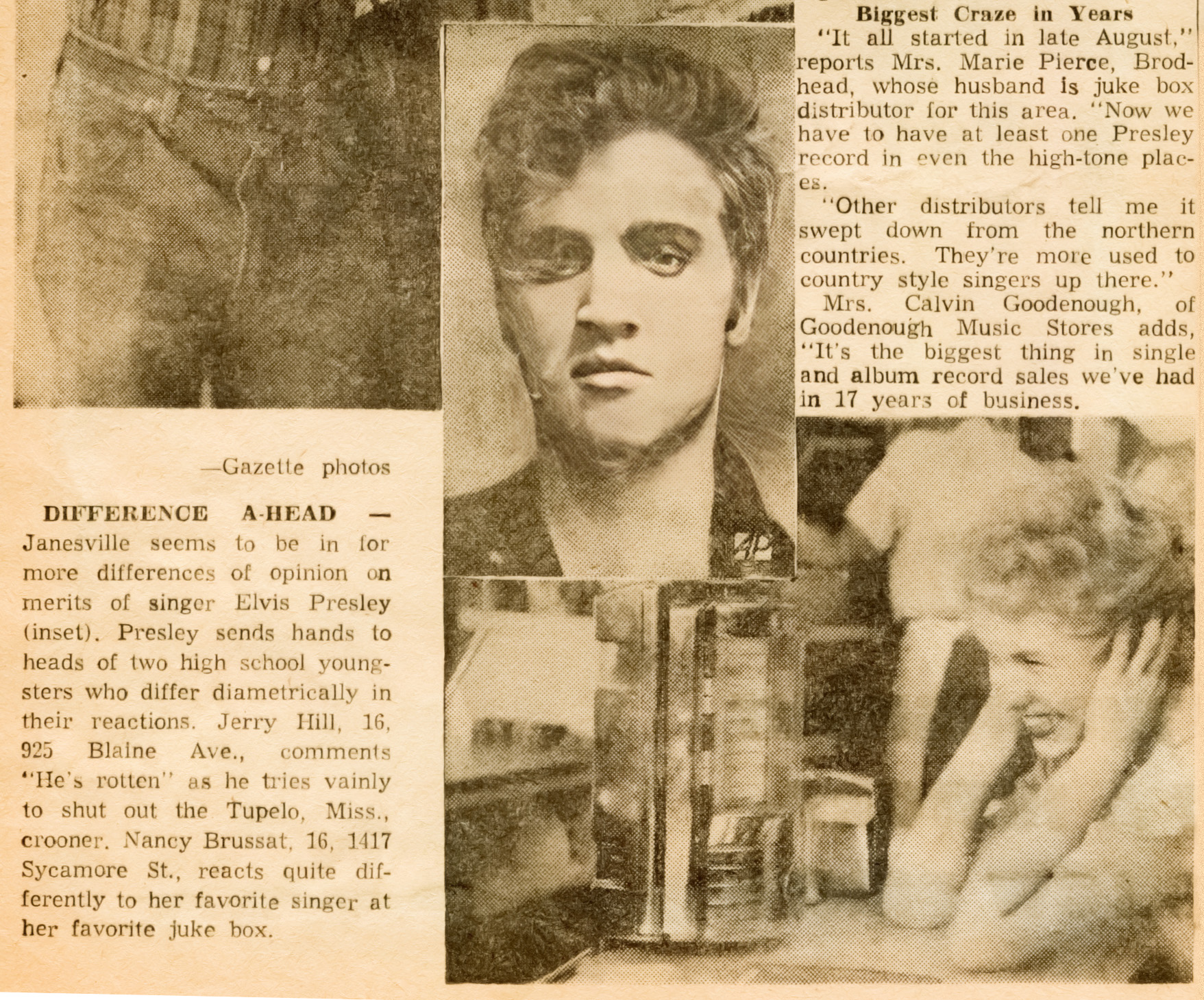
Me at Milt’s in an article about the Elvis’ “Pelvis Controversy”
Baked or fried, mashed or roasted, the flavor and texture of potatoes brings back happy memories in many people’s lives. Almost everyone has been served some version of the iconic baked potato, which is perhaps the ultimate comfort food. It is the perfect base the simplest of ingredients – slathered in butter and sour cream, dashed with salt and pepper, or can become a comfort meal in itself when ingredients like broccoli, onions, cheddar cheese and bacon are added.
And it’s not just my sentimentality that makes this root vegetable so important to so many of us. It’s believed that the high carbohydrate content of potatoes increases serotonin levels in our brains which is directly connected to an elevated feeling of well-being. Supposedly one feels calmer and more content after indulging in a plate of French fries or a big baked potato (I know I do!).
The best potato recipes are also very simple and easy to make. One I especially love is my dear friend (and former brother-in-law) Tom Barocci’s recipe that my son calls “Uncle Tom’s Breakfast Potatoes” though Tom refers to them as his “Sunday Potatoes”. Tom has been making this potato dish since his years at the University of Wisconsin when he was working towards getting his PHD. He and his three roommates, like most graduate students, were on a strict budget and needed a cheap any easy way to fuel themselves. Potatoes and onions were two inexpensive ingredients they always seemed to have around the kitchen of their rented farmhouse, so they became the foundation of this dish.
 Tom came up with this recipe – which has evolved over the years – one foggy morning after a late night in Madison. Tom has always loved food and grew up with his mother’s excellent cooking (link to Journey into the Kitchen “My Three Mentors), so it was in his DNA to invent something that was as delicious as it was nourishing. It began as a side dish prepared for weekend breakfasts, but sometimes it often ended up as a main course. In those cases, the basic recipe was often modified by adding other ingredients like bacon or whatever vegetables he happened to have around, and it might be served any time of day (or night!).
Once Tom moved out of the farmhouse, got married and found steady employment as a Professor at MIT, he continued to make his potato dish (despite no longer being on a budget that required it) because everyone loved it. By then the recipe was exclusively prepared for breakfast or brunch, and usually on Sundays; hence the name, Sunday Potatoes. His grad school version contained hot sauce but once he met and married Monica Radvany (also an exceptional cook) whose family had Hungarian roots, paprika found its way into the ingredient list. It added a sweet and peppery flavor to the dish and now is an essential part of the recipe.
My son, Rob, still distinctly remembers climbing down from the attic loft of Tom and Monica’s New Hampshire farmhouse to the heavenly savory-sweet smell of onions – masses of them – being sautéed for Tom’s potato dish. How could he stay in bed?! I think Tom knew from experience that the best way to rouse an exhausted college kid out from under the warm covers of his cozy loft, would be to overwhelm him with the smell of good food (and the promise of more drink). Rob would join Tom, Monica and the kids in their rustic kitchen for a robust Bloody Mary, some bleary conversation and a delicious breakfast of scrambled eggs, bacon and sausage, toasted “good bread”, fruit and – most importantly – Sunday Potatoes.

Whether Tom was making his potatoes or grilling something from his vast repertoire (roasts, turkey, sausages, burgers, or steaks), or Monica was preparing a Brazilian feast or an everyday family meal, food was something that bound their family together. And if you were lucky enough to get invited over for dinner or brunch, you were guaranteed to have a splendid meal.
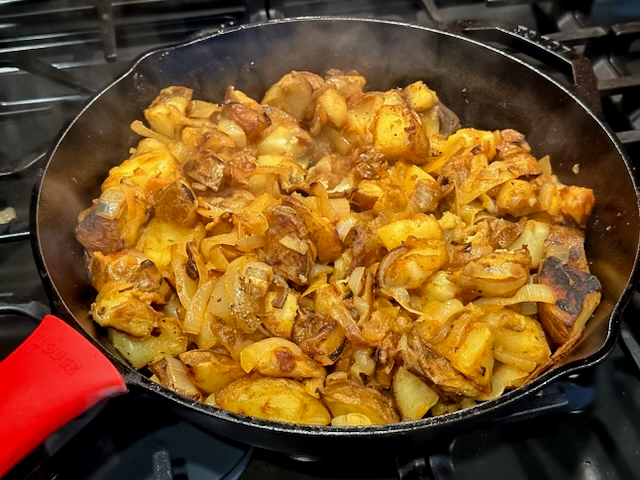
© rob barocci photography 2024
Tom Barocci’s Breakfast Potatoes
(serves 4-6)3 large potatoes (Russet or Idaho)
3 large, sweet onions (Walla Walla or Vidalia are best)
3 tablespoons of olive oil
8 ounces butter (half stick)
1 tablespoon sweet paprika
1 teaspoon hot sauce (Frank’s Red Hot or Cholula)
1 small bunch chives, chopped (optional)
salt & ground pepperIt is best to bake the potatoes the night before so they are cool when they are fried. If you can’t cook them before, then bake them per the below recipe and cool them in the fridge before frying.
Preheat oven to 425 degrees and line a baking sheet with tin foil. Wash the potatoes and use a fork to poke holes in the skin (maybe 10 stabs per potato). Coat with olive oil, sprinkle with salt, and place on the baking sheet. Bake for 50-60 minutes or until a knife or toothpick can be easily inserted into the center of the potato. Cool potatoes.
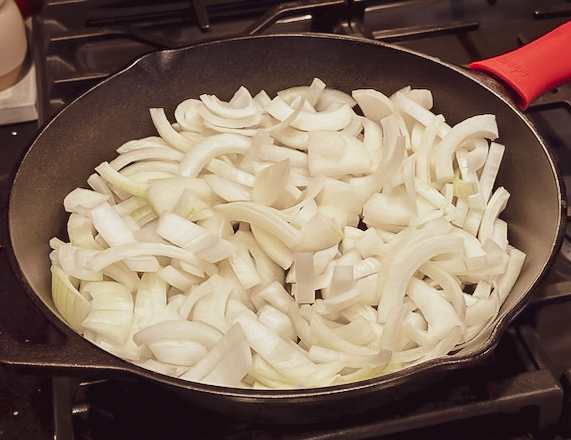
Quarter onions and slice into ¼ inch slices. In a large skillet (cast iron is ideal, but anything will work), fry onions in olive oil slowly over medium-low heat until transparent, but not brown. Don’t crowd the pan. While onions are cooking slice potatoes into ¼ inch pieces.
Remove onions from the pan, add a little more olive oil and fry potatoes over medium-high heat until they begin to brown. Re-add onions and combine with potatoes.
Reduce heat to medium. Add butter, sweet paprika and as much hot sauce as you like (Tom’s preference is a hefty dose of Frank’s Red Hot). Add salt, freshly cracked pepper, and chives, then sauté for another few minutes until well mixed and warm. Serve with eggs, bacon, toast coffee and Bloodies.
***************************************************************
Though appetizers are not necessarily excluded from the category of comfort food, there were rarely on mine. But this wonderful appetizer, originating from France, is an exception for me. This little savory choux pastry is called a Gougere and is made of choux dough mixed with cheese and delicately baked. They look like mini cheese puffs – crusty on the outside, soft and hollow on the inside. I had not had them for years until I encountered them again at a dinner party given by my good friend Kathy Clement.
My very first encounter with Gougere was back in the seventies at one of the late Leslee Reis’ French cooking classes. My dear friend Leslee was not only a great teacher (on the level of a Julia Child) but also a very successful restauranteur and personal mentor. She too was a big fan of these little “dream” puffs and claimed they were first on her list of appetizers to make for cocktail hour because they not only look great and taste special but most importantly, they require minimum effort and time. Kathy agrees. Gougere is very much a part of her appetizer selection whether as a pre-dinner app or just to savor with a glass of wine.
It is no surprise that Kathy truly enjoys cooking. Graduating from the University of Illinois as a Home Economics major, she took a job as a Home Economist consultant in the creative department at the renowned Chicago ad agency Leo Burnett. For the six years she was there she worked on a whole variety of food accounts including Pillsbury, Campbells Soup and Starkist. Her vast experience with all aspects of food is clear when you attend one of her delicious dinner parties.

Kathy (second from the right) with Julia Child and classmate
Though I have known Kathy for years it has just been in the last seven or eight years after I moved into her neighborhood, that we have become close friends. During the pandemic we spent many hours outside at a local park relaxing in our hand-carried lawn chairs – social distancing of course – and discussing this new bizarre world we were living in, as well as of course, food and all of our latest recipe discoveries.
Kathy, like me, loves to experiment with food. The classic version (below) is made with the usual Gruyere, but as Kathy discovered in her experimentation, there are other combinations that work equally well and give these mini puffs a totally different personality. One such deviation is replacing the Gruyere (which has a nutty flavor) with Parmesan to give them a tangier, saltier character. She also added fresh, aromatic basil, which mixes so well with all the other flavors. This particular Gougere version would be especially delicious alongside Italian antipasti like a lovely platter of prosciutto and other Italian cold cuts such as salami and capicola.
Be it Gruyere, Parmesan or some other cheese, these little French puffs have always reminded me of savory profiteroles and satisfy many of the requirements for being considered comfort food – especially their high proportion of butter and cheese which makes them extra rich in flavor.

© rob warner photography 2024
Gougeres
(French Cheese Puffs)1 cup water
6 tablespoons butter, cut in pieces
½ teaspoon salt
Pinch of nutmeg
Pinch of pepper
1 cup all-purpose flour
4 large eggs
1 cup gruyere cheese, freshly gratedLine 2 baking sheets with parchment paper and preheat oven to 425.
In a heavy saucepan bring water, butter, salt, nutmeg and pepper to a boil. When butter has melted, remove from the heat. Stir in the flour and beat vigorously over medium heat for 1 – 2 minutes. Dough will leave sides of the pan and film the bottom of the pan. Remove from heat and let sit for 1 minute.
Make a well in center of the dough. Beat in the eggs one at a time until well blended and smooth. Add cheese to dough and mix well. Using two teaspoons or a small ice cream scoop make 1 inch diameter – 1 inch high – mounds. Place on parchment paper 2 inches apart.
Bake 20 minutes until golden brown.
Variations:
- Replace 1/2 of the Gruyere with grated ½ cup Parmesan
- Replace 1/2 of the Gruyere with grated ½ cup Parmesan and add 2 tablespoons chopped fresh basil or fresh rosemary
- Replace the cup of Gruyere with ½ cup grated Cheddar
- Add 2 tablespoons of your favorite herbs
***************************************************************
There are certain ingredients that really lend themselves to comfort food, and when you can put them all together you are bound to find something universally loved. One such dish is the grilled cheese sandwich. It always warms the heart and nourishes the soul (especially when accompanied by a bowl of tomato soup)!

Legend tells us that a grilled cheese sandwich became a symbol of comfort during World War II when English soldiers craved the flavors of home. What better tastes than melted cheese, butter, and white bread to reminder these men of the simpler times of their childhoods. When my children were small, I kept the preparation as simple as possible (Velveeta, Land ‘o Lakes butter and Wonder Bread). Later when I tried to evolve the grilled cheese sandwich to a gourmet level I was almost always disappointed. My chefs and I made some wonderful sandwiches along the way, but fancy cheese on bespoke crusty bread didn’t add up to a proper grilled cheese sandwich for me. They were delicious in a different way but were missing the “comfort” that I was looking for.

My brother-in-law, Jeff Butler, reminded me of what a real nostalgic grilled cheese sandwich should be during one of my visits to Connecticut to visit him and my sister Karen. He decided we would have grilled cheese sandwiches for lunch and he would make them. All cozied up in the TV room in comfy chairs wrapped in warm blankets (it was winter), Karen and I happily anticipated a lovely comforting lunch.
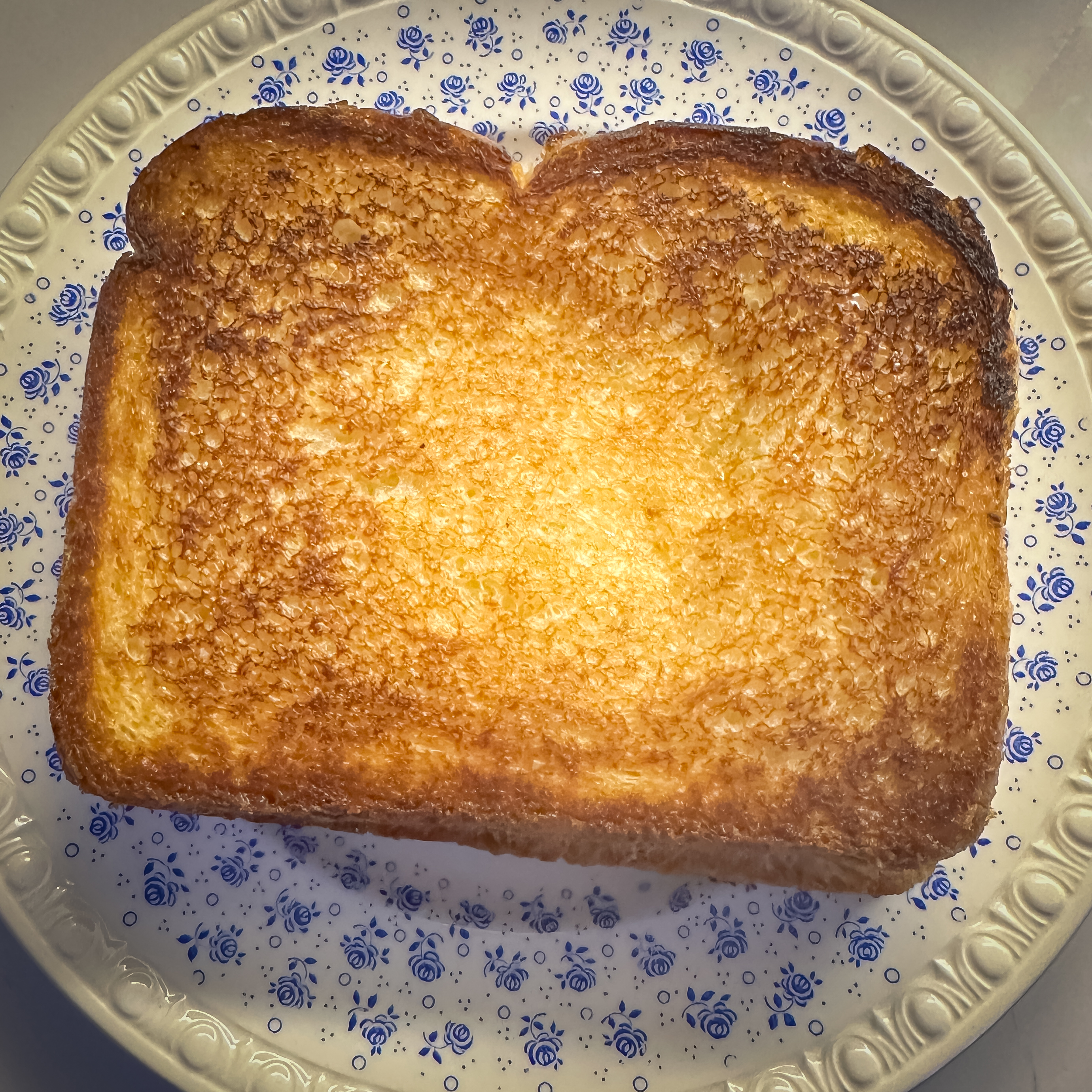
To my surprise, Jeff violated the first rule of comfort food by adorning his grilled cheese with sliced green olives. But since it was family, I accepted that dish graciously. To my surprise, I absolutely loved the combination! I assumed it was a new twist, but I learned that this was his connected to his own nostalgic trip back to Janesville, Wisconsin where he also grew up. This was the version his mother made for him as a little boy and to this day it still embodies home and comfort to him. The green olives gave the sandwich a tangier flavor, but the foundation of the sandwich still said “comfort”. It is now my favorite grilled cheese sandwich.

© rob warner photography 2024
Jeff’s Grilled Cheese Sandwich with Green Olives
(1 serving)2 slices white bread (Arnold’s Country Style White bread or something similar)
2 slices American Cheese (yellow)
1 ¾ tablespoons butter – room temperature
8 green olives with pimentos, cut in half lengthwiseHeat up iron skillet medium high until it smokes a bit, then turn down to medium low.
On each slice of bread place 5 thinly sliced squares of butter (one in each corner and one in the middle). Place bread buttered side down in the hot skillet and rotate to make sure all surface is covered in melted buttered.
Place a layer of cheese on top of bread in the skillet (cover bread to the edges with cheese) and add 8 halves olives on top of the cheese. Make sure that the bread doesn’t burn. Cover the pan to let cheese melt for a minute or two.
Remove cover and place 2nd slice on top with butter side up. Turn heat up to medium, press bread down gently into the olives and cheese. When the two slices of bread are stuck together with the cheese flip the sandwich and rotate it again to make sure butter is evenly distributed. Cook until sandwich is golden brown.
Serve with potato chips.
On my many trips to visit my sister Karen and her husband Jeff, it is usually my sister and I doing the cooking. But that dynamic had seemed to change of late. I asked Jeff when he began cooking more and he answered, “Not until recently”. Over the years I had frequently seen him in the kitchen, but it was usually on the way to or from the grill. He did tell me, however, how he had always loved to make breakfast, even from the beginning of their marriage, but he considered it “processing then assembling” a meal, not cooking. He would fry bacon, scramble eggs and make “sweet pancakes” (really crepes) then “assemble” it all on a plate. That to him was not cooking. I told him that I disagreed. For me, making crepes is tricky because they are so thin they are very hard to flip. I could never master it the way he can and that alone makes him a chef in my book!
And while he admitted to being the “grill man” he never considered that “cooking. Hmm? Like so many men in our generation, grilling was often a male responsibility but usually the repertoire was limited to hamburgers, brats and maybe chicken. Not so with Jeff who undertook more difficult grilling like roasts, pork loin and all kinds of fish and shellfish. To me, anything beyond burgers and hot dogs takes serious cooking skills. When to marinate? When is it done (not too rare or too dry)? Is the outside the way it should be – crisp? Lightly browned? You simply have to know what you’re doing when you grill. Because my ex-husband was also the grill man in our cooking dynamic, it wasn’t until after we divorced that I picked up that mantle and discovered that grilling was NOT easy. Even grilling a chicken breast to the desired doneness is tricky.
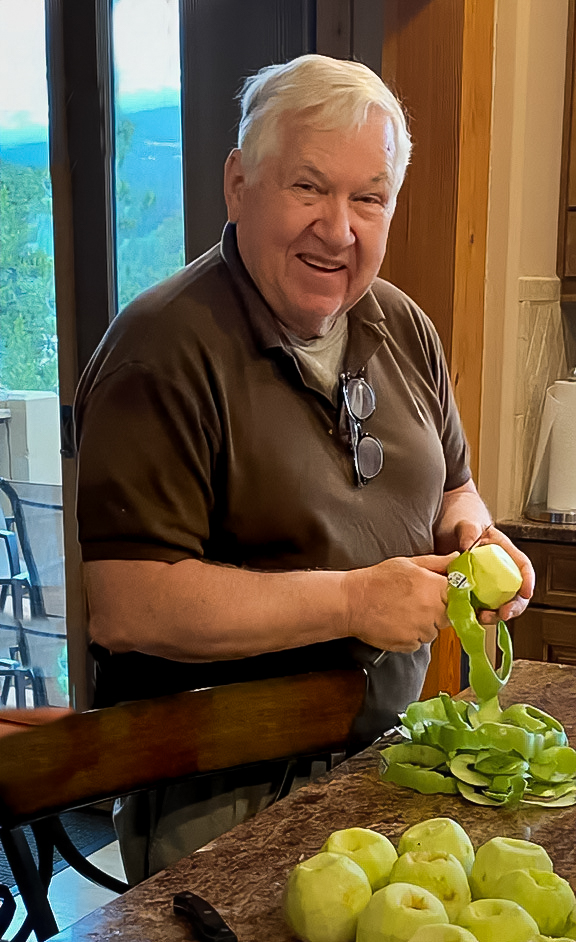
Upon further conversation, I learned exactly what Jeff thought of as “cooking”. Even though he floured and breaded (with cornflakes) Walleye then pan fried it, he says that when he began making dishes like chili that required gathering a list of ingredients – chopping, sautéeing other and combining them all to produce a delicious dish, that to him was cooking.
His wife, my sister Karen, is still the main chef in the kitchen at their Connecticut home but Jeff is now experimenting with dishes like Chili Verde and Chicken Minestrone – dishes he will now “cook” for Karen. So, while Jeff and I may disagree on the definition of cooking, I have spent many hours with him in the kitchen and there is no doubt he is an excellent griller, prep cook, and – whether he likes it or not – an accomplished chef in his own right.
Also…he makes a mean grilled cheese sandwich!
***************************************************************
Among comfort foods that both give pleasure and make us feel better, I am not sure there is there anything more delicious, more popular, and more sought-after than chocolate cake? Chocolate is often described as the “big hug” of comfort food and always takes a top spot among ingredients and flavors that people love – comfort or not. But in our health-conscious culture, sometimes we feel guilty about indulging in it. But the great news is that chocolate, like potatoes, can actually be quite good for you! Dark chocolate especially has many health benefits including lowering blood pressure, reducing diabetes risks, and boosting mental sharpness. It can also be good for your heart as cocoa contains flavonols which activate enzymes that can lead to a better blood flow in your vessels. So, dig in readers (with moderation, of course)!
Chocolate cake was never on my own list of comfort foods – at least not until I had a slice of Colleen Remsberg’s Chocolate Cake which among friends and family is known as THE Chocolate Cake. It’s not that I don’t like chocolate cake but it is often too sweet for me. I have always preferred less sweet desserts like fruit pies or the German Cheesecake my mother baked for me on my birthday. But Colleen’s cake is in a different category.

Colleen and I
Colleen has always loved to bake. I knew this about her almost from the beginning of our friendship all those many years ago when we met (along with her sister, the late Sheila Bradley) at the Evanston Women’s Club. Our friendship blossomed through the Women’s Club Show (a musical revue) which we were all a part of as well as the many weekend parties we gave for the purpose of socializing, conversation and recreation and to just simply get a break from the demands of little children. Instead of the typical cocktail party with savory hors d’ouevres that most of us hosted – especially during the holidays, Colleen gave a wine and dessert party. I still remember her beautifully decorated table covered in a whole array of the desserts she had baked. A perfect and most festive holiday party. She was also known for the candies that she and her sister Sheila made for holiday gifts. I was the lucky recipient for many years. So, her sweets bonafides were well established.
Colleen has been baking this particular chocolate cake for decades. She was introduced to the recipe more than 50 years ago when chatting with a member of the Evanston Women’s Club. Colleen happened to mention how much she loved to bake and in response, the woman gave her a recipe for what she described as a unique eggless chocolate cake. With minor tweaks, Colleen started baking it and the reception was uniformly enthusiastic. Once she refined the recipe and made it her own, it became her signature gem and has forever been known as Colleen’s Chocolate Cake (aka THE Chocolate Cake).
It is moist, dense and savory – the very reasons I like it so much- and even travels well. She has sent it by mail to friends, relatives, and college kids in multiple states and foreign countries including Singapore where her daughter was working for a short period of time. She even hand-carried one when she came to visit me while I was living in England in the 1970s. My then husband, Bob, who had requested it, was in heaven as were my kids! We love it “as is” or with a dollop or two of whipped cream.
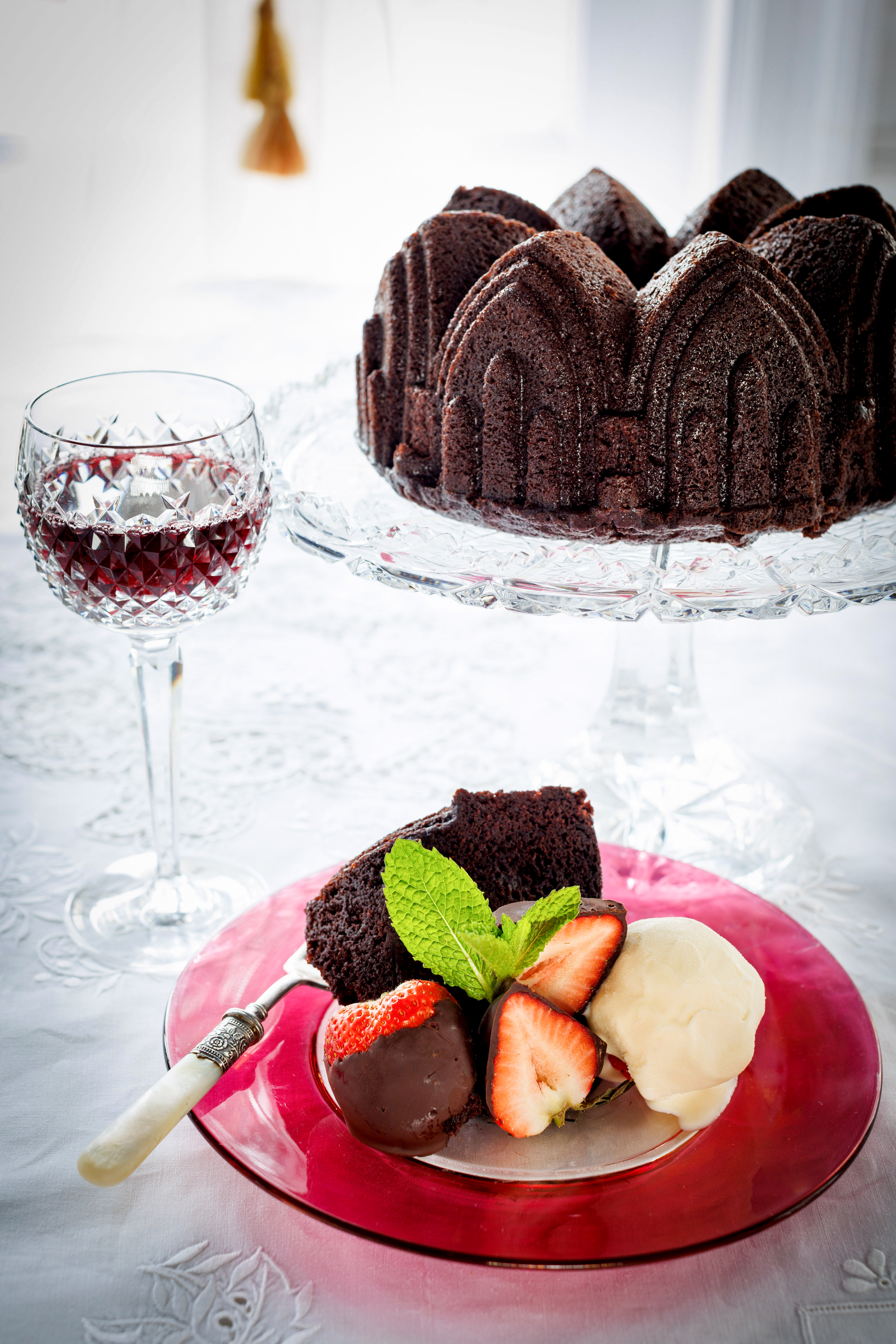
© rob warner photography 2024
THE Chocolate Cake
3 cups flour
6 tablespoons Dutch cocoa powder*
2 teaspoons baking soda
1 teaspoon salt
2 cups sugar
2 cups cold water
2/3 cup canola oil
3 tablespoons white vinegar
2 teaspoons vanillaPreheat oven to 350 degrees. Spray 10 “ Bundt pan with baking spray.
Sift dry ingredients together 3 times and put in mixing bowl. Add remaining ingredients, mixing until well-blended. Pour into prepared Bundt pan. Bake for about 43-45 minutes.
Insert a toothpick or paring knife into the cake and if it comes out clean, that means the cake is done. Cool for about 30 minutes before removing from the pan.
Notes:
Dutch Cocoa: Dutch-process cocoa powder is made with cocoa beans that have been washed in a solution of potassium carbonate which neutralizes their acidity and makes it darker in color and mellow in flavor.
Cost: Cocoa powder‘s price usually reflects the quality of the beans used. Higher quality beans contain a higher percentage of fat, which makes for a richer flavor overall. Colleen buys hers at the Spice House in Evanston, Illinois.
Shipping: To ship a cake Colleen recommends removing the cake from the Bundt pan after it has cooled, wrapping it in cling wrap and freezing it. When you are ready to ship, wrap it in more cling wrap and surround the cake in the shipping box with packing peanuts and real popped popcorn, which protects it from damage and keep it moist in transit.
Parting thoughts: Colleen says to be ready to repeat all this because the lucky recipient is sure to ask for more!
While writing this blog I began to notice that some of my favorite comfort food dishes also fell into the category of peasant food. These working class meals are always made from accessible, inexpensive seasonal ingredients. They are usually one-dish meals that can be easily served or packed up for a long day away from home. Shepherd’s Pie is the epitome of both comfort and peasant food and no other dish feels more home-y when serves on a cold winter’s night.
Until I moved to England, I mistakenly thought that the meat in this dish was beef. However, I learned that a real Shepherd’s Pie is made with lamb. Its origins are credited – depending on who and where you’re asking – to the English, the Irish and the Scots and references to date back to the late 18th century. Like most peasant food, it was a way for frugal peasant housewives to use their leftover food, as well as the bits of an animal that were less desirable on their own. I have always used beef in my version which makes it technically a Cottage Pie, but I prefer to call it a Shepherd’s Pie anyway since very few Americans know the difference.

Mary Lu and I
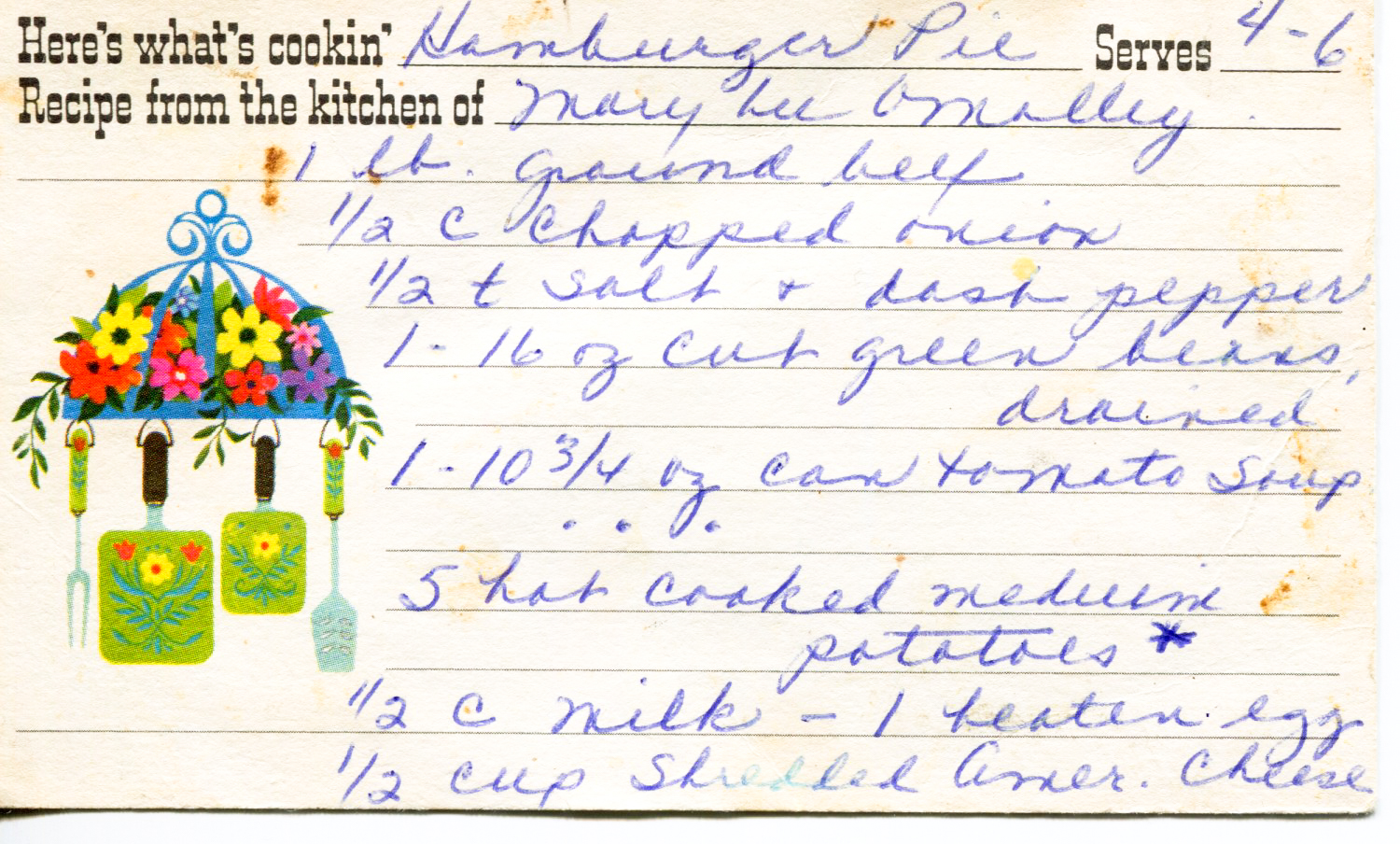
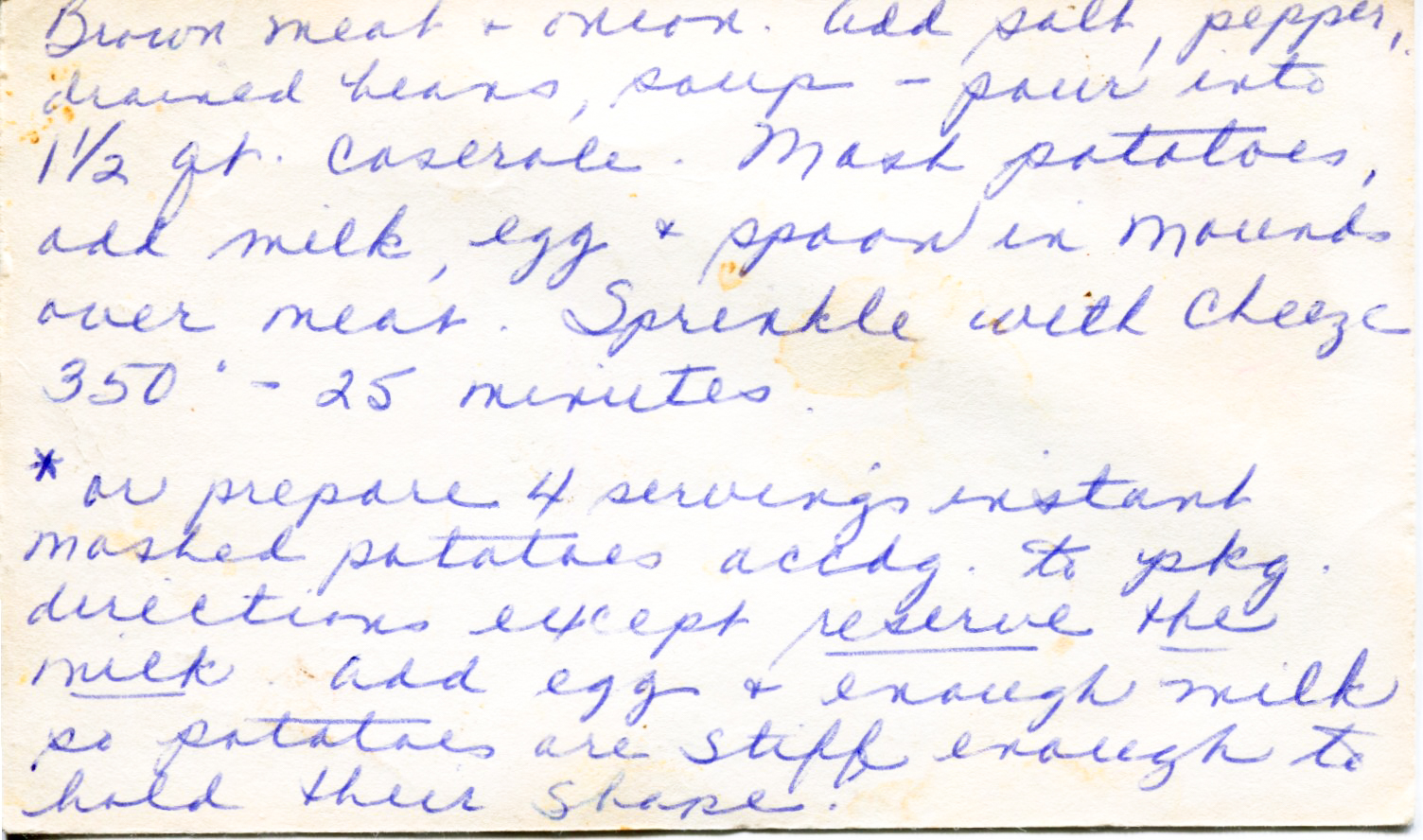
My first encounter with this dish was during the 1970s when my friends and I were busily swapping recipe cards with one another. It was a time we all had little children and little money, so the recipes were most often easy ones that could be made on the cheap in lickety-split time. My good friend, Mary Lu O’Malley gave me a recipe entitled “Hamburger Pie” which was essentially an Americanized version of Cottage Pie. This one, of course, included ground beef and mashed potatoes, but also a can of Campbell’s Tomato soup. Many recipes from this era included cans of various soups which were meant to add a saucy-like flavor without going through the more time-consuming process of making something from scratch. Regardless of the shortcut, my kids loved it! How can a dish consisting of creamy mashed potatoes on top of a rich bubbly hamburger stew not be on the top of any kid’s comfort food list?
Mary Lu is another good friend who I first met at the Evanston Women’s Club which is the origin of many of my lasting friendships. Fortunately, we have stayed close through the years as we watched our children grow up, go to college, get married and then give us grandchildren. She is one of many people I know who claims that she gets intimidated when she cooks for me. That’s probably because I am in the food business. The truth is that she is terrific and I have never had anything less than delicious at the O’Malley’s home. And she has a great palate! Knowing good food when you see it is half the battle and she is a pro in that regard.
With this recipe I eventually decided to drop the Campbells soup and make my own simple sauce. I also added some crispy onions to top the potatoes. It is delicious but really ……was it any better or any more comforting than Mary Lu’s “Hamburger Pie”? If you asked my kids, I think they would say no (and so would I).

© rob warner photography 2024
Shepherd’s/Cottage Pie
Serves 62 tablespoons kosher salt
3-4 large russet potatoes, peeled & quartered
8 tablespoons unsalted butter
½ cup milk
1 cup grated Parmesan cheese
Freshly ground black pepper
1 1/3 cups onion, finely diced
1 ½ cups carrots, peeled and diced small
1 clove garlic, minced
4 sprigs fresh thyme
1 ¾ pounds ground beef
1/3 cup tomato paste
1 tablespoon all-purpose flour
¾ cup beef stock
¼ cup chopped fresh parsley
1 ½ cups frozen peas, thawed
¾ cup crispy onions*In a large pot of boiling water add salt and potatoes and boil for about 20 minutes until potatoes are soft. In a small saucepan, heat 6 tablespoons butter and milk together until butter melts. Drain potatoes and return to pot. Using a masher, mash hot potatoes until smooth. Mix in the hot butter mixture a little at a time and mash until well blended. Stir in the Parmesan. Blend. Season with salt and pepper. Cover and set aside.
Heat the oven to 375 degrees. Melt the remaining 2 tablespoons of butter in a large skillet over medium heat. Add the onions, carrots, garlic and thyme and cook stirring often with a wooden spoon until the onions are translucent and the carrots are tender approximately 10 minutes. Add the beef, breaking the meat up with the spoon and cook until no longer pink. (Drain off excess fat) Season with salt and pepper to taste. Add the tomato paste and stir until well blended. Another 2 to 3 minutes. Sprinkle the flour over the mixture and cook 1 minutes. Add the beef stock , stirring until liquid has thickened lightly. Stir in the parsley and remove thyme stem. Stir in thawed peas. Taste and add more salt and pepper if needed.
Place the meat mixture in a baking casserole (3-quart capacity) and spread into an even layer. Top with dollops of mashed potatoes. Transfer to the oven and if mixture is at the top edges of your baking dish, set a foil-lined baking sheet underneath the casserole dish to catch any drips. Bake until the the potatoes have begun to brown and the edges are bubbling, approximately 30 minutes. Let stand at room temperature for 10-15 minutes.
Recently Peasant Food has gained a newfound popularity and is no longer just simple blue-collar fare but something you find in the best restaurants all over the the world. It is now possible to order dishes from the humblest of origins at the fanciest of restaurants. Who would have ever guessed that something as simple as Italian polenta (nothing more than cornmeal porridge) would become a status symbol on any self-respecting Italian menu? Or Bouillabaisse (fish stews originally made from leftovers) would command top dollar at gourmet restaurants in New York, London and Shanghai?!
I am looking forward to showcasing several Peasant Food recipes in my next blog posting – recipes from friends, collogues and family. Some might be from their grandma’s recipe box and some might be their own creative take on a dish that has been a part of their history for years. Whatever their origins may be, all of them I can assure you, will be delicious.

Love this! Fun recipes and a wonderful look at your friendships over the years!