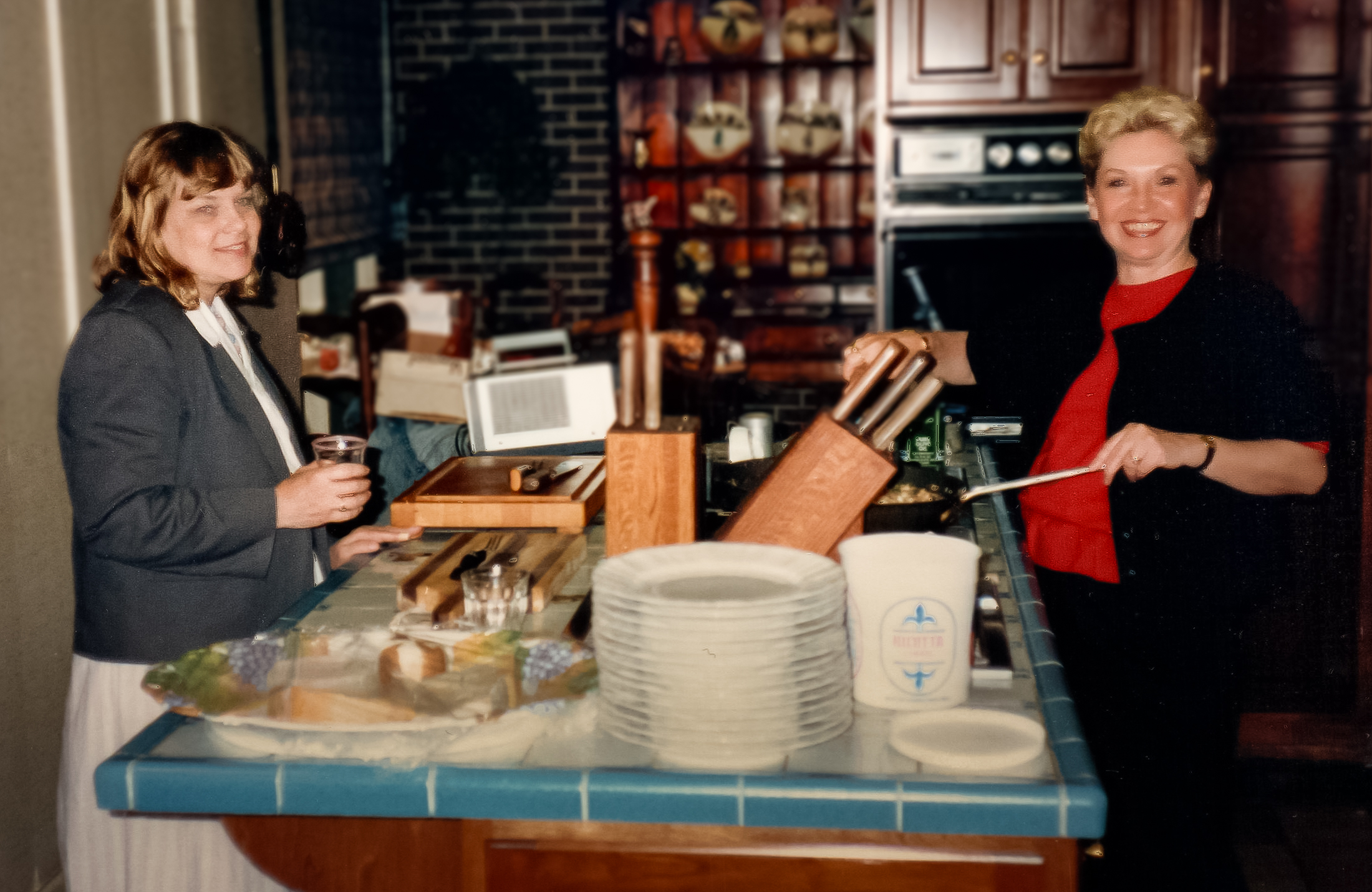
The decision to embark on the new Collaborations and Inspirations chapters of this blog was driven to a great degree by my desire to spend a little time away from my own journey and instead focus on people who have inspired me. This chapter on peasant food features friends and family who all share a knack for taking the humblest of ingredients and turning them into something utterly delicious. Some of these recipes have been passed down over the years as family favorites, some are signature dishes representative of a particular locale, and others are recent creations. In either case, they have been lovingly cooked by some of my favorite people.
Peasant Food has a rich history of using both scraps from the animals being butchered and other locally available ingredients. Beans are grown all over the world, ands you will find them in several of my recipes since they are an affordable and reliable protein source for peasants globally and a symbol of rustic simplicity.
The difference between the Peasant food dishes in this blog and their originals is that these recipes were not made out of necessity, but instead developed as a nostalgic tribute to kitchens and dining rooms where they were originally served. For instance, the Shepherd’s Pie recipe was originally created by a peasant housewife using every resource she had to feed her family, whereas my version exists to just be delicious!
It has amazed me that by simply combining a number of simple, accessible, inexpensive ingredients, transferring them into a pot and cooking them over slow simmering heat for whatever time is required, that it is possible to produce these one-dish meals that have fondly become known as Peasant Food.
***************************************************************
Monica Radvany Barocci
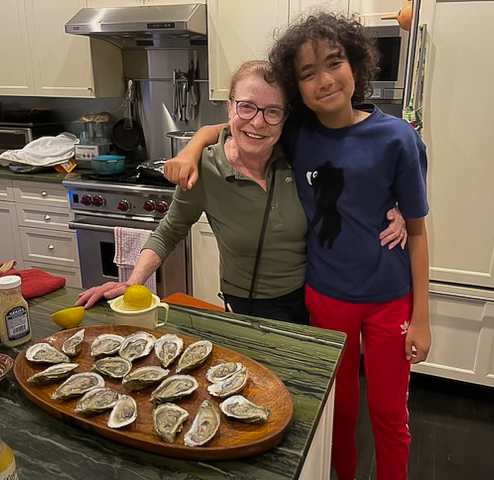
Monica with grandson Luca
The very first time I tasted my former sister-in-law, now friend, Monica Radvany Barocci’s Feijoada, I had no idea it was her version of Brazil’s national dish. I just knew that it was incredibly delicious. It wasn’t until I decided to write this blog and began researching peasant food dishes, that I realized that wonderful, black bean and pork stew that I had so enjoyed at Monica’s home in Boston so many years ago was one of the world’s iconic dishes. Clearly its roots were in peasant food since it had all the markings – inexpensive ingredients, locally available ingredients, a one dish meal, and most importantly it was incredibly flavorful.
Once I recognized this, I immediately called Monica in hopes that she would share her version of this recipe, and that we could talk about her distinctive cooking style which had impressed me since we first met decades ago. What I was most curious about was how a young woman who had grown up in a household where meals were handled not by her mother, but by cooks employed by the family, would end up being such an instinctively talented cook.
When I asked her about this, Monica laughed and admitted she really didn’t know exactly how she learned to cook. She did know that it was not from reading cookbooks, since to this day she has no interest in making food based on written recipes (which ended up making this blog section slightly more challenging!) She guessed that simply being around a kitchen every day and watching various Brazilian cooks create meal after meal with skill and ease must have been the key factor. Amazing I thought. There was no way I could watch a person cook and then store all those details in my head and recreate that same meal at another place, another time. At the very least, I’d have to record measurements and steps along the way. But I suppose the fact that Monica also speaks five languages fluently suggests she possesses a distinctive intellect which must also allow her an intuitive ability to create amazing food in ways unique to her.
She also claimed to have had a little hands-on experience on her path to becoming a good cook. That began when she moved to the U.S. in 1970 with her first husband who was completing his residency in Boston. Shortly after she arrived, a friend asked her if she would consider replacing the lunch chef at his fraternity who had abruptly abandoned his position with no notice at all. They needed to replace him immediately. “But I don’t cook – I don’t even know how to cook,” Monica answered. “It’s only opening cans of Campbell’s soup and heating them up. There’s nothing to it,” her friend explained. Somehow this argument convinced Monica to at least give it a try. She needed the money and always liked a challenge.
Of course, being a fraternity lunch chef turned out to be way more than just opening cans of soup, but she survived and quickly began to realize how much she actually enjoyed creating food in the kitchen. She stayed in that job until she was accepted into Boston University’s School of Economics, but left with the new-found knowledge that she really could cook and to her surprise, enjoyed the experimentation along the way. Reflecting back on this period of time, she did have to smile when she thought about some of the “exotic” concoctions she had provided those naive fraternity boys in her lunch chef position.

Monica and I in Boston
Feijoada was one of the first things Monica cooked when she began preparing meals for her family and it became a weekly menu item almost immediately. Monica had a fascinating life as a girl and young woman – she was born in Austria and lived there until she was seven, spent a brief time in Casablanca, and then relocated to Brazil where she lived until 1970 – I knew her head had to be filled with a whole myriad of flavors (way more than just Brazilian) that she had tasted through the years. Mix into that combination, her parent’s Hungarian roots with all their marvelous use of spices (paprika being the most notable) it was inevitable that someone with that many influences would produce great and most interesting food.
And Feijoada was certainly one of those interesting dishes. The most frequently told legend about the origins of this dish claims that it was created out of necessity by Brazilian slaves who combined beans with scraps of the pigs that their masters slaughtered for other meals. And though the name Feijoada is derived from feijoa – “bean” in Portuguese – I believe it is the variety of meats that makes this dish special. At one time or another, Monica has used everything from ham hocks to bacon to pork shoulder to chorizo, but no matter how many or what kind of meat is in the spotlight, it is always the beans that remain the main ingredient.
But you can also find recipes using no meat at all. As Monica points out, the way the beans are cooked is really the real key to Feijoada – “Not too soft, not too hard”.
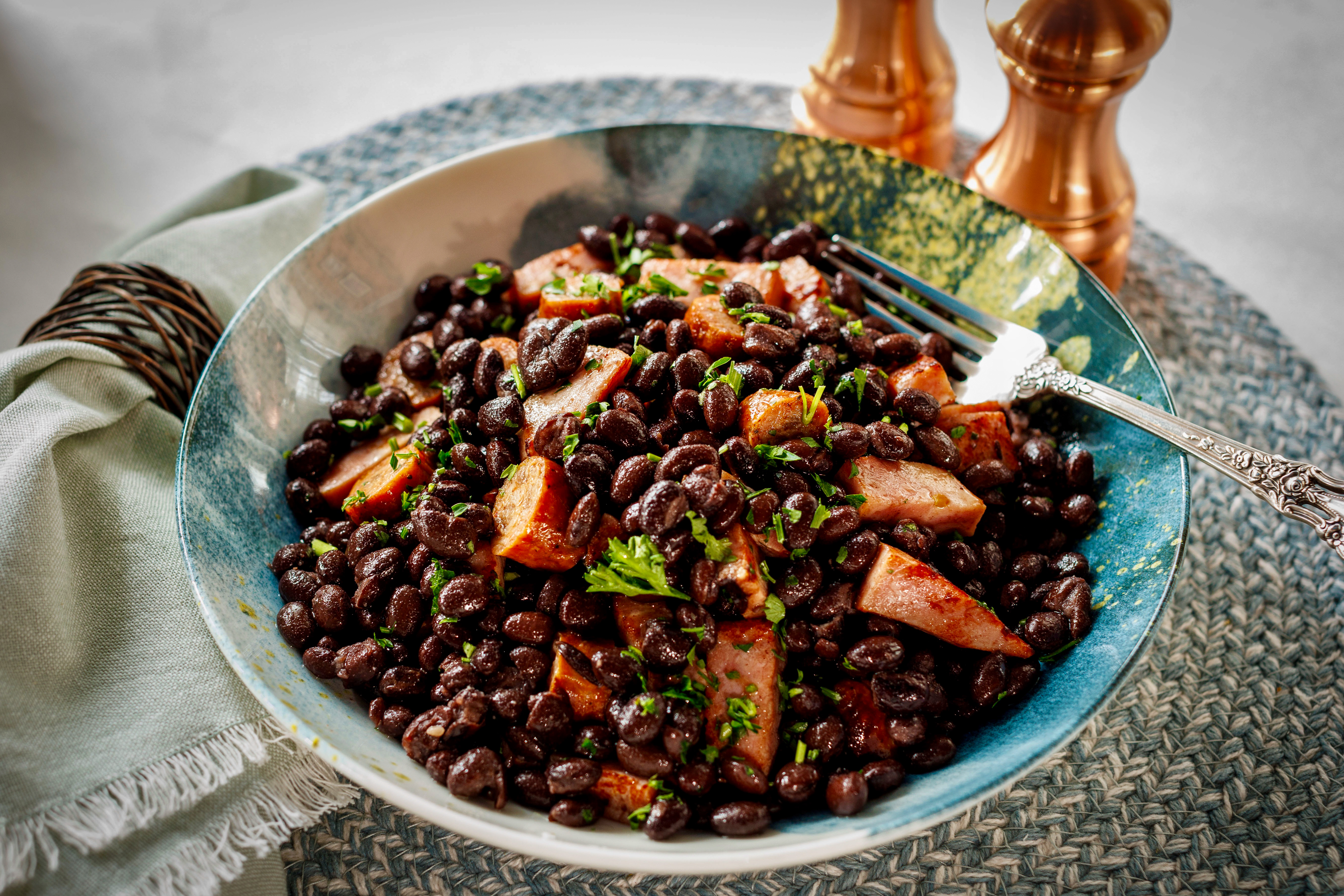
© rob warner photography 2024
Feijoada
Brazilian Black Bean Stew3 cups dry black beans, soaked overnight
1 ham hock
1 smoked sausage (like linguica or kielbasa), browned then sliced into ¼” coins
2 beef bouillon cubes
3 bay leaves
3 cloves garlic, chopped
Salt & freshly ground pepper to taste
Olive oilIn large pot or Dutch oven, place-soaked beans, and enough water to cover beans by 3 inches. Bring to a boil, then reduce heat to medium-high and simmer uncovered for 30 minutes (if beans seem to be drying out add warm water as needed to keep them under water)
Remove beans from heat. Strain and discard water.
Remove 1 cup of beans and set aside.
Return the rest of the beans to the Dutch Oven. Add the ham hock and other meats. Add the same amount of water as you did the first time along with 3 bay leaves. Cover and cook on medium- high heat for 2 hours until tender. (Beans should maintain a low, steady simmer)
While beans are cooking, sauté garlic in olive oil in a large frying pan. With a ricer or mashing tool make a paste out of the reserved cup of beans and add to sautéed garlic. Mix well then remove from the heat.
When beans cooking with the meat are tender, uncover the pan and continue to cook for another 20 minutes to allow some of the liquid to evaporate.
Add 2 cubes beef bouillon and freshly ground pepper. Combine well.
Combine beans and meat with the bean paste and garlic mixture.
Season for salt & pepper and serve with white rice
Notes:
1 cup dried beans will make about 3 cups cooked.
***************************************************************
Karen Brussat Butler
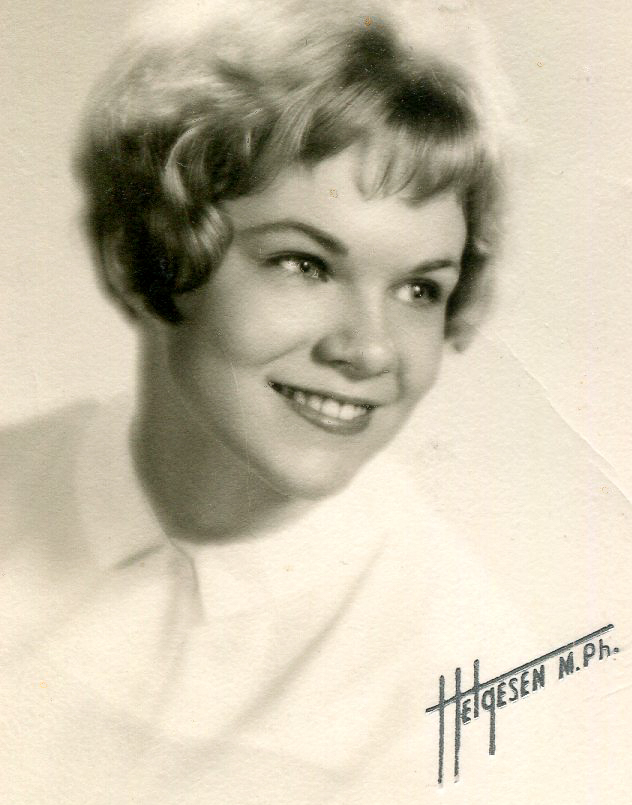
My sister Karen comes to cooking through a more traditional path than Monica. Like many young girls, she began baking cookies in our mother’s kitchen when she was about ten years old. Cookies quickly gave way to pies about the same time that her prodigious skills as an artist came into view. Karen’s pies always looked as if they were waiting for a Bon Appetit photographer to pop out from around the corner to snap a shot for the magazine’s cover. That artistry continues to be a signature of her cooking.
When Karen was a new mother her experience as a baker in our childhood home allowed her to be comfortable in the kitchen and it was there where she taught herself everything else. She used cookbooks and recipe cards swapped with friends and family as her resources and she was always on the lookout for dishes that would please her kids like mac ‘n cheese, a classic “kid-meal” from the 1940s through today. More exotic fare came as her children grew up and she had time to prepare for more complicated events like cocktail or dinner parties.
When I thought of Karen for this blog, there was no question what dish I wanted her to cook. It is something she still makes and is one of the best-known and most beloved peasant food dishes on everyone’s list.
Jambalaya is a dish that was destined to be a part of Karen’s cooking repertoire from the beginning of her marriage. Her husband’s family had strong connections to New Orleans that began when her father-in-law, Graham would travel there on business as a part of his Parker Pen sales territory. Graham immediately fell in love with the city – especially the food and the music – and he quickly passed that love onto his son Jeff. Jeff remembers one particular incident when he was still in his pre-teens that influenced him greatly. One night when his dad was away on a work trip the phone rang in the Butler home around the time they would often hear from their father. But this night when his mom picked up the phone a cacophony of music came blaring through the phone. Graham was in the French Quarter listening to Dixieland Jazz and became so enthralled by the moment that he called home from the pay phone at the back of the club and held the handset in the air so his family back in Janesville could share his joy. Now how could a son not be impressed and profoundly influenced by that kind of fatherly enthusiasm?!

Karen and Jeff in NOLA
Jeff began traveling to New Orleans early in their marriage as a part of his own business obligations, but he and my sister quickly made it their city of choice for weekend get-aways. In the eighties Karen’s watercolor artwork found its way into two of the city’s vibrant art galleries, so visiting the city to “check up on everything” became a frequent excuse for them to go for a brief visit.
They quickly became as enamored as Graham – if not more so – with the food and the music of this unique city, and they ventured deeper and deeper into the music scene of the city where Cajun, Zydeco and R&B was everywhere. They also embraced the city’s wide variety of famous food like gumbo, po’boys and a delicious oyster dish called Oysters Bienville which is a traditional dish of baked oysters in a shrimp sauce. This mix of Cajun and Creole cultures has produced many of the city’s distinct and delicious dishes – more than any other American City I can think of.
 Karen was also profoundly inspired by the blend of people they found in NOLA. The diversity of the city was – and is – astonishing, and it seemed to her like everyone looked and sounded totally unique. The energy of all these people set New Orleans apart for her and being there reminded Karen of many Europe cities where you could share your enthusiasm about the food you had just eaten with a stranger sitting at the table next to you, or discuss the fabulous museum you had just toured with your cab driver who was already recommending the next restaurant you should try (or talking about his grandmother’s great Sunday Supper recipe). New Orleans remains a distinctively intimate city where people wear their passions on their sleeve so much so that you can almost feel the spiciness in the air.

“Spice of the Party” by Karen Brussat Butler
That inspiration led Karen to create a series of Giclée Prints (a fine art print created by using a specialized high resolution inkjet printer) for the “Hot and Spicy” food show in New Orleans in the nineties. There were 6 prints of 6 different peppers from mild to extra hot with a story about the pepper and where it was grown. Of course, peppers are a ubiquitous ingredient in New Orlean’s cuisine and Jambalaya is just one of the many dishes that contains them. Jambalaya has remained Karen’s favorite New Orlean’s dish.
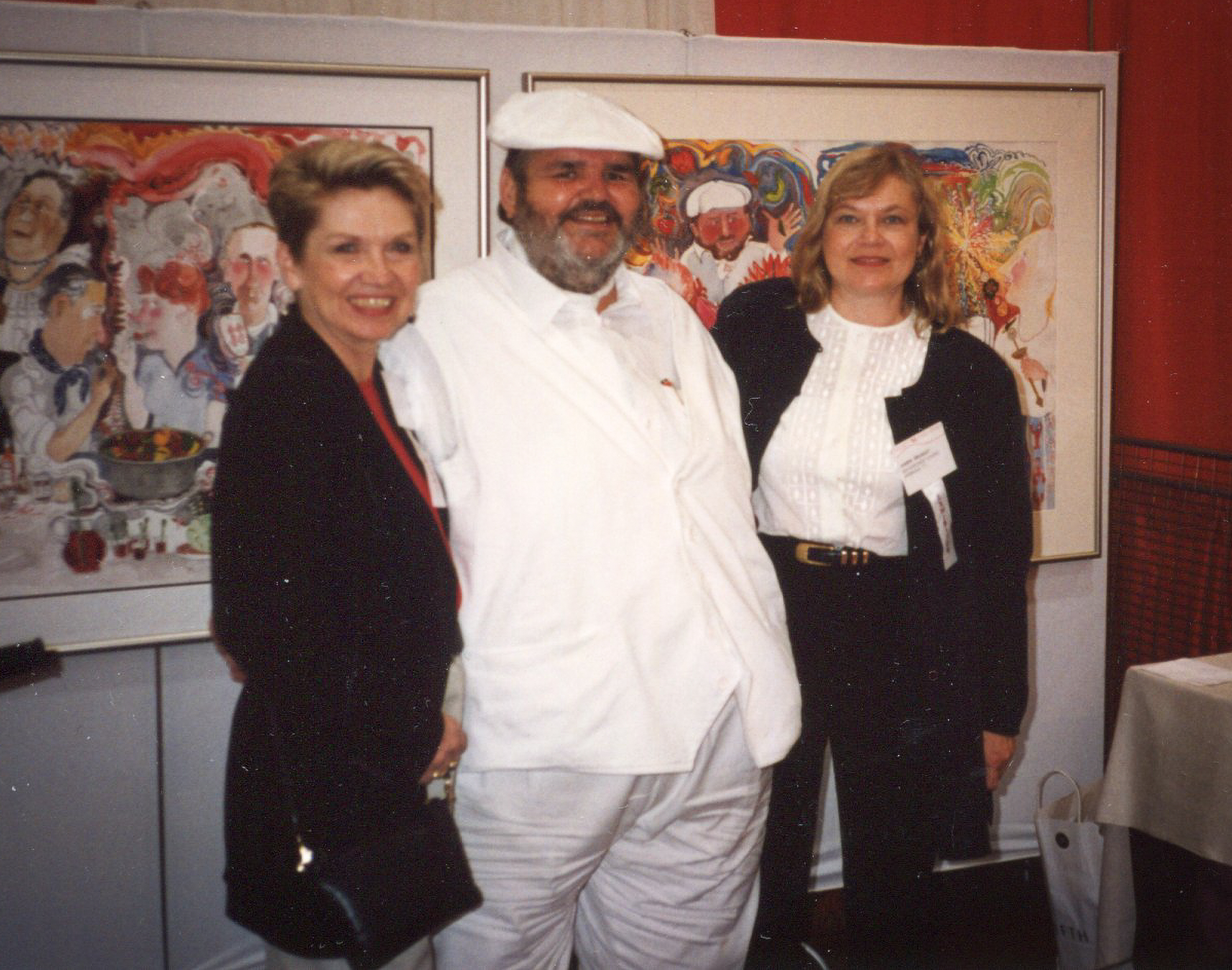
Karen and I with Paul Prudhomme
Paul Prudhomme, one of the city’s most famous citizens, was in the center of one of her paintings entitled “Spice of the Party”. Karen had used his Magic Blend Seasonings before meeting him in New Orleans, but they just became tastier and much more meaningful after meeting him. He was a magic kind of guy. I had been lucky enough to work with him as a part of the American Airlines Chefs Conclave (a group of 15 chefs from across America who were food consultants for the airline) and I always looked forward to spending time with a man so passionately committed to creating extraordinary food.
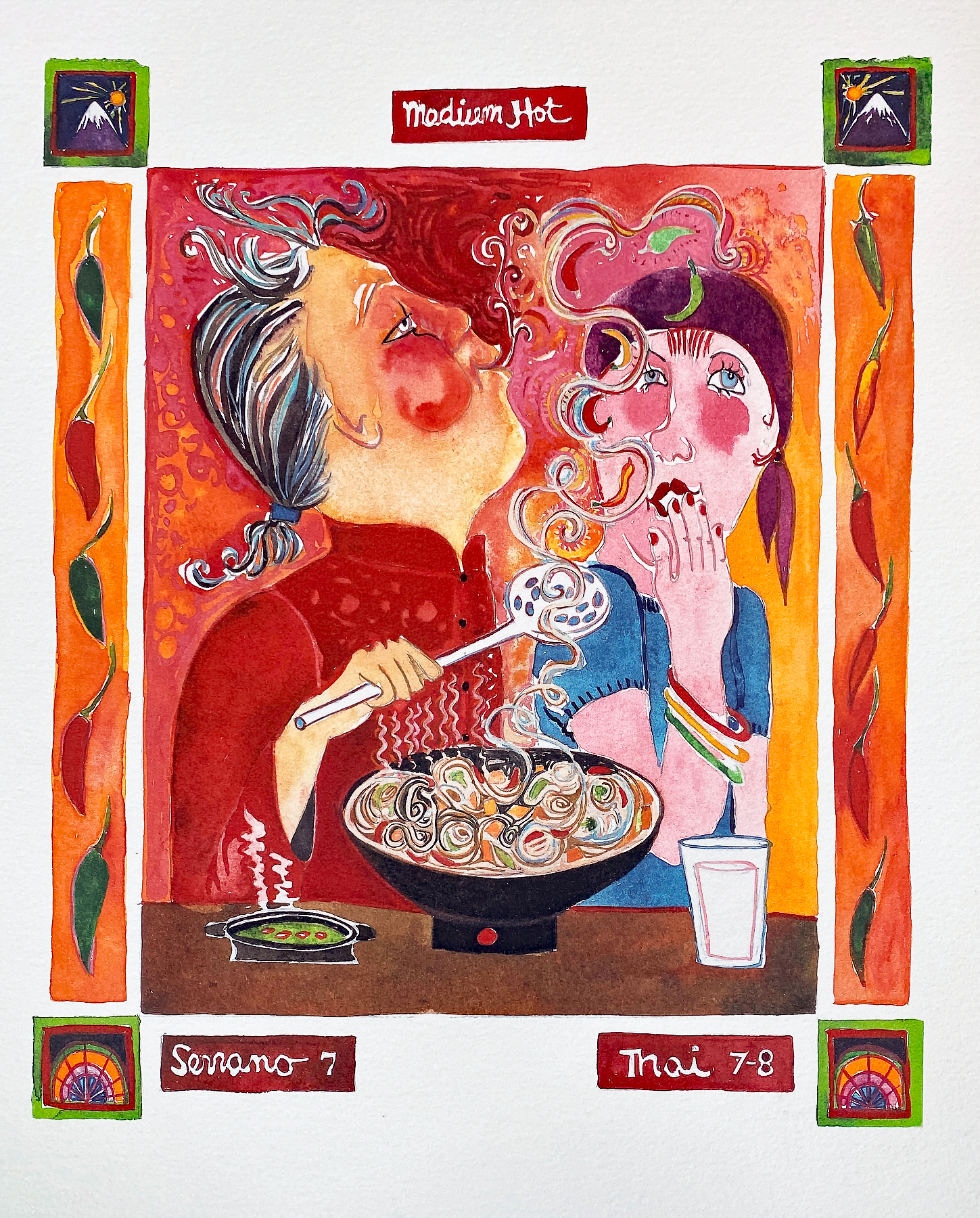
“Medium to Hot” by Karen Brussat Butler
Legend has it that Jambalaya originated in the French Quarter and was probably a local variation of Paella, the famous Spanish rice dish. Though its true identity is unknown, Jambalaya has been a part of New Orleans cuisine for hundreds of years and combines influences from the many cultures that settled there including African, Spanish, French, Native American and Caribbean. Whatever its origins, there is no disputing that it is one of the most interesting and flavorful of all peasant dishes.

© rob warner photography 2024
Jambalaya
4 x large chicken breasts
2 x 28 oz cans whole tomatoes in water
1 x 16 oz can of tomato sauce
2 cups chicken stock
1 pound sweet Italian sausages (browned then cut into ¼” coins)
Low salt ham steak (browned in hot pan, then cut into 1” pieces)
3 ½ cups chopped onions
1 teaspoon garlic, minced
1 ½ cup green pepper, chopped
Paul Prudhomme’s Poultry (or Seafood) Magic seasoning
2 x bay leaves
4 tbsp chopped parsley
6-12 cooked shrimp, (optional)
Olive oil
Salt & pepper to taste
2 cups cooked riceSeason chicken breasts liberally with Paul Prudhomme’s Poultry seasoning (and ideally let the chicken sit refrigerated for a few hours)
Preheat oven to 350 degrees. Place chicken in baking dish with space between breast and bake uncovered until cooked through, approx. 30 mins (chicken is done when an instant thermometer reads 165 degrees). Let cool chicken cool, then cut into ½” cubes and set aside.
In a Dutch oven combine 2 cans whole tomatoes, tomato sauce, chicken broth, Paul Prudhomme Seasoning (start with 4 – 6 T- add more if need – I use a lot), bay leaves and parsley. Warm over medium heat.
In a large sauté pan or skillet, heat the olive oil over medium high heat. Add the onion and cook for 4 minutes, stirring occasionally. Add some salt and fresh ground black pepper and cook another 4 to 5 minutes, stirring occasionally. Add to Dutch oven.
In the same skillet you sued for the onions, sauté green peppers the same way until a little brown. Add to pot.
Sauté whole sausages until browned, then cut into ¼” coins. Put sausage back into the pan with ham cubes and brown Add to pot.
Keep sauté pan on medium hight heat, add a few tablespoons of water and deglaze. Add to pot. The sauce should not be too watery but not too thick.
Add cooked chicken cubes, cover and cook slowly over low heat for 2 hours.
When the Jambalaya is done, add the cooked shrimp (or portion pieces out to each bowl wen serving.
At this point there are many options for serving. For larger groups combine the rice and shrimp to the pot and serve. Alternatively, you can fill each bowl with rice, add a shrimp or two and cover with Jambalaya. Either way, sprinkle each bowl with parsley and serve.
Karen’s Note:
Jambalaya is a Creole rice dish that reminds me of our favorite city, New Orleans. I make Jambalaya when large groups (more than 4) are coming for dinner. It’s good because it can be made ahead so that you can spend time with your guests. I like to serve it with crusty bread and a green salad.
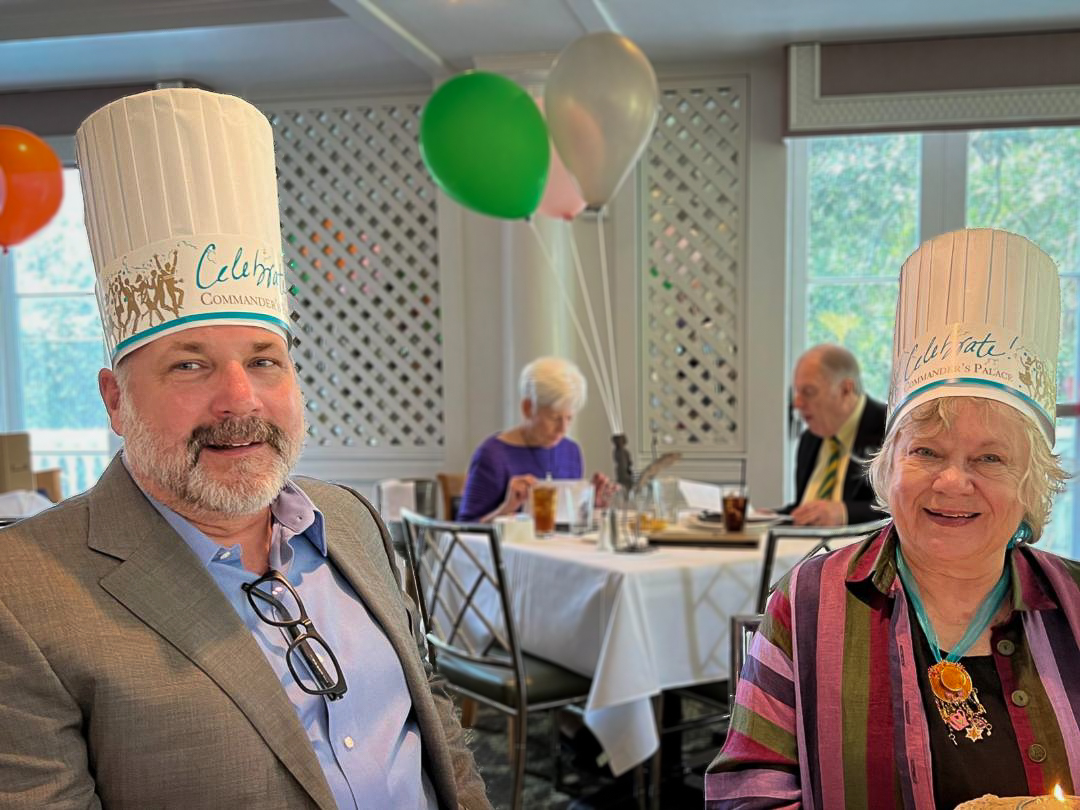
Karen with son Travis at Commanders Palace
Jambalaya is still on the Butler family menu as are visits to this most intriguing city. They still manage to find an excuse to visit New Orleans as often as they can. Just last year the extended family gathered in NOLA to celebrate Karen’s and her son Travis’s birthdays which culminated at a fabulous jazz brunch at the famous Creole restaurant Commander’s Palace. The city’s great music and great food combines in an alchemy to create a flavor that fill the city’s every pour and draws the Butler clan from near and far. That magic will not relinquish its grip anytime soon!
***************************************************************
Sarka Kalocajova

It is amazing how culinary influences work their way into people’s lives at so many different times and in so many ways. In Sarka Kalocajova’s case they arrived long before she joined the staff at Convito Café & Market where she would eventually become our longtime Restaurant Manager. Born in the Czech Republic in the region of South Moravia, Sarka loves to boast about the bounty of gastronomic delights that surrounded her growing up in this delightful section of the world known for both its great food and wine.
South Moravia has a rich wine-making tradition and houses some of Europe’s finest restaurants. It is where her fellow citizens all go for the finest food and drink in Czechia, as well to drive through the vineyards and rolling hills that remind one of a Tuscan landscape.
Though Sarka is primarily self-taught, she comes from a family of excellent cooks including a father who is a professional baker. Because both her mother and father had full-time jobs, the whole family shared in the cooking, which she has been doing since she was a little girl of twelve just like her older brother and sister, Roman and Ester.
Many of Sarka’s most vivid memories of childhood focused on food. One of her favorites is how much she loved accompanying her father to work. He was considered the best baker in the very famous baking town of Petrov and was especially sought after for his delicious wedding cakes, pastries and kolackys. Every time she visited his bakery, Sarka requested (as only a little girl could), a sample of each of the doughs her father was preparing that day. Her favorites were the sugar doughs, the puff pastries, and the sweet-yeast dough, but she insisted on tasting everything, even the more sophisticated and bitter doughs. She eventually got a reputation amongst her father’s baking colleagues – as well as family and friends – as a discerning taster and so they started calling her the “little dough girl” and teased that she must be made of dough herself.
Good food is good food the world over, but how people choose to enjoy it varies from country to country. In Czech Republic, many families like Sarka’s make Sunday a “baking day” where the women of the household bake both sweet and savory goodies that – along with a cup of hot coffee, of course – bring together the whole family to review the week’s happenings, debate politics and sports and maybe even gossip a little. Today Sarka is most comfortable with the bustling, sometimes frenetic pace of America, (she is now a U.S. citizen), but she admits to occasionally longing for the slower pace and camaraderie that the Czech people bring to their enjoyment of food and life in general.
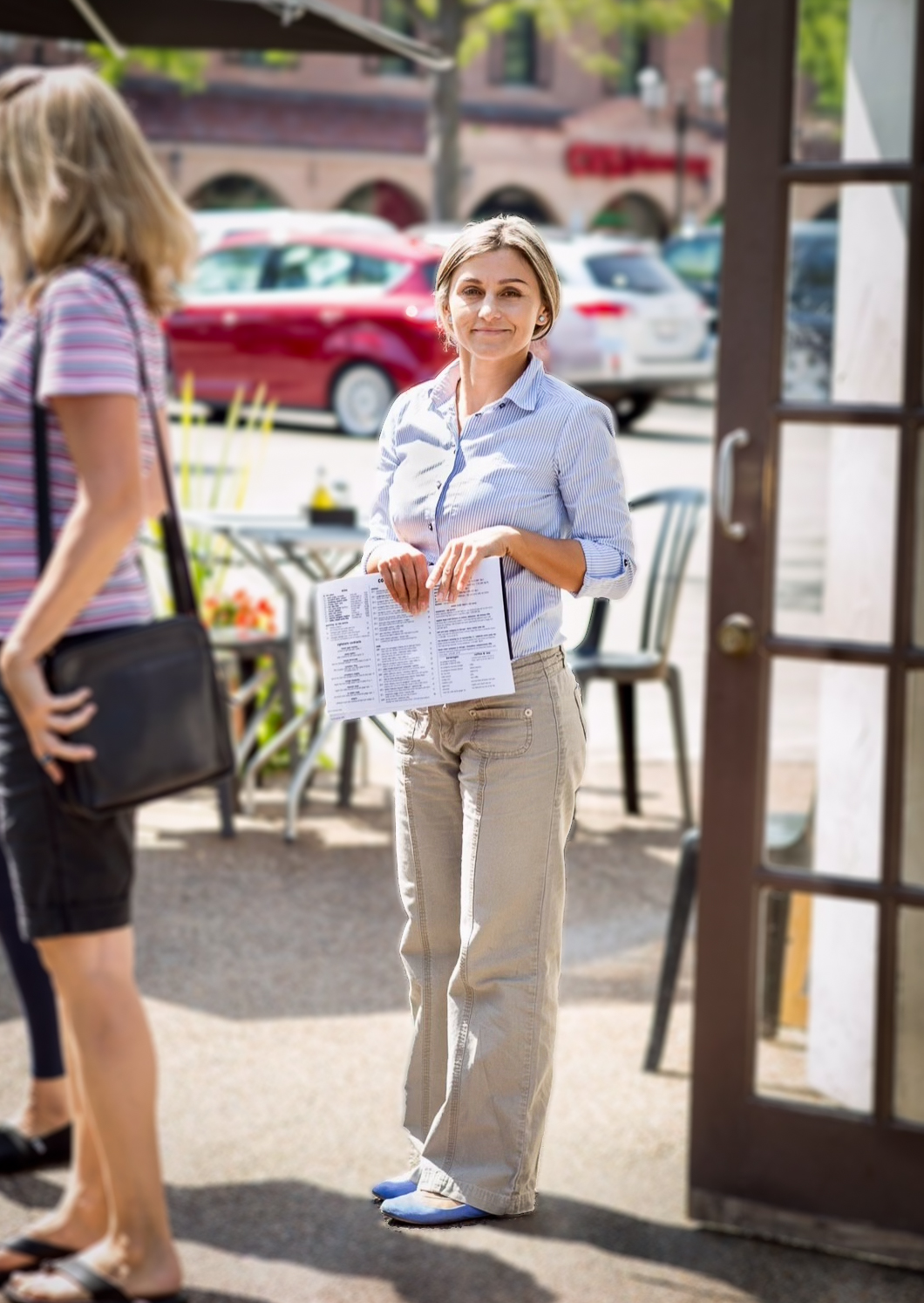
Sarka at Convito
With the kind of rich culinary history that Sarka carries with her, Convito was lucky that she joined our staff. Food and wine knowledge is a treasured commodity and Sarka’s path to Convito is an interesting one – a story that paints a picture of a young woman from a small European town who early on wanted to expand her horizons and become more acquainted with the world and what it had to offer.
When she left the Czech Republic at age 19 to move to London, it was her intention to improve her English. She supported herself for a year and a half as an au pair then moved back home for six months, only to pack up again and move to the U.S. where her sister lived. Again, she found work as an au pair in a suburb of Chicago (Northbrook) and stayed for 4 to 5 years until the children no longer needed her.
As the time approached for her to leave this family, not only was her English much improved, but she had developed other skills too. She had begun to take extra jobs at nearby restaurants as a server and bartender where she could explore the restaurant business as a possible future career choice as well as to earn a little extra money.

Sarka with Kianna and Kingston
As fate would have it, one afternoon she ended up at my daughter’s house who was both a mother in need of a babysitter (she has two young kids at the time – Kingston (4) and Kianna (1) and a restaurant owner who was in need of additional help at our café. The next week she was already helping with Candace’s kids and not long after that she became a host then server at Convito. Soon she was the store’s Assistant Manager and then Restaurant Manager, but between the responsibility of multiple jobs and the fun of living in the U.S. in her twenties, she was too busy to do much cooking for herself, which is why it took me many more years to learn about her skills in the kitchen.
From time to time Sarka would make some of the traditional Czech recipes she brought with her. Czech cuisine is distinguished by heavier and more filling meals shaped by its long, cold winters and influenced by its neighbors – Austria, Germany, Hungary, Poland, and Slovakia. Like many northern European cultures, the Czech people have a love of hearty meals like roasts, stews, sausages, and dumplings. I already liked Sarka, but once I learned how much her country’s cuisine reminded me of the Midwestern dishes I grew up with, she became family to me.

Sarka and Candace
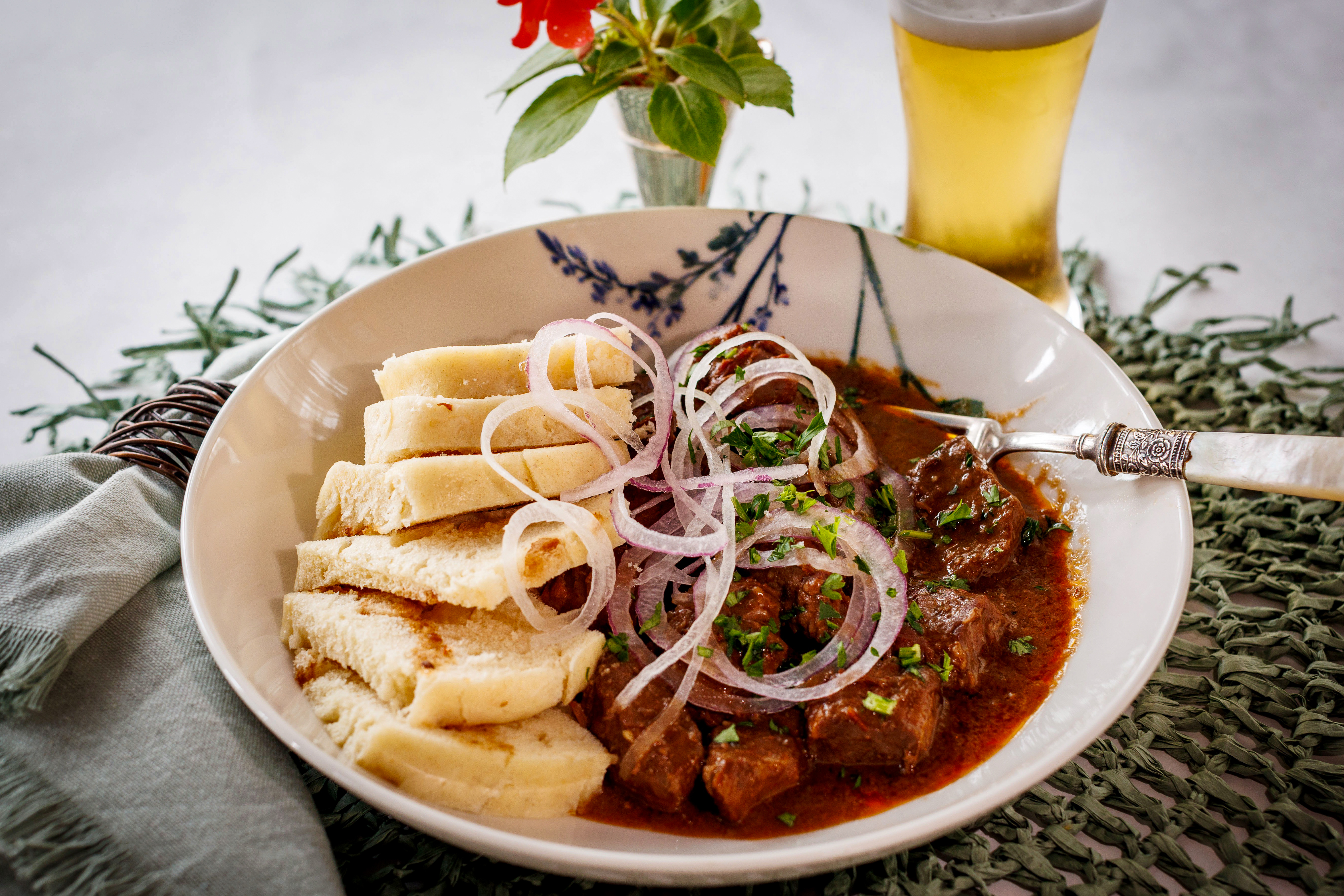
When I thought about who to include in this blog, I was fairly certain Sarka was a perfect match and when she didn’t hesitate when I asked her for a “Peasant Food” recipe, I knew I had the right girl! Hovezi Gulas (Beef Goulash) was her choice. Czech Goulash tends to be milder and beefier than its Hungarian counterpart (and with fewer vegetables), but what I especially like about it is its liberal use of beer (specifically, Pilsner), which imparts the goulash with a very aromatic scent and a rich taste.
© rob warner photography 2024
Hovezi Gulas
Beef Goulash2 tbsp olive oil
2 large yellow onions, chopped
3 lbs stewed beef, cut into in ½ inch cubes
4 to 6 tablespoons Hungarian paprika (fresh is best)
1 tbsp tomato paste
2 cloves of garlic, minced
3 tbsp all-purpose flour (or cornstarch for a gluten free version)
1 tbsp marjoram
Salt and pepper to taste
2 oz of Czech Pilsner styleWarm olive oil in a large Dutch oven or pot on medium heat. Add the onion and garlic and sauté until soft. Add the beef and allow it to brown on the outside.
Add paprika and combine with beef.
Whisk the Wondra flour with 3 tbsp of water, taking care to remove any lumps. Add to beef.
Add tomato paste and enough water to fully cover meat (with a little extra).
Add salt and pepper.
Bring mixture to a boil, cover, and simmer on low for about two hours until the sauce thickens and the meat becomes tender and falls apart. Once the sauce is thick and meat is tender it is ready to serve.
Note:
The beer that we know today as pilsner has its origins in Bohemia known in the present day as the Czech Republic, where it was originally brewed in 1842 in the town of Plzen (known in English as Pilsen)
Sarka always serves her goulash with dumplings made from scratch or purchased from her local Czech market, but it can also be served with noodles (German), Spätzle (Hungarian) or even rice.
Sarka’s roles over the years as Restaurant Manager and Assistant General Manager at Convito and all-star babysitter to Candace’s children have made us all very close. But it is her love of food, her dedication to Convito and how much fun she is to be around which makes her more than that to us. She is both a good friend and member of the family. And now that my grandchildren Kianna (18) and Kingston (22) are hosts at Convito when they are home from college she has assumed yet another role – boss!
***************************************************************
Ann Yonkers
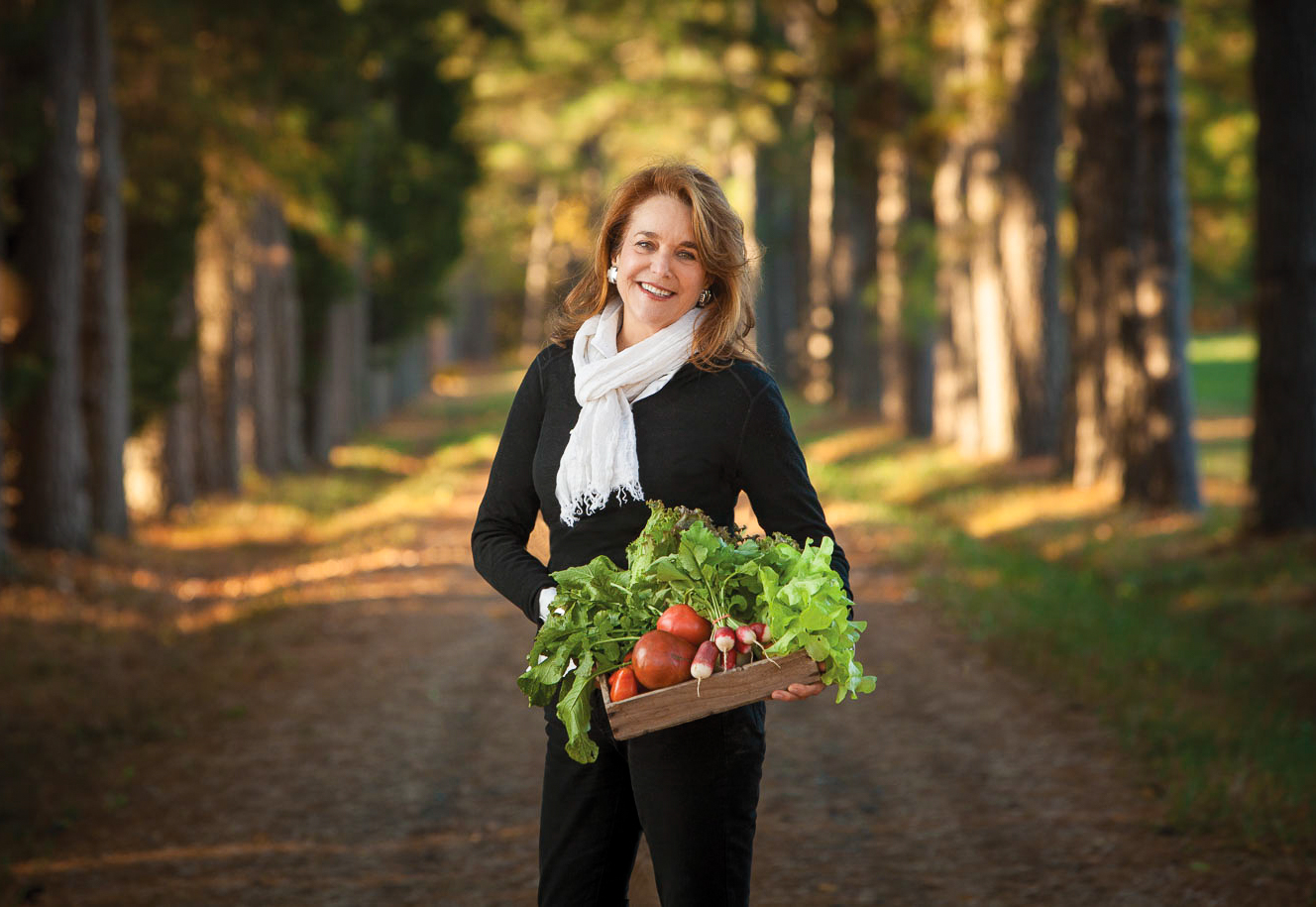
Attending my first Les Dames d’Escoffier International conference in San Francisco as a member of the Chicago Chapter delegation, I found myself sitting across from Mother Earth – or at least a person who fit my idea of what Mother Earth should look like. She was nurturing, naturally beautiful, statuesque; a woman full of emotional and spiritual intelligence and someone I decided immediately that I would get to know well. Often our wishes don’t materialize the way we hope, but in this instance – lucky for me – they did, and Ann and I have been dear friends to this very day.
I was also right about my Mother Earth observation. As I grew to know her better I saw how she cultivated an exceptional power and a disarming wisdom that a woman in an industry dominated by men needed in order to be a leader. Then I marveled at how she viewed food as something that needed protection and nurturing in order to develop into the healthiest and tastiest meal it could be. She is a one-of-a-kind force of nature!
When we first met however most of us “food people” were still in the throws of French cuisine worship, its rich flavors and meticulous presentation holding it in a revered place in our hearts. Those very sophisticated and respected techniques would never be left behind, but I could tell Ann was on to something very different, but I wasn’t able to see it right away.

Candace, Ann & Charlie Yonkers I
In 1991 Ann and her husband Charlie bought Pot Pie Farm on the Chesapeake Bay. Located in Talbot County, Maryland and set on a peninsula surrounded by water on three sides, Pot Pie is a gorgeous piece of land with magnificent views and and awe-inspiring sunsets, and it became an incubator for Ann to ponder the best way to get fresh food from the local farms that had a surplus to the people in the surrounding area who couldn’t find anything fresh or local on their grocery shelves.
During their first spring at Pot Pie, Ann’s father visited and reminded her of a family tradition he learned as a boy growing up on a ranch in Montana. Something perennial would be planted each time they purchased new land so that when it appeared healthy and sturdy during the next harvest, it would be a positive sign. When you taste something right after it pops it new little head from the very ground in front of you, it is a very different experience. It indicates the future of this newly purchased piece of land. Her dad chose to plant asparagus, and when it finally appeared the next season – with the silent unfolding of its fonds and leaves – it seemed to both Ann and her father to prophesize the future success of Pot Pie.
Breaking off one of those tender asparagus spears and biting into it, Ann had a eureka moment. The taste was clearly the exciting marker that Ann remembers most! Almost buttery, the green grassy fresh flavor astounded her. It was nothing like the asparagus she had tasted before. To share that experience with people in the D.C. area became her new mission.
Ann was prepared for this new venture – to create a program that connects farmers in the Chesapeake Bay area with a local communities in need of healthy (and local) nourishment. Encouragement and help from people like renowned chef Nora Pouillion (owner of the first certified organic restaurant in the U.S.) and members of American Farmland Trust (AFT), whose mission is to protect American farmland and encourage sustainability within the industry, were essential influences along the way.

Ann and Bernadine Prince at the 1997 debut of FRESHFARM’s first market in Dupont Circle
It was not long before everything was organized enough for Ann and her cofounder to start the Dupont Circle Farmers Market which became the showcase market of FRESHFARM the nonprofit she co-founded that seeks to build a more equitable and sustainable food system in the Mid-Atlantic through the use of education, farmers markets, and food distribution programs. The organization eventually expanded to a network of over 18 markets all over D.C, Maryland, and Virginia with Ann as its passionate organizer and leader.
“I had really big policy goals. I wanted to change the way Washingtonians experienced food. I wanted to disrupt the current food system by bringing fresh local food into a city where policy is made but instead of talking about it, actually doing something. I believed in the power of food to inspire and alter habits and hearts because you could actually see it, taste it, and feel it,” Ann declared.
Ann was also determined to bring the local and fresh food back to the chefs in D.C. Its easy to forget that neither fresh nor local were the culinary buzzwords they are today, but Ann knew this had to change. Her culinary degree and experience as a professional cooking teacher allowed her the clout to walk into the best kitchens in the region and discuss all these opportunities with the restaurant chefs whose support she needed for this to become a successful project. She wanted people to remember that a cucumber didn’t need to be waxy, bland and watery and that a fresh eggplant has a savory, slightly sweet taste, as opposed to the bitter, thick-skinned ones we find in our grocery stores.
It was an exciting time for Ann. This whole movement – to raise, produce and distribute better quality, local foods – naturally changed the way she cooked at home as well. Seasonality was always top of mind. She didn’t plan what she would cook that night until she could see it – always selecting what looked succulent and at its optimum “freshness.” This was to be her criteria for what would be on her menu that night.
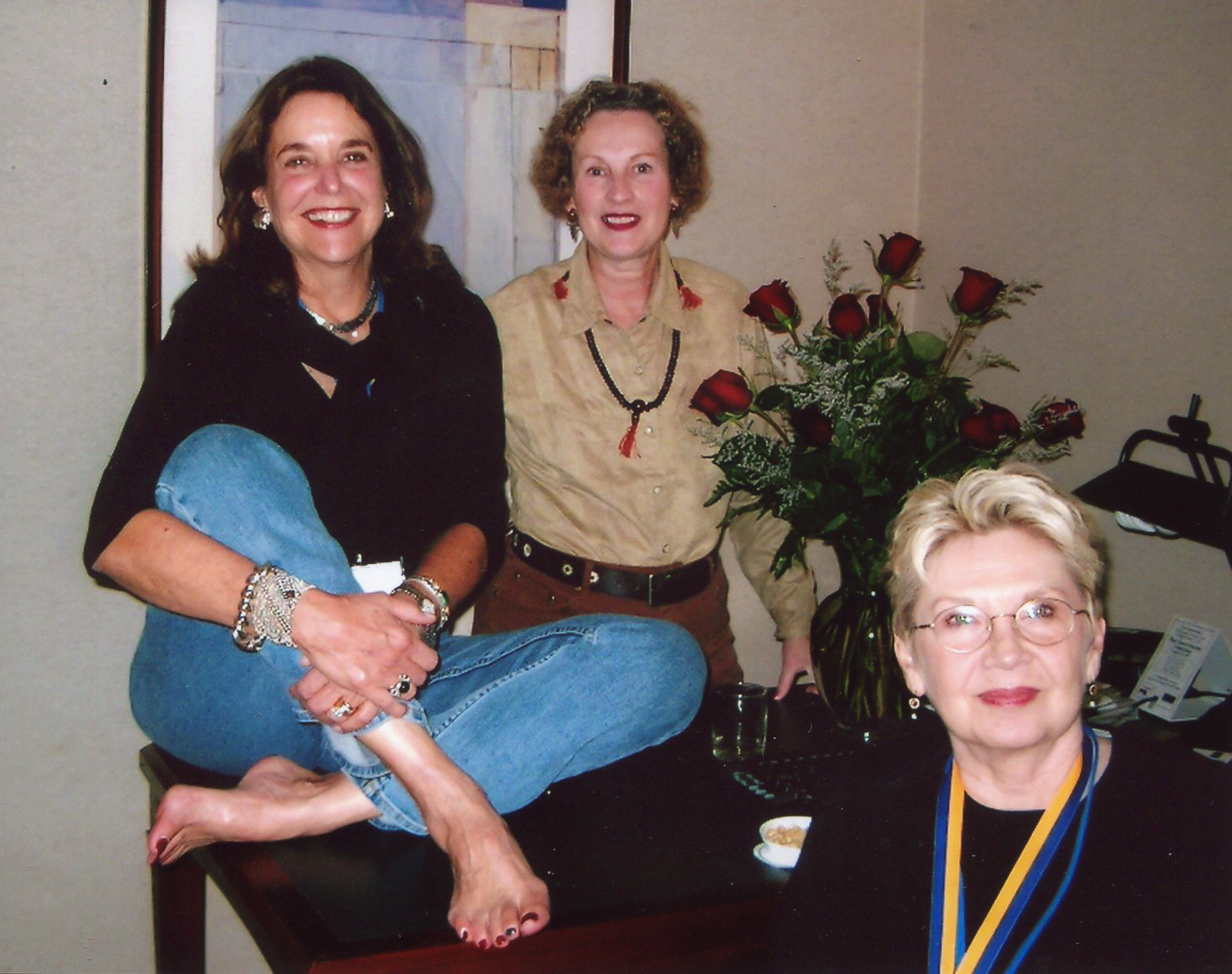
Ann, Toria Emas and I at a Les Dames conference
When I asked Ann for a Peasant Food dish recipe, I wasn’t surprised when she gave me a colorful, but simple Smoky Sausages, Peppers, and Onions recipe. The combination of simple, accessible, and inexpensive ingredients is not an unusual mixture for a peasant dish, but Ann’s introduction of the smoked paprika gives the dish a lovely spicy flavor with hints of sweetness and a warmth of flavor that Ann describes as adding “happiness to this already happy mixture”. To Ann, “Happy Food” happens when all the ingredients of a dish blend together so harmoniously that everyone at the table is smiling, which is exactly how this Earth Mother wants us all to feel.

© rob warner photography 2024
Smoky Sausages, Peppers, and Onions
2 pounds heritage pork sausages (sweet, hot or mixed)
2 x medium onions
Extra virgin olive oil
5 red and yellow Italian frying peppers, rinsed, stems and seeds removed and
1 tbsp smoked paprika
Salt and pepperLine a cast iron skillet with all the sausages and add enough water to cover. Over medium heat, simmer about 6 minutes. Turn off the burner, cover, and soak for 6 more minutes. Pour off the water, dry the sausages and set aside.
Place the large cast iron skillet over medium heat, add 2 tablespoons of olive oil and put the sausages back in. Sauté them until they are thoroughly browned, turning with tongs throughout. Remove the sausages and set aside.
Cut onions in half, then slice vertically into half circles. Slice peppers vertically into long thin strips.
Add onions to the skillet with sausages and sauté over medium heat until golden. Stir in the smoked paprika and the sliced peppers, stirring briefly to combine, then sauté until the mixture is lightly browned.
Cover the skillet and simmer over low heat for about 2-3 minutes or until the peppers and onions are softened. Uncover the skillet and raise the heat to medium-high. Add the whole or cut up sausages and sauté briefly to combine all the flavors.
Add salt and pepper to taste.
Serve as an entrée over brown rice or as a filling for tacos. Yum!
Ann Harvey Yonkers Note:
The combination of pork sausages, onions and peppers is classic and delicious. What distinguishes this recipe is the intentional sourcing of the highest quality free-range, heritage-breed pork and the specific choice of pepper; the Cubanelle, a late summer/fall long, sweet, flavorful pepper whose popular name is Italian frying pepper. These carefully sourced ingredients raise the deliciousness quotient to new heights.
Writing about my friend Ann reminds me of the Belgian-French novelist Marguerite Yourcenar. She once wrote that “to stay in one place and watch the seasons come and go is tantamount to constant travel: One is traveling with the earth.” Ann’s willingness to let the nature guide her as a cook and a human being is truly inspirational and reinforces my conviction that she is a true Earth Mother. What a lovely thought for us all!
***************************************************************
Peasant food combines the things I love most about cooking: bold flavors, simplicity, the embrace of regional character and the celebration of cultural diversity. But I also appreciate that these dishes endure first-and-foremost to provide sustenance for families by using inexpensive and accessible ingredients. I certainly have a place in my heart for haute cuisine, but I’ll take a one-pot meal on a chilly night any day of the week!
I chose these particular recipes because I love both the food and the people who cook them, but I also admire how representative of their origins they are.
This chapter of my blog series represents just half of my reflections on peasant food. Next month I will highlight another four of my favorite cooks and share their take on the simple pleasures of peasant food. Stay tuned for more Collaborations and Inspirations and thanks so much for reading.

Karen wrestling a mid-size Connecticut Peasant Fish
