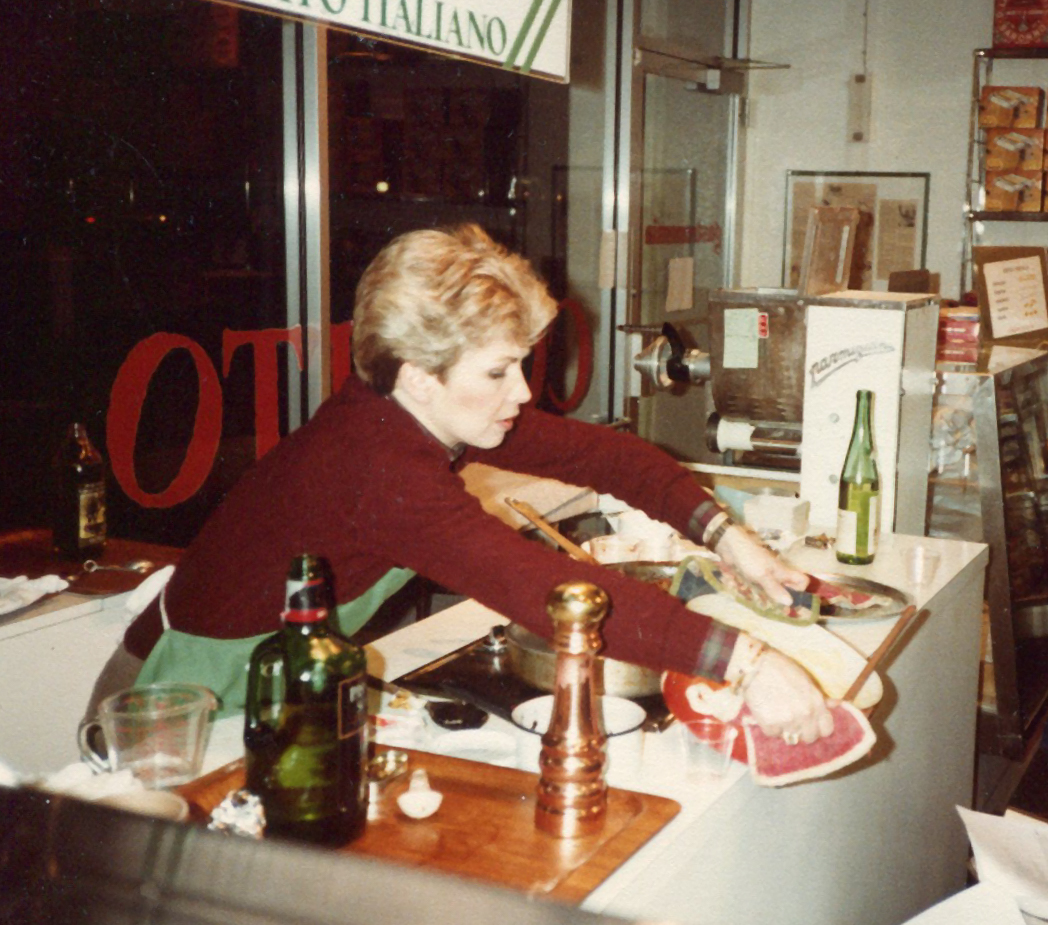
Sautéing, braising and searing are just a few of the culinary skills I accumulated on the road to becoming a cook. And while there are some moments in my culinary education where I can identify the precise moment I learned a particular technique, others came to me over time, by reading cookbooks, observing and assisting cooks I met all over the world and – perhaps most important of all – making mistakes and corrections in my own kitchen. Much of what I know was developed by simple experimentation; like gradually understanding that to make French Fries the way I liked them – with a slight crispness and a light browning – I needed the frying oil to be intensely hot and the potatoes dried of all excess moisture. No cookbook was ever able to guide me to make fries exactly the way I liked them. But time, experience and patience did.
The more I cooked, the more I became aware of the importance and meaning of those skills. Sautéing cooks food quickly and keeps flavors vivid. Braising – essentially low and slow cooking – is used to break down the connective tissue of tougher meats to render them fall-off-the-bone tender. And searing – cooking on an extremely hot surface, causes what is referred to as the Maillard reaction which creates a golden crust on food that looks, smells and tastes wonderful.
Once skills like those are properly executed, one doesn’t forget the succulent juiciness of that perfectly sautéed chicken breast or the incredibly delicious and flavorful beef stew that slowly braised for two plus hours on your stovetop.
Three women – all incredible cooks – introduced me to many of those techniques, but what most stands out in my mind when I think of their influence on my culinary journey is the role they played in my understanding and appreciation of Italian cuisine. Mary Barocci, my once-mother-in-law, introduced me to authentic Italian cooking. Wanda Bottino, the Milanese mother of my original business partner, showed me its great regional diversity. And Violet Caldarelli in her role as Convito’s first chef, taught me how to take that culinary knowledge and translate it to the countless dishes we still sell to this day. Their skills, their love of food and their culinary knowledge provided me with a dream education, one you couldn’t get from a TV cooking show or a classroom. It was up close and personal, intense and always hands-on. Cooking alongside them and watching their command of the kitchen was not only educational, but also incredibly inspiring.

Mary Barocci
It was in Mary Barocci’s kitchen that I first came face to face with true Italian cuisine. I had been dating her son, Bob for six months before we decided to take a break from our studies at the University of Wisconsin and visit his mom and dad at his home in Cudahy to experience some good home cooking. It didn’t take long to recognize that Mary’s Italian dishes were in a whole different league than the Italian food I had tasted before I met her. From my first taste of her spaghetti sauce I knew that her cooking elevated that dish to something I had not experienced before. Even though I continued to thoroughly enjoy every Italian meal that Mary cooked – especially when they introduced to new tastes like polenta and potato gnocchi – it wasn’t until many years later when I became responsible for cooking meals for my own family that I began to fully appreciate her talent and to recognize that her culinary skills were prodigious.
There was always something extra in each dish Mary prepared. She had her own unique touch that both elevated a dish and also gave it her signature. I vividly remember watching her make a simple cucumber salad. Hers was crunchier and more “cucumbery” than others I had tasted. Her secret I observed, was to slice the cucumbers very thinly, salt them heavily and then leave them soaking for an hour or so to bring out the excess water (cucumbers consist of 95% water). The process is called sweating. Later she would “wring out” the excess moisture like one would with a damp washcloth – and then carefully separating each of the slices, add thin slivers of onion and toss the mixture with oil and cider vinegar – heavy on the vinegar! I make this salad frequently and whenever I “wring out” my cucumber slices…I think of her.
The direction Mary’s life took was deeply impacted by the skills she developed in the kitchen at a young age. I learned about her childhood from her daughter Katherine, the oldest of Mary’s three children and the self-appointed family historian. Since Mary herself rarely spoke of her childhood, Katherine learned most of her mother’s history from piecing together tidbits of information gleaned over many years listening to her aunt and uncles.
***************************************************************
Mary was born in Michigan to first-generation Croatian parents. She spent most of her youth in Bessemer, a small mining town in the upper peninsula of Michigan where her father worked in some of the deepest mines in the United States. As in most mining communities, life was hardscrabble and fraught with danger and fear and everyone in the family had to contribute to the running of the household. Mary, the oldest of four, was responsible for many chores at a very early age and one of those was cooking for the family. Because Bessemer contained such a diverse collection of ethnic influences, she not only learned to cook her family’s Croatian dishes but also those from other miners’ home countries like England, Ireland and Italy.
 Not long after her sixteenth birthday when her siblings were old enough to contribute to running the house, Mary was sent to work as a maid for a wealthy family in St Louis. After a few years there, she moved to Cleveland where she became the nanny for another wealthy family. Eventually, Mary returned to Bessemer and married an Italian man, Louis Barocci, whom she had met some years before.
Louis became a teacher, eventually settling his family in Cudahy, a suburb of Milwaukee where Mary became a mother of three and an extremely skilled homemaker. Family roots – in combination with Mary’s early employment and the fact that she had married into an Italian family – greatly influenced Mary’s evolution both as a homemaker and in the kitchen. Certainly, the impact of her early years of living and working in the homes of highly educated and wealthy families surrounded by beautiful things had an impact on her taste level. Because a teacher’s salary could not buy many of the high-quality items she had been exposed to, Mary became very adept at watching for sales. Her son Tom recalls growing up with many lovely things – and especially remembers the perfect table his mother set every Sunday all complete with beautifully folded white linen napkins, an elegant lace tablecloth and quality china and glassware all placed in their proper positions. “She knew all about those things,” Tom told me. “And all about proper etiquette, another set of facts she most likely learned during her days serving as a maid and a nanny. I grew up with my own private Emily Post,”
Mary’s Italian recipe file expanded greatly after her marriage to Louis. His family was believed to have emigrated from the northern Italian region of Emilia-Romagna specifically from around the town of Parma, arguably the greatest of Italy’s food regions and home to world famous food products like prosciutto and Parmigiano Reggiano. I not only became familiar with those products under Mary’s tutelage, but also learned to cook a whole myriad of Italian dishes like rich tomato and mushroom Chicken Cacciatore, succulent potato gnocchi drenched in browned butter, plum dumplings in a yummy brown sugar sauce, and creamy polenta to name just a few.

As much as Mary is responsible for all my first fine Italian cooking experiences, she also exposed me to other European cuisines. One of the very first lunches I had at her house was neither Italian nor Croatian, but a delicious little hand-held pie stuffed with meat, potatoes, onions and carrots from Cornwall, England. It was called a pasty and was an all-in-one meal brought into the depths of the mines by immigrant laborers across the Midwest. Easy to pack in their lunchbox and even easier to eat, it provided sustenance for the grueling days spent in the dark, damp mines of Bessemer. How this traditional English dish cross-pollinated into Italian and Croation-American culture is anyone’s guess. But I suppose that is precisely what makes this country so culturally fascinating.
Croatian dishes were, of course, her specialty. Once I married her son and became more interested in cooking, I would often follow Mary around her kitchen writing down recipes of the dishes she was preparing for dinner that evening. I was eventually invited to help stir the polenta, which in retrospect was a little like Tom Sawyer’s fence painting invitation. The labor intensive nature of this Italian/Croatian dish begins by slowly adding cornmeal to boiling water, then stirring it constantly with a wooden spoon to prevent it from becoming lumpy and to make sure it was perfectly creamy and not bitter. It is much easier when that the stirring is shared with someone (which is where I came into the picture), since producing “perfect polenta” often takes an hour or more. Because I love polenta so much it was a tradition I continued in my own family, waiting for the kids to come home from school to help me in the stirring process.
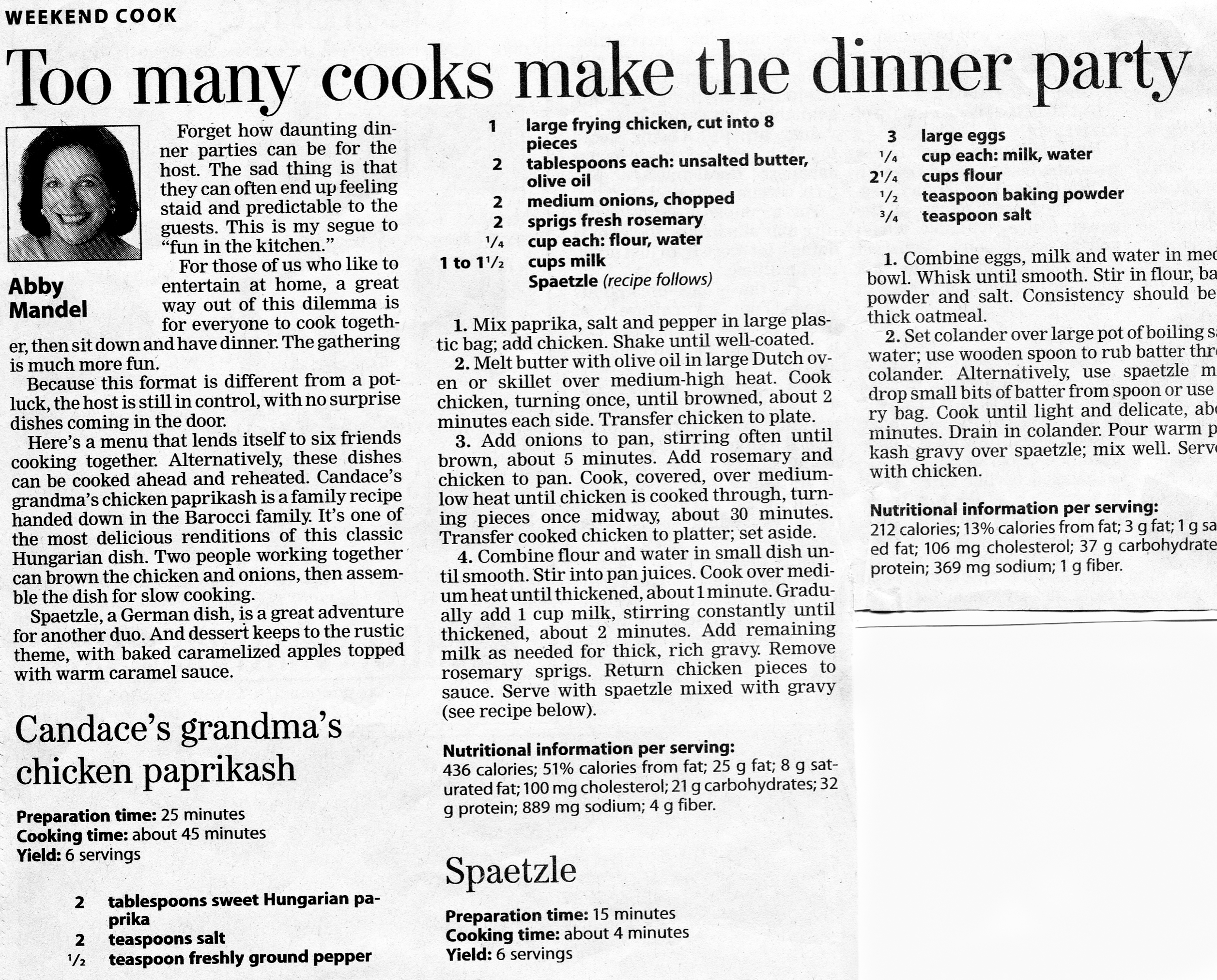 Croatia was a part of the Austro-Hungarian Empire for centuries, so many Croatian dishes like polenta, resemble the dishes of the countries that were originally a part of that empire. Chicken Paprikash, for instance, is a dish usually associated with Hungary. Mary served hers with spaetzle smothered in a to-die-for creamy gravy. I still cook it for special occasions, as does my son who prepares it annually for each of his family members’ birthday dinners. I once made it for a group of friends that included food columnist Abby Mandel and she loved it so much she subsequently published it her Weekend Cook column in the Chicago Tribune a few weeks later.
Mary’s authority in the kitchen was unquestioned. She knew how to cook almost anything including many foods I had never heard of before, let alone tasted. Things like pickled pigs feet, tongue, and head cheese (a lunch meat made from the head of a calf or pig often set in aspic) were commonplace in her kichen. I was impressed that she knew what these “strange” items were and even more impressed that she knew how to cook them, but it wasn’t until later that I understood the source of her knowledge. Growing up in rural Michigan, Mary’s family would buy just one pig, one cow and one sheep every year. Throughout the warm seasons they would care for those animals until winter came when they would butcher them to use as sustenance through the cold winter months. As a result, Mary understood how to best utilize every part of each animal – the best way to fry kidneys, the best way to slowly simmer tongue, the best way to quickly sauté liver – always elevating each into something delicious.
Canning was also a big part of her upbringing. The cellar – sometimes called the root cellar or the fruit cellar – was a structure (usually underground or partially underground) used for storage of many different foods. Mary, like many Americans back in the early part of the century, canned all sorts of fruits and vegetables in the late summer and early fall in preparation for a long winter. Her family also canned, jarred or pickled more “exotic” items. Her youngest son Tom clearly remembers opening a jar of pickled pigs feet and sucking the delicious, chewy meat off the knuckles. “It didn’t seem strange to me at all. It was a part of my upbringing.” However, he does remember an animal part he really didn’t like and recalls coming home from school to the smell of kidneys being cooked for his dinner. “I could identify that smell a block away and immediately began to invent a “stomach-ache story” so I could go directly to my room and skip the evening meal.”
When I met Mary she was still utilizing many of those animal parts (often referred to as offal – internal organs) in her everyday cooking. Pig snout went into pots of beans or soups to give the dish more flavor and a richer body. Ham hocks were used in many dishes especially enhancing the flavor of her pea soup or pork and bean casserole. I became familiar with many of them and began to appreciate their function. However, some of the more “exotic” organs and animal parts were never served to me, existing simply as family lore. Deep-fried chicken feet or scrambled eggs with brains – her husband’s favorite breakfast – were cooked only for the immediate family.. I can’t say I felt the least slighted.

Mary and I in her Cudahy, WI home
Mary was a very intelligent woman who read prodigiously, was very well spoken and kept up on all the happenings of the world. She was especially proud of her children’s academic accomplishments: Katherine graduated from Marquette and became a teacher; Bob graduated Phi Beta Kappa from the University of Wisconsin and went on to Harvard Business School; and Tom received a BS, MS and a PhD from the U of Wisconsin and became an associate professor in the Economics Department and Business School at MIT. And her husband was a high school teacher. So I just assumed that she, like the rest of her family, had gone to college. When I learned that her education had to be cut short at age sixteen, I was quite surprised. For someone who placed such a premium on education, that had to be very difficult.
It would have been so interesting hearing about those early days from Mary herself. The idea of a young poor girl from a small mining community moving to the “big city” and being immersed in a completely foreign world is the stuff of great American literature. What we did know about Mary – what was perfectly clear – was that she was a great cook and I – like her three children – was the lucky recipient of that talent. Each time I cook one of her recipes I think back to all that I learned in Mary’s kitchen.
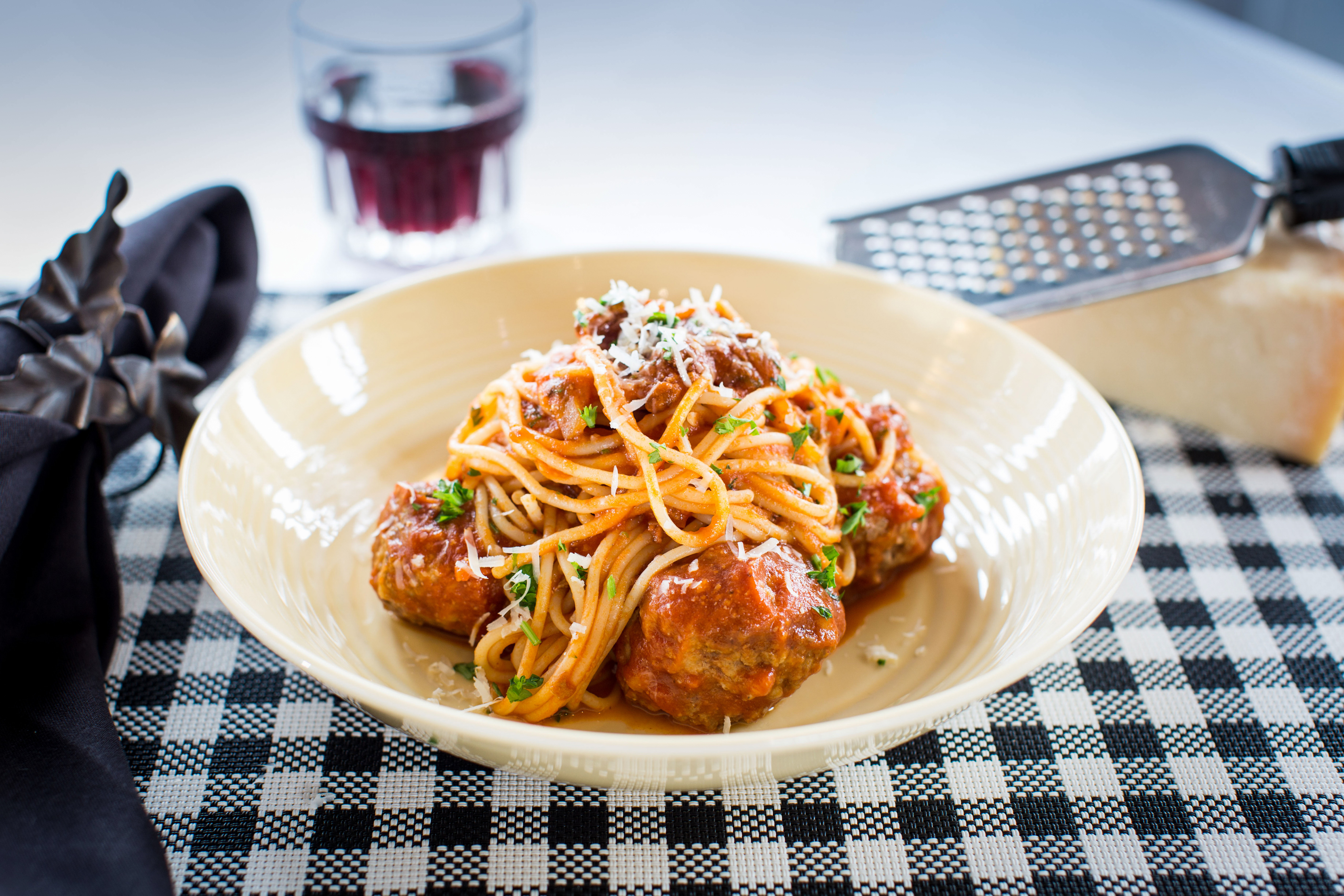
Mary’s Spaghetti and Meatballs – the first Italian meal I had at the Barocci home – is still delicious. It is a vibrant and savory tomato sauce with a hint of cinnamon, which comes from its addition to the meatballs that simmer in the sauce for an hour or more. The use of cinnamon is typical of the Emilia-Romagna region. Its sweetness serves to bring savory flavors alive and counterbalances the acidity of the tomatoes. It is one of many recipes that have been passed on to her grandchildren and will continue to be passed on to her great grandchildren. They are her legacy.
© rob warner photography 2020
Mary Barocci’s “Italian Spaghetti”
(aka Spaghetti & Meatballs)
Serves 4
Meatballs
1-pound ground beef
½ pound ground pork
1/3-cup breadcrumbs
1 small onion finely chopped
1 small clove garlic, minced
1 small egg, slightly beaten
½ teaspoon ground cinnamon
2 teaspoons salt
¼ teaspoon pepper4 tablespoons oil
Mix together the beef, pork, breadcrumbs, onion, garlic, egg, cinnamon, salt & pepper. Form into meatballs about the size of walnuts. (Will make about 20) In a skillet heat the oil over medium-high heat and fry the meatballs in two batches until browned. You may need to use more oil. Set the meatballs aside
In the meantime make the tomato sauce
Tomato Sauce
¼ cup olive oil
2/3 cup finely chopped onion
2/3 cup finely chopped carrots
2/3 cup finely chopped celery
1 clove garlic, minced
1 (28-ounce) can whole Italian Plum Tomatoes, including the juice – broken up into pieces
salt & pepper to tasteIn a Dutch Oven sauté the onions, carrots and celery over medium heat until soft – approximately 5 minutes. Add garlic and sauté for another minute. Add salt and pepper.
Add the tomatoes and bring to a low simmer. Cook uncovered for 15 minutes. Pour the sauce into a food mill and process. Pour the smooth sauce back into the Dutch Oven, add the meatball and simmer covered for about 10 minutes.
Pasta
1 pound spaghetti cooked al dente
grated Parmesan cheeseCombine and sauce and meatballs with the cooked pasta and sprinkle with grated cheese.
Note: I like to add a drizzle of extra virgin olive oil to each serving before I sprinkle on the cheese.
***************************************************************
For more than a decade as I raised my young children in the Chicago suburbs, Mary’s version of Italian became my own. But it wasn’t until almost fifteen years after I first met her that my Italian culinary education exploded when I met Wanda Bottino, the mother of Paolo Volpara, my then-husband’s new business associate. Bob and Paolo worked for the same American advertising agency, Leo Burnett; Bob as managing director of London and Paolo of Milan. The three of us immediately clicked and began spending lots of time together both in Italy and in England. Many Italian meals and much discussion later, it was decided that once I moved back to the states, I would open an Italian food and wine business with Paolo as my partner. Even though we weren’t sure what form it would take, we knew that in order for me to be effective in promoting Italy and its wine and food, I needed to begin a crash course immediately.

Wanda Bottino
Enter Wanda (pronounced “Vonda”), Paolo’s mother and my soon-to-be-teacher and mentor who would introduce me to the incredible depth and diversity of Italian regional cooking. From 1979 to 1986 I began one of the most intense learning periods of my life, traveling frequently to Milan where both Paolo and Wanda lived, cooking with Wanda in her small Milanese kitchen during the week and traveling to different regions with Paolo on the weekends.
Wanda’s self-determined mission was to expose me to the myriad differences in the cooking of Italy’s 20 regions. For this assignment she was well qualified. She, like Mary Barocci, was a superb home cook. That was common enough in Italy, but Wanda’s depth of regional experience was what set her apart and made her special. Back then, most Italian home cooks were proficient in the recipes of their region but not necessarily beyond. Wanda had the advantage of actually living in many of Italy’s 20 different regions. In her youth, the family moved with her engineer father to the city of his latest assignment and then as a married woman, to whatever base her military husband was assigned. However, home base was always the region in which Wanda was born – Piemonte, the land of wine and tartufi (truffles) and neighboring Liguria, the coastal region just 60 kilometers away where fish, pesto and focaccia were ubiquitous. To Wanda these were the two regions whose cuisine had the most influence on her – the regions she would return to either to spend a vacation on the Ligurian seaside or to visit family in hills of Piemonte.

Her son Paolo remembers happily growing up in the delicious world of Wanda’s cooking. Enjoying flavors from all over Italy was very much a part of his upbringing. On Sundays he recalls the smell of the kraphen she baked. Although its origins are Austrian, many Italian regions like Trentino-Alto Adige, Friuli Venezia Giulia and the Veneto (areas once subject to Austrian rule) featured this heavenly sweet pastry filled with cream and covered with sugar. He also fondly recalls autumn evenings when she served farinata, essentially a large chickpea pancake, for dinner. Farinata originated in Liguria in the middle ages and became a typical food of that area. To Paolo it was a kind of earthy, satisfying comfort food. Also comforting was the Tuscan castagnaccio (a dense, thick chestnut crepe/cake) that she liked to serve on a cold winter’s night. When eaten warm it was chewy and moist with almost a meaty quality and a hint of smoke from the pinenuts. Her repertoire of recipes was so vast he can’t begin to remember them all.
When we first met, Wanda spoke no English and I no Italian. That fact didn’t seem to matter to her at all, which I was to quickly learn the very first evening I spent with her. Paolo thought it would be a good idea for us to meet socially before we began our intense cooking sessions, so he arranged a meeting with a wine producer friend of Wanda’s in Ovada, Piemonte some 100 kilometers from Milan. The plan was for the three of us to tour the vineyards and then have dinner in one of Wanda’s favorite Piemontese restaurants.
That night would foreshadow what our relationship would become – invariably intense, frequently frenetic and always great fun. She peppered me with questions about my planned business, my upbringing and my personal life all the way from Milan to Ovada. The interrogation continued during cocktails with the winemaker, through dinner and all the way back to Milan. At first Paolo translated, but the pace of her inquisition was so fast that he eventually had to give up. She was relentless. I eventually came to understand that in Wanda’s mind if she spoke loud enough and used enough exaggerated hand gestures and facial expressions then any non-Italian speakers would eventually have to comprehend what she was getting at. I have no idea if I answered her questions or she understood my answers, but I certainly spent a lot of time talking that night.
***************************************************************
By the time we began our cooking sessions in her tiny Milanese kitchen I had taken several Berlitz classes and had mastered just enough food and cooking terminology to keep up with her. I was also beginning to understand that if I said “capisco” (I understand in English) or “si” (yes) after her long and sometimes confusing explanations of what she was about to cook, that she would move on to another subject – even though frequently I didn’t have a clue as to what she was saying! But most of the time I at least understood the general idea. Never was I more comfortable speaking Italian than with Wanda. No matter how I struggled, she made me feel like a linguistic genius for simply trying. “Brava! Brava!” she would say.

Wanda was a little fireball, a woman of such energy and personality it was often hard to keep up with her, especially in her kitchen – chopping, stirring, pureeing – there were all done with intensity and great flourish. Very dramatic she was – a little like an opera diva. Wanda was an instinctual cook, an experimental one who did not like to follow a recipe. In her mind, recipes took away her creativity. But I did eventually convince her that recipes were essential for her newest protege. How would I be able to teach our chefs and share these dishes through our Capitolo publications without a recipe? Eventually she got used to me following her around her little kitchen with my set of measuring cups and a little stopwatch – always hanging over her shoulder furiously recording every measurement and every move she made. That way I could later write up accurate measurements and clear cooking instructions for the dishes we had cooked that day.
 Once she became more confident in my cooking skills, she finally allowed me to act as her sous chef. But in Wanda’s kitchen, a good sous chef is responsible for the acquisition of the days fresh ingredients, so it became our habit that after we finished our morning cooking sessions we would spend the afternoons visiting salumerias (delicatessens), pasticcerias (pastry shops), drogherias (grocery stores), panificios (bakeries) and macellerias (butcher shops) where she introduced me to the owners or managers and requested samples of the myriad of cheeses, salamis and assorted delicacies for me to taste. She especially loved pointing out all the amazing food displays in all of these stores, which in her opinion were the best in the world. My favorites were the Peck stores which are considered the temple of Italian gastronomy by many chefs and restauranteurs in Italy. Pecks are landmark shops in Milan where cheeses, prepared foods, wines and all kind of deli items are magnificently displayed in sparkling cases, on tables and in windows throughout their deliciously elegant stores. And more than any other place, Peck was a direct inspiration for me in envisioning my own business.
***************************************************************
Once Convito opened its doors, I continued working with Wanda in Milan but she also came to visit Convito on at least four or five different occasions. Her first visit was for our September 1980 opening and it was a gala, crowded affair. We even put up a tent in the parking lot where we served many items that Wanda and I had cooked that day. As usual, she managed to charm all of the guests while not speaking a word of English. She was not the least bit shy or worried that she was in a country that did not speak her language. To her, Italian was the mother tongue, be it in Milan or Chicago.
During those visits we also cooked in my Glencoe kitchen, testing dishes we would feature in Convito’s market – salads like our famous Rigatoni Noci, a pasta salad she had once tasted in Rome and prepared it from memory. It remains one of our most popular salads to this day. Like Mary Barocci, Wanda also had her “tricks” – enriching skills like drizzling a fine extra virgin olive oil on a Tuscan bean soup elevating its flavor and giving it that piquant, peppery Tuscan zip.
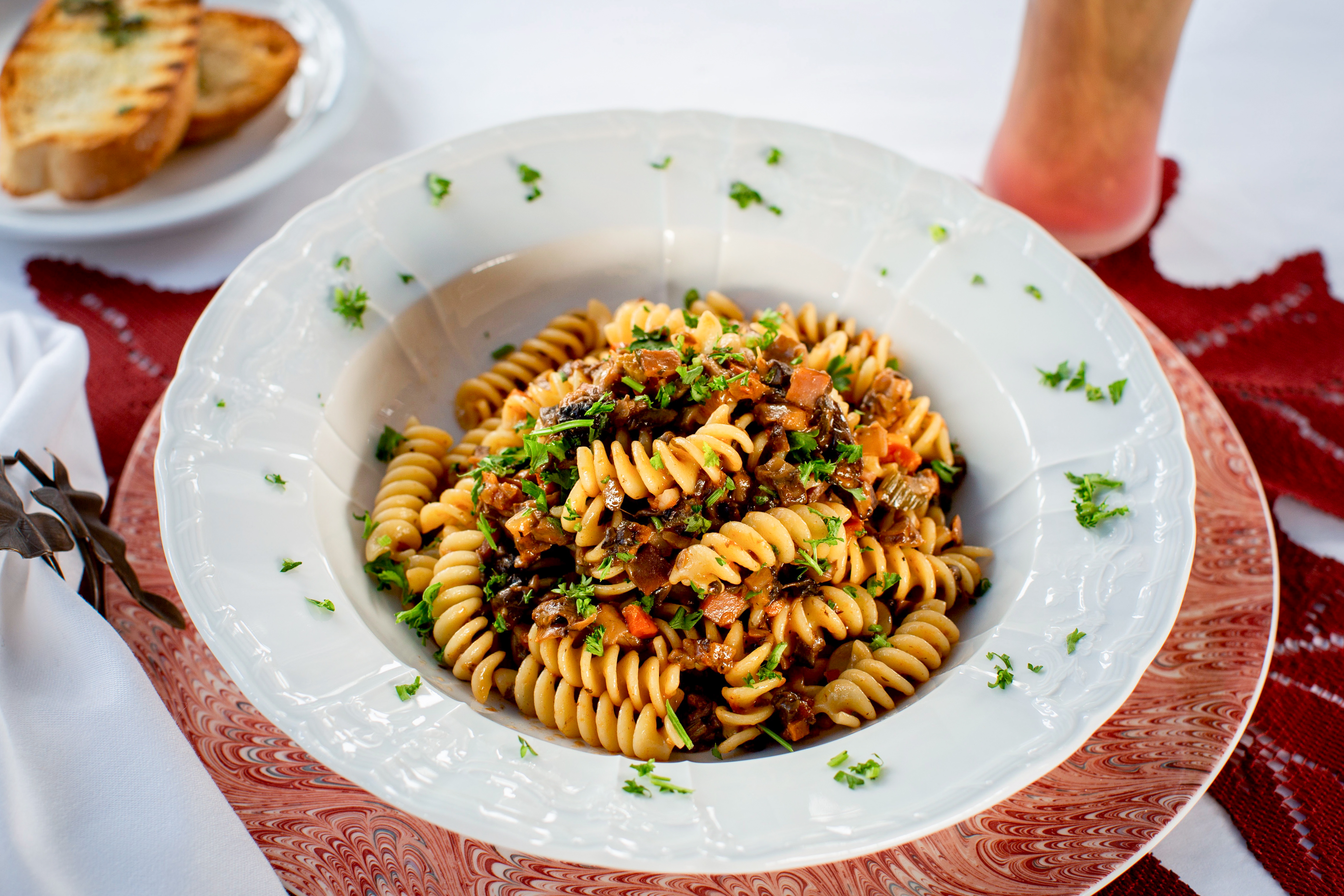
During her time in the U.S. we came up with many new ideas together, but one area we focused on in particular were the sauce recipes. Today Convito offers 21 different sauces for sale and almost all of them originated with Wanda and I cooking together. We first tested recipes for the classics – Bolognese, Pomodoro e Basilico and Sugo di Vongole – but soon began inventing sauces with made-up names like Spinacciola; an intensely flavorful Gorgonzola and spinach sauce (Milano II “Cooking with Wanda). One sauce she developed during a trip to Chicago was a mushroom sauce – Boscaiola (woodsman-style sauce), a delicious combination of mushrooms and vegetables with prosciutto adding a savory element. All of her sauces – even if invented, were based on her intuitive connection with the Italian palate.
© rob warner photography 2020
Boscaiola
Hearty Mushroom Sauce
(serves 4-6 as a sauce for pasta)
½ oz. dried porcini mushrooms
1/3 cup olive oil
1 cup finely diced onions
¾ cup finely diced carrots
¾ cup finely diced celery
2 cloves garlic, finely diced
¼ cup finely diced parsley
1 pound mushrooms roughly chopped (I use a combination of white, cremini and shitake mushrooms, but other varieties will work)
1 cup diced prosciutto
½ cup red wine
2 tablespoons tomato paste
½ cup creamSoak dried porcini mushrooms in water. When soft, remove mushrooms from water, squeeze dry and finely dice. Reserve ½ cup of porcini water strained well to remove sand. Set aside
Clean and finely chop fresh mushrooms. Don’t make too fine or they will be watery.
In a large skillet, heat the olive oil. Add onions, carrots, celery, garlic & parsley. Saute over medium-high heat for approximately 5 minutes until vegetables are soft. Add mushrooms and continue sautéing until most of the moisture from the mushrooms has evaporated.
Add prosciutto and stir into mixture.
Add diced porcini and mix well. Add wine and turn heat to high. Saute for approximately 4 minutes until wine has reduced somewhat.
Add tomato pasta and ½ cup of porcini juice. Lower heat to medium and cook for another 5 minutes, stirring frequently.
Add cream, mix well and cook for another 3-5 minutes.
***************************************************************

Wanda’s cooking class at the original Convito
Wanda’s visits also usually included a series of cooking classes where she managed to charm pretty much everyone in the room. These classes called “Cooking with Wanda” quickly became wildly popular. She was a natural born instructor – knowledgeable, fearless and exuberant – and her classrooms were not only instructive, but they were also alive with laughter. Incidents like a smoking sauté pan setting off the fire alarm or an out-of-control sneezing spell from breathing in a cloud of flour during her pasta making demonstration were all part of the experience. That was Wanda and nothing fazed her, and nothing embarrassed her. She was our Italian Julia Child. “Non importante”, Wanda would say when something would go awry and she was always right. It was the transfer of culinary knowledge, expression of passion for the process and the enjoyment of being with like-minded people that made Wanda an infectious and effective instructor.
My time with Wanda was intense. Looking back, I can’t imagine a better, more fun, more interesting culinary education. Her tiny kitchen became my own private -albeit somewhat unorthodox – culinary institute at a critical moment in my education when my learning was at its peak, when my business began and when I became immersed in all things Italian. And she was at the center of it all.

Violet Calderelli
When Convito Italiano opened in 1980 the most popular items in our brand-new store were those that we prepared fresh on premises. Every day we filled the deli case and freezer to overflowing with freshly made salads and pasta sauces that would sell out by the time we closed. With nothing but an outdated four-burner electric cooktop crammed behind our deli case, Convito’s “chefs” (I being the main one) cooked non-stop to keep up with the demand for this wildly popular and ever growing section of our store. To most Americans in the early 1980’s “take-away” food brought to mind a bucket of fried chicken, a pepperoni pizza or maybe a mayonnaise-soaked potato salad purchased at the local supermarket. The idea of sophisticated prepared foods was new and exciting to customers and they responded with enthusiasm. But our bare-bones staff didn’t include anyone to help me prepare all the new recipes I had learned over the past few years, so it quickly became clear that I needed a full time cook.
I immediately sought the advice of my close friend and advisor, Leslee Reis (founder of the iconic Café Provencal) and she introduced me to Violet Caldarelli. Violet was Leslee’s sous chef from the catering business Leslee ran before she opened her restaurant Not only was Violet an excellent cook, but she was also an incredibly hard worker and someone who could easily adapt to adverse conditions, so having to cook in Convito’s non-kitchen was an easy fit for her. Four months after we opened Convito’s doors, Violet Caldarelli came through them and stayed with us for the next 25 years, deeply impacting the quality of our food as well as all aspects of our customer service. Her work ethic was incredible and became Convito’s gold standard.
***************************************************************
Violet Angus came from a hard-working family with a strong food culture which made her a perfect fit for Convito. Born in Milwaukee to Greek immigrants – her father was from Athens and her mother from Sparta – Violet eventually married another first generation American, Dave Calderelli whose parents were from the Abruzzo region in southern-central Italy stretching from the heart of the Apennines mountains to the Adriatic Sea. Both families valued hard work and resourcefulness and those ideas were carried forward by Violet and her husband Dave.
So was the entrepreneurial spirit so typical of many immigrants. In 1952 Violet and Dave opened a school supply store close to Senn High school in the Edgewater neighborhood on the North Side of Chicago. In addition to pencils and notebooks, their store featured a 25-foot marble soda fountain complete with Dad’s Old-Fashioned Root Beer on tap as well as other sodas, milkshakes and ice cream treats. In the morning students would come in for donuts and sweet rolls and for lunch Violet cooked up hamburgers, Vienna Hot Dogs, corned beef and other special sandwiches. She managed all this with only a small grill, a steam table, a refrigerator and a stove. Perfect training for Convito!
Violet was nothing if not hard-working and resourceful. After she ran her school store for over a decade, she became a Real Estate agent then worked part time for Leslee Reis’ catering business and finally a 25-year stint at Convito. At the same time, she raised her son David and supported him through his many years of an Otolaryngology (ear, nose & throat) study. Eventually he was named the head of head and neck Surgery at Rush University Medical Center as well as becoming a Professor in the Medical school there from 1975 to 2012. Violet was exceptionally proud of her son and kept us up to date on his myriad accomplishments. He is still considered a member of Convito’s extended family to this day.

Violet in Convito’s kitchen with chef Robert Chavis
One of Violet’s enduring contributions to Convito is something I never would have guessed would become a customer favorite when I first conceived of my business in the late 1970’s. When Violet was still running her lunch counter many years before Convito opened its doors, she made a particular tuna salad that was a student favorite around campus. Known as Vi’s Tuna Salad, she generously shared with me that recipe and we put it on our menu immediately. It soon became our most popular salad and remains in that position to this day. As soon as the word spread that Violet began working at Convito, former Senn students began flocking to Convito from all over the Chicago area in hopes that they could once again purchase their much-loved salad. And we were happy to oblige them!
Like Mary and Wanda, Italian food was critical to Violet, but it was not her only influence. Her son David remembers growing up eating both fantastic Greek and Italian dishes like Dolmades, Mousaka, Spanakopita and Baclava, as well as a whole range of Italian dishes from his dad’s side of the family. Her goal was always to be seated every evening around the table enjoying a hot meal together. And while that goal was occasionally unrealized given her intensely hectic schedule, she always managed to cook for the family even if they didn’t sit down together. Violet was always on the go!
After Violet began working at Convito there wasn’t a day when I came to open the market that I didn’t find her already there (probably for hours) surrounded by pots and pans steaming, boiling simmering on our little 4-burner electric stove – some cooking fresh pasta, others with one of Convito’s sauces gently bubbling on the back burner releasing a heavenly aroma that penetrated every square inch of our little store. Violet was usually busily chopping fresh vegetables for one of the salads she was about to prepare or sautéing onions at the stove with at least two or three finished salads sitting in their pristine white bowls looking all fresh and beautiful and ready for purchasing customers. She was amazing!

Not long after Violet arrived, we began cooking together and developed one of my favorite dishes – Caponata, a Sicilian sweet and sour eggplant dish often used as an antipasti. (blog Sicily I “A Salvador Dali Weekend”) I had always intended it to be a part of our prepared foods selection but because of the work required for its preparation – eggplant, tomatoes, celery, onions, red pepper, capers, which all had to first be chopped then sautéed – I had not attempted to make it until I had full time kitchen help. Violet usually prepared the first batch of Caponata before the store had even opened. However, that batch didn’t last long at all. It became so popular that she often made fresh batches of it several times a day, sautéing pound after pound of eggplant, which, of course filled the market with the mixed aromas of sweet and sour tempting every customer that entered to buy some. “When they bury me, eggplant will be sprouting all around my grave,” Violet would laughingly say. Caponata is also on our prepared food menu to this day.
When Violet came into my life, my Italian recipe repertoire was extensive. Since the sixties I had cooked many Italian dishes with Mary Barocci and had been studying Italian regional cuisine with Wanda Bottino for the past several years. So, my need for new recipes was not a top priority. What I needed from Violet was someone to help me interpret those dishes, someone with an innate understanding of Italian cuisine to bring that food alive. She meticulously did just that and – lucky for us – she also contributed many new ideas and recipes for both the market and the cafe.
Violet also taught me things that I hadn’t even realized were absolutely critical in the restaurant business like the care and handling of food and ingredients. I was mesmerized watching her gingerly fold a lemon mayonnaise into a pasta salad paying attention not to bruise any of the other ingredients. Her knowledge and expertise were extensive and she treated all ingredients with tender loving care just like they were her children. I can’t begin to inventory all the food knowledge I gained while working with Violet. She shared little tricks like the importance of sprinkling a good amount of salt over eggplant cubes to draw out some of its moisture and lesson its bitterness. But she also brought with her skills learned only after working in the food industry for many years, like how to enlarge a recipe. That talent is indispensable in the restaurant busines because you cannot just double or triple the ingredients in a recipe to get more of it. If a dish is spicy or contains alcohol, multiplying them as you would for the other ingredients is not the answer because it is easy to overpower a dish. Trial and error were always required (which fortunately we both loved!) so it didn’t matter how much time we took – only that the recipe came out the way we thought it should. Most of all it was just damn fun working with Violet on all these kinds of projects. We not only accomplished a lot, but we had many laughs along the way.
Violet’s role at Convito changed over the years. Catering Director was her next official position. But even when we moved to a larger location with a larger kitchen and opened two other locations, Violet never got far away from the kitchen. If she wasn’t preparing market salads or sautéing chicken breasts for our new hot food case, she was checking up on the performance of whatever new chef had been hired in one of Convito’s establishments. No matter what culinary school a new chef might have graduated from, Violet did not hesitate to correct them if she didn’t feel they were performing up to her standards. And interestingly enough, most of those chefs (who usually didn’t take criticism well) took it from Violet and actually loved working with her. They wanted her approval. A not-so-infrequent question asked in the kitchen was “What would Violet think?”

Violet was a true character. Sometimes irreverent and sometimes irascible, she was always principled and kind. She was opinionated, but always listened to reason. She was dependable, outrageous, caring and strong-willed and she put everything on the line for her customers. She would do anything to make them happy and they loved her for it, as did I.
© rob warner photography 2020
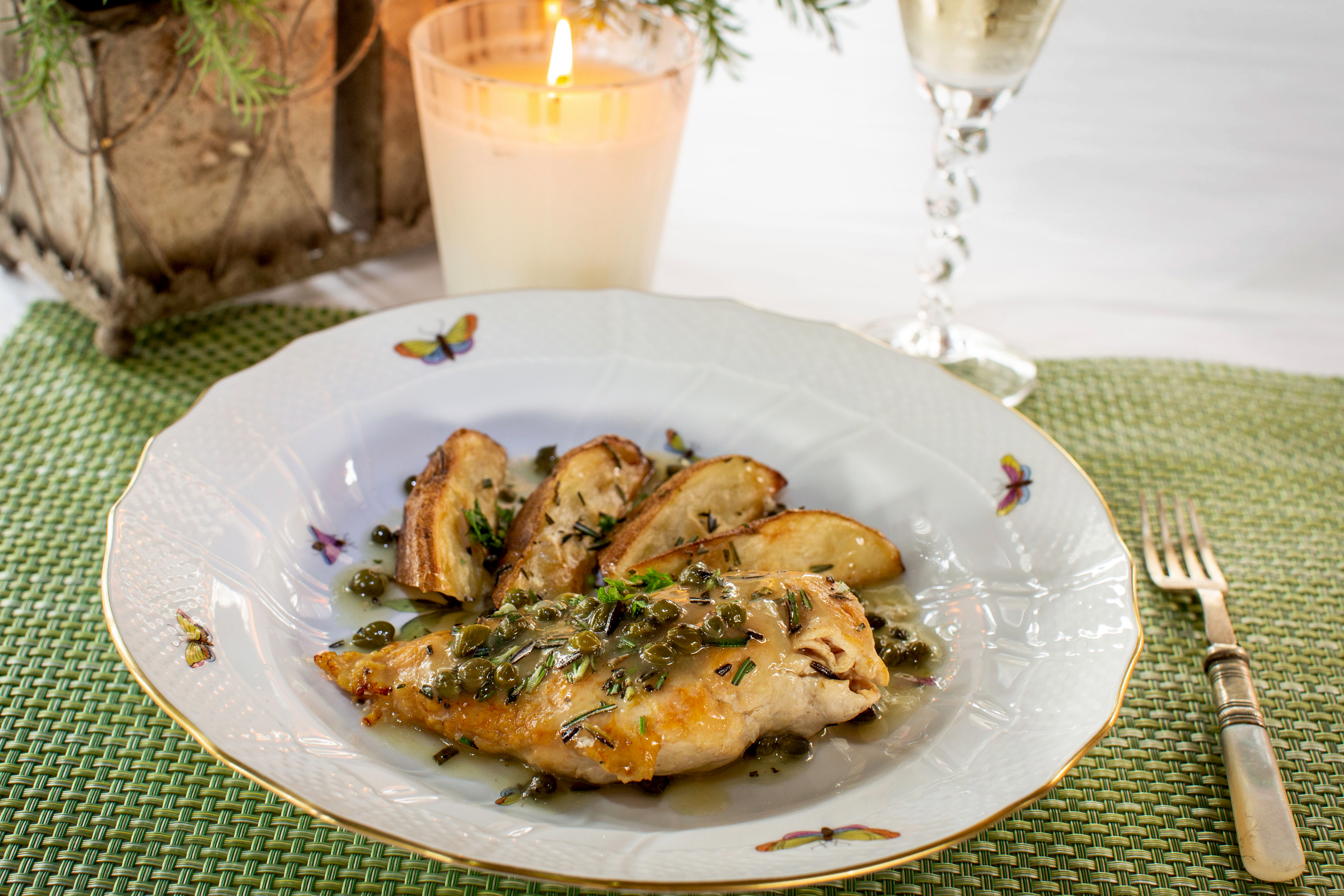
Violet’s Pollo Impressivo
(Serves 8)
8 – 6 oz. boneless, skinless chicken breasts
salt & pepper
¼ cup olive oil
1-tablespoon chopped rosemary
1 tablespoon minced garlic
1 tablespoon chopped parsley
1 cup white wine
1-cup chicken broth
½ cup capers
1 tablespoon cornstarch – mixed with a little waterHeat oven to 400 degrees
In an oven proof skillet large enough to sauté 8 chicken breasts, add olive oil and turn high to high. When hot, place the children breast in the oil, sprinkle with salt and pepper and half of the rosemary and sauté for approximately 2 – 3 minutes until breasts are golden brown on one side. Turn the breasts over and sprinkle with the remaining rosemary and sauté until gold brown on other side – another 2-3 minutes. Take off the burner and place the skillet with the breasts in a 400-degree oven for 5 minutes.
Remove skillet from oven and place back on stove over medium-high heat. Add the garlic and the parsley. Add wine and reduce wine somewhat – sautéing for about 3 minutes. Then add chicken broth and simmer for another 3 minutes. Remove breasts and put on a platter or individual plates.
Mix the cornstarch and the water until smooth and add to the simmering broth left in the skillet. Turn heat to medium and stir until incorporated and the broth has thickened. Spoon over the chicken breasts and serve hot.
Violet likes to serve with rosemary-roasted potatoes.
***************************************************************
Violet stayed with us until she was 95, still slicing prosciutto and harassing the chefs in the kitchen and the clerks on the line and always adored by the staff and her customers. She passed away this past year 2020 at the age of 103. The “spirit of Violet” will always be a part of our history.
***************************************************************

How lucky I was to have been educated by these three amazing women – all mentors who inspired me along my journey into the kitchen and whose influence on my career can never be fully measured. I believe that knowledge and education are the basis of most successes, and I know that the gifts I received from these three women are indelibly connected to the success of my now forty-year old business. The secret to long-term sustainable success is usually found in the basics – good food, good people and good service – and each of these amazing women shared that conviction. It is to Mary Barocci that I owe thanks for introducing me to the food that would become my passion, to Wanda Bottino for teaching me its incredible depth and variety and to Violet Caldarelli who become essential in bringing those amazing flavors and tastes to all the many customers who have frequented Convito for over forty years. Certainly, all their lessons in Italian cuisine were pivotal – but their lessons in so many things that go way beyond the pots and pans in my kitchen are the lessons that will stay with me forever.

Nancy. Thank you for your new post….always love reading them! Miss our dinners…..hopefully 2021. Ironically, Nicole is here & we are having your clam sauce for dinner tonight. Hope you are feeling better & things are as good as possible at Convito. Weird times not helped by Pritzger…..restaurants are not the problem. Hang in there…..Merry, merry to all of your family if I don’t see you before 12/25 😍 Claire
Sent from my iPhone
>