
In 1988 I was chosen to be one of fifteen award-winning chefs assembled by American Airlines as an elite culinary consultation team tasked with developing the penultimate in-flight food service. In the Spring of 1989, all of us arrived at American Airlines headquarters in Dallas for our first meeting full of aspirational ideas and impressive resumes, but were quickly disabused of any notion that an airline galley kitchen would be the place from which our sometimes-outsized culinary notions would be launched. Cost, it was emphasized was always to be considered. Though we wouldn’t be responsible for costing out any menu items we developed, we were informed that removing just one olive from every salad served on the airline could save $40,000. That thought served as a cautionary tale.
Excited and full of enthusiasm, I had flown to Texas with good friend and fellow Conclave member, Leslee Reis of the iconic Café Provencal to meet the rest of the members and to learn from American Airline executives just what they expected of us. I anticipated that the day would be quite daunting. How often had I been asked to consult with one of the largest companies in the world?

Our agenda was jam-packed. Not only did we learn about the goals for the Conclave, but we were also presented with a surprisingly interesting history of American Airline’s past food and beverage service. It was decided that we would meet as a group once a year in Dallas or in one of the Conclave members’ home cities, and that American Airlines’ food and beverage staff would bring us up to date on any significant changes that were relevant to our mission. Consideration of current food philosophy and trends would be on the agenda, as well as a discussion of any problems American needed the Conclave’s help in solving. Individual projects – most likely to take place at headquarters in Texas – would also be a part of our job.
Our heads crammed with new information, we eventually adjourned to a private dining room for a lunch consisting of dishes currently served in first class. After being informed that we would be asked to critique those dishes later, I certainly gave more scrutiny to what was set before me than I would have under normal circumstances. Very friendly, professional flight attendants served us so many dishes that in order to comment on them later most of us began taking notes. Little was said about the food as it was being served, however when lunch was over and the critiques began all hell broke loose over one dish in particular. “Over designed!” Contrived!” “Not in keeping with today’s styles!” The lobster entree suffered some of the most withering criticism I have ever heard! This dish, everyone agreed was “old fashioned” – something that would have been served in a pretentious second-tier French restaurant in the nineteen-fifties. American’s food and beverage employees had been invited by the executives to stick around to hear our notes on the meal and I watched with sympathy from the corner of my eye as their offerings were eviscerated. But instead of being offended, they seemed genuinely engaged in the conversation and took copious notes, not seeming to mind our brutally frank reviews. I actually think at least some of them agreed, but like professional poker players they never let us know what they were thinking. One thing I’m sure ran through their minds was “what the hell have we unleashed by asking professional chefs to criticize airplane food” since I was thinking the very same thing.
 Next up was a tour of their catering facilities. We entered a kitchen the scale of which I had never seen before: a room the size of a football field, as clean as a hospital operating room and cluttered with hundreds and hundreds of aluminum pots – some the size of Volkswagens – all kinds bubbling with soups, sauces and stews. The room was populated by white-clad chefs busily chopping, sautéing and prepping foods of all kinds. We wandered through the facility stopping occasionally to talk to one of them about what they were making or to ask questions about the scale of the operation. The packing area was equally impressive with an assembly-line-like operation that would not have been out of place in a science fiction film. Packaged meals ended up either in huge refrigeration units or on a loading dock where they would be transferred directly to their designated airplane.
Our last stop was onboard a 747 where we took turns crowding into the tiny galley kitchen where flight attendants showed us where the meals were stored and gave us a lesson about their convection oven specifically designed for heating pre-cooked, chilled in-flight meals. The vastness of the catering facility compared to the minute scale of the galley was mind-blowing. It was at this very moment when all of us began to recognize the complexities of our assignment and the challenges of the whole operation. Preparing and serving some 100,000 meals a day is slightly different then cooking for 50 to 100 customers in a restaurant kitchen. The purpose of this tour I am sure was designed for just that reason – to illustrate the almost impossible challenge of combining fine dining and air travel – and to help us all clearly understand our new assignment. And to be a little humbled by it.
***************************************************************
Flying back to Chicago at the end of that very busy day, my head was swimming with new information about an international business carried on the backs of tens of thousands of employees that was known not only for its strong commitment of excellence to its customers, but also to its employees and business partners. The Chefs’ Conclave was but a small part of American Airline’s overall operation, but I realized on that first day that whatever assignments we would be given, I would need to take them seriously.
I quickly came to believe that the greatest contribution I could make to this partnership would come mainly from my experience in creating high-end “Prepared Food” for the take-away side of Convito’s business. Most of the other chefs in the Conclave had restaurants with Michelin stars or famous pedigrees, but not many of them had my background in transforming gourmet cuisine from a restaurant dish to something customers could successfully take from our store, to their oven (or microwave), to their kitchen table. Over the years I learned countless dos and don’ts about prepared foods that I suspected would translate well to the airline food service industry: that not all food translates well to reheating, that certain ingredients don’t do well at common storage temperatures, that some dishes look terrible after reheating no matter how fresh the ingredients or preparation.
My very first assignment in Dallas was tasting new dishes that the American Airline chefs had created for their fall menu. When I was given one of these individual assignments, I was generally joined by a few AA food and beverage employees, one or two senior flight attendants, as well as another member of the Conclave. Conclave members took turns with these “tasting” assignments designed to get our take on the look and the flavor of each new item, an exercise that took place whenever there was a big menu change, often a few times a year. The number of dishes up for review was – as usual – overwhelming. It reminded me of the wine tastings I frequently attended where bottle after bottle was lined up for tasting – sometimes over a hundred – which severely taxed one’s palate. Taking notes and reviewing the meals was actually quite fascinating given their surprising quality. Except for a few, we gave most of them high marks. The rejected dishes were often too bland, drowned in cream sauce or simply poor candidates for reheating. But the most frequent rejection was because they were deemed too spicy. The flight attendants there that day warned us that spiciness was by far their most frequently heard complaint (and they hear it all – the good and the bad). No one wants a belly full of over-spiced food at 35,000’.
After a few years as part of the Conclave I was given what turned out to be my favorite assignment when I was asked to develop a dish that would embody the spirit of my own restaurant – a feature of their in-flight menu called Signature Dishes. The American Airlines food execs were hoping for a pasta dish from Convito which I agreed with. Where we differed – initially – was that I wanted to do something less in the noodle-and-sauce category and instead focus on something heartier that was inspired by Convito’s ever-popular lasagnas and cannellonis. I wasn’t surprised when they agreed with my initial idea, but I didn’t expect that a group of their Food and Beverage team would want to come to Convito for a demonstration. Six AA employees – including two chefs – came to our kitchen for a full day of lasagna-making, tasting and discussions.

Adjusting to a small kitchen for the AA chefs had to be as strange as my adjustment to their huge facility. Both of the American Airlines chefs who were with me that day were used to working in very large kitchens, but found themselves quite comfortable in my smaller, more intimate setting. Convito certainly had some large pieces of equipment, but the scale was nothing compared to theirs. During the course of their observation, we made several dishes including a sausage and wild mushroom lasagna, a spinach & mushroom lasagna and something they eventually selected as my first Signature Dish – our Garden Fresh Lasagna. After our kitchen demos we all adjourned to lunch in the café, which included at least four or five more lasagnas, a few cannellonis and many of Convito’s sauces over assorted pastas. Though Convito’s kitchen may have been smaller than what they were used to, I did my best to match the culinary volume I experienced on that first trip I took to Dallas. But unlike that day, we all managed to pace ourselves this time! The whole event was not only great fun, but a wonderful chance to get to know the people I would be working with in the coming years in a more intimate setting and on my home turf.
I shared with them the recipes for many of the dishes we ate that day and within months their choice of our Garden Fresh Lasagna was being served aboard flights all over the world (albeit renamed simply Garden Lasagna). To this day I wish I would have gotten to see our single-pan recipe enlarged to the volumes they needed!

© rob warner photography 2021
Garden Fresh Lasagna
12 servings
12 lasagna noodles
2 tablespoons olive oil
¼ cup chopped onion
1 small clove garlic, minced
16 oz. can crushed tomatoes
4 fresh basil leaves, chopped
salt & pepper to taste
2¼ cups ricotta cheese
3 cups shredded mozzarella
2 ¼ cups grated parmesan
salt and pepper
1 ½ cups zucchini
1 ½ cups broccoli
1 ½ cups diced carrots
¼ cup scallions
Tomato Basil Sauce
Heat 2 tbsp olive oil in a medium saucepan over medium-high heat. Add onion and garlic and sauté until soft. Add tomatoes, basil, salt and pepper and simmer the sauce for approximately 10 to 15 minutes. Set asideZucchini filling
1 ½ cups zucchini diced (do not peel, do not use soft center) in ¼ inch pieces
Season with salt and pepper and sauté with olive oil for approximately 1 minute. Set asideCarrot filling
1 ½ cups carrots, peeled, diced in ¼ inch pieces
¼ cup scallions, chopped (green part only)
Season with salt and pepper and sauté in olive oil for 2 minutes. Set asideBroccoli filling
1 ½ cups broccoli heads cut into small pieces and briefly blanched al dente.
Season with salt and pepper. Set asideAssembly
Cook the lasagna noodles in a large pot of boiling salted water until al dente according to package directions. Rinse with cold water and drain. Lay flat.Preheat oven to 350 degrees.
Spread a thin layer of the tomato-basil sauce onto the bottom of a greased 9 x 13 inch baking dish. Cover the layer of tomato sauce with 3 noodles
Sprinkle with:
Sautéed zucchini filling (drained well)
¾ cup of ricotta
1 cup shredded mozzarella
½ cup parmesanCover with 3 more noodles and sprinkle with:
¾ cup of ricotta
Carrots/shallot mixture (drained well)
1 cup shredded mozzarella
½ cup parmesanCover with 3 more noodles and sprinkle with:
¾ cup of ricotta
Steamed broccoli (drained well)
1 cup shredded mozzarella
½ cup parmesanEnd with remaining 3 noodles
Top with remaining tomato sauce spread evenly over noodles
Sprinkle with remaining Parmesan
Cover and bake for 30 to 45 minutes or until bubbly. Let stand for 15 minutes before cutting into serving pieces
***************************************************************
Besides the prestige and the PR associated with having been chosen for the Chef’s Conclave, the biggest Conclave perk was our compensation – four First Class tickets to anywhere American flew for each and every project we participated in! And more for our special assignments. Since I was still travelling to Europe several times a year this was a great benefit. And because I began to collect more tickets than I could use on my own, my young-adult children also got used to flying First Class. Rob once flew in style to a backpacking trip in Ecuador where between flights he spent weeks in a tent or hostels, and Candace and her husband used them for several European trips as well as a sojourn to Chile where they visited Santiago and then traveled to the Lake District. “Who doesn’t like the indulgence of flying First Class, Mom”? Certainly I did!
Using two of these tickets on a flight to Paris with my daughter – and now business partner – Candace, we were surprised when our menus arrived and Convito’s Signature Dish – the Garden Lasagna was on the menu alongside my name and restaurant. It had been over a year since those American employees had visited Convito for a pasta demonstration so I was not sure when and where it would appear on the menu. And there it was!
Candace and I, of course, both ordered “our dish,” as did the man sitting across the aisle from us. I was relieved when the lasagna arrived, because not only did it look great, but it was also delicious. “This lasagna was fantastic” he commented to our flight attendant as she cleared his tray. Knowing that I was on the plane (she had recognized me as I came aboard from my photo in the in-flight magazine), she turned and pointed to me as the chef responsible for the dish. Yikes! I instantly wondered whether she would have done the same if he hadn’t liked it. I’m not good at being singled out unexpectedly like that, but we ended up having a pleasant conversation about Italian food in general. He was a frequent flyer and said he usually chose to order pasta when flying: “It always seems to be the most reliable choice.” Fortunately we delivered on his expectations!
 Serving the Signature Dishes was just one of the many ways American Airlines promoted us. Another was by featuring us in the American Way in-flight magazine, either in features that celebrated the Conclave in general or in individual articles. One series called Meet The Chef focused on our personal background, information about our restaurants and a list of our favorites: meals, wines, cookbooks and restaurants. The magazine would also occasionally create little blurby articles that featured wine, food and restaurant recommendations of various Conclave chefs. So over time I was profiled quite a few times. And without fail, a few weeks after publication of one of these articles, a surprising number of Convito customers would come in with their in-flight menus or torn-out magazine pages to show me. I think they were proud that they frequented a restaurant and market that was featured on the airline they had just flown, as was I! Clearly, I was not just contributing advice to AA, but my restaurant and market were getting invaluable PR in return.

***************************************************************
The conferences that were held in Chef Conclave cities always culminated in a special dinner at the host chef’s restaurant. The food was – of course – always excellent, but my most vivid memories of those dinners were rarely about what we ate. I’ll never get over my memory of standing (very tightly packed) in Paul Prudhomme’s K-Paul kitchen in New Orleans’ French Quarter trying to imagine how in the world this large man managed to cook all the amazing and complex Cajun and Creole dishes in this very small space. I figured he probably related to those airline galley kitchens more than most of us! During our conference meetings I always looked forward to hearing Paul’s comments. He was a free-thinking, creative and optimistic man whose foremost desire was to infuse more flavor into everything – his food and even life. At the same time, he was practical and recognized the airline’s limitations. I found him fascinating.
I also enjoyed the dinner we had at Jasper White’s spacious Summer Shack in Boston where the casual atmosphere allowed us all to mingle as we enjoyed a bounty of fish and seafood dishes. Jasper is one of the leading authorities and trusted resources on fish and New England cuisine and I loved his novel take on the traditional New England Clam Shack. It was an evening filled with the kind of energy that Jasper himself exuded. I had partnered with him during a Chef Conclave visit to Sid Wainer, an award winning specialty food wholesaler just outside of Boston. Jasper and I came up with a cheese plate with all the trimmings including dried fruit and nuts that would serve as an alternative to in-flight desserts. To this day I often serve a similar dish when I entertain.
So many of those conferences have a place in my list of favorite professional experiences. The vibrant colors and flavors of Douglas Rodriguez’s “Nuevo Latino” Patria in New York City was another Conclave highlight, as was an evening spent in a lovely tented area outside of Bradley Ogden’s Lark Creek Inn in Marin County just north of San Francisco. The multi-course dinner was held to celebrate the restaurant’s anniversary and featured an abundance of excellent dishes that were specialties of the restaurant, each with a wine paring. It was a long – but delicious – evening.
As I think back over these events, I have come to realize that all of the dinners at Conclave restaurants were both delicious and completely unique. We had several dinners in Dallas where Stephan Pyles and Dean Fearing presented amazing meals from their restaurants that featured authentic and sophisticated Southwestern fare which before I spent time with them I had believed to be incompatible concepts. I was certainly familiar with Southwestern food, but nowhere had I experienced it at this level. Both Stephan and Dean had multiple restaurants over the years and I have eaten in most of them and was never disappointed.
But easily my favorite Conclave meal remains the one we were served at Alice Water’s Chez Panisse in Berkley, California. True to her now-celebrated philosophy, everything Alice served us was organic, simple and locally grown. I especially remember the lovely small fennel bulbs still attached to their light feathery dill-like leaves placed effortlessly on a table next to little bowls of olive oil. This served as our appetizer – crunchy fennel dipped in glorious extra virgin olive oil. Divine! The minestrone course – a light broth filled with local vegetables served with Chez Panisse crusty bread is still a mouth-watering memory I can taste to this day. Simple and incredibly delicious. As the years passed Alice never deviated from her original mission – the champion of local sustainable agriculture. “The Mother of American Food” as she became known, it was inspiring to work with someone so focused and dedicated to her principles.
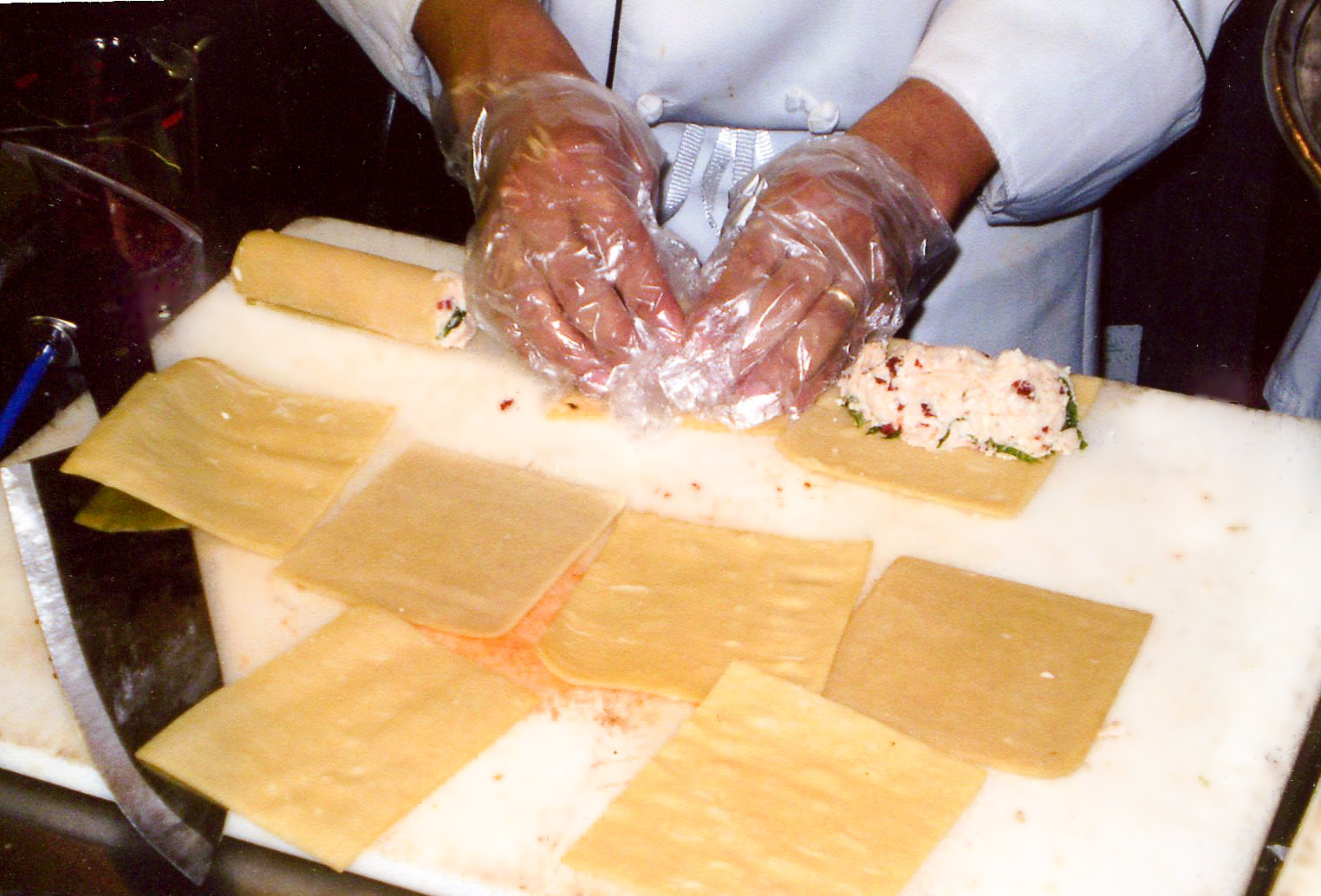
Cannelloni making at Convito
My focus was, of course, Italian cuisine. Continuing to work with various food and beverage staff developing individual items for their menus was always a pleasure. After their trip to Convito, I continued to counsel them about uses for the sauce recipes I shared with them. Most were used for the usual pasta-sauce combination, but others they got creative with. At one point they combined our gorgonzola-spinach sauce with mashed potatoes and served it with steak. I would never have thought of that and it worked like a dream!
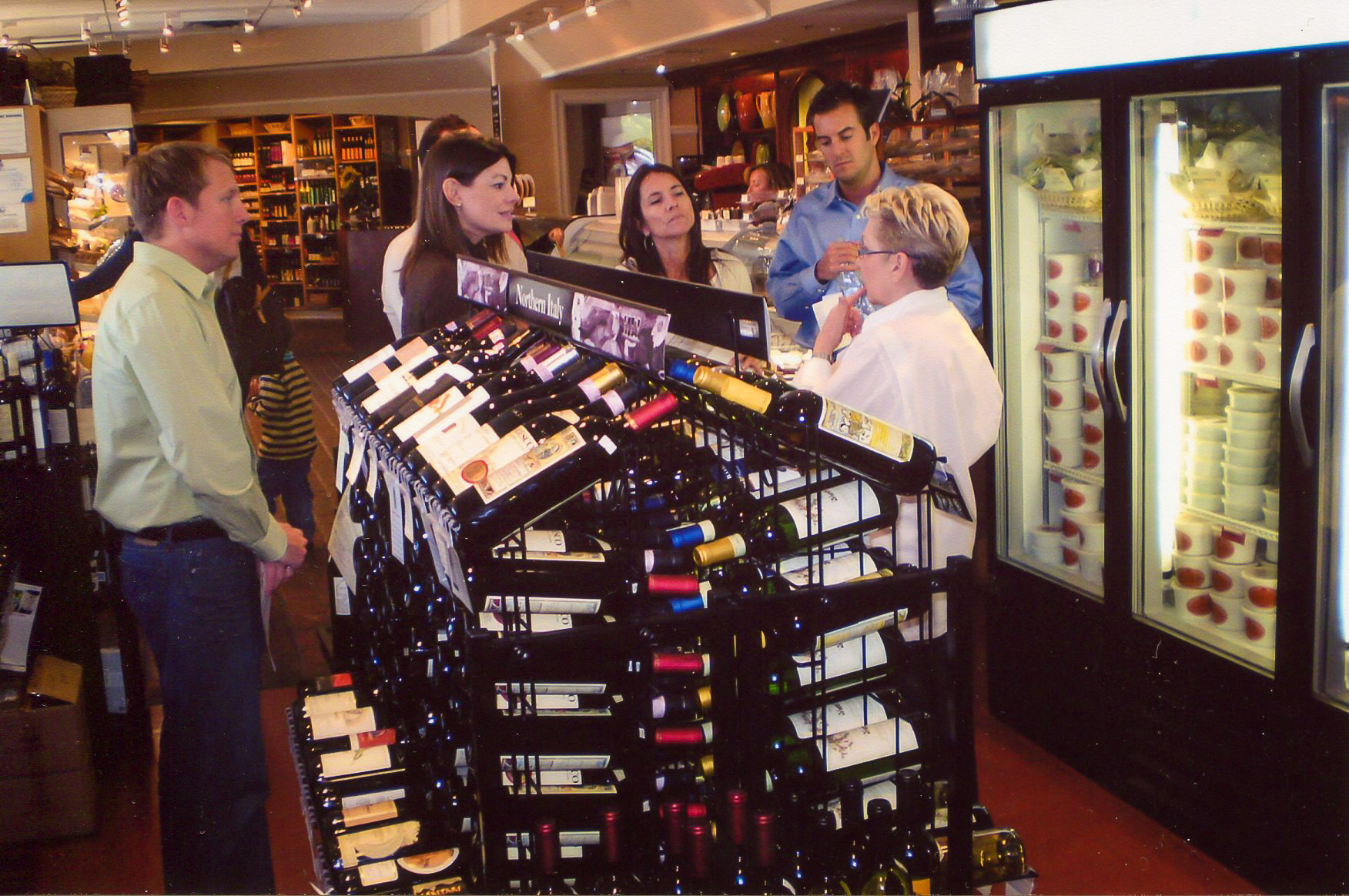
Convito’s lasagnas and cannellonis continued to be popular items for both our customers and the airline since they were so well suited to reheating. One recipe American adopted was one I developed for my daughter’s wedding that was catered by Convito in the historic and elegant Chicago Cultural Center. I used only ingredients that she loved; chicken, mushrooms, spinach, ricotta, mozzarella and parmesan. We named it Country Cannelloni. I’m not sure what it was called on the American menu, but I do know that they served it for years.

© rob warner photography 2021
Country Cannelloni
(makes 12 pieces)For the pasta and filling:
8 sheets lasagna pasta
4 tbsp olive oil
1/3 cup chopped mushrooms
1/3 cup chopped spinach
1 ¼ cups ricotta cheese
¾ cup shredded mozzarella cheese
¾ cup grated Parmesan cheese
1 cup cooked, diced chicken breast
¼ teaspoon salt
¼ teaspoon freshly grated pepperSauce ingredients
1 small onion, minced
1 x 28-ounce can plum tomatoes, drained and coarsely chopped
3 x basil leaves
salt & pepper top taste
¼ cup mascarpone cheese
Cook the lasagna according to package directions or until al dent. Drain, rinse in cold water and reserve.
Filling (part 1)
Heat 2 tablespoons of the oil in a medium sauté pan over medium-high heat. Add mushrooms and cook until slightly golden – approximately 4 minutes. Add spinach and cook until just wilted. Remove from heat and reserve in refrigerator to cool.Sauce
In the skillet used for the mushrooms, heat the remaining 2 tablespoons olive oil over medium-high heat. Add the onions, sauté until soft. Add the tomatoes, basil, salt and pepper and continue to cook until sauce begins to thicken, approximately 15 minutes. Strain the sauce and fold in the mascarpone.Filling (part 2)
Mix together the ricotta, mozzarella, and Parmesan cheeses, chicken breast, egg, salt and pepper in a large bowl until well combined. Add the cooled mushrooms and spinach mixture and combine well.Assembly
Pre-heat oven to 350 degrees. Butter a 9 x 13-inch baking dish.Coat the bottom of the dish with a thin layer of the sauce. Cut lasagna sheets in half to make 4-inch squares. Divide the filling into 12 portions. To form the cannelloni, spread filling evening along the edge of each square. Carefully roll up pasta and place in baking dish, seam side down. Top the cannelloni with the remaining sauce and bake for 30 minutes, or until bubbling.
***************************************************************
My most fun assignment was developing a Signature Dish specifically for a flight from Chicago to Rome. I created it in coordination with Lisa Smith (now Lisa Smith King) one of the airline’s chief employees in charge of menu and recipe development. She was exceptionally good at taking a concept from its inception all the way through to its final execution, which for a big company like American, is very complicated. She was also incredibly knowledgeable about food in general, had a healthy respect for the collaborative process and was simply a fun working partner as well.
Initially I had been asked to develop something with beef for the Rome dish. Beef – especially steak – was one of the most popular items ordered on first class, but many of the Conclave chefs had been consistently critical of it. Because meat has to be pre-cooked and reconstituted in the flight convection ovens, it was difficult to effectively and consistently achieve the texture and flavor required for a good steak. But eliminating steak was not an option since it remained one of the airline’s most popular menu choices, so we got creative.
Lisa and I had a long discussion about beef in general and we decided to develop a stew. Lisa suggested that we use tenderloin instead chuck, the meat commonly used for stew. Because chuck requires long and slow cooking she wanted something that cooked faster. Beef tenderloin has all the flavor of its slow cooked counterpoint and requires much less cooking time, but…it is more expensive. Time is money, a consideration for a large catering facility like American, so after she made a cost-benefit analysis, we realized the time-savings cost more than the higher per-pound cost and we embraced the tenderloin! Additionally, tenderloin adds a bit more “prestige” than chuck. Our dish might not replace steak, but it would match better with First Class expectations. And maybe even appeal to some of the steak lovers.
Basic parameters settled on, my goal became giving the dish an Italian flair. After much mulling, I eventually suggested that the stew be topped with three Gnocchi alla Romana – flat semolina gnocchi that would not only act as a kind of attractive “lid” for the dish but would also be delicious when mixed with the gravy in the stew. Gnocchi alla Romana, after all, is a cornerstone of Roman cuisine and like stew, is considered a comfort food. I never was on a flight to Rome when it was on the menu, but Lisa presented me with the dish during one of my trips to Dallas. I loved both the look and the flavor and was told that it was a very popular choice on that flight.
I was even asked for the recipe from one of the American customers who had ordered the dish on his Rome flight. I told him that the recipe – like all American Airlines recipes – was huge, so I didn’t actually have a small-scale version of it. I told him that the ingredients were beef tenderloin (not chuck!), mushrooms, shallots and red wine. Hopefully that helped. I did, however, send him my own gnocchi recipe.
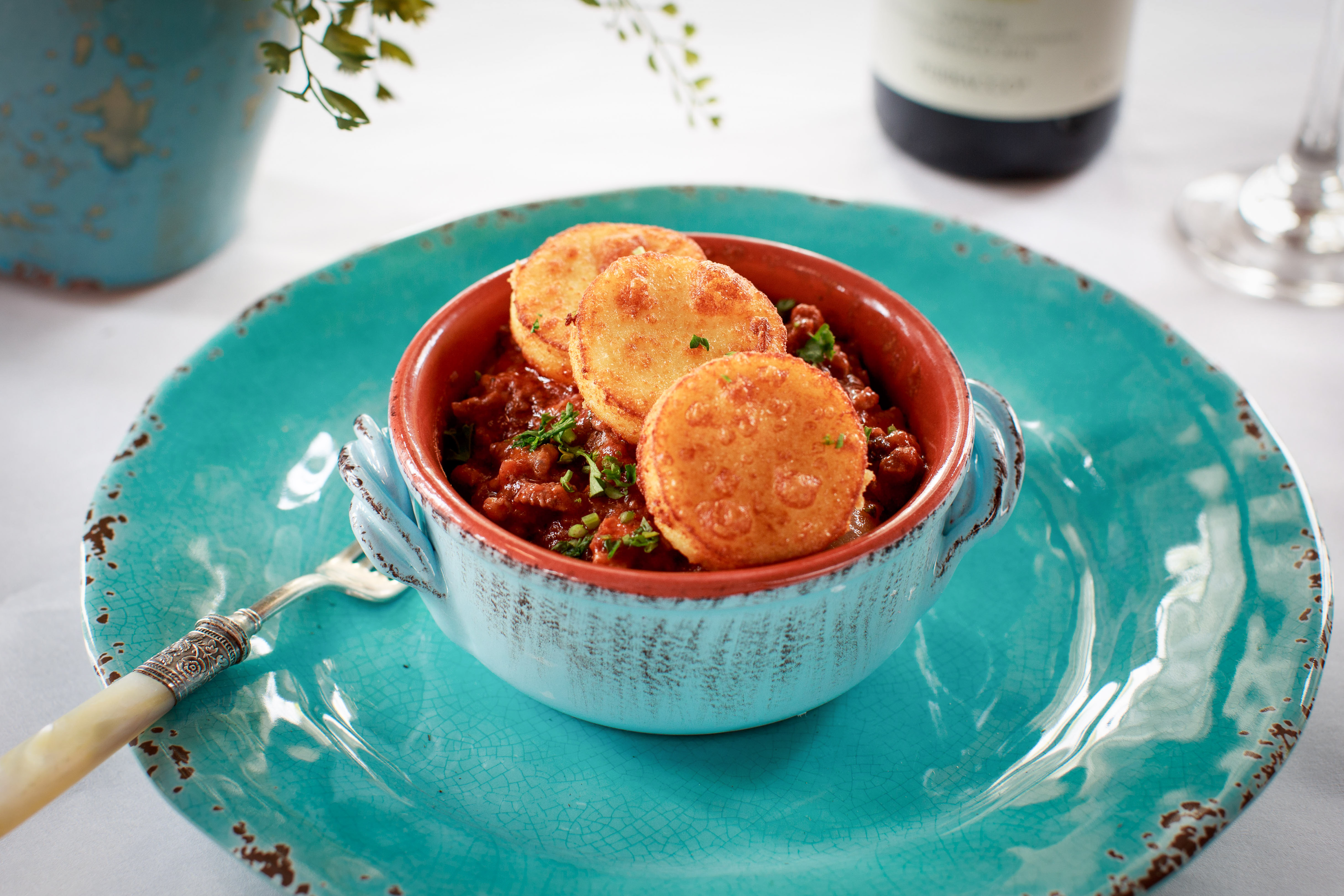
© rob warner photography 2021
Gnocchi alla Romana
(Semolina Gnocchi)4 cups milk
1 cup semolina flour
1 tsp salt
4 tbsp unsalted butter
1 cup grated Parmesan cheese
ground pepper
2 egg yolksReduce the heat to low. Slowly add the semolina flour in a steady thin stream continually stirring the mixture with a whisk. It should cook for approximately 15 to 20 minutes total or until it becomes thick and pulls away from the side of the pan. You may need to switch from a whisk to a wooden spoon as you continue stirring and the mixture begins to thicken. Remove from the heat. Allow mixture to cool for a minute or two.
Stir in 2/3 of grated Parmesan, 2 tablespoons of the butter, and the salt. Season to taste with the pepper. Allow mixture to cook slightly. When somewhat cooled, add the egg yolks and quickly mix until thoroughly incorporated.
Moisten a half sheet pan with cold water and allow excess water to drip off the pan. Spoon the hot semolina mixture onto the moistened sheet pan with a spatula smoothing it out to form an even layer about ½ inch thick. Let cool for 30 to 40 minutes.
Preheat the oven to 425 degrees.
Grease the bottom and sides of a of an oven-safe baking dish (2 quarts) with butter. Using a biscuit cutter (2.5-inch), cut the semolina into disks, dipping the biscuit cutter into cold water frequently to prevent sticking. Transfer and layer the semolina rounds into the greased baking dish, overlapping slightly and not overlapping Dot the top of the gnocchi with the remaining butter and the remaining Parmesan. Bake uncovered for 15–20 minutes until a light golden brown. Allow gnocchi to cool for a few minutes.
Use gnocchi rounds as a topping for a stew, hearty soup or even salad.
***************************************************************
2008 marked the 20th anniversary of the Chef’s Conclave. To celebrate those twenty years, a lunch was held in Dallas for some of American Airline’s best frequent flyer customers and Dean Fearing, Stephen Pyles and I were asked to attend. Dean and Stephan conducted cooking demonstrations in one room while I passed out samples of one of Convito’s lasagna in another room. All three of us answered questions. Guests were especially curious about the Conclave and the challenges of our group’s mission. Airline food, they pointed out, certainly didn’t have a good reputation. It was our goal, we pointed out, to dispel that image. They were especially fascinated about the challenges of the tiny galley kitchen on board. Until you actually experience the enormity of the catering kitchen and the tininess of the galley kitchens, it is hard to fully appreciate those challenges. Initially the Conclave did not appreciate that either. We did our best to articulate how hard it was to create a fine experience dining aboard an airliner flying 500mph at 35,000 feet, but it was lost on most of the guests. They were simply thrilled to be in close proximity to two of Dallas’s most famous chefs – Stephan and Dean, and to be given the VIP treatment.

American suspended the 25-year old Chefs’ Conclave program when it started to merge with US Airways in 2013. By this time, Stephan Pyles, Dean Fearing and I were the last three remaining chefs. Of course, we were sorry to see it all end, but also enormously thankful for the opportunity it had given us – to consult with one of the largest companies in the world. It was quite a “ride” while it lasted.
I would like to think that we were successful in steering the airline menus toward healthier, lighter fare and also toward foods that could be done well in-flight. Serving meals consumed aboard an airline designed for travel, not entertaining was an enormous challenge. Even though difficult, we always emphasized simple and delicious dishes using fresh, high quality products. I believe the Conclave – as a group and individually – had been used well by American and benefited from our advice.
Before my time in the Conclave, I certainly knew about the importance of food cost and labor cost – but not on the American Airlines scale. Serving on the Conclave focused me even more on those elements crucial to operating a successful food-service business. There’s a real art to balancing quality and cost and no matter how great the food may be, if costs are not under control, it is impossible to keep the doors open. I vowed to never let that be our downfall.
I also learned even more about the kinds of food that lent themselves well to the reheating process – lessons perfect for my market dishes. And then, of course, working with all the chefs in the Conclave and learning about their businesses, their approach to marketing, their food and menu philosophy was both tremendously valuable and personally rewarding.
What will happen with airline food after the pandemic is anyone’s guess. I’m sure some things will return to some version of what they were before, but we all look at everything differently today. Maybe a new set at consultants will be enlisted by American Airlines – chefs who will give a whole new perspective to food and beverage service. Whatever the future brings, I will always be thankful that I was able be a part of American Airline’s Chefs’ Conclave.

Chefs Conclave(L to R): Michael Dellar, Nancy Brussat, Mark Miller, Wolfgang Puck, Robert Del Grande, Allen Susser, Paul Prudhomme, Dean Fearing, Douglas Rodriguez, Jasper White, Larry Forgione, Jonathan Waxman, Alice Waters seated Stephan Pyles, Bradley Ogden

Nancy Was just thinking of you as I enjoyed my linguini & clam sauce dinner from Convito last night. Nicole is here & she made a bee line to Convito as always. Delicious!! Hope you are feeling good & your treatment is behind you. Am ready to resume our Thurs night ladies night w Mary Lu whenever you are ready. 😍. Claire
Sent from my iPhone
>