
The overwhelming scent of lavender permeated our senses as we walked the grounds for the first time of the Umbrian villa we rented in 2017. Given its name – Casale delle Lavande – we expected as much. But some of the other sensory surprises we encountered that week were less expected. Like the heat wave that washed across most of Western Europe that summer continually roasting us and forcing us to rethink some of our initial plans.
But the biggest surprise of all was the bees. We had seen website photos of a large expanse of lavender on either side of a stairway descending a small hill below the house. But what we had not accounted for, were the pesky residents of that lavender, the swarm of bees that formed a humming cloud above each plant. Their collective buzzing came at us in stereo as we made our way cautiously down to the pool below the house, intimidating all of us with each step. The first sting came just an hour or so after our arrival – granddaughter Kianna’s finger was the recipient – but more than anything else, it was the constant fear that another attack was imminent which kept us all on guard throughout our stay.
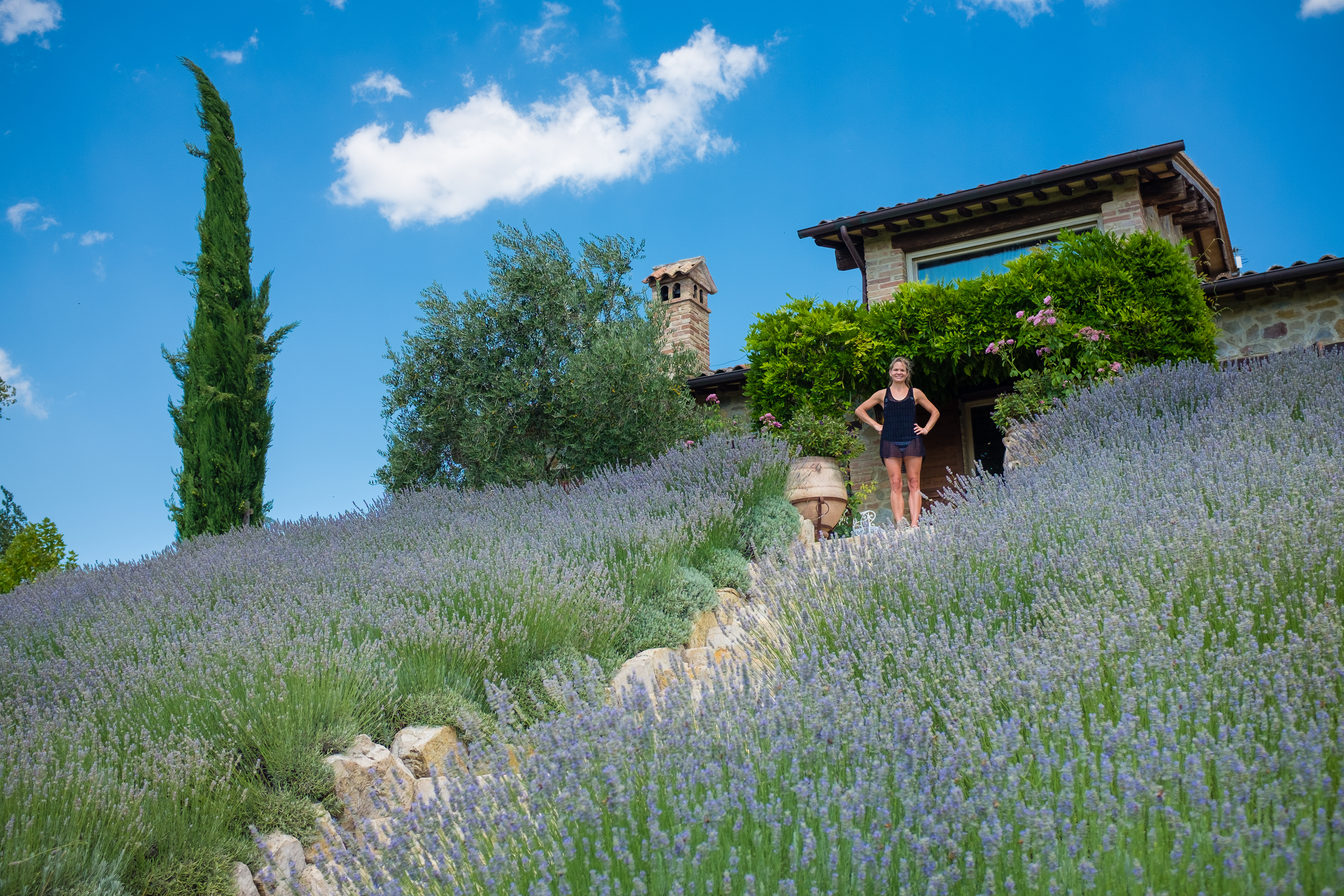
We quickly learned that bees have a love affair with lavender, especially when the blossoms are at their peak,as they were upon our arrival. Naturally bees are less likely to sting if you don’t spend time in the areas where they are busy collecting nectar and pollen, but given the fact that the lavender plants not only surrounded the pool but were growing in just about every part of the property, staying out of their collection area was next to impossible.
 Lingering in the cool waters of the pool away from the lavender plants was not the answer either. We also learned that bees love to spend a lot of time in the water – especially during hot weather – in an effort to control the humidity of their colony and to dilute stored honey that has become crystalized. The in-hive workers accept water quickly from the forager bees. Who knew?
This was our second trip to Italy as a family of nine. Accompanying me were my son Rob and his wife, Angie, their children Neko and Isis, my daughter Candace, her husband Rob and their children Kingston and Kianna. After a quick tour of the villa and the grounds we unpacked and began organizing the kitchen, putting away groceries and reviewing the appliances and equipment we would need in the upcoming week. Even though cooking together was a priority, our first day would just be a time to relax, get organized and dine out at a nearby restaurant, expending as little energy as possible.
The tensions of the day – the heat, the bees and jetlag – slipped away as we all piled into our van and drove to the medieval hamlet of Collevalenza for our first family dinner. The restaurant, Torre Sangiovanni, was at one time a 13th Century watchtower. Tastefully converted into a charming restaurant/bed and breakfast, we knew from the moment we entered the tiny art and ceramic filled reception area that we had selected the perfect place to begin our journey. It was quiet, impeccably decorated and imminently tranquil – just what we needed.
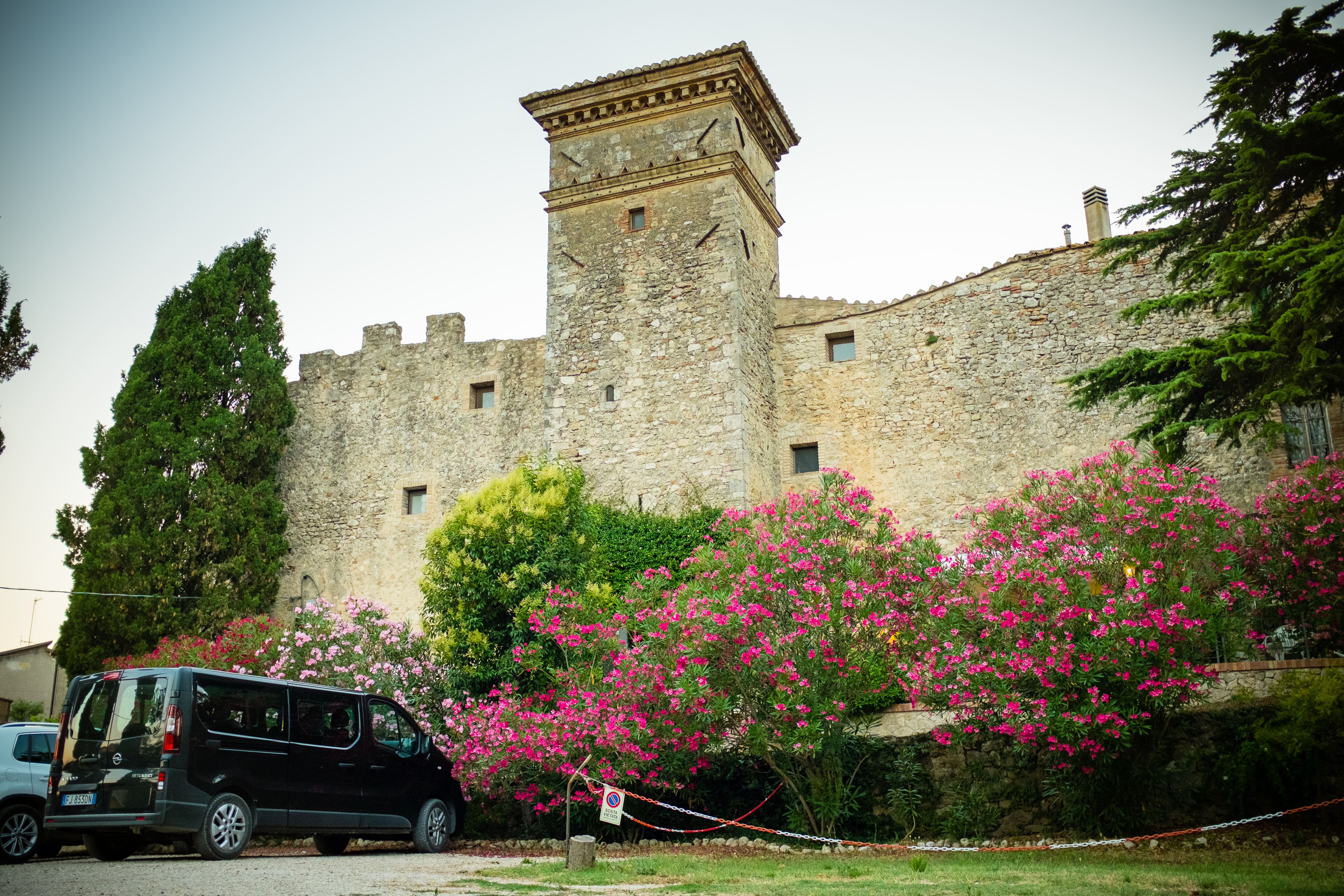
Torre Sangiovanni Aubergo & Ristorante
The hostess ushered us outside to a little gated terrace surrounded by a wall of pink oleander. Deep fuchsia roses crawling over its wrought iron fences and pink geranium-filled terra cotta pots scattered throughout encased this storybook garden with a romantic glow. Even the soft light of lanterns added to the soothing atmosphere. And the piece de resistance was the rosy luminescence of a full moon peeking through the leafy branches of the trees.

Two Lazy Susan ceramic servers filled with a glorious assortment of antipasti were promptly delivered to our table.  As we enjoyed each delicious item including melon wrapped prosciutto, salamis, cheeses, several types of bruschetta, a farro salad and marinated vegetables we began to discuss plans for the upcoming week. We all agreed that lying-around and getting-organized was the preferred activity for the next day. Exploring medieval villages and maybe even a lake visit would have to wait until we regenerated and adjusted to Italian time.

For the moment we all wanted to just simply enjoy being together in this most interesting Italian region – a region that offered an abundance of charming little towns scattered about an enchanting landscape of green winding valleys, rolling hills, craggy mountains and plains brimming with sugar-beet plants, vineyards and sunflowers. It was one of my favorite Italian regions and one I was thrilled to share with my family. We even had our own sunflower field situated at the entryway of the long, winding dusty road that led to our villa – greeting us each day with their perky presence. Even in the heat they radiated happiness.
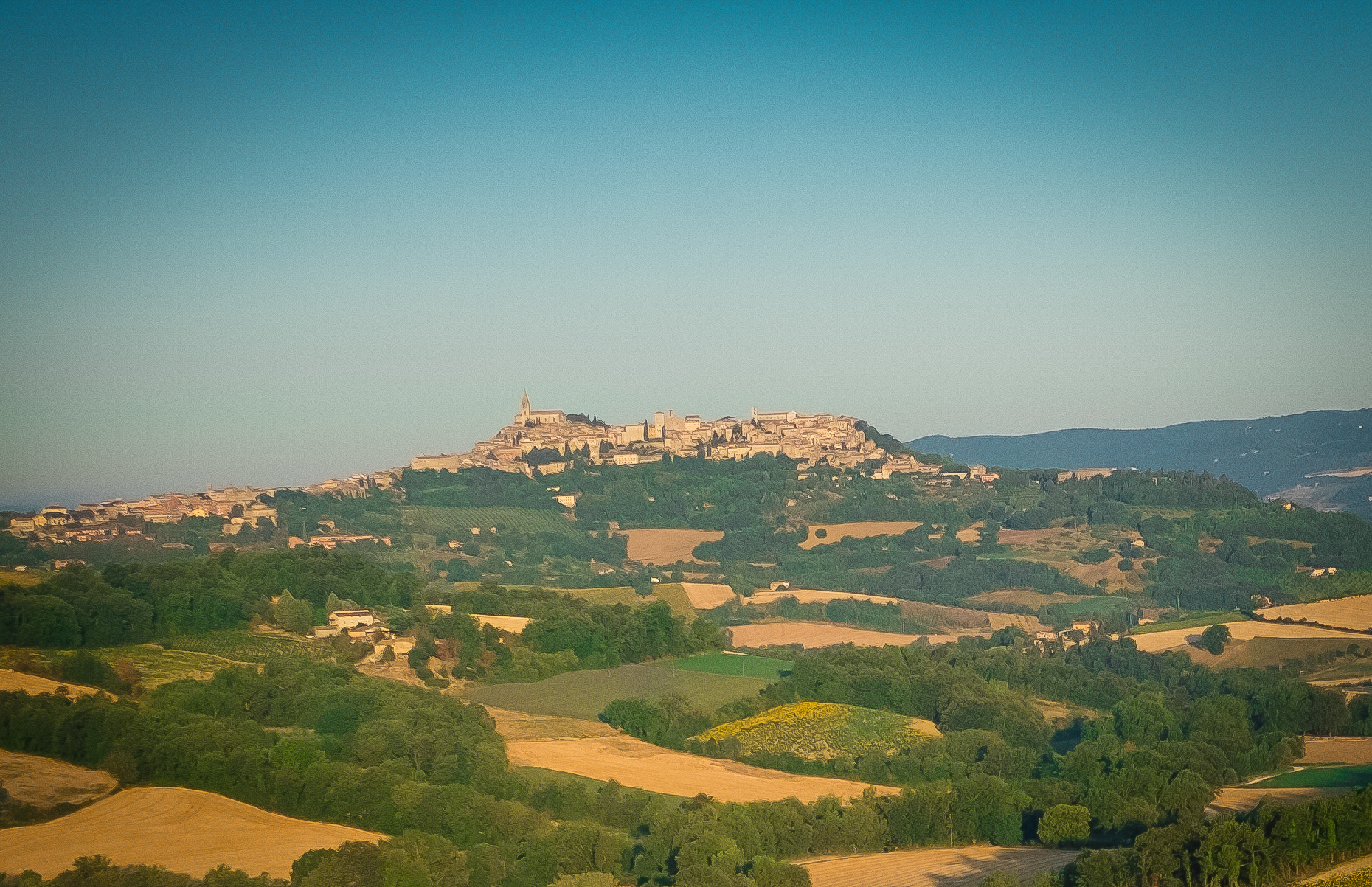
Todi, the nearby hilltop village visible from our property, became our “go-to” dinner destination. Its presence pretty much dominated the surrounding landscape. I had visited Todi during one of my other Umbria journeys (this was my sixth visit to the region) and was happy to return. In fact I was always happy to return to Umbria and never fully understood why guidebooks sometimes described it as “a region not quite living up to” its illustrious neighbors, Tuscany and Lazio. I disagree. It may not have a coastline (it is the only landlocked region of Italy) or a Rome or a Florence, but it has so much else. Certainly it was easier to navigate without the crowds so typical of those other two regions. And its extraordinary natural beauty and charming villages could, in my mind, compete with any area of the country.

Nancy in Todi
Although driving is permitted in Todi, it is far easier to negotiate its narrow streets on foot. So after a relaxing first day at our villa, we drove to the base of the village, parked and took the tram up to the center. Such an interesting history Todi has. Three concentric rings of walls encircle it. The outer medieval walls are the most recent. The ancient Roman walls make up the middle and finally the innermost walls are thought to be Etruscan and date all the way back to the 3rd century B.C.
We selected a restaurant just a short walk from the Piazza del Popolo, the medieval heart of the city. Everyone wanted to eat at someplace casual and preferably outside. Even with the heat, eating outside is such a rare treat in our respective cities – Chicago and New York – finding a cafe with an outside eating area was always a priority. La Cisterna, a pizza and pasta restaurant with a lovely rooftop terrace fit the bill. We liked it so much we returned a second time later in the week. I ordered potato pizza and a panzanella salad, a Tuscan chopped salad (blog – Tuscany II – “An Artist’s Palate”), which is – if done properly – a favorite of mine. This one with incredibly succulent “in season” tomatoes and browned crunchy croutons was perfect.
 The pizza was also delicious. Potato pizza is a very rustic dish found in varying forms all across Italy. Often people are surprised that its origins are Italian. Somehow it seems strange to top a pizza with potatoes (starch on starch!) but from the first time I ever tried a slice in Rome, I have been a fan. The one I ordered at Le Cisterna came with thin slices of potatoes, mozzarella and parmesan cheeses, little patches of crumbled sausage and sprigs of rosemary lightly sprinkled over the top. Everyone ordered pizza that evening – mostly the classic Pizza Margherita (my grandchildren’s favorite) except for son Rob. He is, unfortunately, lactose intolerant and since the one consistent ingredient in pizza is cheese, he perused the menu for something without dairy settling on one of the region’s most famous dishes: Ragu di Cinghiale, aka, pasta with a wild boar sauce. In my mind, it is one of Italy’s tastiest pasta dishes. In fact, we all ended up ordering it at different times during our stay. Rob ordered it so often (with different pastas, and even with polenta) we began calling him Signor Cinghiale.
Ragu di Cinghiale is not a difficult sauce to make – just time-consuming. When I do make it, I make a big batch and freeze some to have on hand for a cold winter night. Just defrost, reheat and serve with any kind of pasta, a green salad and good crusty bread. (You may want to add a little tomato sauce to thin it out)
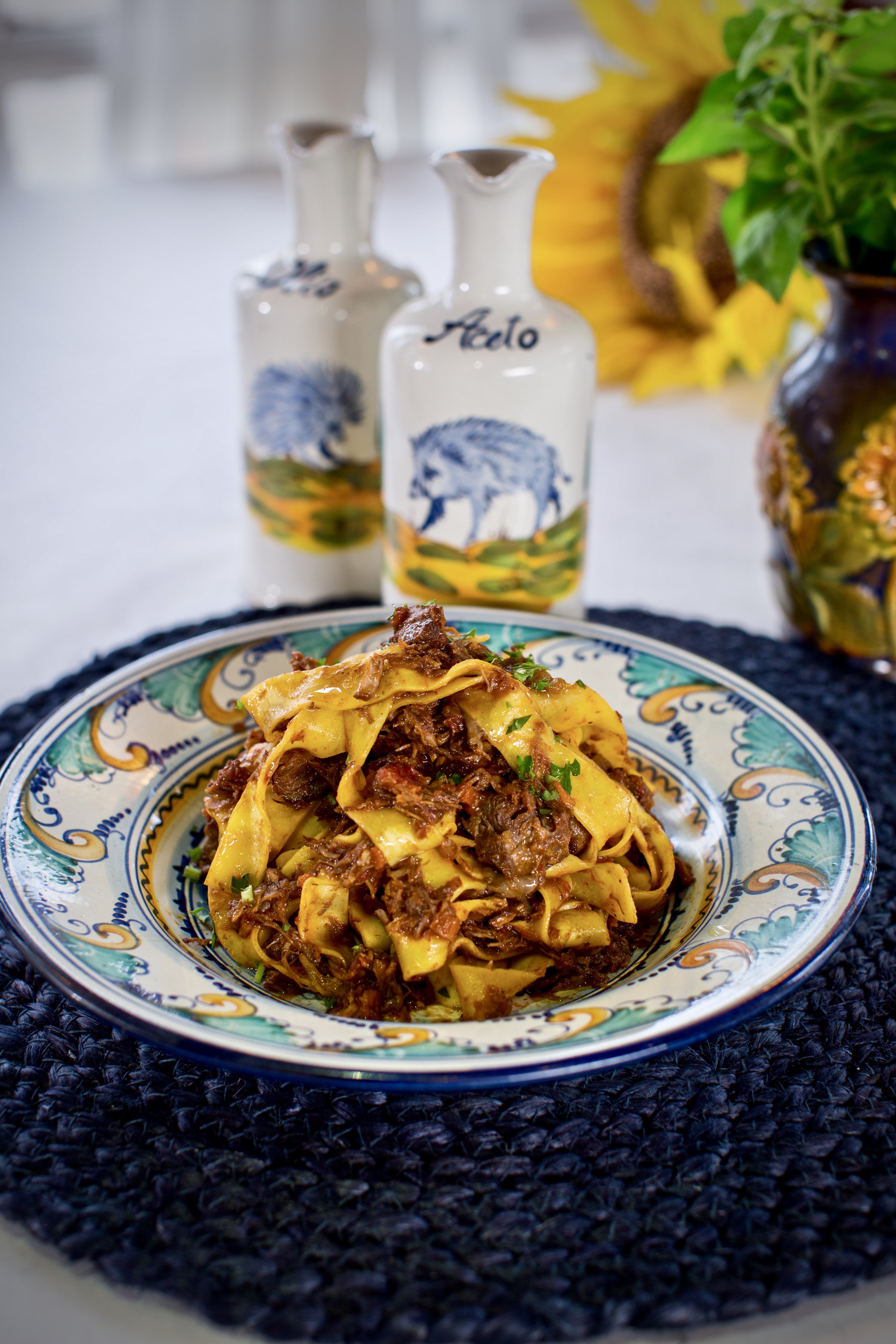
© rob warner photography 2019
Ragu di Cinghiale
(Wild Boar Ragu)Serves 6 – 8
2-pound wild boar shoulder or leg cut into 1-inch pieces
2 sprigs rosemary
6 cloves garlic
10 peppercorns
3 cups red wine (I used Chianti)
¼ cup olive oil
1 cup carrots, finely chopped
1 cup celery, finely chopped
1 onion, finely chopped
2 cups canned diced tomatoes*
3 cups chicken or vegetable stock
Pappardelle
Grated ParmesanThe night before cooking the ragu, place the meat in a bowl with the rosemary, garlic and peppercorns. Add the red wine – 3 cups or enough to cover the meat. Cover the meat with plastic-wrap and place in the refrigerator overnight.
Before preparing the ragu, discard the rosemary and the garlic. Drain the meat in a colander reserving the wine. Place the olive oil in a Dutch oven and turn the heat to medium-high. Add the carrots, onion and onions and sauté for approximately 3 – 5 minutes until soft.
Add the meat and sauté until the liquid from the meat has evaporated and the meat is browned, stirring frequently, for approximately 10 to 15 minutes. Add the reserved red wine and continue to cook until the wine has evaporated. Add the tomatoes, 2 cups of the stock and 1 cup of water. Reduce the heat and cook at a low simmer with Dutch oven partially covered for 1 hour.
Add remaining 1-cup stock and 1 more cup of water and continue to simmer until the meat begins to fall apart for 1½ to 2 hours, stirring occasionally. When meat is very tender, remove from the heat and break the meat apart into fine shreds with a fork or a spoon. (I used a pastry cutter). You may want to add a little water or more broth depending on the preferred thickness of the sauce. Serve over pasta with grated Parmesan.
*My son has made this recipe and doubled the amount of tomatoes for a more saucy (and kid friendly) version
***************************************************************
We divided our time in Umbria between short visits to close-by towns and just hanging around the villa. A visit to the Archaeological Park of Carsulae, an ancient Roman outpost abandoned in the 4th century and truly in the middle of nowhere, was one of our most interesting excursions. Since ruins are obviously not sheltered but usually piles of rock and ancient half-structures out in the open with no cover or shade at all, the heat was overwhelming – at least to me. I just couldn’t keep up with the group, so I spent a most of my time getting cool in the museum/visitor center studying everything from a distance and recalling all the many ruin sites I had visited over the years.

Neko & Isis at Carsulae
I wouldn’t say “if you’ve seen one, you’ve seen them all” because it always seems there is something unique about each, but with this particular visit I rationalized that maybe all my previous “ruin visits” compensated for the fact that I was not participating in this one. No one was complaining or forcing me to come outside, but feeling guilty is just something, unfortunately, that comes easy to me!
 Despite all of that, I loved the fact that my children and grandchildren were so interested in learning that they were willing to put up with a little discomfort. Oh, to be young again! As much as these family trips were about spending time together, enjoying each other and eating great food and drinking great wine, they were also about learning. Coming from a history teacher father and a librarian mother, education was always a big part of my travels. Sharing “my Italian Journeys” with my family – the food, the wine and the culture, which of course, includes the history of this great country, was one of the most rewarding aspects of our time together. And their enthusiasm for that education added so much context and dimension to everything we did.
***************************************************************
Later in the week we spent an entire day in Orvieto, a small majestic Umbrian city sitting high above the Umbrian plains on the flat surface of a volcanic tuff (volcanic stone). It is worth the long, winding drive to get there for many reasons, none more so than to visit its magnificent gothic cathedral (Duomo di Orvieto) dating from 1290. The rose window, the monumental façade adorned with intricate golden mosaics and the details in the three bronze doors are just some of the many layers of history to be explored in this amazing cathedral. We spent almost two hours appreciating its beauty.

Kianna, Isis, Neko & Kingston at Duomo di Orvieto
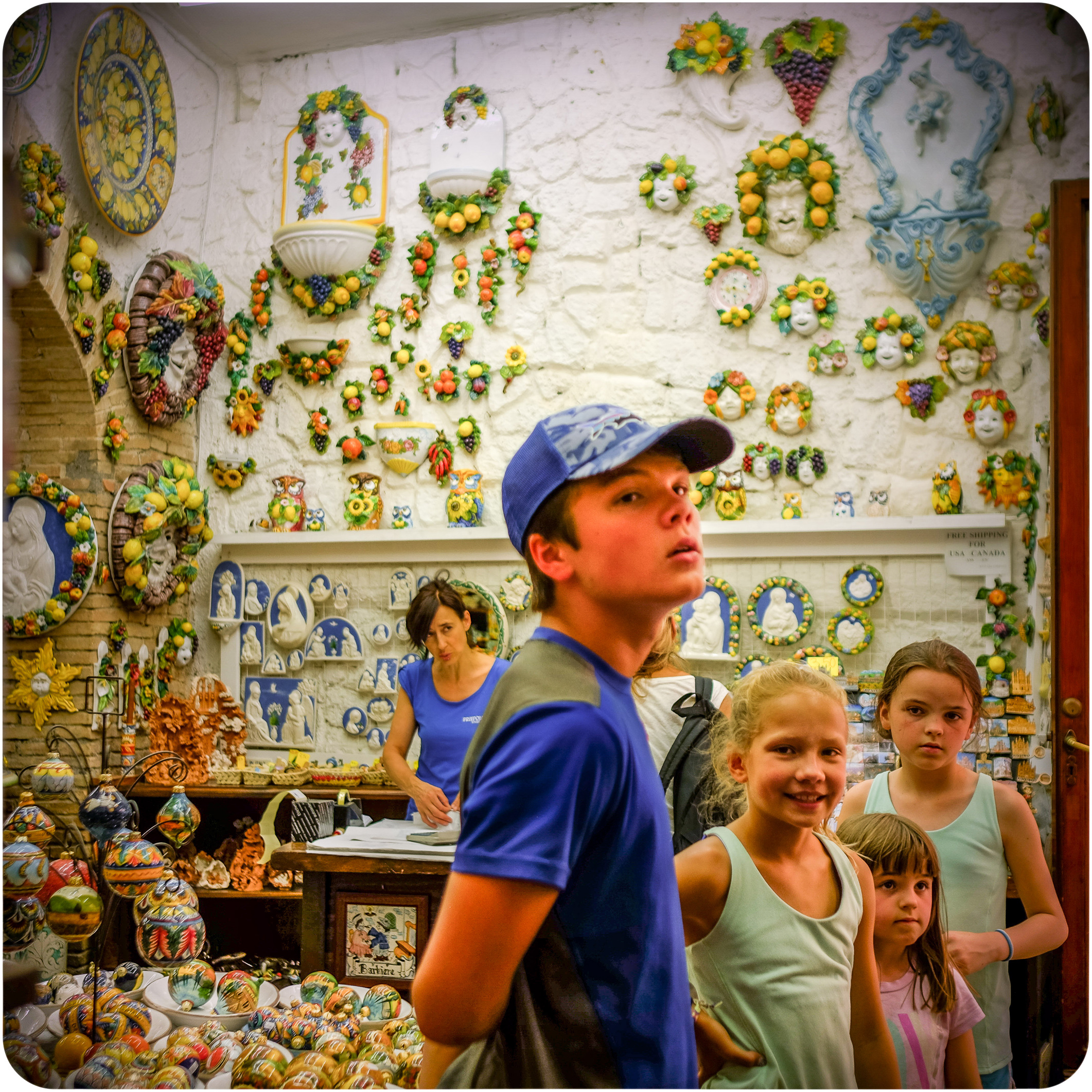 Of course a trip to Orvieto must include a stroll down “ceramica lane”, a narrow, winding street filled with ceramic shops offering everything from the mundane to the extraordinary. The local traditional themes are inclined towards colorful floral patterns and animal and human figures (including the ubiquitous rooster pitcher) while the refined handcrafted objects of local artisans are often a mix of gothic and middle-eastern elements. It always amazes me that each small ceramic town in Italy (and there are many – at least three just in Umbria alone) has a completely different ceramic history and a completely different look.
Before we did some serious ceramic shopping we had a delicious calzone and pizza lunch outside at one of the many restaurants along “ceramica row”. Sitting under a large natural colored umbrella, I enjoyed my first glass of Orvieto wine from one of my favorite producers, Antinori. At an earlier visit (blog Umbria I “Generations”), Rob, Candace and I had visited his vineyards (close to Orvieto) and had the good fortune to stay in the Antinori castle – an amazing experience.
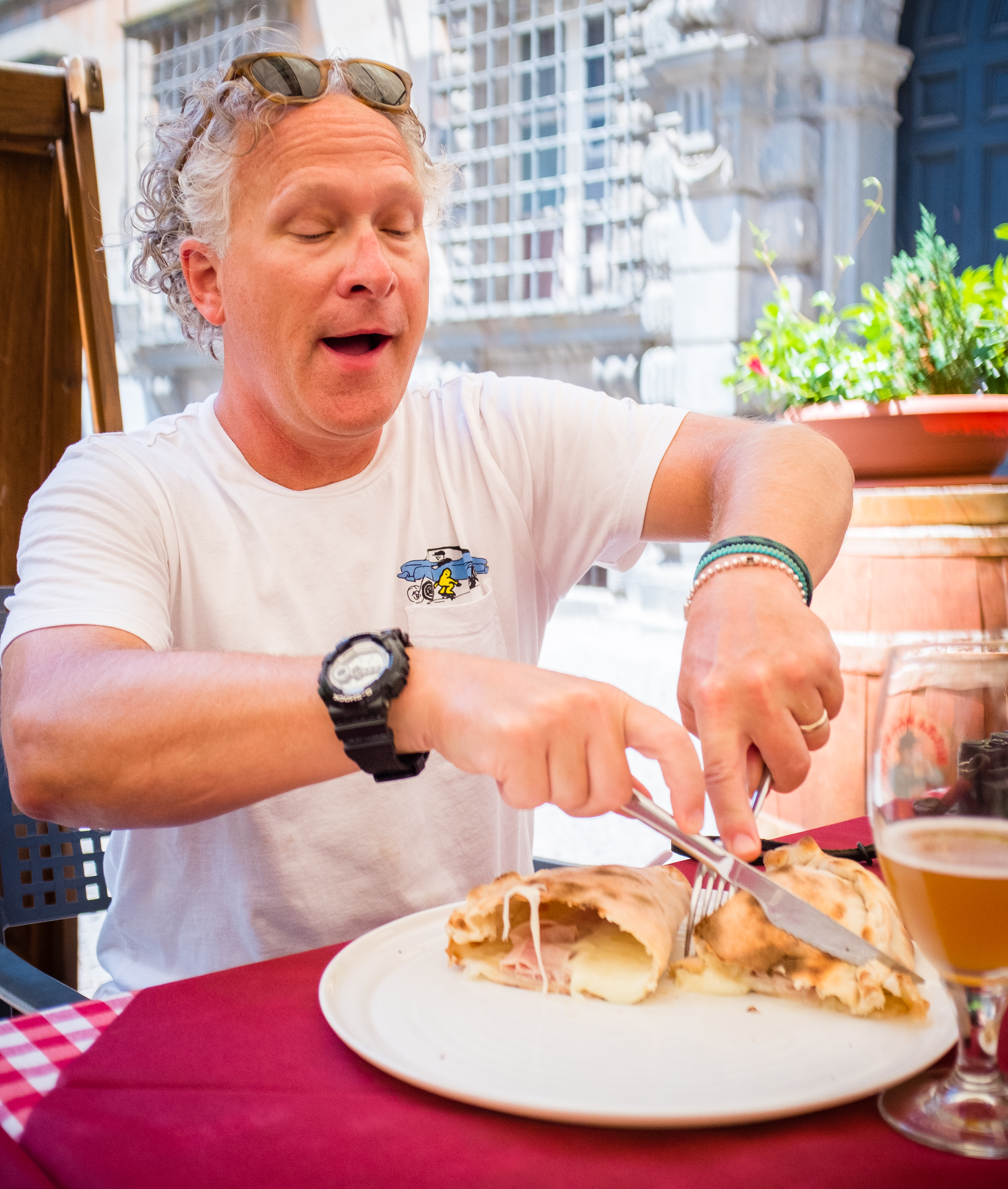
Rob Warner e il calzone
Dessert was almost always the same for our group– after both lunch and dinner we always found the nearest Gelateria and enjoyed Italy’s incredible ice cream. 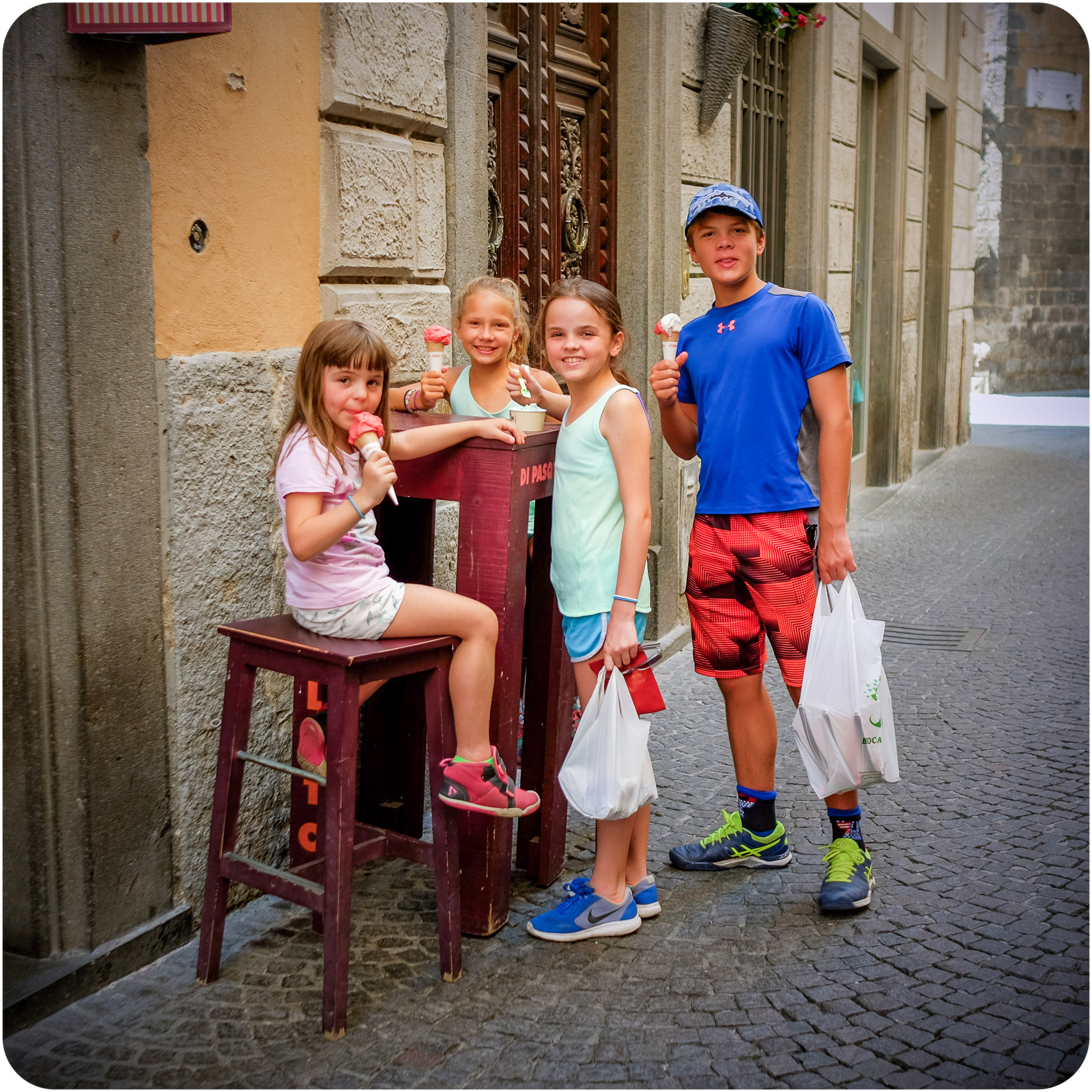 Made with a mixture of custard, cream and milk without eggs, it is generally lower in fat, contains less air and is more dense and flavorful than other ice creams.
Our heads filled with gothic architecture and religious frescos, our shopping bags brimming with ceramics and our stomachs stuffed with pizza and ice cream, we decided to head back to our villa and just “hang around” that evening – bees and all. By this time we were getting used to them – sort of.
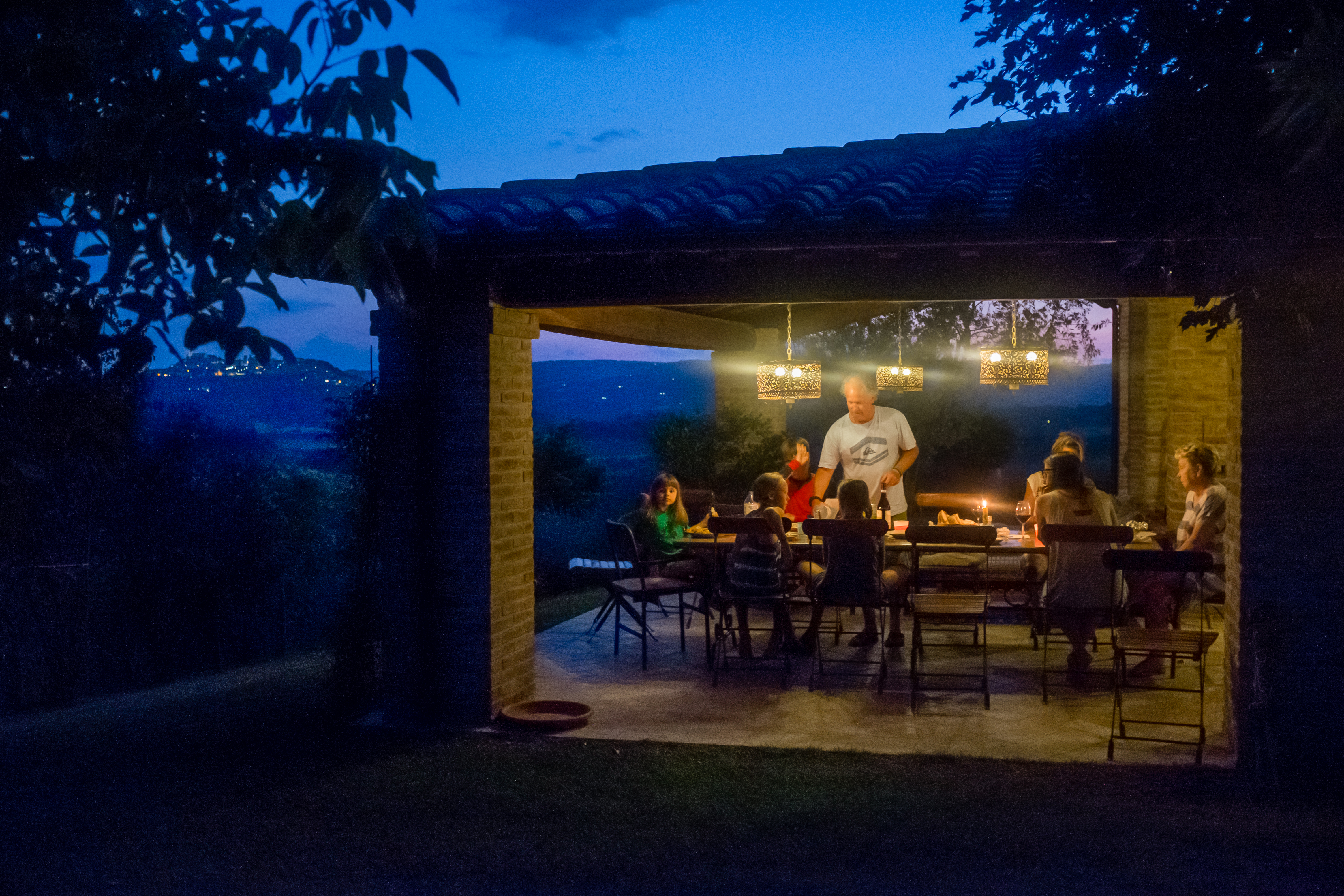
After hours of considerable “digesting”, I made a batch of Amatrciana, a tomato pancetta sauce that we served over spaghetti (blog – Lazio I Rome “Begin at the Beginning”) and son Rob grilled juicy succulent Italian sausages – a mixture of both mild and spicy. Candace made a caprese salad and we hung out in our favorite area of the villa, an outside covered porch just out the kitchen door to the side of the villa.
We continued to be fascinated by the bees and their activity – especially their attraction to the pool. At one point Angie even asked the groundskeeper why so many of the bees were in the pool? His very matter of fact replay was: “They eat the lavender. They get thirsty. They drink the water in the pool. And they die.” I don’t think it was that simple because I don’t their intention was to die, but we loved the answer and repeated it frequently during the week. However, we did come to respect our buzzing neighbor’s sense of community and amazing work ethic. They never stopped – at least not that we could see.


 We had our communal obligations as well. The whole family participated in making the meal – from setting the table, making the caprese and arranging a selection of antipasti on a low table in the seating area to be enjoyed with a glass of wine (or beer) before dinner. Dinners and lunches at the villa were always a participatory affair.
Generally, I like to serve pasta as an individual course – not as many Italian-American restaurants do as a “side” with something else on the plate like roast chicken. But for some reason the combination of the grilled sausages and the spaghetti with Amatriciana on the same plate worked – totally casual, totally easy and most important, totally delicious.
Following is the grilled sausage recipe – in this recipe the sausages are served with broccolini and roasted potatoes, a dish found in many parts of Italy. Rob actually prepared it this way at a summer family reunion. It makes for a perfect rustic Sunday night supper!

© rob warner photography 2019
Italian Sausage with Broccolini and Potatoes
Serves 46 large sweet Italian sausage links
1 pound fingerling potatoes, scrubbed but unpeeled
2 – 3 bunches of broccolini*
4 tablespoons olive oil
2 cloves garlic
1/8 to ¼ teaspoon chili pepper flakes (depending on desire of spiciness)Place the potatoes in a pot of water enough to cover the potatoes and bring to a boil. Cook over medium heat until the potatoes are tender but not falling apart. Using a slotted spoon, remove the potatoes and set aside. When cooled, slice the potatoes into ¾ inch rounds.
Trim the broccolini. Trim bottom of stalks. Return the potato water to a boil. (You may need to add more water to accommodate broccolini). Add salt and then the broccolini. Cover partially, and cook until tender 2 – 5 minutes, depending on thickness of the stalk. Drain and set aside.
In a frying pan place the sausages and ¼ cup of water, cover and bring to a simmer over medium-high heat. Cook for about 10 minutes. Remove cover (water should have evaporated) and add olive oil. Sauté over medium-high heat until sausages are well browned. Slice sausages on the diagonal into 3 inch pieces.
In a frying pan large enough to hold the potatoes & broccolini, add 3 tablespoons of olive oil. Add garlic and sauté until golden. Add sausage slices back into pan and sauté briefly just until warm. Add the wine and deglaze. Add the potatoes and broccolini. Add chili peppers. Toss to combine and heat through. Serve
*broccolini is milder and sweeter than broccoli and has thinner stalks. It has a more earthy taste. Broccoli rabe – similar to rapini, which has thin stalks and deep green leaves and small buds is a delicious alternative. My son prefers its more bitter, earthy taste alongside the grilled sausages.
***************************************************************

Candace arranged a visit to a vineyard as she had done during our previous Veneto trip. She chose Avignonesi, a producer whose wines Convito has admired and carried for years. Located near Montepulciano in southern Tuscany just over the Umbrian border, Candace, the two Robs and Angie left early in the morning while I stayed back at the villa with the grandchildren which I was happy to do since I have had the good fortune to visit many wine producers during the course of my Italian journeys. Swimming and art projects filled our day.
One of the most prestigious wineries in the area, Avignonesi was founded in 1974 and produces some of Tuscany’s most renowned wines including Vino Nobile di Montelpulciano and the famous dessert wine, Vin Santo. The vineyard was recently sold to a Belgium firm who was in the process of converting the whole property to an organic and biodynamic viticulture. The owner, Virginie Saverys and her partners were always happy to welcome visitors and arranged for a most informative day concluding with a multi-course lunch and matching wines served under a handsome tented area in the middle of the vineyard.
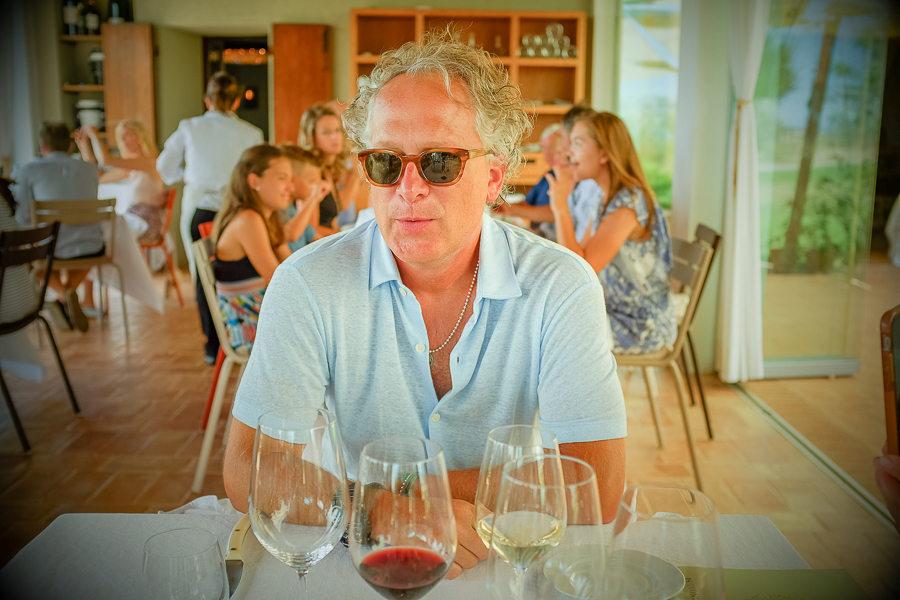
Rob Warner spotted at Avignonesi
The menu they brought back to the villa for me to see was full of innovative and compelling dishes. One especially caught my eye as a potential Convito market salad – Insalata di farro con verdure croccante e pesto di basilica– a farro and crunchy (croccante) vegetable salad with a pesto dressing. I have just recently tested it and will include it in our spring market menu.

Farro alla Genovese
1-pound farro cooked al dente (cooked – 8 cups)
2 cups cubed carrots – ¼ inch (steamed al dente)
2 cups zucchini cubed – ¼ inch
2 cups summer squash cubed ¼ inch
½ cup scallions (green part) dicedPesto vinaigrette
¾ cups olive oil
¼ cup white wine vinegar
3 tablespoons lemon juice
2 tablespoons pesto
½ teaspoon salt and pepper combo
Combine the farro with the vegetables and the scallions.
Combine vinaigrette ingredients and add to farro mixture.
Serve!
Because of the continuing intense “Lucifer” heat wave (the label the press had given it), we decided a lake visit was in order. Swimming in the cool waters of Lake Tresimeno was appealing to everyone so we piled in our van and drove to one of the lake’s most charming villages, Castiglione del Lago, situated right on the southwest corner of the lake. Lago di Tresimeno is the fourth largest lake in Italy. Although it falls within the region of Umbria its basin stretches into Tuscany as far west as Montepulciano and as far north as Cortona.

After several hours of swimming and lounging on the beach (I did the lounging), we walked to a nearby restaurant, La Capannina and sat on its lovely terrace to enjoy a delicious lunch. The restaurant was recommended by the staff at Avignonesi as “the place” to eat – where the locals dine which is always the best of endorsements. Known for their fresh local ingredients, I ordered lake trout prepared in my favorite way – olive oil, herbs and lemon – the only way, in my opinion – to eat fish when it has just freshly arrived from its watery home. In this case, Lake Tresimeno.

Before heading back to our villa we visited the old part of the town higher up on a chalky promontory seemingly ruling over the waters below. Famous for its medieval castle “Rocco del Leone” and its charming old town center ringed with medieval walks and incredible views of the lake, we tried for a few minutes to do our usual casual exploring but because the temperature had reached 99 degrees, we simply could not linger – so we quickly scurried into a few local shops, bought a few souvenirs (cinghiale tee shirts and cinghiale magnets) then headed back to our villa.
 Though our time in Umbria was coming to an end, we spent one more night dining in Todi and two nights cooking together at the Villa. Ristorante Umbria was not to be missed. I had been there for lunch back in the early nineties and clearly remember its delicious regional food and the spectacular view overlooking the Umbrian countryside. Window boxes filled with red geraniums lined the wide expanse of arched windows in the semi-circle room.
I ordered taglliatelle with extra virgin olive oil and black truffles, a dish integral to Umbria’s cuisine. The region produces the highest number of black truffles in all of Italy. Their quality is famous throughout the world.  Because truffle season is so short, it is a rare treat to have either the fresh black truffles of Umbria or the white truffles of Piemonte with pasta or risotto. Very few accompanying ingredients are needed since truffles have such a huge and unique flavor profile. In this dish, just extra virgin olive oil and some freshly grated Parmigiano Reggiano along with the pasta or rice and of course, the grated truffles is all that was required for a gloriously satisfying dish.
No meal in an Umbrian restaurant was complete for us without someone in our group ordering ragu di cinghiale. It was on every menu. This time both Kingston and Neko ordered it with pasta and Rob, (Sig. Cinghiale himself), enjoyed a hearty cinghiale stew over polenta.

We pretty much stayed close to the villa our last day – swimming, packing, straightening up and cleaning out the fridge which, because of our overly ambitious grocery shopping at the beginning of the week, provided a beautiful antipasti spread of cheeses, cured meats and marinated vegetables for lunch as well as for our pre-dinner cocktail hour. Everyone wanted to help so I had plenty of sous chefs and waiters to assist me. A hearty meat sauce with pasta, a salad and grilled bruschetta comprised our last dinner in Umbria.

The next day we reluctantly said goodbye to our temporary home (and less reluctantly to the bees!) and began our drive to Rome. As usual, our faithful chauffeur Rob took the wheel steering us through this lovely last look at the “green heart” of Italy into the bustling and congestive streets of the eternal city where aggressive driving the guidebooks advise, is the only way not to be left in the dust. And that he did.

Though very steamy as all big cities are in the middle of a heat wave, Rome is always a welcome adventure. How could it not be? It is one of the great cities of the world. Even though its depth and breath can sometimes be overwhelming, offering the visitor almost too many sights, too many monuments and museums to pick from; it is still awe-inspiring. Because we had just two days and it continued to be extremely hot, we decided to concentrate on the area surrounding our hotel which was located in the Piazza Farnese close to one of Rome’s most colorful and vibrant squares – Campo de Fiori and just south of Piazza Navona, one of the most charming and popular piazzas in all of Rome.


Rob Warner sparkles in Rome
We dined both for lunch and dinner in little side streets off of Campo de Fiori except for one memorable lunch eating outside in Piazza Navona at one of my favorite restaurants Ristorante Tre Scalini. Amidst the accordion and violin players and all the artists scattered around the handsome historic fountains – not to mention hundreds of tourists – we enjoyed a lovely simple lunch. I had my usual, the Tre Scalini house salad followed by a simple pasta with a tomato sauce – perfect hot weather food.
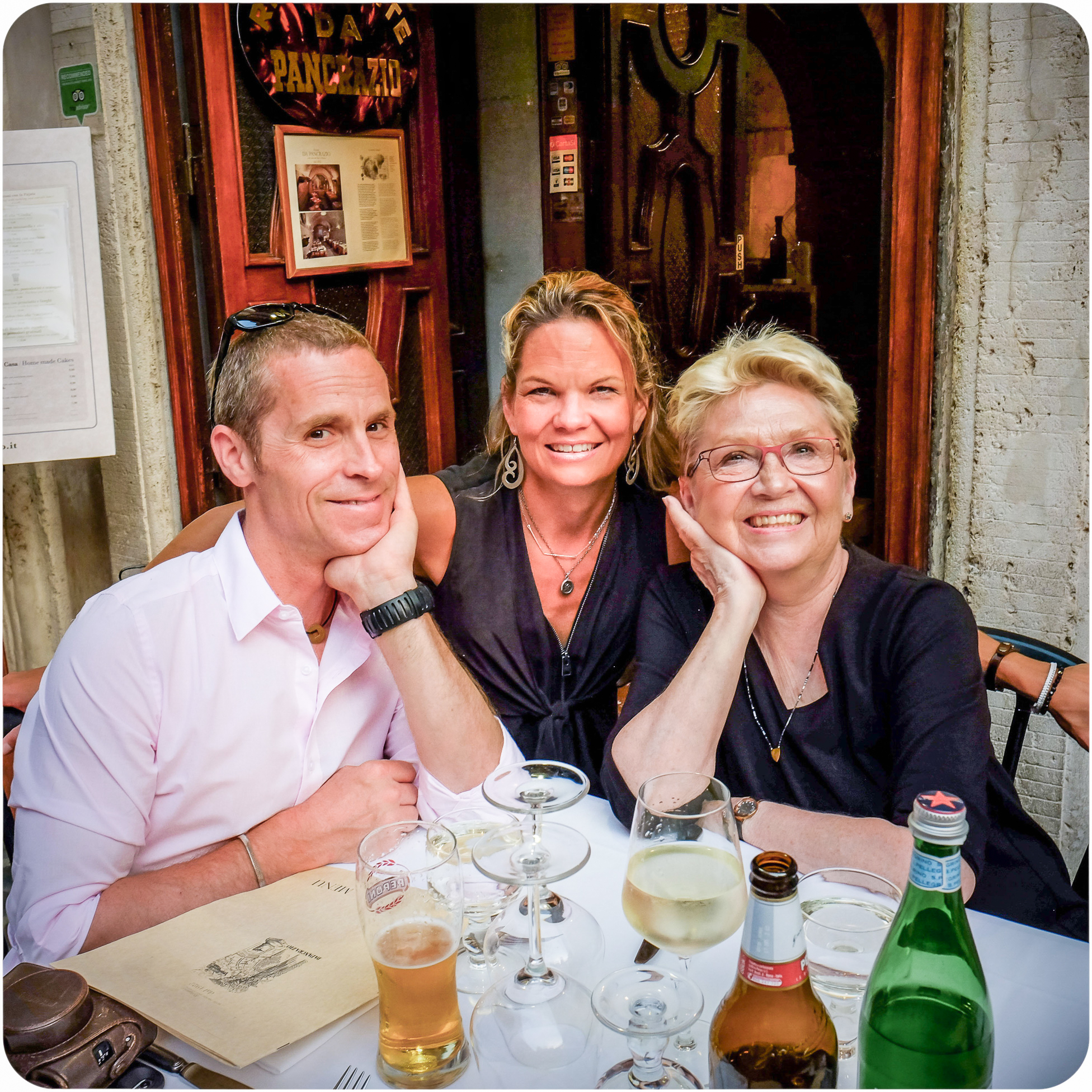
Because of the heat, my ordering focused mostly on lighter summer dishes like Checca (a room temperature pasta dish with fresh tomatoes, mozzarella and fresh basil (recipe also in blog Lazio – Rome “Begin at the Beginning”) but I couldn’t resist ordering one of my favorite Roman classics – Spaghetti Carbonara. Made with egg, cheese, pancetta and pepper it’s a little rich for my taste in summertime but nonetheless, it is sumptuous. Convito frequently has the traditional version on our winter menu but last spring we made a somewhat lighter version with asparagus that I include here.

© rob warner photography 2019
Spaghetti Carbonara con Asparagi
1-tablespoon olive oil
4 ounces pancetta, cubed into small pieces
1 clove garlic, diced
1 tablespoon diced shallots
3 large eggs
¾ cup freshly ground Parmigiano Reggiano
¾ cup cream
½ teaspoon salt
freshly ground pepper – lots
1 ½ cups previously cooked (al dente) asparagus, sliced into 1 inch pieces on diagonal1-pound spaghetti
Bring a large pot of water to a boil. In a large skillet heat the oil. Add the pancetta and cook over medium high heat until crispy stirring until fat has been rendered for approximately 5 – 6 minutes. With a slotted spoon, drain pancetta to a paper towel and set aside. Turn heat to low and add the garlic and shallots. Cook for a few minutes until soft. Set aside with pancetta.
Crack the eggs into a bowl. Add grated Parmesan. Whisk together. Pour in the cream. Whisk together. Add salt and pepper and stir.
In the meantime cook the spaghetti according to directions.
Drain the pasta reserving a little of the pasta water. Put into a very hot bowl and immediately begin drizzling in the egg mixture. Stir the entire time, which will prevent the eggs from scrambling. Throw in the asparagus, the crispy pancetta, shallots and garlic. If mixture seems too thick add a little of the hot pasta water. Toss all together and serve immediately.
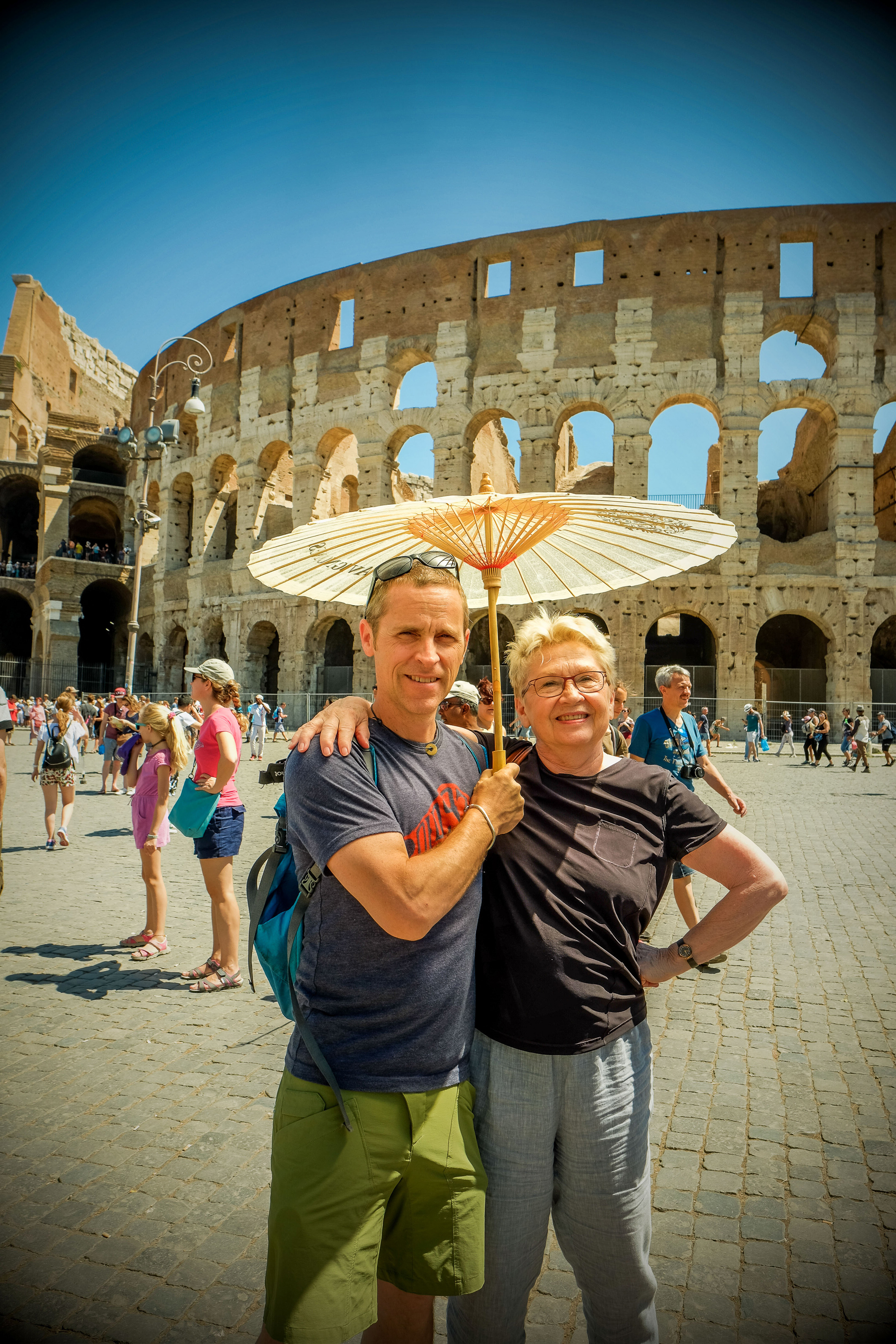
We visited many of the traditional iconic sites of Rome including the Colosseum, and spent a lot of time wandering around the Campo de Fiori market. This had been my 12thor 13thtime in Rome and my sixth trip to Umbria. As with all sojourns, traveling partners alter the experience and add a different texture to the places you visit – especially when you are traveling with children. Seeing the world helps to open the mind and I was happy to be a part of doing just that for my grandchildren. At the same time, the fresh perspective of youthful eyes gave me new insights – a different way to look at many of the places and sights I had previously visited.
New situations also alter travel – like the bees of Casale delle Lavande. Because they were so ever-present, we spent a lot of time trying to understand their habits. In the end – though undeniably annoying – we accepted the fact they were just doing their job and our job was to steer clear of them, or at least try. And to let them continue doing their work. After all, in the end they had provided us with a great deal of interesting conversation and much laughter. Our “Bee Trip” was certainly one that will not be forgotten!

So enjoyable to follow your travels after all the years. How special for your grandchildren these trips must be. Best regards.
For our last night in Rome….sipping prosecco as the sun set on Campo de’ Fiori with everyone settling in for diner , aahhh…. What a Fantastic Trip & so many memorable moments Nancy 🙂
I loved every day and night of the 2017 Lucifer tour ! As hot as it was , the eye popping scenery of everything Italian overwhelmed me as it always does ! I love you Italy !!
And , Another beautifuly written story once again Nancy !!